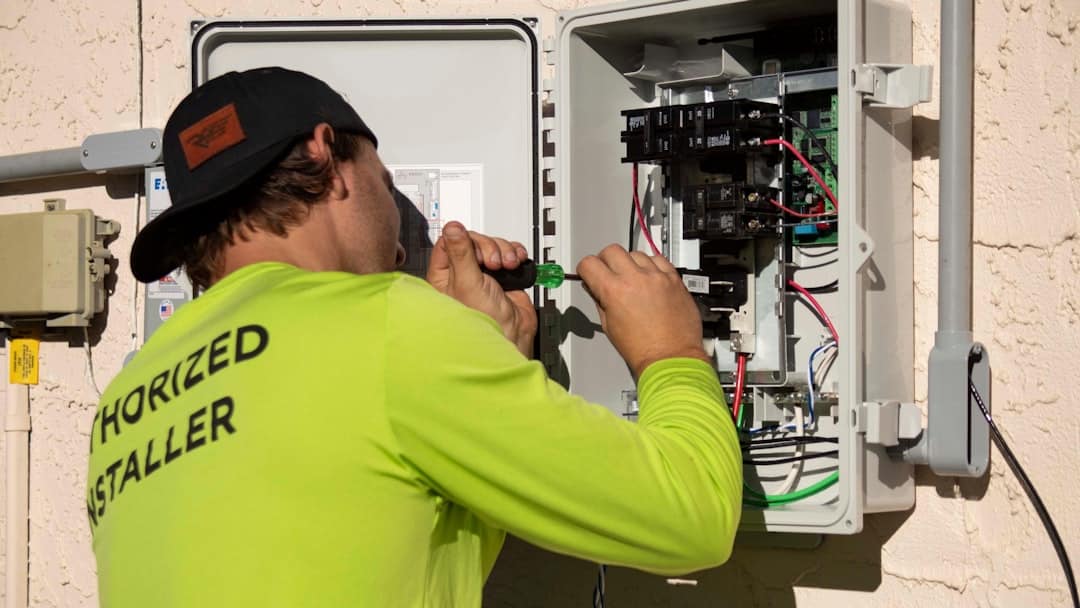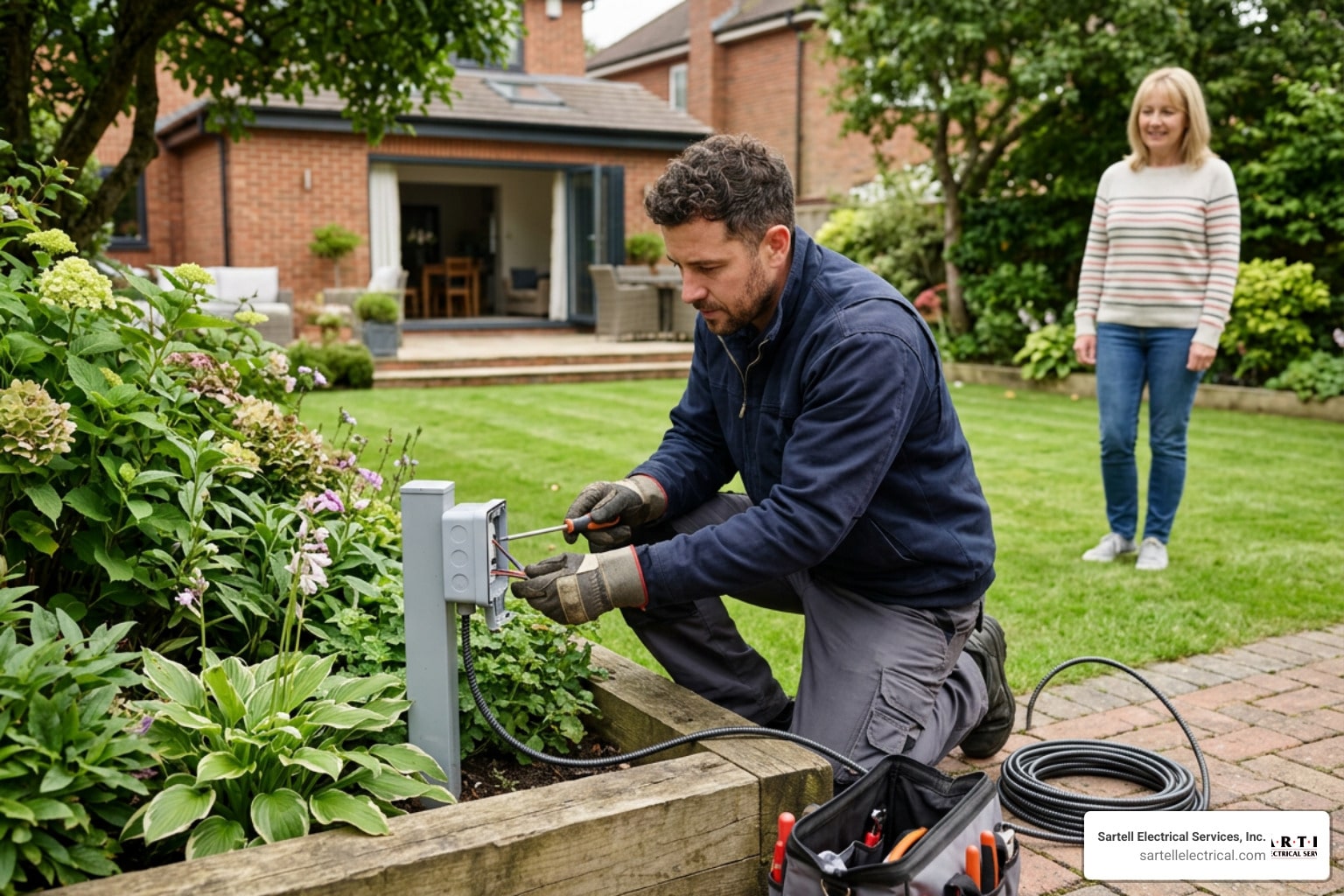

Why EV Charger Installation Andover Homeowners Are Making the Switch Now
EV charger installation Andover is one of the fastest-growing home electrical upgrades in Massachusetts — and for good reason.
Here's a quick summary of what you need to know:
| Step | What's Involved |
|---|---|
| Choose charger type | Level 2 (240V) is best for most homes |
| Assess your panel | May need upgrade to 200-amp service |
| Pull a permit | Required in Andover, MA |
| Hire a licensed electrician | DIY is not recommended or code-compliant |
| Installation time | Typically completed within 1-2 weeks |
| Cost | Equipment + labor; rebates may apply |
More and more Andover residents are driving electric vehicles — and relying on public charging stations is quickly becoming the old way of doing things. Public stations can be hard to find, slow to use, and more expensive than charging at home. A dedicated home charger changes all of that.
By 2030, the White House aims for EVs to make up 50% of all new car sales. That shift is already underway right here in Massachusetts.
I'm Ed Sartell, President of Sartell Electrical Services, Inc., and I've been delivering high-quality electrical solutions to Massachusetts homeowners and businesses since 1985 — including a growing number of EV charger installation Andover projects. Let me walk you through everything you need to know to get this done safely and correctly.
EV charger installation Andover helpful reading:
Benefits of Home Charging in Andover
When we talk to neighbors about EV charger installation Andover, the conversation usually starts with one word: convenience. Imagine never having to hunt for a functional public charging station in a grocery store parking lot again. Instead, you pull into your garage, plug in, and wake up to a "full tank" every single morning.
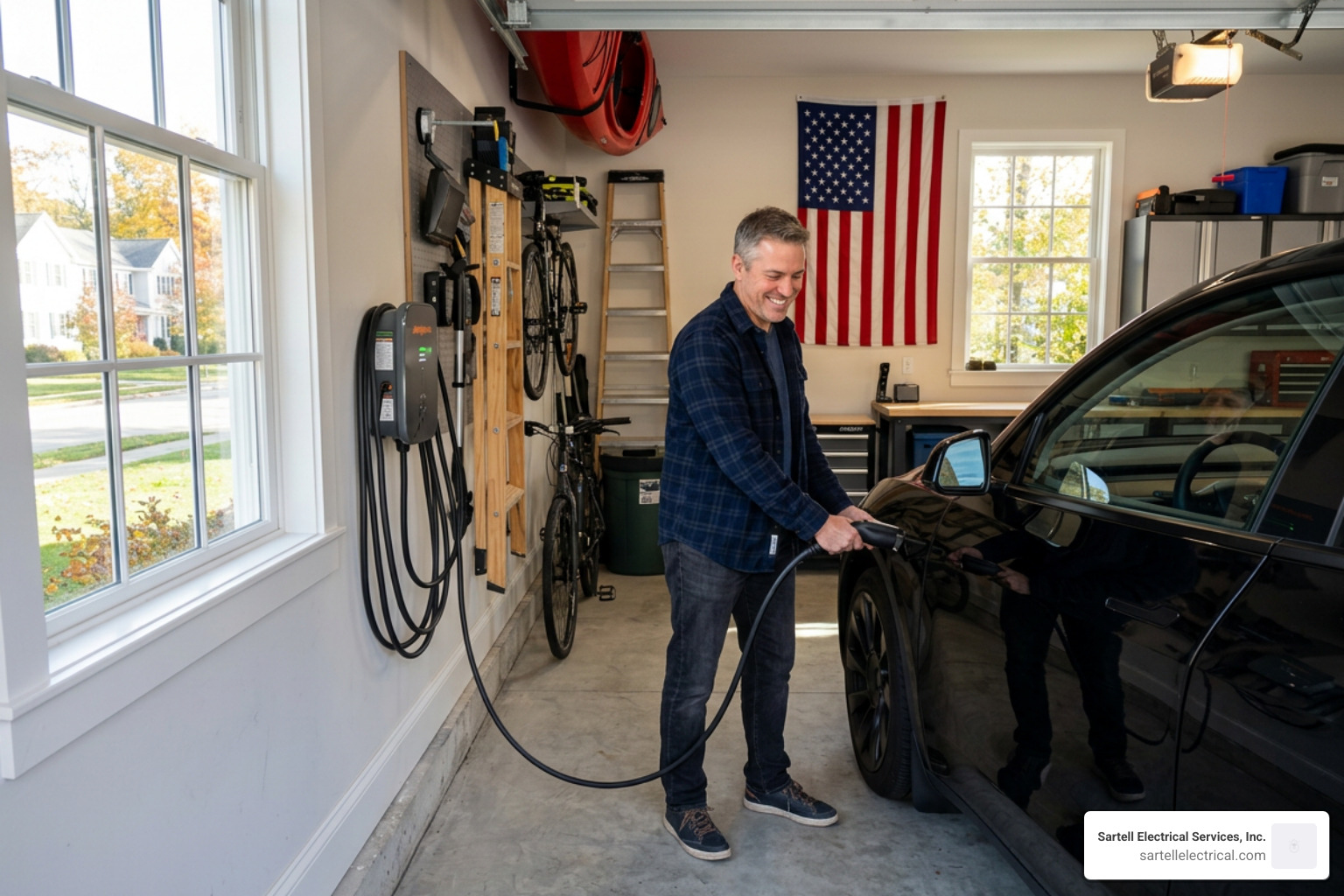
Beyond the sheer ease of use, there are several concrete benefits to moving your fueling station to your own property:
- Significant Cost Savings: Charging at home is significantly cheaper than using public fast chargers. In many cases, home charging can halve the amount you spend to stay on the road compared to public infrastructure. By utilizing off-peak electricity rates offered by local Massachusetts utility providers, those savings grow even larger.
- Property Value Boost: As electric vehicles become the standard, home buyers are increasingly looking for properties that are already "EV-ready." Installing a high-quality charging station is a form of future-proofing that makes your home more desirable in the competitive Andover real estate market.
- Battery Longevity: While Level 3 "Fast Chargers" are great for road trips, consistent use of ultra-high-speed charging can actually degrade your car's battery over time. A Level 2 home charger provides a steady, controlled flow of power that is much gentler on your vehicle’s battery health.
- Time Efficiency: You spend zero minutes waiting for your car to charge when it happens while you sleep. For most residents, a Level 2 charger can provide up to 60 miles of driving range with just one hour of charging.
- Environmental Impact: By pairing your EV with a home charger, you are directly supporting the transition to clean energy. This aligns with the broader goals of New England communities to reduce carbon footprints.
If you are looking to enhance your home's functionality, our residential electrical service team can help you integrate this technology seamlessly into your existing system.
Selecting Your EV Charger Installation Andover Equipment
Choosing the right equipment is the first major hurdle for many homeowners. In EVs, not all chargers are created equal. For a residential setting, we almost exclusively recommend a Level 2 charging setup. This requires a dedicated 240-volt circuit—the same kind of power used by a large electric clothes dryer or a kitchen range.
A standard Level 2 charger typically offers 7.4kW fast charging, which is the maximum rate most residential electrical systems can handle efficiently. This speed ensures that even the largest EV batteries can be topped off overnight.
Comparing Level 1, Level 2, and Level 3 Chargers
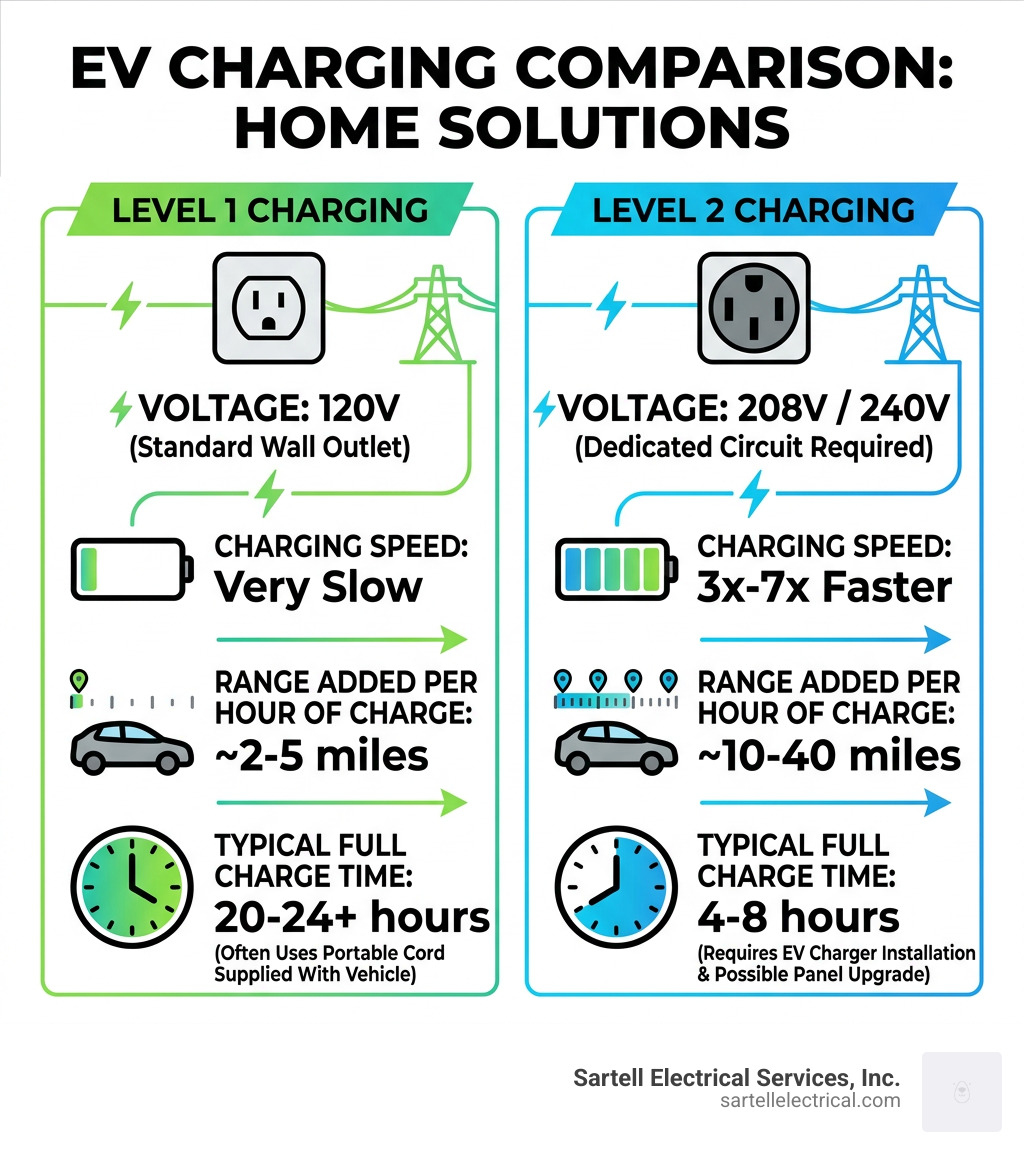
To understand why Level 2 is the "sweet spot" for EV charger installation Andover, let’s look at the differences:
| Feature | Level 1 (Trickle) | Level 2 (Standard Home) | Level 3 (DC Fast) |
|---|---|---|---|
| Voltage | 120V (Standard Outlet) | 240V (Dedicated Circuit) | 480V+ |
| Charging Speed | 3-5 miles per hour | 25-60 miles per hour | 60-100+ miles in 20 mins |
| Installation | Plug and play | Professional Electrician Required | Commercial Only |
| Typical Use | Emergency/Very low mileage | Daily home/office use | Road trips/Commercial fleets |
While a Level 1 charger comes with most cars and plugs into a standard wall outlet, it is painfully slow. If you drive more than 30 miles a day, a Level 1 charger will likely never catch up to your usage. Level 3 chargers, on the other hand, require massive amounts of power that residential neighborhoods simply aren't wired to provide.
Recommended Brands for Massachusetts Homeowners
We often get asked which brands hold up best in our New England climate. Whether your charger is inside a garage or mounted on an exterior wall, durability and weatherproofing are key.
- Tesla Wall Connector: The gold standard for Tesla owners. It offers the fastest home charging speeds and sleek integration with the Tesla app.
- ChargePoint Home Flex: A highly versatile, "smart" charger that allows you to adjust the amperage (up to 50 amps). It uses a universal J1772 connector, making it compatible with almost every EV on the road.
- Enphase ClipperCreek: Known in the industry for being "built like a tank." These chargers are incredibly reliable and are a favorite for those who want a straightforward, no-frills hardware solution.
Most non-Tesla vehicles use the SAE J1772 "J plug." If you own a Tesla but want a universal charger for guests or a second non-Tesla EV, you can easily use a J1772-to-Tesla adapter. When you're ready to pick your hardware, it's a good idea to consult with an Andover MA electrician to ensure the model you choose is compatible with your home's specific electrical capacity.
The Step-by-Step EV Charger Installation Andover Process
Installing an EV charger is more than just mounting a box on the wall. It involves a sophisticated integration into your home's power grid.
When you work with us, the process follows a strict safety protocol:
- Site Assessment: We evaluate where you park and where your electrical panel is located.
- Load Calculation: We determine if your current electrical service can handle the added demand of an EV charger without tripping breakers or overheating wires.
- Permit Acquisition: We handle the paperwork with the Town of Andover to ensure the installation is legal and recorded.
- Dedicated Circuit Installation: We run high-gauge wiring from your main panel to the charger location.
- Mounting and Wiring: The charger is securely fastened and hardwired (or plugged into a high-voltage NEMA 14-50 outlet).
- Testing and Inspection: We verify the charger is communicating correctly with your vehicle and coordinate the final inspection with the local building department.
For a deeper dive into how we handle these projects, you can explore our local electrical services overview.
Assessing Your Electrical Panel and Capacity
The "brain" of your home's electrical system is the main service panel. Most modern EV chargers require a 40-amp to 60-amp circuit. If your home still has an older 100-amp service, you might be pushing the limits of your capacity, especially if you also run air conditioning and electric appliances.
In many EV charger installation Andover cases, a service upgrade to 200 amps is necessary to ensure safety and reliability. If your main panel is full but has enough total capacity, we can often install a sub-panel to create the necessary space. This is why finding a professional electrician near me is vital; we perform the "load management" calculations that prevent house fires and equipment failure.
Choosing the Optimal Charger Location
Location is everything. Ideally, your charger should be mounted within 10 to 20 feet of where your vehicle's charging port is located when parked.
Consider these factors:
- Garage vs. Driveway: If you park outside, you'll need a charger rated for outdoor use (NEMA 3R or 4).
- Cord Length: Most chargers come with a 18-to-25-foot cable. You want enough slack to reach the port without the cable becoming a tripping hazard.
- Conduit Routing: The further the charger is from the electrical panel, the more conduit (piping for wires) will need to be run, which can impact the aesthetic and the cost.
Why Professional EV Charger Installation Andover Matters
It might be tempting to treat an EV charger like a DIY project, but this is a high-voltage, high-amperage installation that runs for hours at a time.
A licensed electrician ensures:
- Fire Safety: Loose connections at high amperage are a primary cause of electrical fires.
- Code Compliance: We follow the National Electrical Code (NEC) and specific Andover regulations.
- Insurance Protection: If a DIY installation causes a fire, your homeowners' insurance may deny the claim.
- Warranty Integrity: Many charger manufacturers require professional installation to keep the warranty valid.
Costs, Rebates, and Requirements in Massachusetts
The cost of EV charger installation Andover varies based on the complexity of the wiring run and whether your panel needs an upgrade. However, there has never been a better time to invest, thanks to various financial incentives.
- Federal Tax Credits: Under the Inflation Reduction Act, homeowners may be eligible for a federal tax credit covering a portion of the hardware and installation costs.
- Massachusetts MOR-EV Program: The Commonwealth offers various rebates for electric vehicle owners, and while these often focus on the car itself, they are part of a broader push to make EV ownership affordable.
- Utility Rebates: Many local utility providers in Massachusetts offer "Smart Charging" programs. They may provide rebates for specific Wi-Fi-enabled chargers or offer lower electricity rates if you agree to charge during off-peak hours (usually late at night).
By halving your "fuel" costs compared to public stations and taking advantage of these rebates, the system often pays for itself over a few years of driving.
Maintenance and Long-Term Care for Home Stations
One of the best things about home EV chargers is that they are relatively low-maintenance. However, a little care goes a long way in New England:
- Cable Management: Avoid leaving the cable on the ground where it can be driven over or buried in snow. Most units come with a holster—use it!
- Connector Inspection: Periodically check the "J-plug" for any signs of dirt, debris, or charred metal.
- Software Updates: If you have a "smart" charger like a ChargePoint or Tesla unit, ensure it is connected to your Wi-Fi to receive the latest firmware updates.
- Cleaning: Wipe down the exterior of the unit with a damp cloth. Never use harsh chemicals or high-pressure water on the electrical components.
Modern units feature auto-stop technology, meaning they stop pulling power the moment your battery is full, providing peace of mind while you sleep.
Frequently Asked Questions about EV Charging
Can I install a home EV charger myself?
Technically, if you are not a licensed electrician, you should not attempt this. In Andover, MA, electrical work requires a permit that must be pulled by a licensed professional. High-voltage work carries significant risks of electrocution and fire if not grounded and phased correctly.
How long does the installation process take?
The physical installation usually takes about 4 to 6 hours. However, the total timeline from your first call to a working charger is typically 1 to 2 weeks. This allows time for a site survey, permit approval from the town, and scheduling the final inspection.
Will an EV charger increase my home value?
Yes. Real estate trends show that modern infrastructure like EV charging stations and smart home features are high on the list for eco-conscious buyers. It positions your home as "move-in ready" for the next generation of drivers.
Conclusion
At Sartell Electrical Services, Inc., we pride ourselves on bringing over 30 years of excellence to every job. Whether you are a first-time EV owner or looking to upgrade your current home charging setup, our team is ready to help. We understand the specific needs of Massachusetts homeowners and are committed to providing safe, efficient, and professional EV charger installation Andover services.
Don't leave your vehicle's "fueling station" to chance. Work with a team that values leadership, customer service, and technical precision.
Ready to power up your home? Schedule your installation in our service area today and take the first step toward a more convenient, sustainable future.