Why Evaluating Your Subpanel Capacity Matters
A
60 amp electrical sub panel is a secondary distribution panel that extends your home's electrical capacity by adding circuits in a specific location, like a detached garage, workshop, or finished basement. It's rated for up to 60 amps of electrical load and connects to your main panel via a feeder cable.
Key Facts About 60 Amp Subpanels:
- Typical capacity: Can support 10-20 circuits depending on panel design (using tandem breakers)
- Common wire size: #6 AWG copper or #4 AWG aluminum for feeder cable
- Voltage: Operates at 120/240 volts
- Best applications: Detached garages, workshops, small additions, basement renovations
- Load capacity: A 60A 240V panel can potentially supply 120 amps worth of 120V circuitry when balanced across both legs
- Code requirement: Must use a 4-wire system (two hots, neutral, ground) with separated neutral and ground bars
When 60 Amps Is Sufficient:
A 60 amp subpanel works well when you need to add 7-10 general-purpose circuits for lighting, receptacles, and small tools. It's ideal for a one-car garage with a 30-amp 240V receptacle for a large heater and four 20-amp circuits for outlets and equipment.
When You May Need More:
Consider a 100-amp subpanel if you're planning to add an EV charger, large hot tub, or multiple high-draw appliances. Future-proofing your electrical system now can save significant expense later.
The main challenge is determining if a 60 amp subpanel provides enough capacity for your needs. Undersizing your electrical system can lead to tripped breakers, safety hazards, and costly upgrades down the road.
I'm Ed Sartell, founder of Sartell Electrical Services. Since 1985, I've helped countless Massachusetts property owners properly size and install
60 amp electrical sub panels for a wide range of applications. Understanding load calculations and code requirements is essential to getting these installations right the first time.
Understanding the 60 Amp Electrical Sub Panel
A
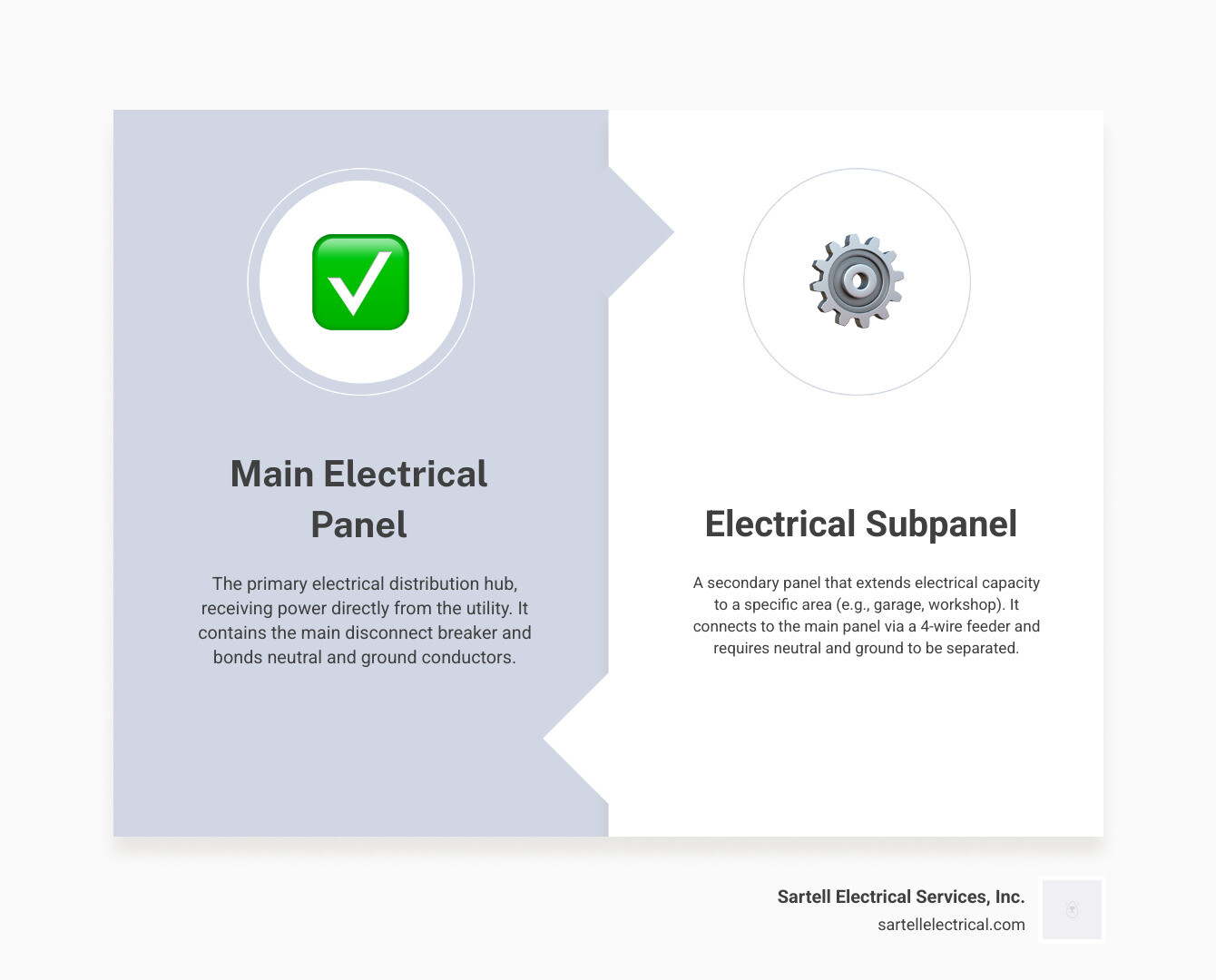
60 amp electrical sub panel is an extension of your main electrical panel, designed to bring power to a specific area. It redistributes power from your existing supply, not increase the total power from the utility. Think of it as a mini-dispatch center for electricity in a remote part of your property.
This setup allows for efficient circuit distribution. Instead of running many individual wires from the main panel, you run one larger feeder cable to the subpanel and branch out from there. This shortens wire runs, organizes circuits, simplifies troubleshooting, and improves safety by centralizing control for that area.
When considering a
60 amp electrical sub panel, several key specifications come into play:
- Voltage: Most residential subpanels, including 60 amp models, operate at 120/240 volts. This allows you to power both standard 120V outlets and 240V appliances.
- Amperage: The "60 amp" name refers to the maximum current it can safely handle, determined by the feeder breaker in your main panel.
- Spaces vs. Circuits: A panel with "12 spaces, 24 circuits maximum" has 12 physical slots but can hold up to 24 circuits using tandem (half-size) breakers. Many 60 amp subpanels offer 20 circuits, providing ample flexibility.
- Main Lug vs. Main Breaker: "Main lug" panels connect directly to feeder wires, with overcurrent protection coming from the main panel's breaker. "Main breaker" panels have an integrated breaker that acts as a local disconnect. For a 60 amp subpanel, a main lug panel is common.
The advantages of a
60 amp electrical sub panel are clear: convenience, reduced voltage drop, easier power isolation, and capacity expansion without a full service upgrade, which saves costs.
However, a 60 amp subpanel has limitations. The
total simultaneous load must not exceed 60 amps. This makes careful load calculations essential to prevent overloads. For future-proofing against high-draw appliances like EV chargers, a 60 amp subpanel may not be the best long-term solution.
When is a 60 Amp Subpanel Recommended?
A
60 amp electrical sub panel is ideal for extending capacity to areas without extremely heavy loads. We often recommend them for:
- Detached Garages: A classic application. It can power lights, outlets, garage door openers, and a 30 amp 240V receptacle for a heater or small welder. A 60 amp subpanel is often sufficient for a one-car garage with four 20 amp circuits and a central vacuum.
- Workshops: For hobbyists or small home workshops, a 60 amp subpanel can handle various power tools, lighting, and general-purpose outlets.
- Basement Finishing: A subpanel can provide dedicated circuits for lighting, receptacles, a home office, or an entertainment area in a new living space.
- Small Home Additions: For modest expansions without heavy appliances, a 60 amp subpanel is an efficient way to distribute power.
- Powering Specific Areas: When your main panel is full, moving 7 to 10 lightly loaded circuits to a 60 amp subpanel can be a cost-effective solution.
For more information on how we can help with your residential electrical needs, visit our guide on
residential electrical services.
Common Circuits and Loads
A
60 amp electrical sub panel typically hosts a mix of circuits:
- General Lighting Circuits: Usually 15A circuits for overhead lights and general-use receptacles.
- 15A Receptacle Circuits: For standard wall outlets. Our research suggests ten 15A 1P circuits can be supplied by a 60A 2P feeder.
- 20A Appliance Circuits: For kitchen counters, bathrooms, laundry rooms, or dedicated workshop tools. A garage subpanel might have four 20 amp circuits for receptacles and a central vac.
- Dedicated 240V Circuits: A 60 amp subpanel can support one or two 240V circuits for equipment like a 30 amp 240V heater, an air compressor, or a small water heater.
- Power Tools: Dedicated 20A circuits are common for stationary tools like table saws or dust collection systems.
- Small Heaters: Smaller 120V electric heaters can be accommodated on 15A or 20A circuits.
While a
60 amp electrical sub panel can host many circuits, the total simultaneous demand must not exceed its 60 amp capacity. For details on installing dedicated circuits, check out our page on
dedicated circuit installation cost.
Is 60 Amps Sufficient for Your Needs?
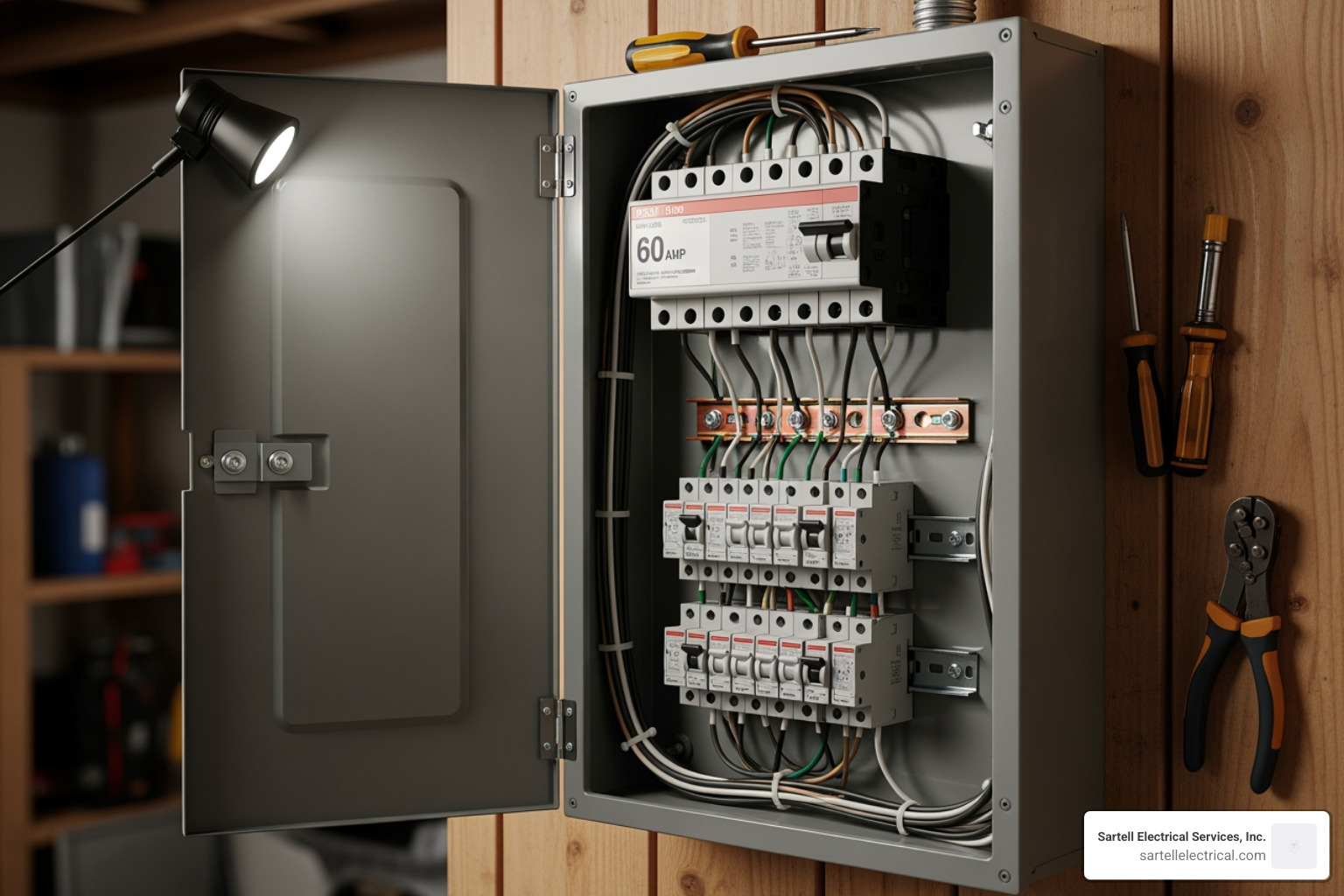
Determining if a
60 amp electrical sub panel is sufficient is the most critical step in planning. It requires a thorough load calculation—an essential practice for safety, preventing tripped breakers, and complying with the National Electrical Code (NEC).
A load calculation evaluates the total electrical demand of all planned circuits, from lights to power tools. The NEC provides guidelines for this, distinguishing between continuous loads (running 3+ hours) and non-continuous loads. Continuous loads require special consideration, with breakers typically sized at 125% of the load to adhere to the 80% rule.
How to Determine Your Power Requirements
Calculating your total wattage and converting it to amperage is the key to proper subpanel sizing. Here's how we approach it:
- Appliance Nameplate Ratings: For fixed appliances like water heaters or large tools, the nameplate provides the most accurate wattage or amperage.
- General Lighting Load: For general lighting and receptacles, the NEC allows calculation based on square footage (e.g., 3 volt-amperes (VA) per square foot).
- Small Appliance Branch Circuits: The NEC typically assigns 1500 VA per kitchen or small appliance circuit.
- Zero Load Circuits: Some circuits, like outside or bathroom receptacles, may have a load value of zero in certain calculations if not expected to contribute to continuous demand.
Example Load Calculation (Simplified):
For a small workshop with a
60 amp electrical sub panel:
- Lighting: 500 sq ft x 3 VA/sq ft = 1500 VA (approx. 12.5 amps @ 120V)
- General Receptacles: Two 20A circuits for hand tools (non-continuous).
- Dedicated 240V Heater: 4500W @ 240V = 18.75 amps (continuous, so 18.75A * 1.25 = 23.44A for breaker sizing).
- Small Welder: 240V, 30A (intermittent use).
Summing these and applying diversity factors is a complex task best left to licensed electricians who understand NEC Article 220.
To dive deeper into your home's overall electrical capacity, we recommend our comprehensive
residential electrical capacity guide.
The 60 Amp Electrical Sub Panel vs. a 100 Amp Subpanel
The choice between a
60 amp electrical sub panel and a 100 amp subpanel often comes down to cost, current needs, and future plans. A 100 amp subpanel offers significantly more headroom.
Cost Comparison:
- Panel Cost: The cost difference between 60 amp and 100 amp panel boxes is often minimal.
- Wire Size Differences: This is a major cost factor. A 60 amp subpanel uses #6 AWG copper or #4 AWG aluminum, while a 100 amp subpanel needs larger, more expensive #4 AWG copper or #2 AWG aluminum.
- Breaker Cost: The price for two-pole breakers above 60 amps is often negligible, making a 100 amp feeder breaker a cost-effective choice for future capacity.
Future Capacity:
This is the most important factor. A 60 amp subpanel leaves little room for growth. If you might add high-draw items, a 100 amp panel is a better investment.
- EV Charging Considerations: EV chargers can draw 30-50 amps. A 60 amp subpanel could support a smaller charger but would consume most of the panel's capacity.
- Hot Tub Power Needs: Hot tubs often require 30-60 amp dedicated circuits. A 60 amp subpanel would be fully used by a hot tub alone, making a 100 amp panel more practical.
We often advise clients in Massachusetts that if future needs like EV charging or a hot tub are a possibility, investing in a 100 amp subpanel upfront is a wise decision that saves money on future upgrades.
For a broader understanding of electrical panel upgrades and their associated costs, explore our
electrical panel upgrade cost guide.
Installation and Safety Essentials
Installing a
60 amp electrical sub panel is a complex project that demands precision and adherence to safety protocols and local codes. We always recommend hiring a licensed electrician for this work to ensure it's done correctly and safely.
The process begins at your main panel, where a 60 amp double-pole feeder breaker is installed. This breaker protects the feeder cable and the subpanel.
Next, a 4-wire feeder cable is run from the new breaker to the subpanel location. This cable consists of:
- Two hot wires (black and red)
- One neutral wire (white)
- One ground wire (bare copper or green)
Feeder Wire Sizing is paramount. For a 60 amp subpanel, NEC guidelines in Massachusetts generally recommend #6 AWG copper or #4 AWG aluminum conductors.
Voltage Drop is a critical factor, especially for long runs. The longer the distance, the more voltage can drop, affecting equipment performance. For runs over 100 feet, you may need to upsize the wire. For instance, a 150-foot run for a 60 amp subpanel might require #4 copper or #2 aluminum. Always consult NEC ampacity tables and consider the panel's temperature rating (e.g., 75°C). When in doubt, size up!
For many
long wire runs, using
conduit (like PVC) is best practice. It protects the wires (THHN/THWN) and allows for easier future upgrades. For a 60 amp subpanel at 100ft, we'd typically suggest #4 copper wires and an #8 ground wire in the conduit.
For a comprehensive review of electrical safety, including best practices for installations, refer to our
electrical safety checks guide.
Wiring a 60 Amp Electrical Sub Panel Safely
Wiring the
60 amp electrical sub panel itself requires meticulous attention to detail.
- Feeder Breaker Installation: The 60 amp double-pole feeder breaker is installed in two adjacent slots in your main panel.
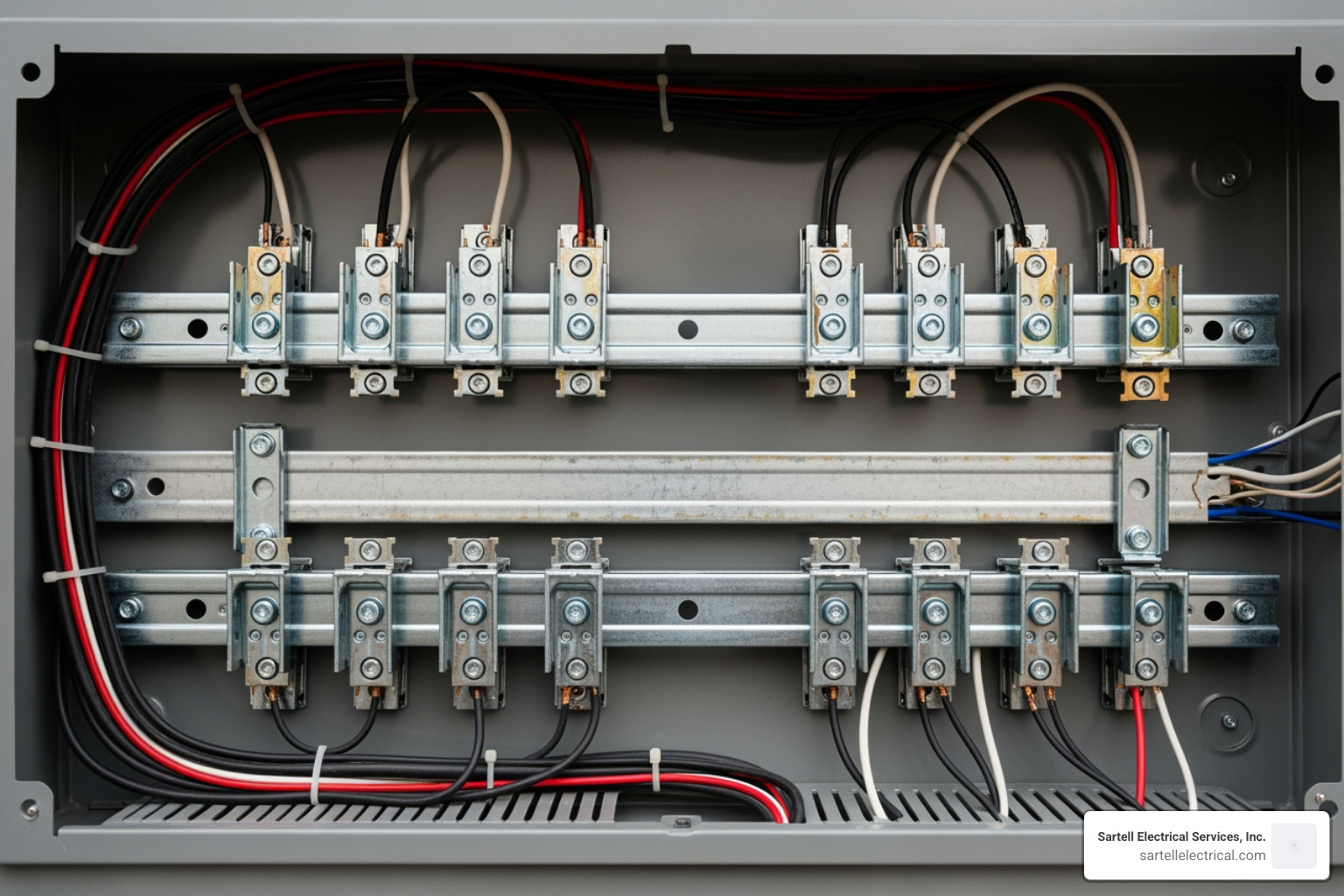
- Connecting to Main Lugs: The two hot wires connect to the subpanel's main lugs. The neutral wire connects to the neutral bus bar, and the ground wire connects to the ground bus bar.
- Wire Type and Size: As mentioned, we typically use #6 AWG copper or #4 AWG aluminum conductors for a 60 amp subpanel.
The goal is absolute safety, as improper wiring can lead to severe hazards.
Grounding, Bonding, and Code Compliance
Proper grounding and bonding are non-negotiable for safety and where many DIY attempts fail.
- Separating Neutral and Ground Bars: In a subpanel, the neutral and ground buses must be isolated. The neutral bar "floats" (is not connected to the panel's metal enclosure), while the ground bar is connected to it. This separation is critical for preventing dangerous ground fault currents.
- Bonding Screw Removal: Subpanels often come with a bonding screw that connects the neutral bar to the enclosure. This screw must be removed in a subpanel installation.
- Ground Rods for Detached Structures: A subpanel in a detached structure (like a garage) requires its own grounding electrode system, meaning one or two ground rods installed at the structure, in addition to the ground wire from the main panel.
- National Electrical Code (NEC) & Massachusetts Electrical Codes: All subpanel installations in Massachusetts must comply with the National Electrical Code (NEC), which sets the national standard for safe electrical practices. Massachusetts also has its own state-specific amendments, including requirements for GFCI protection and detailed wiring regulations. A permit is legally required for subpanel installations and must be completed within 12 months of issuance. The final inspection ensures the work meets these stringent safety standards.
Implementing these complex code requirements is a job for a licensed professional. To learn more about the specific electrical codes in our state, please read our
Property Owner's Guide To Electrical Codes in MA.
Frequently Asked Questions about 60 Amp Subpanels
We often hear similar questions from Massachusetts homeowners and business owners considering a
60 amp electrical sub panel. Let's tackle some of the most common ones.
How many breakers can you put in a 60 amp subpanel?
The number of breakers depends on the panel's physical "spaces" and "circuits" rating, not the 60 amp feeder. A 60 amp subpanel might have 12 spaces, allowing up to 24 circuits with tandem breakers. The true limit is the total electrical load. You could have 24 breakers, but if they draw too much current simultaneously, the 60 amp feeder breaker will trip. It's about the calculated load, not just counting breakers.
Can a 60 amp subpanel power a hot tub or EV charger?
It depends on a careful load calculation. Both are significant electrical loads:
- Hot Tubs: Many require a 30 to 60 amp 240V circuit. If your hot tub needs 60 amps, it would consume the subpanel's entire capacity, leaving no room for other circuits. A larger subpanel is usually more appropriate.
- EV Chargers: Level 2 chargers typically draw 16 to 48 amps. A 60 amp subpanel could power a 30A or 40A charger, but this would use a large portion of its capacity, potentially overloading it if other circuits are in use.
For both, we strongly recommend a detailed load calculation. A 100 amp subpanel often provides the necessary headroom and flexibility.
What is the typical cost to install a 60 amp subpanel?
The cost to install a
60 amp electrical sub panel in Massachusetts varies based on factors like:
- Labor Rates
- Distance and Wire Length: Longer runs increase material and labor costs.
- Panel Features: Main lug panels are less expensive than those with main breakers.
- Permits and Inspections: These are mandatory costs.
- Installation Complexity: Trenching or running wire through finished walls adds to the cost.
While a site assessment is needed for an exact figure, a professional installation typically ranges from
$500 to $1,500. This broad estimate usually includes the subpanel, feeder breaker, cable, grounding components, and labor. We always provide a detailed quote based on your specific project.
Conclusion
The
60 amp electrical sub panel is a versatile addition for Massachusetts homes and businesses, efficiently expanding capacity to areas like detached garages, workshops, or basements. It improves circuit organization, shortens wire runs, and can prevent a full main panel upgrade.
However, a successful, safe installation hinges on two critical areas: a precise load calculation and strict adherence to electrical codes. Accurately assessing your current and future power needs is crucial to ensure 60 amps is sufficient. Underestimating can lead to tripped breakers, safety hazards, and costly re-work.
At Sartell Electrical Services, we prioritize safety above all else. Our licensed electricians in Massachusetts are experts in the National Electrical Code and all local amendments. We understand that installing a
60 amp electrical sub panel is about integrating a safe, reliable, and compliant solution into your property.
Knowing when to call a professional is paramount for complex projects involving load calculations, grounding, and code compliance. For homeowners and business owners across Massachusetts, from Boston to Reading, Sartell Electrical Services provides expert installation and peace of mind.
Ready to improve your electrical system or need a professional assessment? Get a quote for your
main electrical panel upgrade or any subpanel project today.