
When Your Home's Electrical Panel Needs to Go
Replace main electrical panel is one of the most important electrical projects a homeowner can undertake — and one of the most misunderstood.
Here's a quick snapshot of what you need to know:
| Question | Quick Answer |
|---|---|
| When should you replace it? | Panel is 25–40+ years old, frequently trips, shows burn marks, or has a known defective brand |
| What does it cost? | Typically $1,500–$9,000+ depending on amperage, location, and scope |
| How long does it take? | Installation day is 6–8 hours; full process with permits can take 4–14 weeks |
| Do you need a permit? | Yes, always |
| Can you DIY it? | No — hire a licensed electrician |
| What size do you need? | Most homes need 200-amp service; older homes often have 100-amp panels |
Your electrical panel is the nerve center of your home. Every light, outlet, appliance, and circuit runs through it. When it starts to fail — or simply can't keep up with modern demands like EV chargers, heat pumps, or solar — the consequences range from flickering lights to house fires.
The challenge is knowing when to act, what it will cost, and how the process actually works from start to finish. That's exactly what this guide covers.
I'm Ed Sartell, President of Sartell Electrical Services, Inc., and I've been helping Massachusetts homeowners safely replace main electrical panel systems since 1985. Over nearly four decades in the trade, I've seen every panel type, every code change, and every mistake a homeowner can make — and I'm here to help you avoid them.
Simple Replace main electrical panel glossary:
Signs and Timing for Replacement
If you live in an older Massachusetts home—perhaps in a historic area like Reading, Andover, or Salem—your electrical system might be a relic of a different era. While a well-maintained Residential Main Electrical Panel can last up to 40 years, many reach the end of their reliable service life between 25 and 30 years.
How do you know if yours is a "ticking time bomb" or just an old friend? We look for specific red flags. Frequent breaker tripping is the most common sign; it means your panel is struggling to handle the load you’re putting on it. Flickering lights when the microwave or AC kicks on aren't just "character"—they're a sign of voltage drops.
Comparing the Old and the New
Many older homes in the Greater Boston area still have fuse boxes. While fuses aren't inherently "evil," they are outdated.
| Feature | Fuse Box (Old Standard) | Circuit Breaker (Modern Standard) |
|---|---|---|
| Mechanism | Wire melts to stop current | Switch flips to stop current |
| Resets | Must replace the fuse | Just flip the switch back |
| Safety | High risk of "over-fusing" (fire hazard) | Internal safety mechanisms prevent overloads |
| Capacity | Usually 60–100 Amps | 100–400 Amps |
Dangerous Brands to Watch Out For
There are three names that keep electricians up at night: Federal Pacific (Stab-Lok), Zinsco, and Challenger. These panels have documented design flaws. For instance, Federal Pacific breakers are notorious for failing to trip during an overload, which leads to wires melting and fires starting inside your walls. If you see these names on your panel door, you should replace main electrical panel units immediately.
Other signs of trouble include:
- Burning Smells or Scorch Marks: This is an active emergency. It means something is arcing or melting.
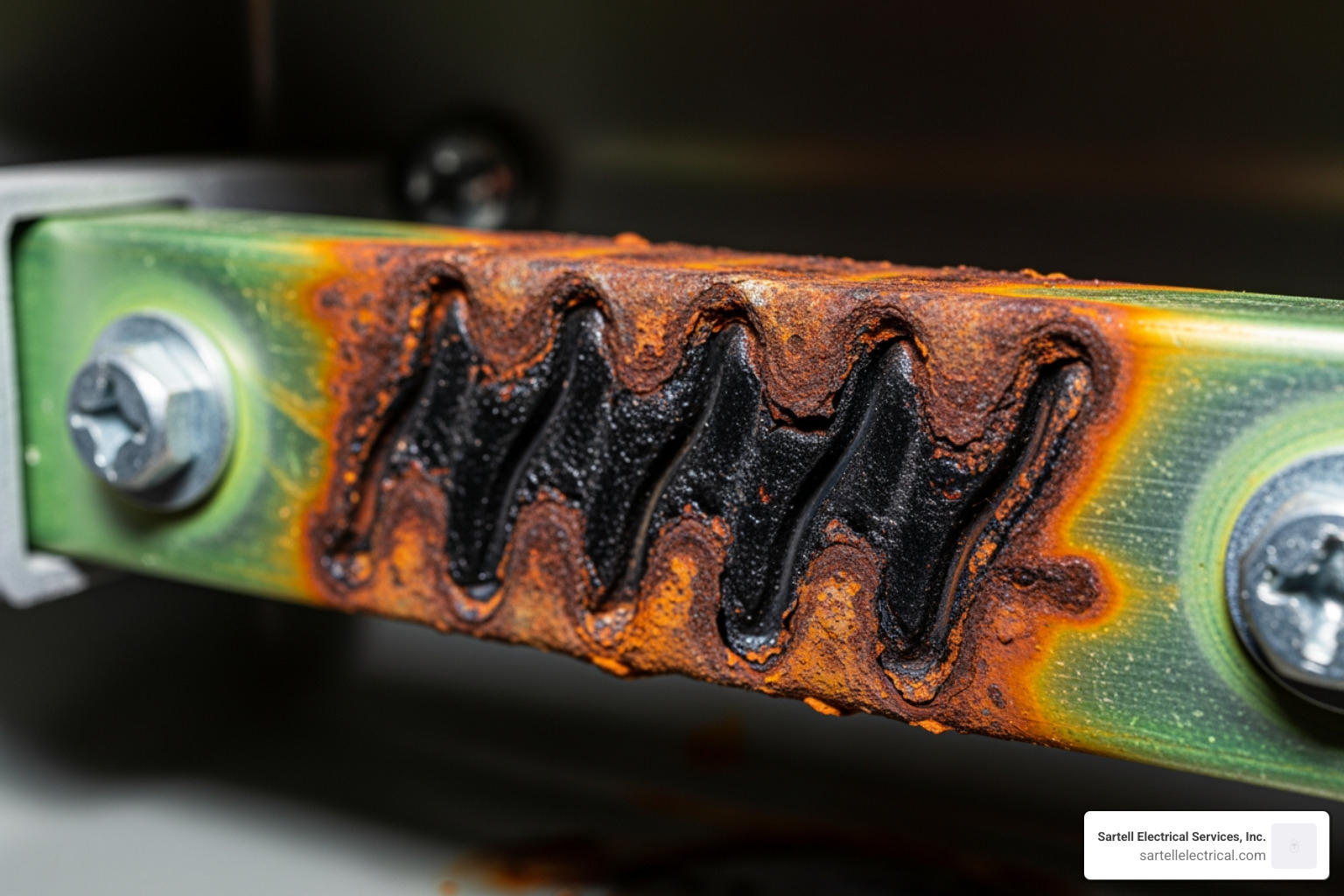
- Corrosion and Rust: In our humid Massachusetts climate, basement panels often suffer from moisture damage.
- Buzzing or Crackling: These sounds indicate loose connections or failing components.
The Cost to Replace Main Electrical Panel Systems
Let's talk numbers. We know that "it depends" is a frustrating answer, but in electrical work, it’s the truth. To Replace Main Electrical Panel equipment in Massachusetts, you are looking at a range that typically falls between $1,500 and $9,000.
What Drives the Price?
- Amperage Rating: Swapping a 100-amp panel for another 100-amp panel is much cheaper than a 200 Amp Service Upgrade.
- Labor Hours: A simple swap might take 6 hours, but if we have to relocate the panel or rewire old, brittle circuits, labor can stretch to 20 or 30 hours.
- Permit Fees: Every town from Billerica to Weymouth has its own fee structure for electrical permits.
- Betterment Work: This is a big one. Sometimes, the utility company (like National Grid or Eversource) requires us to upgrade the "service entrance"—the pipe and wires on the outside of your house—to meet modern safety codes. This "betterment" can add $500 to $2,500 to the bill.
In high-cost areas like Santa Clara County, CA, prices can soar to $16,000 for complex upgrades. While Massachusetts is slightly more conservative, the complexity of our historic homes often requires more intensive labor. Learn more about technical Q&A for electrical work to see how pros handle these complex variables.
Capacity Upgrades for Modern Loads
Thirty years ago, a 100-amp panel was plenty. You had a TV, a fridge, and maybe a toaster. Today, we are asking our homes to do much more. Between home offices, high-efficiency AC units, and the big one—electric vehicles—the old 100-amp standard is fading fast.
Why 200 Amps is the New Gold Standard
Most modern homes require a 200-amp panel. If you are planning on adding a Level 2 EV charger, you’ll need about 40 to 50 amps of dedicated capacity just for that car. Add in a heat pump or an induction stove, and a 100-amp panel is officially maxed out.
NEC 2020 and Outside Disconnects
The National Electrical Code (NEC) 2020 update introduced a major change: the requirement for an outdoor emergency disconnect. This allows firefighters to cut power to your home from the outside without having to enter a smoke-filled basement. Often, this means we install a "meter-main combo" on the exterior of your home. This change is great for safety, but it does mean that a simple "panel swap" often involves exterior work too.
The Installation Process and Safety
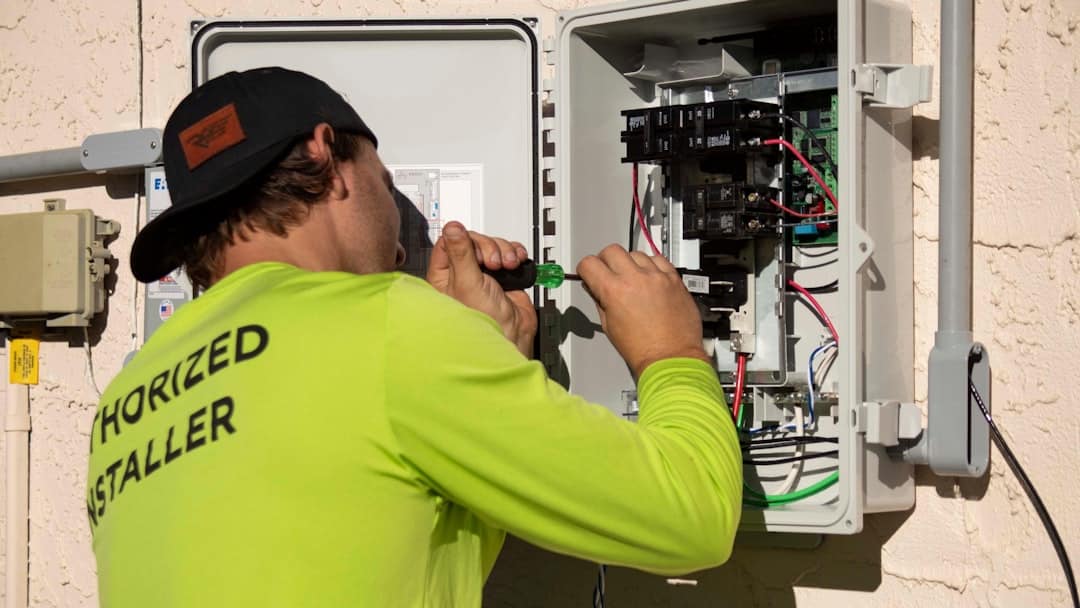
When we arrive to replace main electrical panel components, we aren't just swapping a box; we are coordinating a mini-symphony between our crew, the town inspector, and the utility company.
The "One-Trip" Strategy
To minimize your downtime, we aim for a one-trip strategy. We do as much prep work as possible before the power goes out. This includes labeling every single circuit (so you don't end up with the "Kitchen" breaker actually controlling the "Bathroom") and mounting the new panel enclosure if space permits.
The utility company will eventually arrive to pull the meter, physically disconnecting your home from the grid. From that moment, the clock is ticking. We work quickly to strip the old wires, mount the new interior, and land the circuits.
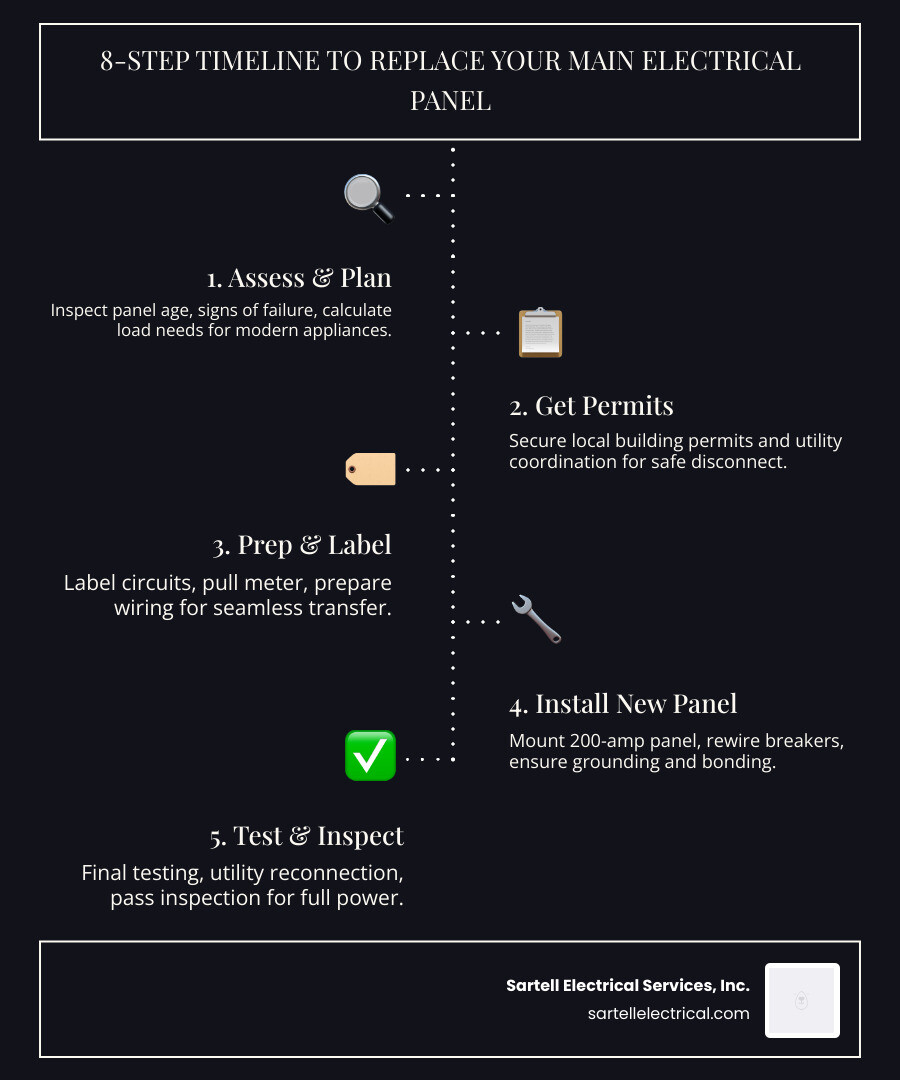
Step-by-Step to Replace Main Electrical Panel Components
- Permit Acquisition: We never start without the town's blessing.
- Circuit Labeling: We map your home so your new House Breaker Panel Wiring is perfectly organized.
- Utility Disconnect: The power goes out (usually for 6–8 hours).
- The Swap: We remove the old "guts" and install the new copper busbars and breakers.
- Grounding and Bonding: We ensure the system is safely tied to your home's grounding rods and water pipes.
- Testing and Inspection: We test every circuit before the inspector signs off and the Electric Meter Upgrade is finalized.
Why You Should Not Replace Main Electrical Panel Units Yourself
We love a good DIY project as much as anyone, but the main electrical panel is where we draw the line. Here is why:
- The "Live" Side: Even when you turn off the main breaker, the wires coming from the street are still "live." One slip with a screwdriver can cause an arc flash—an explosion of heat and light that can cause permanent injury or death.
- Insurance Risks: If you DIY your panel and your house later has a fire, your insurance company may deny the claim because the work wasn't done by a licensed pro with a permit. Check the Terms of service and safety acknowledgments for your local utility; they usually require a licensed signature for reconnection.
- Code Compliance: Massachusetts codes are strict. If your grounding isn't perfect or your wire gauge is off, you won't pass inspection, and you'll be stuck without power until a pro can come fix it.
Frequently Asked Questions about Panel Replacement
How long will my power be out during the swap?
Typically, your power will be out for 6 to 8 hours. We usually schedule the utility disconnect for early morning (around 8:00 AM) and aim to have the power back on by dinner time. We recommend keeping your fridge and freezer closed—they’ll stay cold for about 4 hours if left shut!
Does a panel upgrade require rewiring the whole house?
Not necessarily. In many cases, we can Home Electrical Panel Upgrade your system while keeping your existing branch wiring. However, if we find old "knob and tube" wiring or dangerous aluminum connections, we will recommend addressing those for safety. A panel is only as good as the wires it feeds.
Are there rebates available for upgrading to a 200-amp panel?
Yes! Thanks to federal initiatives like the Inflation Reduction Act, there are often tax credits available for "electrical load service center" upgrades, especially if you are also installing energy-efficient appliances or solar. Some local Massachusetts utility programs also offer incentives for "electrification" readiness.
Conclusion
Replacing your main electrical panel is an investment in your home’s future and your family’s safety. Whether you're in Reading, Newton, or anywhere in the Greater Boston area, having a modern, high-capacity system means you're ready for whatever the next 40 years of technology brings.
At Sartell Electrical Services, Inc., we’ve spent 30 years perfecting this process. We handle the permits, the utility coordination, and the heavy lifting so you can enjoy a home that’s safe and powerful. If you’re seeing the warning signs or just want to prepare for an EV charger, don't wait for a failure.
Ready to see what it takes for your specific home? Check out our Home Electrical Panel Upgrade Cost guide or give us a call. We're here to make sure your home's "heart" stays beating strong.