What Does a 100 Amp Panel Actually Cost in 2026?
100 amp panel price is a common question for homeowners and project managers weighing electrical upgrades. Here's a quick answer:
| Cost Type | Typical Price Range |
|---|---|
| Panel hardware only (budget) | $33 - $99 |
| Panel hardware only (mid-range) | $100 - $175 |
| Panel hardware only (premium) | $175 - $390+ |
| Professional installation (upgrade) | $850 - $1,150 |
| Professional installation (new service) | $1,200 - $1,600 |
| Subpanel installation (100 amp) | $400 - $1,750 |
The hardware itself is just one piece. Labor, permits ($100–$300), and any new wiring can push total project costs significantly higher.
Older homes — especially those still running on 60-amp or early 100-amp service — are the most common candidates for this type of work. If you're managing a renovation, addition, or facility upgrade, getting the panel spec right from the start saves time and money down the line.
I'm Ed Sartell, President of Sartell Electrical Services, and I've been working with 100 amp panel pricing and installations across Massachusetts since 1985. In that time, I've seen costs shift dramatically based on brand, configuration, and labor market — and I'll walk you through exactly what to expect today.
Simple 100 amp panel price word guide:
Understanding the 100 Amp Panel Price Range in 2026
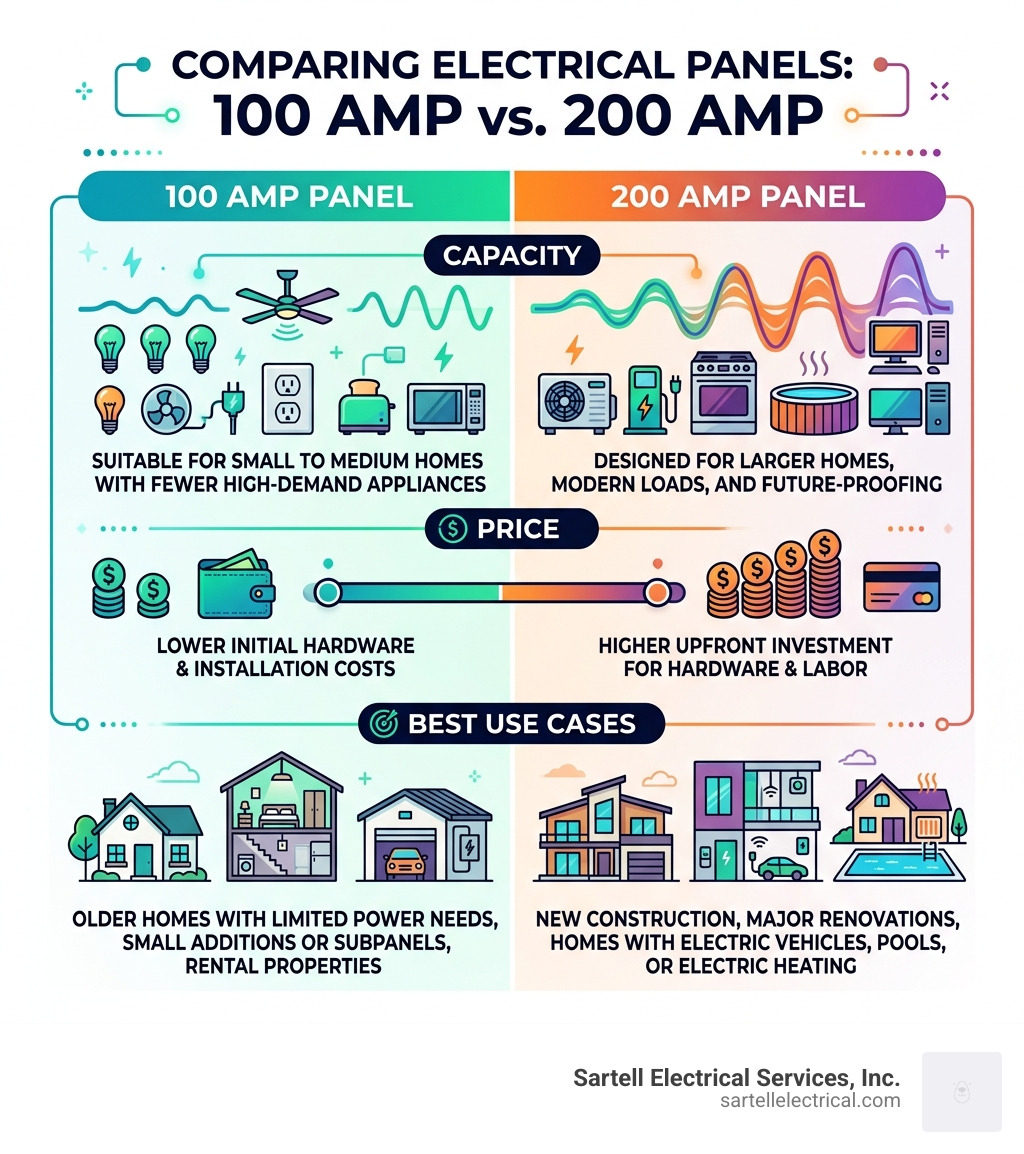
When we look at the 100 amp panel price in today's market, we have to distinguish between the box you buy at a hardware store and the final invoice for a fully installed, code-compliant system. In April 2026, the retail landscape for these panels is more varied than ever. You can find basic "main lug" panels for as little as $33.45, while sophisticated "main breaker" load centers with advanced technology can reach $170 to $230 at major retailers.
For those looking at a full residential upgrade, the home electrical panel upgrade cost typically falls between $850 and $1,600. This includes the panel, the main breaker, a set of branch breakers, and the labor required to swap out the old equipment. If you are starting from scratch—perhaps for a new workshop or a small accessory dwelling unit (ADU) in Middlesex County—the price reflects the complexity of the service entrance.
Retailers like The Home Depot offer a wide spectrum of choices. A budget-friendly Square D Homeline 6-space outdoor panel might only set you back $59.27, whereas a high-capacity 24-space indoor unit with a main breaker is closer to $108.99. The "sticker price" is often just the beginning of your investment.
Key Factors Influencing Hardware Costs
Why does one 100-amp box cost three times as much as another? It usually comes down to the materials inside and the protective shell outside.
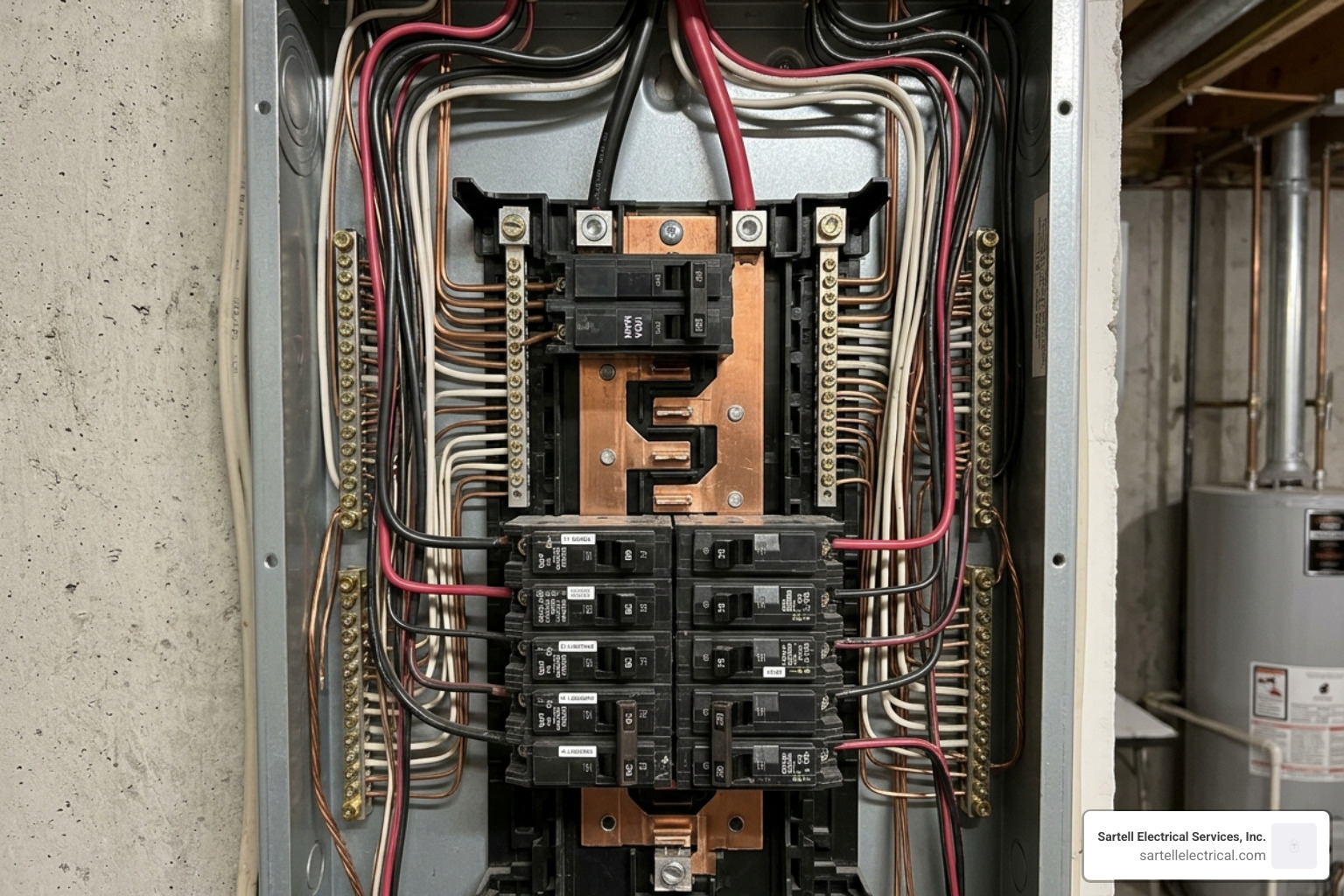
One major price driver is the bus bar material. Panels with copper bus bars are generally considered premium due to copper's superior conductivity and resistance to corrosion, which is particularly important in our coastal Massachusetts environments like Salem or Gloucester. Aluminum bus bars are more common in budget-friendly models and work perfectly well for most residential applications, but they do come at a lower price point.
NEMA ratings also play a huge role. An indoor-rated panel (NEMA 1) is a simple steel box. However, an outdoor-rated panel (NEMA 3R) must be rainproof and ice-resistant. This extra engineering adds to the cost. For example, a Square D 6-space indoor panel might be around $33, while its outdoor equivalent jumps to nearly $60. Selecting the right electrical panel box for your home requires balancing these environmental needs with your budget.
How Circuit Count Affects Your 100 Amp Panel Price
The number of "spaces" and "circuits" is perhaps the most visible factor in the 100 amp panel price. In the electrical world, a "space" is the physical slot where a breaker sits. A "circuit" refers to how many individual lines the panel can handle.
- Small Capacity (6-12 spaces): These are often used as subpanels for garages or sheds. Prices usually range from $33 to $80.
- Medium Capacity (20 spaces / 40 circuits): A standard choice for small homes or apartments, typically costing between $98 and $136.
- High Capacity (24-30 spaces): These offer maximum flexibility for future expansion. Prices for these larger 100-amp units often exceed $150.
Using tandem breakers can effectively double your circuit count without increasing the physical size of the panel, but you must ensure your panel is rated for them. If you're wondering about adding a subpanel to a limited system, you might ask, can a 60 amp breaker power a 100 amp subpanel? The answer involves specific load calculations that we handle during our site visits.
Main Breaker vs. Main Lug Price Variance
The technical configuration of the panel significantly impacts the price.
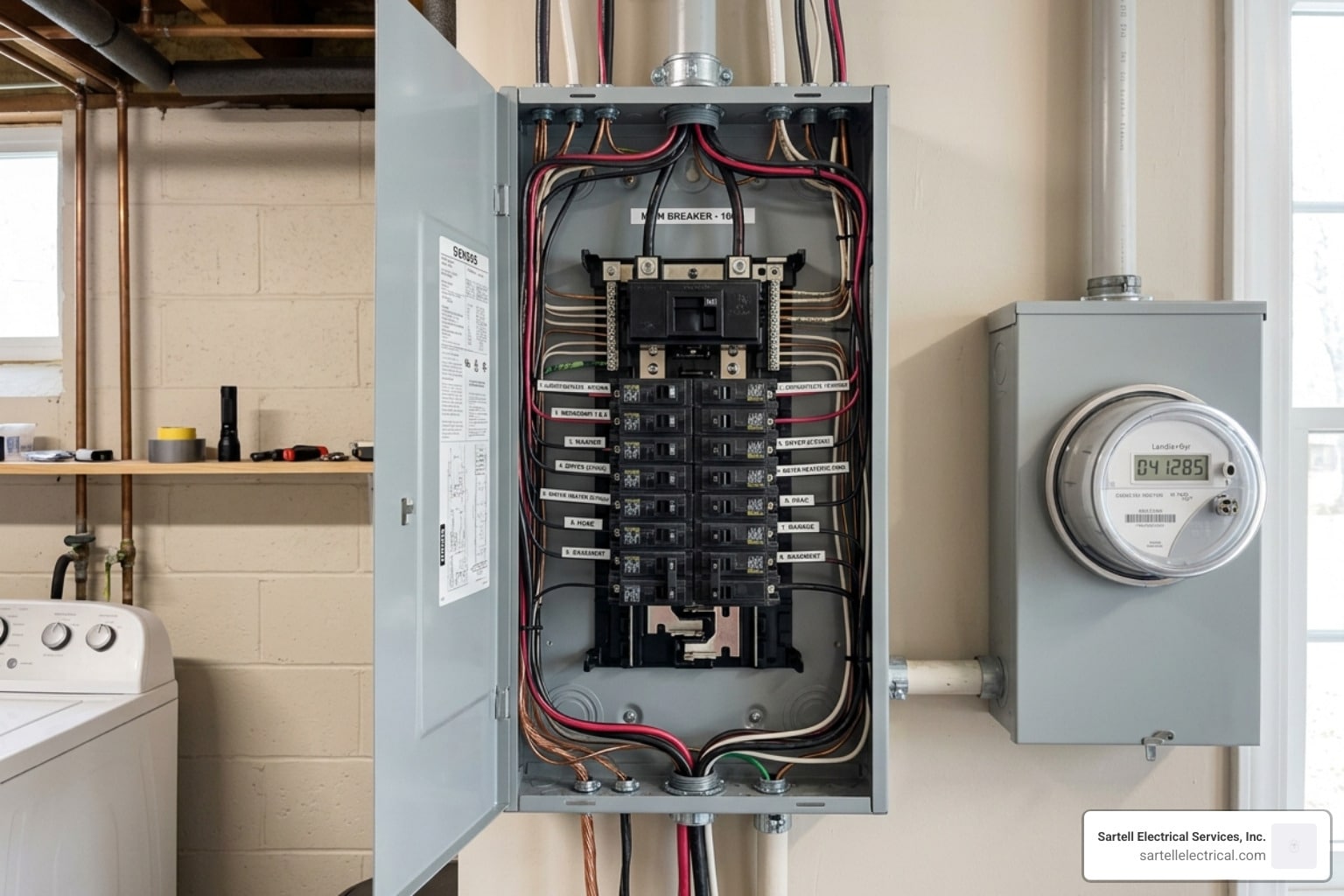
- Main Breaker Panels: These include a large central switch that can shut off power to the entire panel. These are required for your home's primary service entrance. Because they include the expensive 100-amp main breaker, they usually cost between $100 and $200.
- Main Lug Panels: These do not have a main shut-off switch. They rely on a breaker located in a different "upstream" panel. These are almost exclusively used as subpanels. Because they lack the main disconnect hardware, they are much cheaper, often priced between $35 and $90.
For instance, the Square D QO 100 Amp 8-Space 16-Circuit Outdoor Main Lug Load Center is a popular choice for outdoor sub-installations, priced around $95.37.
Comparing Top Brands and Retailer Options
In the Massachusetts market, we primarily see four or five major brands. Each has its own pricing strategy and proprietary breaker design.
- Square D (Homeline & QO): These are the market leaders. The Homeline series is the "value" brand, while the QO series is the "premium" line, often featuring the famous "vis-trip" indicator. A QO panel will almost always carry a higher 100 amp panel price than a Homeline equivalent.
- Siemens: Known for their versatile load centers, Siemens offers competitive pricing, especially for their "PN" series which features plug-on neutral technology. Prices for Siemens 100-amp units typically range from $60 to $175.
- Leviton: A newer player in the panel market, Leviton offers a very modern, white enclosure that appeals to homeowners who want a "tech" look. Their 100-amp main breaker panels are often priced toward the higher end, around $148.
- Eaton: Their BR and CH series are reliable workhorses. Eaton panels are often priced similarly to Siemens and Square D Homeline.
Retailers like Walmart and eBay have also entered the fray. On eBay, you might find a Square D HOM2448M100PCVP for about $108.99, while Walmart often lists the HOM2040M100PCVP for $136.37.
Value Packs and the Total 100 Amp Panel Price
One of the smartest ways to save on your 100 amp panel price is by purchasing a "Value Pack" or "Contractor Kit." These bundles include the load center itself plus a selection of the most commonly used branch breakers (usually a few 15-amp and 20-amp singles).
Buying these separately can add $50 to $100 to your bill, but a value pack often includes them for just a $20–$30 premium over the bare box. For example, a Square D Homeline 20-space value pack is often priced under $140, providing everything needed for a standard small-home installation.
When deciding on these options, you should also weigh the long-term benefits of "Plug-On Neutral" technology. This design eliminates the need for pigtail wires on AFCI and GFCI breakers, leading to a cleaner installation and potentially lower labor costs because the job goes faster. If you're on the fence, check out our guide on should you replace your electrical panel to see if a value pack upgrade makes sense for you.
Frequently Asked Questions about 100 Amp Panel Price
What is the typical price for a 100 amp main breaker panel?
For just the hardware, you should expect to pay between $100 and $170. This includes the enclosure and the 100-amp main shut-off breaker. If you are hiring a professional for the full installation in the Greater Boston area, the total price—including labor, the panel, branch breakers, and permits—usually ranges from $850 to $1,150.
Are outdoor 100 amp panels more expensive than indoor models?
Yes, typically by about 30% to 50%. Outdoor panels require a NEMA 3R weather-resistant enclosure, specialized gaskets, and often a different paint finish to prevent rust. While an indoor 100-amp main lug panel might cost $35, the outdoor version of that same panel is often $60 or more.
Does the 100 amp panel price include the circuit breakers?
Usually, no. Standard retail listings are for the "load center" only. However, "Value Packs" do include a small assortment of breakers. A standard 15-amp breaker costs about $6–$8, but modern safety breakers like AFCI (Arc Fault) or GFCI (Ground Fault) can cost $50 to $70 each. In a full home renovation, the cost of the breakers can actually exceed the cost of the panel box itself!
Conclusion
Navigating the 100 amp panel price doesn't have to be a shocking experience. Whether you're looking for a budget-friendly main lug subpanel for a garage in Reading or a premium Square D QO system for a home in Andover, there are options to fit every budget. By choosing value packs and the right brand for your needs, you can keep your hardware costs manageable while ensuring your home remains safe and up to code.
At Sartell Electrical Services, we’ve spent over 30 years helping neighbors across Massachusetts—from the North Shore to the South Shore—power their lives safely. We understand the local codes in cities like Cambridge, Newton, and Peabody, and we know exactly which panels stand up best to our New England weather.
If you're ready to upgrade your service or need a professional eye to evaluate your current system, we're here to help. Contact Sartell Electrical Services for expert electrical service and let us provide you with a clear, honest quote for your next project. We handle everything from the permits to the final inspection, so you can rest easy knowing the job is done right.