Why Electrical Safety is the Foundation of Your Business Operations
Periodic electrical inspection commercial premises is a systematic safety check of your building's electrical installations, typically conducted every 1-5 years depending on property type, to ensure systems remain safe and compliant. Here's what you need to know:
Key Facts About Periodic Electrical Inspections:
- What it is: A thorough assessment of fixed electrical installations by a qualified electrician, resulting in an Electrical Installation Condition Report (EICR)
- Why it matters: Prevents electrical fires, ensures legal compliance, protects occupants, and avoids fines up to £30,000
- How often: Offices and retail (every 5 years), industrial facilities (every 3 years), high-risk environments like petrol stations (annually)
- What's checked: Wiring, circuits, distribution boards, earthing, protective devices, and overall system condition
- The outcome: A report rating your installation as satisfactory or unsatisfactory, with specific codes (C1, C2, C3, FI) indicating required actions
What keeps your business running? Beyond your products or services, it's the electrical systems powering every light, computer, and piece of equipment. As these installations age, they don't just become inefficient—they become dangerous. Electrical fires and equipment failures often stem from invisible problems that build over time. A flickering light or a tripping breaker isn't just an annoyance; it's a warning sign.
Fortunately, most electrical hazards are preventable through regular inspection and maintenance. A periodic electrical inspection gives you a clear picture of your system's health, identifies risks before they cause harm, and provides a roadmap for safety and compliance.
This guide covers why inspections are crucial, what the process involves, how often you need one, and how to choose the right professional.
I'm Ed Sartell, President of Sartell Electrical Services. Since 1985, I've helped Massachusetts businesses conduct these assessments to maintain safe, code-compliant facilities. Let me share what I've learned to help you protect your property, people, and bottom line.
Relevant articles related to
periodic electrical inspection commercial premises:
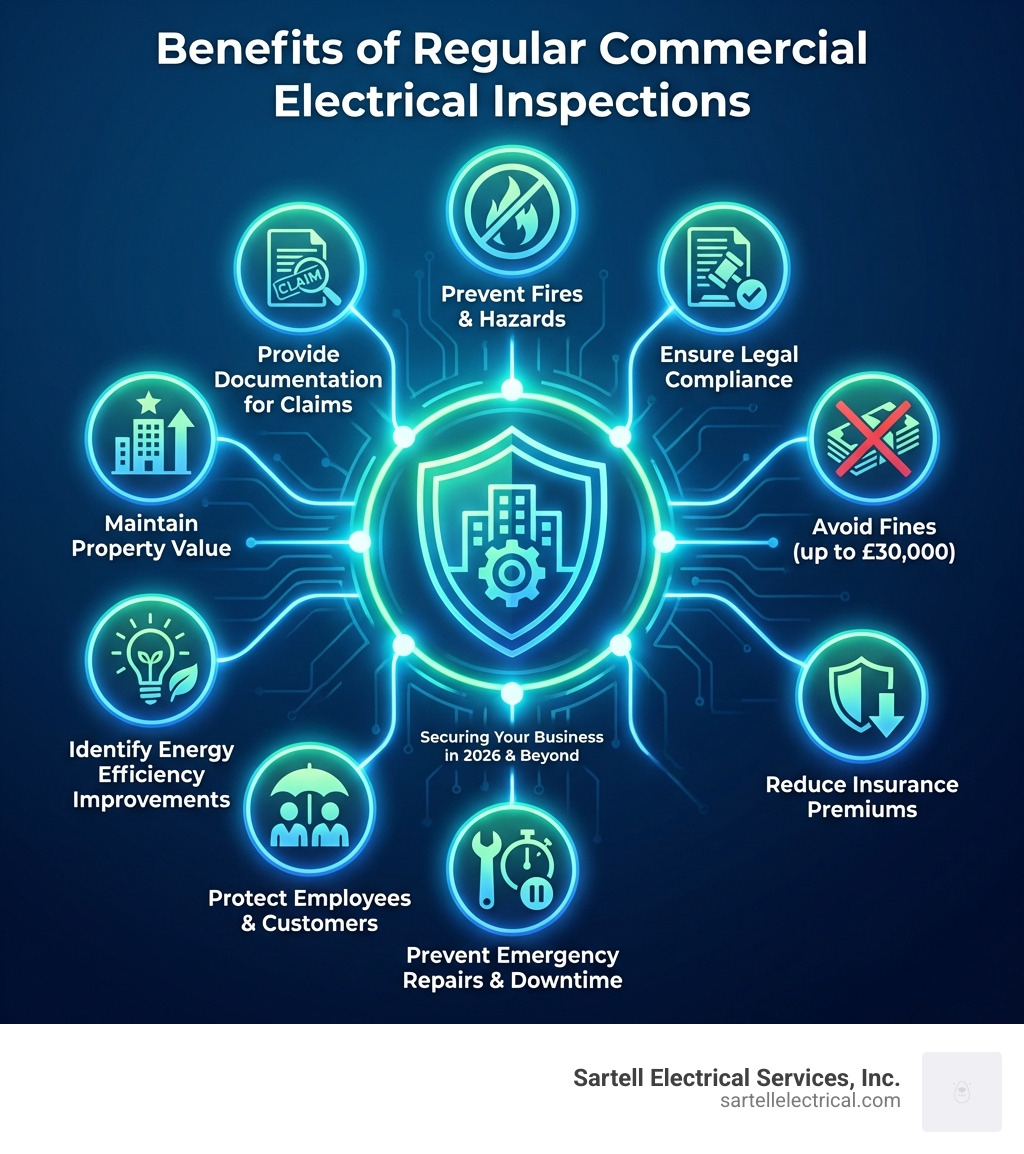
Why Regular Electrical Inspections are Crucial for Your Business
Electrical systems are the lifelines of commercial operations, but they are subject to wear and tear. This natural degradation makes regular
periodic electrical inspection commercial premises a critical necessity. Ignoring these checks can lead to severe consequences for safety, legal standing, and financial health.
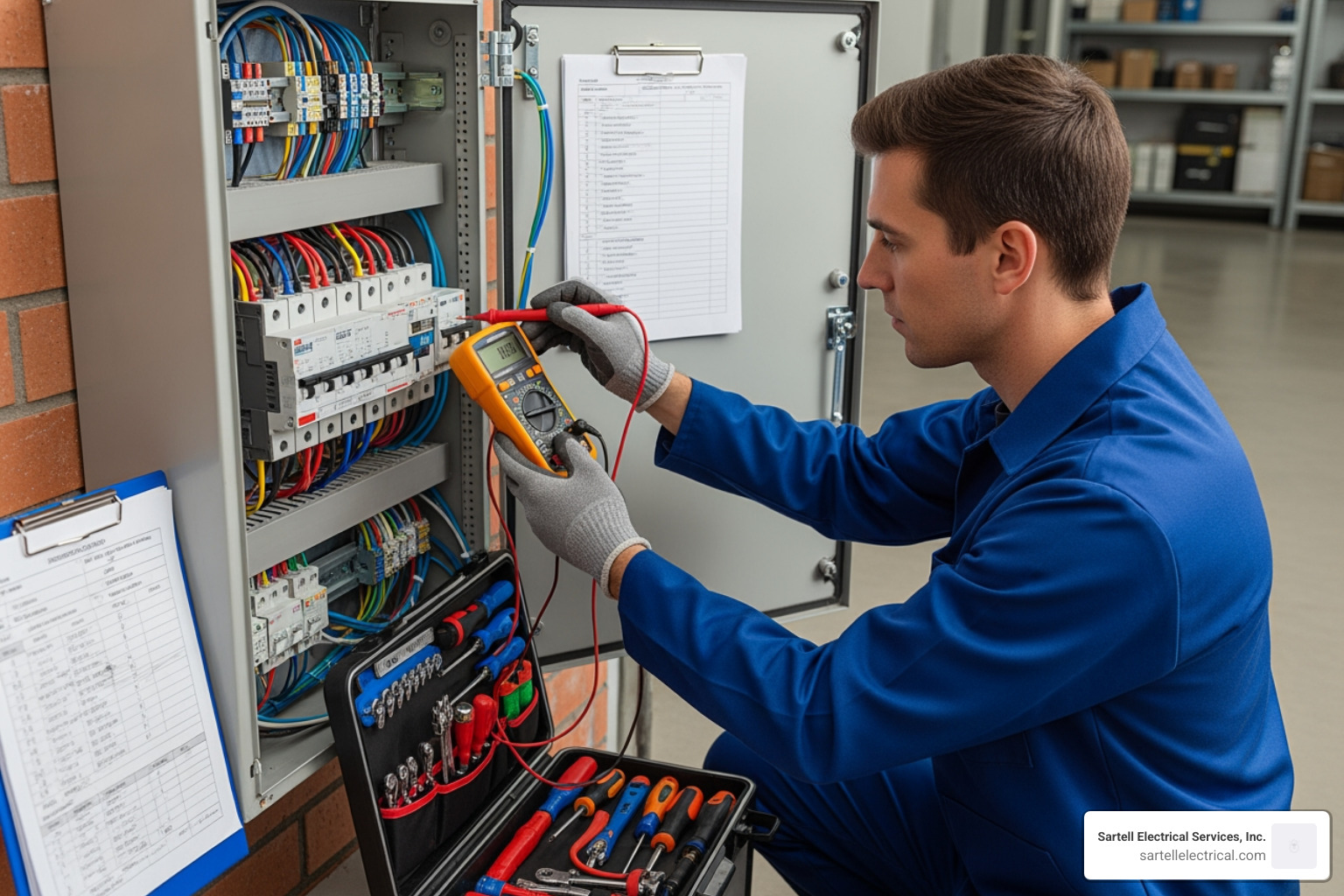
Ensuring Safety and Preventing Hazards
The primary reason for regular electrical inspections is safety. Faulty or aging electrical systems are a leading cause of workplace accidents and property damage.
Here's how a comprehensive inspection ensures safety:
- Preventing Electrical Fires: Inspections identify fire hazards like overloaded circuits, frayed wiring, and faulty connections before they escalate. We check for overheating, improper insulation, and other risks to your Massachusetts business.
- Avoiding Electric Shocks: We verify that safety mechanisms like grounding and protective devices are functioning correctly to prevent dangerous shocks from exposed wires or faulty equipment.
- Protecting People: Regular inspections fulfill your duty of care by proactively identifying and mitigating electrical dangers to employees and customers.
- Identifying Overloaded Circuits: An inspection pinpoints overloaded circuits in older installations that can't handle modern power demands, preventing overheating and system failures.
- Mitigating Arc Flash Incidents: Our electricians assess arc flash risks—dangerous energy releases that can cause severe injury—and recommend protective measures to keep personnel safe.
- Safeguarding Property and Assets: Inspections protect your building, equipment, and inventory. Preventing electrical faults extends machinery lifespan and avoids costly facility damage.
Maintaining Legal and Regulatory Compliance
Operating a business in Massachusetts means adhering to regulations designed to ensure safety.
Periodic electrical inspection commercial premises are fundamental to meeting these obligations.
- Duty of Care: Business owners have a legal duty to ensure electrical installations are safe and maintained.
- OSHA Regulations: OSHA (29 CFR 1910 Subpart S) requires employers to protect workers from electrical hazards, which necessitates regular system assessments and maintenance.
- National Electrical Code (NEC) and Massachusetts Amendments: Our inspections confirm your installations meet the National Electrical Code (NEC) and state-specific amendments, protecting you from violations.
- Meeting Insurance Policy Requirements: Many insurers require regular electrical inspections for coverage. Non-compliance can lead to denied claims. An up-to-date report serves as proof of due diligence, which can help lower premiums and ensure claims are honored.
The Financial Benefits of a Periodic Electrical Inspection Commercial Premises
While safety and compliance are paramount, the financial advantages of regular electrical inspections are equally compelling. Proactive maintenance is almost always more cost-effective than reactive repairs.
- Avoiding Costly Downtime: Inspections identify potential issues before they cause failures, preventing unexpected power outages and equipment malfunctions that lead to lost productivity and revenue.
- Preventing Expensive Emergency Repairs: Planned maintenance found during an inspection is far more cost-effective than paying premium rates for emergency repairs after a system failure.
- Improving Energy Efficiency: Inspections can identify faulty wiring, outdated components, and other inefficiencies that waste energy, helping you save on utility bills.
- Lowering Insurance Premiums: A history of regular inspections demonstrates proactive safety, which may qualify you for lower premiums from insurers who see your property as a lower risk.
- Avoiding Fines and Legal Penalties: Non-compliance with electrical safety standards can lead to significant fines from regulatory bodies like OSHA. Keeping your systems up to code protects your business from these penalties.
- Protecting Business Reputation: Preventing electrical incidents like fires or outages helps maintain a safe, reliable operation, which protects your brand image and customer trust.
- More info about Electrical Troubleshooting Cost.
The Periodic Electrical Inspection Commercial Premises Process: What to Expect
When we conduct a
periodic electrical inspection commercial premises, we follow a systematic process to thoroughly assess your electrical system's condition. The outcome is a detailed Electrical Installation Condition Report (EICR) that provides a comprehensive overview of our findings.
What is an Electrical Installation Condition Report (EICR)?
An Electrical Installation Condition Report (EICR) is the formal document produced after a periodic inspection. While the term "EICR" is common in the UK, the concept is the same in the US: a comprehensive report on your electrical system's safety and compliance with the National Electrical Code (NEC) and Massachusetts state amendments.
The report's purpose is to:
- Identify any damage, deterioration, or non-compliance that could pose a safety risk.
- Document the condition of all components, from wiring and circuits to distribution boards.
- Evaluate the system against current safety standards, noting any defects.
- Provide a formal safety record for insurance, regulatory audits, and proof of due diligence.
- More info about Electrical Safety Checks.
What Does the Inspection Involve?
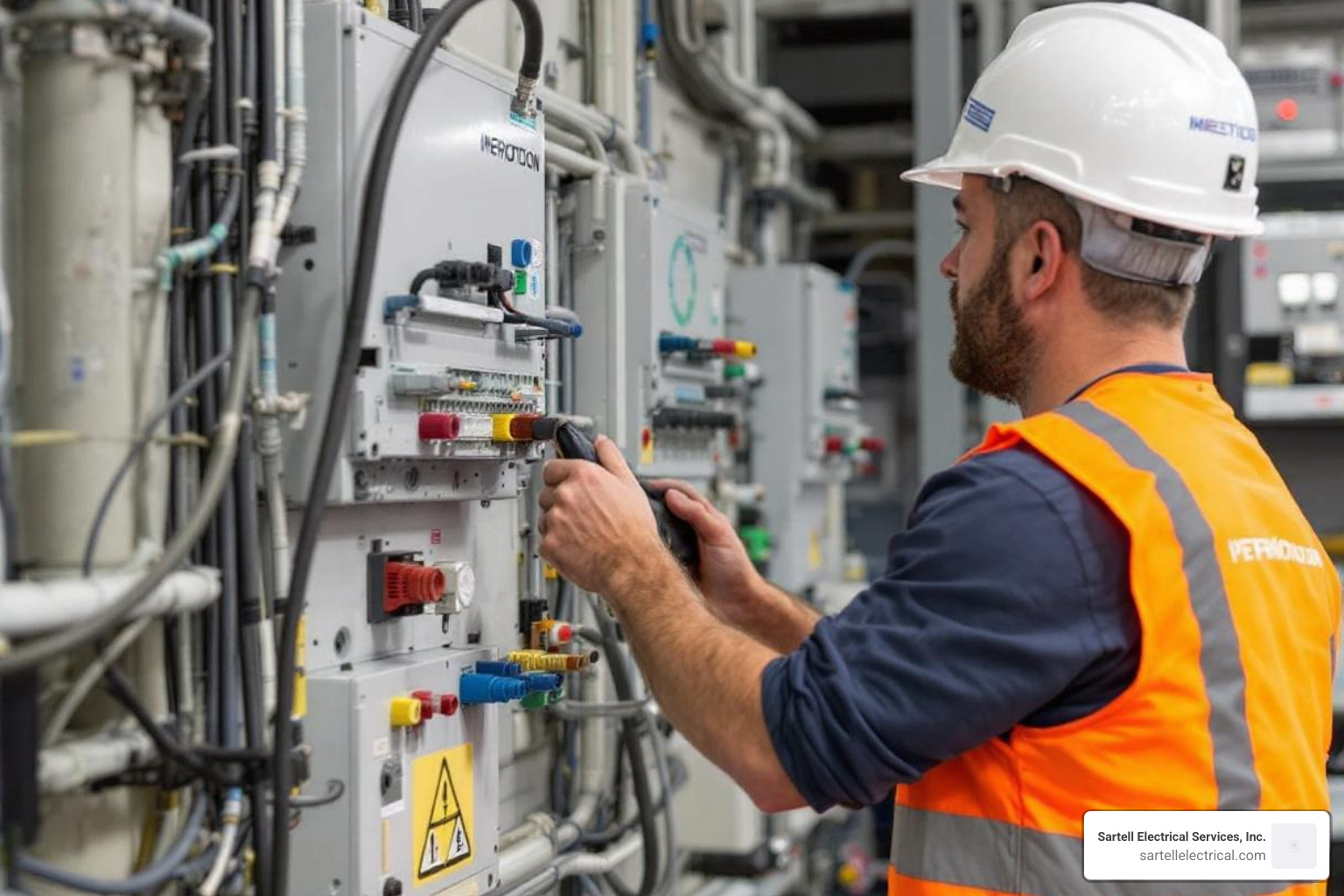
Our periodic electrical inspections involve a combination of visual assessments and rigorous testing.
- Visual Inspection: We start with a visual assessment of accessible parts of the installation to check for:
- Damage, wear, or signs of overheating.
- Intact enclosures for panels and junction boxes.
- Suitability of equipment for its environment.
- Deterioration due to use over time, like cracked insulation or corrosion.
- Immediate dangers such as exposed live parts.
- Dead Testing: With the system de-energized, we perform tests that can't be done live:
- Continuity Testing: Ensures protective earthing and bonding are effective.
- Insulation Resistance Testing: Detects insulation breakdown that could cause short circuits or shocks.
- Polarity Testing: Confirms all connections are correctly wired.
- Live Testing: After re-energizing the system, we conduct live tests to verify performance:
- Earth Fault Loop Impedance Testing: Ensures protective devices will trip fast enough during a fault.
- RCD (Residual Current Device) Testing: Verifies that RCDs operate correctly to protect against electric shock.
- Functional Testing: Checks that switches, sockets, and other accessories work properly.
The inspection also includes assessing the condition of wiring, circuits, and distribution boards. We verify that earthing and bonding systems are robust and compliant, and we identify any outdated components, like old wiring or circuit breakers, that may no longer meet current safety standards.
Understanding the Report and Observation Codes
After the inspection, you'll receive a report stating if your installation is "Satisfactory" or "Unsatisfactory." An unsatisfactory report will detail any defects. While the UK uses codes like C1, C2, and C3, our reports use clear classifications relevant to US standards to indicate severity:
- Dangerous Conditions: Defects posing an immediate risk (e.g., exposed live wires) that require urgent action.
- Potentially Dangerous Conditions: Defects that could become hazardous if unaddressed (e.g., an incorrectly rated protective device) and require prompt repair.
- Improvements Recommended: Suggestions to improve safety or efficiency, such as upgrading circuit protection, that are not immediately dangerous.
- Further Investigation Required: Notes an anomaly that needs more in-depth testing to understand its potential impact.
Our report will clearly outline these findings and recommended actions, giving you a complete picture of your system's health.
How Often Should Commercial Premises Be Inspected?
The frequency of
periodic electrical inspection commercial premises depends on the property type, its use, and the potential risks involved. A high-traffic retail store has different needs than a low-occupancy warehouse.
Recommended Frequencies for a Periodic Electrical Inspection Commercial Premises
Industry best practices and risk assessment help determine how often your property should undergo a formal electrical inspection.
| Property Type |
Recommended Formal Inspection Frequency |
| High-Risk Environments (e.g., Petrol Stations, Marinas, Medical Locations, Laundromats) |
Annually |
| Industrial Facilities (e.g., Factories, Manufacturing Plants), Leisure Centers, Theatres, Cinemas, Caravan Parks |
Every 3 Years |
| General Commercial (e.g., Offices, Retail Stores, Restaurants, Schools, Hotels, Hospitals (general areas)) |
Every 5 Years |
| New Construction / Major Renovation |
Upon Completion |
| Change of Occupancy / Significant Change in Use |
Before or Shortly After |
These are baseline frequencies. Factors like the installation's age, previous findings, and intensity of use may require more frequent checks. An older system in a busy Boston property, for example, will need more attention than a new installation in a less demanding environment.
US Standards: NFPA 70B and the Electrical Maintenance Plan (EMP)
In the US, standards from the
National Fire Protection Association (NFPA) and
OSHA are key. Notably,
NFPA 70B shifted from a recommendation to a mandatory standard in 2023. This means OSHA can cite facilities for non-compliance, making structured electrical maintenance essential for all Massachusetts businesses.
NFPA 70B requires an
Electrical Maintenance Plan (EMP), a customized strategy for your facility's specific needs. Key aspects of an EMP include:
- Condition-Based Maintenance: Adjusting maintenance frequency based on the equipment's current condition.
- Periodic Tasks: Includes visual inspections, cleaning, lubrication, mechanical servicing, and electrical testing.
- Visual Inspection Frequency: Regular visual checks, often every six to 12 months, are crucial for early detection of problems like loose connections or overheating.
- Documentation: A robust EMP requires documenting all maintenance activities and results to prove compliance.
Implementing an EMP aligned with NFPA 70B helps businesses in Woburn, Danvers, and Framingham ensure safety, minimize downtime, and avoid OSHA penalties.
More info about Commercial Electrical System Maintenance.
Best Practices for Ongoing Electrical Safety
Beyond formal inspections, embedding a culture of electrical safety into daily operations is crucial. Here are some best practices:
- Lockout/Tagout Procedures: Strictly follow these procedures during service to prevent accidental energization and protect workers.
- Clear Labeling: Label all panels and circuits for safety, troubleshooting, and efficient maintenance.
- Staff Training: Train employees on basic electrical safety, hazard recognition, and emergency response.
- Clean Electrical Rooms: Keep electrical rooms clear of clutter and combustibles to prevent fire hazards and ensure access.
- Risk Assessments: Regularly assess electrical risks, including equipment condition and potential for arc flash.
- Preventive Maintenance: Follow a proactive maintenance schedule to extend equipment life and prevent failures.
- Address Issues Promptly: Never ignore warning signs like flickering lights, tripping breakers, or odd smells. Have them checked by a professional immediately.
By adopting these best practices, your business can significantly reduce the risk of electrical hazards.
More info about Electrical Maintenance Services.
Choosing a Qualified Professional and Taking Action
The success of your
periodic electrical inspection commercial premises hinges on the competence of the professional performing it. This task requires specialized knowledge and adherence to rigorous safety standards.
A comprehensive commercial electrical inspection must be performed by a qualified, licensed electrician. They have the expertise to identify subtle hazards and non-compliance issues an untrained eye would miss. When selecting a professional for your Massachusetts business, look for:
- Experience: A licensed master electrician or electrical contractor with a proven track record in complex commercial systems.
- Licensing and Insurance: Always verify they are fully licensed in Massachusetts and insured to protect your business. Sartell Electrical Services is a fully licensed and insured contractor serving the Greater Boston area, including Reading, Andover, and Lexington.
- Key Questions to Ask:
- Are you licensed in Massachusetts and insured?
- What is your experience with similar commercial properties?
- Which codes (NEC, NFPA 70B, MA amendments) do you follow?
- What does your inspection process and report include?
- Can you provide commercial client references?
Choosing a reputable contractor like Sartell Electrical Services ensures a thorough, accurate, and compliant inspection.
More info about finding a Commercial Electrician Near Me.
Who is Responsible for Arranging the Inspection?
Responsibility for arranging an inspection depends on the lease agreement.
- Business Owners: If you own the property, you are responsible for arranging inspections as part of your duty to maintain a safe environment.
- Landlords: Commercial landlords are typically responsible for the safety and compliance of the building's fixed electrical installations, even if some duties are shifted to tenants in the lease. They must ensure the property meets all Massachusetts electrical codes.
- Tenants: Leases may require tenants to maintain electrical equipment they install or systems within their specific space. It's crucial to clarify these responsibilities in the lease agreement.
It is in the best interest of both landlords and tenants to collaborate and ensure regular inspections are performed to maintain safety and compliance.
What Happens After an Unsatisfactory Report?
An "Unsatisfactory" report is a call to action, not panic. It means defects have been found that require attention.
- Prioritize Repairs: The report will detail the issues and their severity. Immediately address any defects that pose an immediate danger.
- Repair Timelines: In Massachusetts, the urgency of repairs is dictated by the defect's severity and local codes. Dangerous conditions require immediate action.
- Certify Completed Work: After repairs, a qualified electrician should certify the work, providing documentation that the system is now safe and compliant. We provide this for all our repair work.
- Consequences of Inaction: Failing to address an unsatisfactory report can lead to increased safety risks, fines from OSHA or local inspectors, denied insurance claims, and costly business disruptions.
Prompt action is crucial for maintaining a safe and compliant property. We can guide you through the entire process, from understanding the report to completing the necessary remedial work.
Conclusion
A
periodic electrical inspection commercial premises is a vital investment in your business's safety, longevity, and efficiency. These inspections are fundamental for:
- Safety: Protecting people and assets from electrical fires, shocks, and equipment failure.
- Compliance: Adhering to US electrical codes like the NEC and NFPA 70B to avoid fines and liability.
- Efficiency: Improving energy use, preventing downtime, and extending the life of your electrical systems.
Managing a commercial property in Massachusetts is complex. A proactive approach to electrical maintenance through regular inspections isn't just about meeting obligations—it's about safeguarding your investment and everyone on your premises.
At Sartell Electrical Services, we bring nearly four decades of experience to every commercial electrical inspection. Our licensed electricians are experts in diagnosing issues, ensuring compliance with state and national standards, and providing clear, actionable reports. We help businesses across Greater Boston, from Watertown to Woburn, maintain safe and reliable electrical systems.
Don't wait for a problem to arise. Take control of your electrical safety today.
Power up your business with our Commercial Electrical Services.