What Is Electrical Switchgear Maintenance — and Why Does It Matter?
Electrical switchgear maintenance is the regular process of inspecting, testing, cleaning, and servicing the assemblies that control, protect, and isolate your facility's power systems.
Here's a quick overview of what it involves:
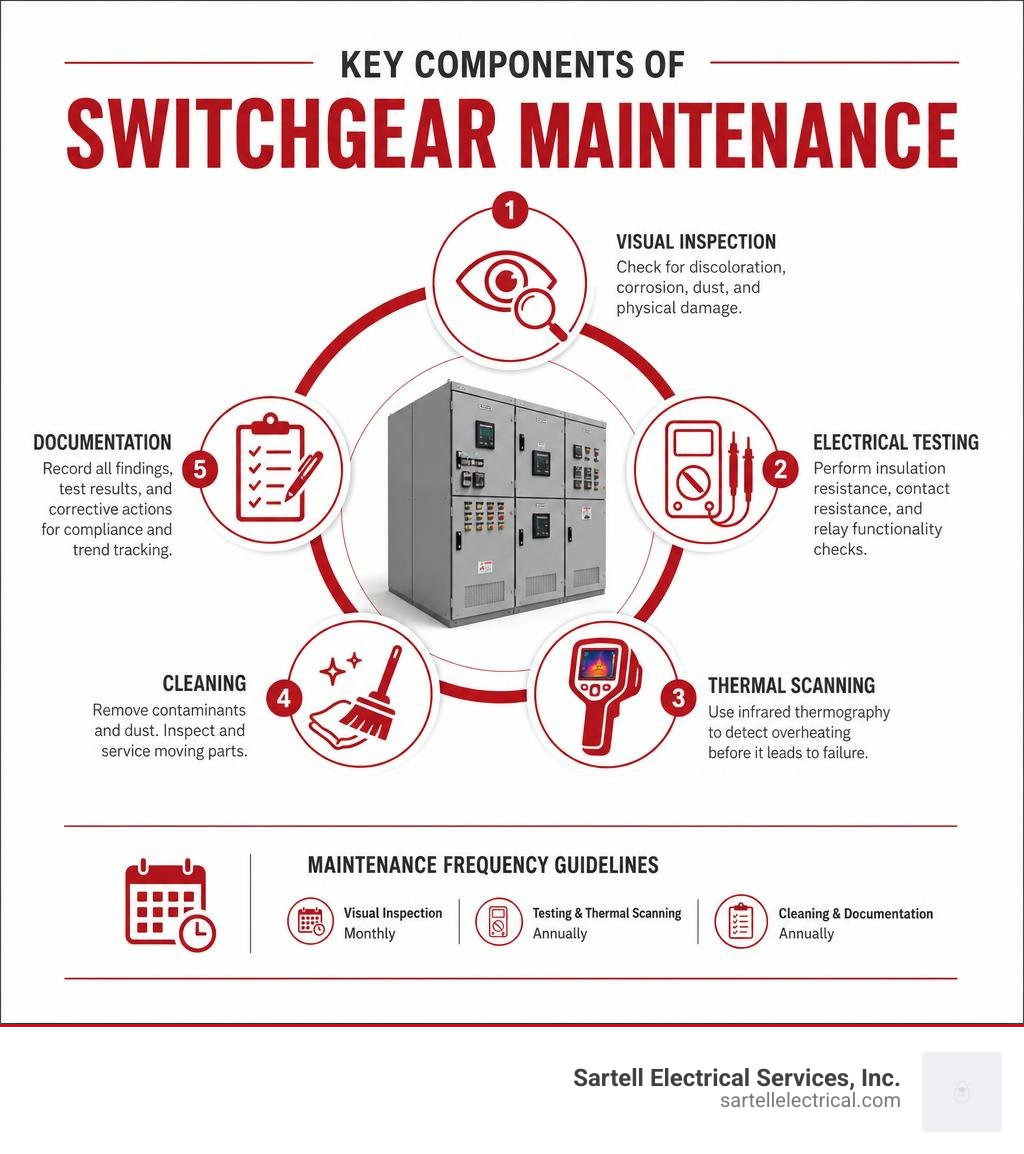
- Visual inspections — checking for discoloration, corrosion, dust, and physical damage
- Electrical testing — insulation resistance, contact resistance, and relay functionality checks
- Mechanical checks — exercising circuit breakers and verifying interlock operation
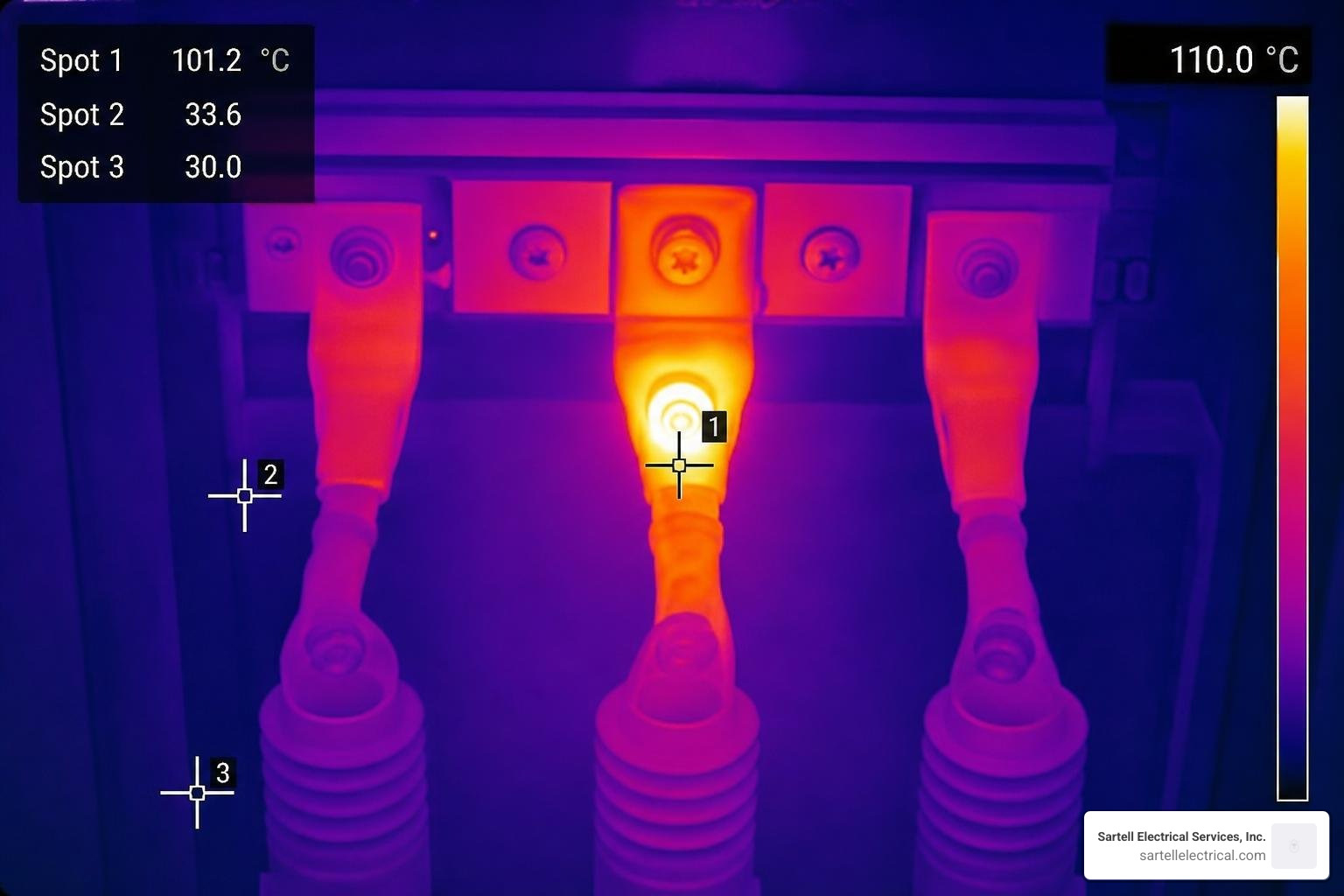
- Thermal scanning — infrared thermography to detect overheating before it causes failure
- Cleaning and lubrication — removing contaminants and servicing moving parts
- Documentation — recording all findings for compliance and trend tracking
Most switchgear failures don't come out of nowhere. They announce themselves early — through subtle heat buildup, unusual sounds, or gradual insulation breakdown. The problem is that without a structured maintenance program, those warning signs go unnoticed until something catastrophic happens.
The stakes are high. A single switchgear failure leads to an average of 261 hours of downtime. Neglected equipment also raises arc flash risk by 83% and cuts component lifespan nearly in half — from a potential 35 years down to just 17.
For commercial and industrial facilities, that's not just an inconvenience. It's a serious safety risk and a significant financial loss.
I'm Ed Sartell, President of Sartell Electrical Services, Inc., and with nearly four decades of hands-on experience in commercial and industrial electrical switchgear maintenance, I've seen what separates facilities that stay up and running from those that face costly emergency repairs. In the sections below, I'll walk you through everything you need to know to build a maintenance program that protects your equipment, your people, and your bottom line.
Electrical switchgear maintenance basics:
- electrical safety for industrial facilities
- electrical condition monitoring
- industrial power monitoring system
The Critical Role of Electrical Switchgear Maintenance
In any commercial or industrial setting across Massachusetts—whether you are operating a manufacturing plant in Middlesex County, a medical center in Greater Boston, or a corporate complex in Reading, MA—the electrical distribution system relies entirely on your switchgear. Switchgear acts as the traffic cop and emergency brake of your electrical network. When a fault occurs downstream, it is the switchgear that senses the anomaly and trips to isolate the issue, saving millions of dollars in equipment and, more importantly, protecting human lives.
However, electrical equipment is not designed to remain perpetually energized and neglected. Over time, physical mechanisms degrade, lubrication dries up, and environmental contaminants creep in. When switchgear is neglected, the consequences are severe:
- Arc Flash Vulnerability: Neglecting routine service increases the likelihood of catastrophic arc flash incidents by 83%. An arc flash can vaporize metal, destroy entire equipment rooms, and cause fatal injuries.
- Asset Lifespan Reduction: Properly maintained switchgear can easily last at least 35 years. In contrast, unmaintained equipment has an average lifespan of just 17 years—meaning neglect cuts your equipment's useful life by approximately 50%.
- Costly Downtime: According to IEEE surveys, a single major switchgear failure results in an average of 261 hours of downtime. For modern operations, that represents an incredible financial hit in lost productivity, emergency repair fees, and supply chain disruptions.
By partnering with experienced professionals to deliver comprehensive electrical maintenance services, facilities can transition from reactive panic to planned efficiency. Implementing standard guidelines like those outlined in Maintaining Electrical ensures that every circuit breaker, busbar, and protective relay performs exactly as designed when an anomaly occurs.
Common Causes of Switchgear Failure and Prevention
Understanding why switchgear fails is the first step in stopping failures from happening. The vast majority of failures can be traced back to a handful of predictable, preventable issues:
1. Overheating (The 80% Culprit)
Research indicates that 80% of switchgear failures are caused by overheating. This is usually driven by loose physical connections, corroded joints, or overloaded circuits. As resistance increases at a loose connection point, localized temperatures spike. If left unchecked, this thermal runaway destroys insulators, melts busbars, and ignites fires.
2. Environmental Contamination
Dust, metallic particles, and debris are silent killers in electrical rooms. In fact, dust and metallic particles contribute to 34% of insulation failures in switchgear. When conductive dust settles on insulating surfaces, it creates a path for electrical tracking, which can lead to phase-to-phase or phase-to-ground short circuits.
3. Moisture and High Humidity
Humidity is a major threat to electrical contacts. Moisture and excessive humidity can increase contact resistance by up to 70%. When humidity combines with dust, it forms a highly conductive paste that degrades insulation and causes rapid corrosion of silver-plated copper parts.
Prevention Strategies
Preventing these failures requires a mix of environmental controls and modern diagnostic techniques. Keeping electrical rooms clean, dry, and climate-controlled is step one. Step two is utilizing predictive technologies.
By utilizing Condition Based Asset Monitoring for Electrical Systems, facilities can track real-time changes in temperature and current. Additionally, regular infrared thermography scans allow technicians to spot hotspots while the equipment remains safely energized and under load.
Key Components of a Comprehensive Checklist
To ensure no critical detail is missed during maintenance, we rely on a structured, step-by-step checklist. This ensures consistency across shifts and technicians, keeping your systems fully compliant with manufacturer specifications like those found in the Maintaining the Switchboard - Power-Style QED-2 Switchboards Technical Literature.
A comprehensive switchgear maintenance program is divided into distinct execution phases:
- Safety & Isolation: Verify lockout/tagout (LOTO) protocols, isolate control power, and verify de-energization.
- Visual Inspection & Cleaning: Vacuum out dust with HEPA-filtered vacuums and inspect for signs of overheating or physical damage.
- Mechanical Servicing: Manually exercise breakers, check alignment, and apply manufacturer-specified lubricants (e.g., BG20 grease for contacts) to moving parts.
- Electrical Testing: Perform insulation resistance and contact resistance tests to verify the integrity of conductors and connections.
- Re-energization & Verification: Confirm all tools are removed, close all compartment doors, remove safety grounds, and systematically restore power.
Visual Inspections in Electrical Switchgear Maintenance
Visual inspections are your first line of defense. They should be integrated into your routine Building Electrical Maintenance schedules. During a visual inspection, technicians look for:
- Physical Integrity: Dents, loose door latches, damaged gaskets, or signs of rodent nesting.
- Corrosion and Discoloration: Slight tarnishing on silver-plated contacts is normal, but severe discoloration or flaking indicates extreme overheating or exposure to chemical vapors.
- Insulation Degradation: Cracking, tracking lines, or chalking on epoxy or porcelain insulators.
Electrical Testing in Electrical Switchgear Maintenance
Visual checks alone cannot identify internal insulation flaws or contact degradation. That is where specialized diagnostic testing comes in. According to Switchgear Maintenance and Testing Services - Martin Technical, several essential electrical tests must be performed:
- Insulation Resistance Testing (Megger Testing): Measures the resistance of the insulation system to identify moisture ingress, dirt accumulation, or cracking before a breakdown occurs.
- Contact Resistance Testing (Ducter Testing): Measures the resistance across bolted busbar joints and breaker contacts. High resistance indicates loose connections or pitted contacts.
- Protective Relay Testing: Simulates fault conditions to verify that the relays will accurately command the circuit breakers to trip within specified timeframes.
Industry Standards and Maintenance Frequency
How often should your switchgear be maintained? The answer depends on equipment criticality, age, and environmental conditions. Industry standards like NFPA 70B (which is now a mandatory standard rather than a recommended practice) and NETA (InterNational Electrical Testing Association) provide clear guidelines.
For standard, clean environments, a comprehensive maintenance cycle is recommended every 3 to 5 years. However, in highly contaminated or high-vibration environments, circuit breaker exercising and contact cleaning may be required annually or even semi-annually.
To help you visualize these requirements, here is a comparison of standard maintenance frequencies based on equipment condition:
| Equipment Condition / Environment | Recommended Visual Inspection | Recommended Diagnostic Testing | Recommended Mechanical Servicing |
|---|---|---|---|
| Excellent / Clean Environment | Monthly | Every 3 to 5 Years | Every 3 Years |
| Moderate / Normal Industrial | Weekly | Every 2 to 3 Years | Every 2 Years |
| Severe / High Dust, Moisture, or Heat | Daily | Annually | Annually (Max 2-year breaker exercise) |
Following these structured guidelines is central to a robust Electrical Asset Management Complete Guide program. For international or highly specialized standards, some facilities also reference AS 2467:2025 | Standards Australia Store to align their safety and diagnostic testing protocols with global best practices.
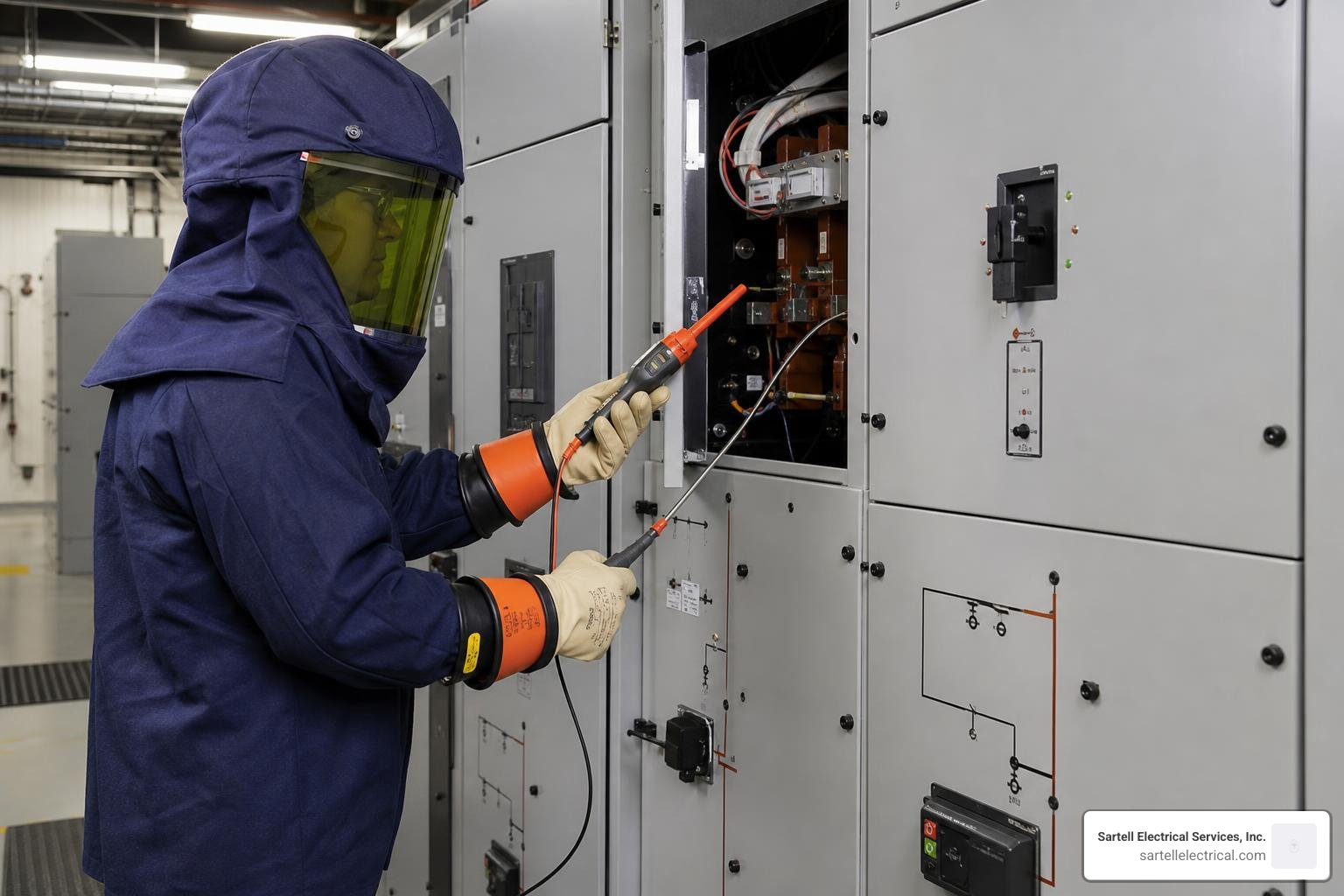
Safety Protocols and Required PPE
Working on or near electrical switchgear is inherently hazardous. Safety is not just a priority; it is a strict regulatory requirement enforced by OSHA and governed by the NFPA 70E Standard for Electrical Safety in the Workplace.
Before any technician touches a piece of switchgear, several safety protocols must be executed:
- De-energization & Verification: Always treat a circuit as live until it is proven dead. A qualified person must use a properly rated, certified voltage-sensing device to verify the absence of voltage.
- Lockout/Tagout (LOTO): Apply physical locks and tags to all energy isolation devices. If multiple teams are working, use lockout devices that accommodate up to six padlocks to ensure no single person can re-energize the system prematurely.
- Establish Safety Grounds: Install temporary protective grounding cables to protect workers from accidental backfeed or induced voltages from adjacent active circuits.
- Appropriate PPE: Technicians must wear arc-rated clothing, face shields, insulated gloves, and safety glasses matching the arc flash hazard analysis of the specific equipment.
For detailed government and institutional guidelines, the MS-28 Handbook - Maintenance of Electrical Switchgear TL-4, May 10, 2011; PSIN: HBKMS28, provides an excellent framework for safety practices, de-energization verification procedures, and the management of protective equipment testing records.
Voltage-Specific Maintenance Requirements
Switchgear maintenance is not a one-size-fits-all discipline. The procedures, safety distances, and testing complexities change dramatically depending on the voltage level:
Low-Voltage Switchgear (Up to 1,000 V AC)
Commonly found in commercial buildings, retail complexes, and light industrial facilities. Maintenance focuses heavily on molded-case circuit breakers, air circuit breakers, and fusible switches. Key tasks include checking contact alignment, verifying fuse tightening torque (typically 21–30 lb-ft), and ensuring dry, clean environments. For a comprehensive look at managing these systems, see our Industrial Electrical Maintenance Complete Guide.
Medium-Voltage Switchgear (1,000 V to 35 kV)
Typically found in heavy industrial plants, hospitals, and large campuses. These systems require highly specialized care. According to the Inspection and Maintenance - SureSeT MV Indoor Switchgear Technical Literature, medium-voltage installations often utilize:
- Vacuum Circuit Breakers: Require vacuum integrity checks (Hi-Pot testing) and mechanism lubrication.
- SF6 Gas Insulated Switchgear: Requires specialized gas pressure monitoring, leak detection, and strict adherence to environmental regulations regarding SF6 gas handling.
- Digital Health Monitoring: Modern systems with Level 4 digital monitoring can safely extend physical maintenance intervals from 3 years to 5 years by continuously tracking insulation and contact temperatures.
Digital Tools and CMMS Integration
The days of tracking complex electrical maintenance on clipboards and paper logs are quickly fading. Modern facilities are transitioning to digitized maintenance logs integrated with Computerized Maintenance Management Systems (CMMS).
The benefits of digitization are clear:
- Efficiency: Technicians using paper checklists typically spend 15 to 30 minutes per work order on manual data entry and administrative overhead. Digital checklists eliminate this waste.
- Audit Readiness: Facilities utilizing digitized maintenance logs reduce their compliance audit preparation time by 41%.
- Data Trending: A digital CMMS allows you to track and trend insulation resistance and contact resistance measurements over several years. This makes it easy to spot a declining trend and schedule repairs before a catastrophic failure occurs.
Integrating these logs with a broader Electrical Network Monitoring Complete Guide strategy gives facility managers a real-time, comprehensive view of their entire electrical infrastructure, turning maintenance from a guessing game into a precise, data-driven science.
Frequently Asked Questions about Switchgear Maintenance
How often should switchgear be tested?
For most standard commercial and industrial facilities, comprehensive testing and maintenance should be performed every 3 to 5 years. However, you should adjust this frequency based on the age of your equipment, its operational criticality, and environmental factors like dust, humidity, and ambient temperature.
Does the power need to be turned off during maintenance?
Yes, for a complete, hands-on preventive maintenance service, the switchgear must be fully de-energized and safely isolated. This requires careful coordination with utility providers and facility managers to schedule a planned power outage. However, some predictive testing—such as infrared thermography scans and continuous thermal monitoring—is performed while the system is fully energized and running under normal load. To learn more about managing these shutdowns, refer to our guide on Industrial Electrical Maintenance.
What are the benefits of preventive vs reactive maintenance?
Implementing a structured preventive maintenance program reduces switchgear failure risks by approximately two-thirds compared to a reactive "run-to-failure" approach. It also doubles the physical lifespan of your switchgear, prevents catastrophic arc flash incidents, and saves tens of thousands of dollars in emergency repairs and unplanned downtime. Check out our Electrical Maintenance Ultimate Guide for a detailed comparison of these strategies.
Conclusion
Your electrical switchgear is the heart of your facility's power distribution. Neglecting it is a gamble that risks costly downtime, expensive equipment replacements, and severe safety hazards. By implementing a proactive, structured maintenance program, you protect your assets, ensure regulatory compliance, and keep your operations running smoothly.
At Sartell Electrical Services, Inc., we have been serving businesses throughout Massachusetts—including Reading, MA, Greater Boston, and Middlesex County—for over 30 years. Our team of highly trained, qualified electricians is committed to delivering excellence, safety, and unmatched customer service on every project.
Don't wait for a costly breakdown to take action. Schedule professional industrial electrical services with Sartell Electrical Services, Inc. today, and let us help you keep the spark alive safely!