
Why Upgrading Your Home's Electrical System Matters
Knob tube replacement is one of the most critical electrical upgrades homeowners with older properties face. This antique wiring system, common in homes built between the 1880s and 1940s, no longer meets modern safety standards or the electrical demands of today's appliances and devices.
Quick Answer: What You Need to Know About Knob Tube Replacement
- Average Cost Range: $8,000 to $20,000 for full home rewiring
- Cost Factors: Home size ($2-$4 per sq ft), permit fees ($200-$500), old wiring removal ($5,000), wall accessibility
- Timeline: Several days to two weeks depending on home size and complexity
- Why Replace: Fire hazards, insurance coverage issues, lack of grounding, insufficient capacity for modern loads
- ROI: More than 50% of buyers will pay more for updated electrical systems
If your home was built before 1950, there's a good chance you're dealing with this outdated wiring method. The system uses porcelain knobs and tubes to support single-insulated copper conductors—a design that lacks the grounding wire essential for modern electrical safety. Over time, the insulation deteriorates, creating serious fire and shock hazards.
Insurance companies have taken notice. Many providers now refuse coverage or charge significantly higher premiums for homes with active knob and tube wiring. Beyond safety concerns, this wiring simply can't handle the electrical load of modern households with multiple appliances, smart home devices, and charging stations.
I'm Ed Sartell, and as President of Sartell Electrical Services since 1985, I've guided hundreds of Massachusetts homeowners through knob tube replacement projects, helping them understand both the necessity and the investment involved. Whether you're planning to sell, refinance, or simply want peace of mind, understanding the true costs and process will help you make an informed decision.

Knob tube replacement word roundup:
Understanding the Risks and Mechanics of Antique Wiring
Knob and tube (K&T) wiring was once cutting-edge technology, used from the late 1800s to the late 1940s. It was considered a safe and effective method for its time, but electrical demands have changed dramatically. This system relies on porcelain knobs to anchor individual insulated copper wires to wooden framing and porcelain tubes to protect wires as they pass through studs and joists. The wires are suspended in open air, which allowed for heat dissipation.
However, the materials and design are outdated by today's standards. The most significant drawback? The complete absence of a grounding wire. Modern electrical systems include a grounding wire as a critical safety feature, designed to redirect excess electricity in case of a fault, preventing electrical shock. Without this, your risk of shock is significantly higher.
Furthermore, the original insulation on K&T wiring was typically rubberized cloth, which tends to degrade over time. Just like us, knob and tube joints don't work as well as they age! This deterioration can expose bare conductors, leading to potential hazards. The National Electrical Code (NEC) standards have evolved significantly since K&T was prevalent, requiring much higher safety standards, including grounding and better insulation.
Here's a quick comparison of knob and tube wiring versus modern Romex (NM-B) wiring:
| Feature | Knob and Tube Wiring (1880s-1940s) | Modern Romex (NM-B) Wiring (Post-1960s) |
|---|---|---|
| Components | Individual insulated copper wires, porcelain knobs, porcelain tubes | Insulated copper wires (hot, neutral, ground) bundled in a plastic sheath |
| Grounding | None | Essential safety feature, redirects fault current |
| Insulation | Rubberized cloth, degrades over time | PVC plastic, durable and heat-resistant |
| Heat Mgmt. | Open-air suspension for cooling | Sheathing contains wires, requires proper sizing and junction box spacing |
| Capacity | Designed for low electrical loads (lights, few appliances) | Designed for modern high electrical loads (multiple appliances, electronics) |
| Safety Devices | None | Circuit breakers, GFCIs, AFCIs, tamper-resistant receptacles |
| Installation | Labor-intensive, exposed wiring | Easier, quicker installation, wires concealed within walls |
| Code Comp. | Not compliant with modern electrical codes | Fully compliant with current NEC and local electrical codes |
Why Knob tube replacement is Essential for Fire Safety
One of the most pressing reasons for knob tube replacement is fire safety. The original K&T wiring was never designed to handle the heavy electrical loads of today's homes. Think about it: homes in the early 1900s had a few light bulbs and perhaps an iron. Today, we have multiple computers, large-screen TVs, high-wattage kitchen appliances, hair dryers, smart home devices, and charging stations for everything.
When modern appliances draw more current than old K&T wires can safely handle, those wires can overheat. This overheating is a significant fire hazard, especially given the degraded insulation often found in older systems. The lack of a grounding wire also means that if a fault occurs, there's no safe path for the electricity, increasing the risk of arcing, which can ignite nearby combustible materials like insulation or wood framing.
Most fires in homes are caused by old or tampered wiring. If you're experiencing flickering lights, frequently tripping breakers, a burning smell, sparking appliances, or buzzing/crackling sounds from outlets, these are urgent signs that your electrical system, potentially K&T, is struggling and poses a serious fire risk. Ensuring your home’s electrical system is up to code with regular electrical-safety-checks is paramount for your family's safety.
The Insurance and Real Estate Impact
Beyond the immediate safety concerns, the presence of knob and tube wiring can create significant headaches when it comes to insurance and real estate transactions in Massachusetts.
Many insurance companies view K&T wiring as a major liability due to the heightened risk of fire and electrical shock. As a result, they may:
- Refuse to provide or renew coverage: This is a common scenario, leaving homeowners without essential protection.
- Charge significantly higher premiums: If they do offer coverage, the costs can be prohibitive.
- Mandate replacement: Some insurers will require you to replace the K&T wiring within a certain timeframe to maintain or obtain coverage.
This directly impacts your home's value and saleability. More than 50% of home buyers say they would pay more for a home with an updated electrical system. Conversely, the presence of K&T wiring can make potential buyers hesitant. It's often a major hurdle in real estate transactions, leading to:
- Lower offers: Buyers will factor in the significant cost of knob tube replacement.
- Longer time on the market: Homes with outdated wiring may sit longer as buyers seek properties without this concern.
- Mortgage issues: Lenders may require the wiring to be updated before approving a mortgage, placing an unexpected burden on either the buyer or seller.
Addressing K&T wiring with residential-electrical-upgrades isn't just about safety; it's a smart investment that protects your assets and improves your home's market appeal.
Breaking Down the Knob tube replacement Costs
So, what are we talking about when we discuss the cost of knob tube replacement? The typical costs associated with replacing knob and tube wiring can range significantly, generally from $8,000 to $20,000 for a complete home rewiring. However, this is a broad average, and several factors influence the final estimate.
The cost to replace wiring around the house can be estimated at $2 to $4 per square foot for labor and materials. In addition to this, you'll need to account for:
- Removal of old wiring: This can add about $5,000.
- Permit fees: These typically range from $200 to $500 in Massachusetts.
Let's look at some average breakdowns based on home size:
- Small Homes (Under 1,500 Square Feet): Expect to pay between $8,000 to $10,000.
- Medium-Sized Homes (1,500 To 2,500 Square Feet): Costs typically range from $10,000 to $15,000.
- Large Homes (Over 2,500 Square Feet): You could be looking at $15,000 to $20,000 or more.
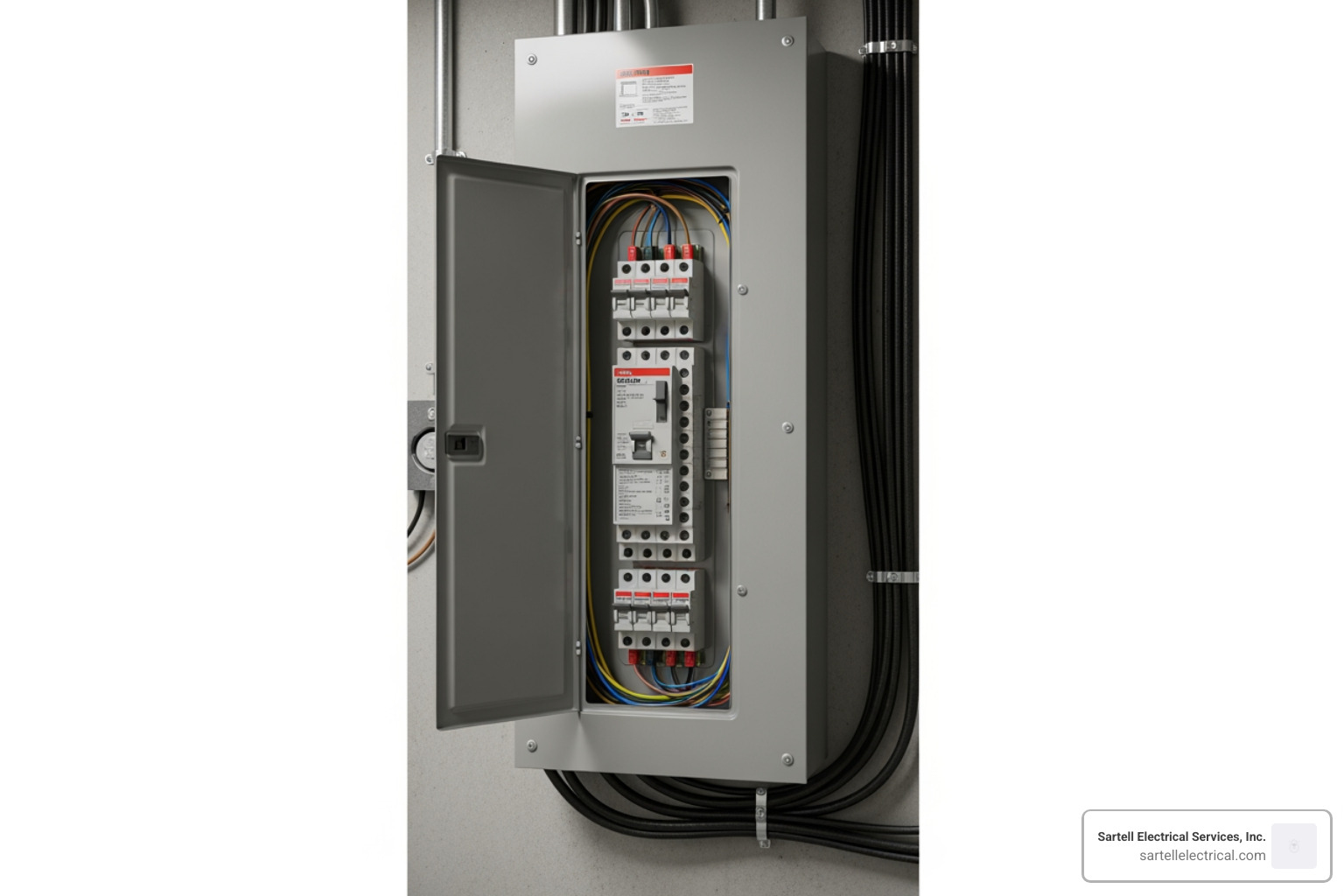
A full electrical system upgrade, which often accompanies knob tube replacement, can also include a new electrical panel. A modern electrical system for a residential home is typically a 200-amp system. The cost for a new electrical panel can range from $900 to $2,000 for 100 amps, and $1,500 to $2,500 for 200 amps. These upgrades ensure your home can handle current demands and are a crucial part of the overall safety and functionality. For more on this, check out our electrical-panel-upgrade-cost-guide-2025.
Factors Influencing Your Knob tube replacement Estimate
While the square footage provides a baseline, several other factors can significantly influence your knob tube replacement estimate in Massachusetts:
- Home Size and Layout: Larger homes naturally require more wiring and labor. Complex layouts with many rooms, fixtures, and switches will also drive up costs.
- Accessibility of Existing Wiring: This is a big one! If your home has easily accessible unfinished basements and attics, the job will be less invasive and costly. However, if wires are hidden behind plaster walls or in difficult-to-reach areas, the labor involved in fishing new wires or even making small openings will increase. The cost to install new wiring if walls need repair (e.g., after opening them up) can be $4 to $8 per square foot.
- Condition of Existing Wiring: While the goal is replacement, the current state of your K&T wiring can impact the complexity. Severely degraded or tampered wiring might require more delicate handling.
- Electrical Panel Upgrade: As mentioned, a new panel is often part of the package. If your current panel is outdated (e.g., a fuse box or a small breaker panel), upgrading it to a modern 200-amp service will add to the cost but is a vital step for safety and capacity.
- Number of Outlets, Switches, and Fixtures: Each receptacle, switch, or light fixture needs to be rewired. Replacing or installing new ones typically costs $100 to $185 per unit.
- Installation of GFCI/AFCI Outlets: Modern codes require Ground Fault Circuit Interrupter (GFCI) outlets in wet locations (kitchens, bathrooms, outdoors) and Arc Fault Circuit Interrupter (AFCI) protection in bedrooms and other living areas to prevent fires. Installing GFCI outlets can cost $130 to $300 per outlet.
- Permits and Inspections: These are mandatory in Massachusetts to ensure the work meets local building codes and safety standards. These costs are usually included in the overall estimate.
- Historical Preservation: For heritage homes in Massachusetts, there might be additional considerations or methods required to maintain the historical integrity of the property, which can add to the complexity and cost.
- Electrician's Experience: The expertise of the licensed electrician you choose plays a role. While competitive pricing is important, choosing a highly experienced professional like those at Sartell Electrical Services ensures the job is done safely, efficiently, and to code. We recommend getting quotes from several licensed electricians and checking their references and reviews. For general guidance on finding a professional, you can look for a Find a Licensed Electrical Contractor Near You.
The Professional Replacement Process: What to Expect
Undertaking a knob tube replacement project can seem daunting, but with a licensed and experienced electrician, the process is well-managed to minimize disruption. Here's what you can generally expect:
- Initial Assessment: We start with a thorough inspection of your home's existing electrical system. This helps us identify the extent of the K&T wiring, assess its condition, and understand your current and future electrical needs. We'll discuss your concerns, review your daily electrical usage, and map out a plan.
- Planning and Permit Acquisition: Based on the assessment, we'll design a comprehensive rewiring plan. We handle all the necessary permits from your local municipality in Massachusetts, ensuring all work complies with the latest electrical codes.
- Phased Work and Power Management: A common concern is losing power during the process. We strive to maintain most of your power during the rewiring. Our approach often involves working circuit by circuit, capping off old K&T as new wiring is installed. While complex switch wiring (like three-way or four-way switches) might require a temporary loss of power for specific circuits until the work is finished, we make every effort to minimize inconvenience. It's important to be wary of electricians who claim all power must be off for the entire duration of the job, as this is often unnecessary.
- "Fishing" New Wires: This is where the magic happens! Our skilled electricians "fish" new, modern copper wiring through existing walls, ceilings, and floors. This technique is designed to minimize demolition of your plaster or drywall. Unless your home is constructed of cement, it's 100% possible to fish wiring without tearing down entire walls or running unsightly surface conduits.
- New Device Installation: As new wiring is run, we install modern, grounded outlets, switches, and junction boxes. This includes installing GFCI outlets in wet areas and AFCI protection as required by code.
- Panel Upgrade (if needed): If your current electrical panel is outdated, we'll replace it with a modern 100-amp or 200-amp service, ensuring your home has sufficient capacity and up-to-date safety features.
- Testing and Inspection: Once the new wiring is in place, we thoroughly test the entire system to ensure everything is working correctly and safely. A municipal inspector will then conduct a final inspection to verify code compliance.
- Clean-Up: We understand that electrical work can be messy. Our team takes care to protect your home from dust and debris and performs a thorough clean-up after the project is complete.
This comprehensive approach ensures a seamless transition to a safe, reliable, and code-compliant electrical system. For more details on the process, refer to our residential-electrical-upgrades-guide.
DIY vs. Hiring a Licensed Electrician
When it comes to knob tube replacement, the question of "Can I do this myself?" often arises. Our answer is a resounding NO. Replacing knob and tube wiring is not a DIY project. In fact, you should never, under any circumstances, handle knob-and-tube wiring on your own. This is one project that can quickly lead to serious injury, electrocution, or even fire if not handled correctly.
Here's why hiring a licensed-home-electrician is not just recommended, but essential:
- Safety Risks: Working with live electrical systems, especially old and potentially degraded K&T, is extremely dangerous. The risk of electrical shock is high, and improper connections can lead to arc faults and fires.
- Code Compliance: All electrical work in Massachusetts must comply with the National Electrical Code (NEC) and local building codes. Licensed electricians are experts in these regulations and ensure your new system meets all safety standards. Without proper permits and inspections, your homeowner's insurance could be voided, and you could face fines or difficulty selling your home.
- Expertise and Experience: Our licensed electricians have the specialized knowledge to safely identify, remove, and replace K&T wiring. They understand the intricacies of fishing new wires through existing structures, minimizing damage to your home.
- Professional Liability: A licensed electrician carries insurance that protects both them and you in case of accidents or errors during the job. A DIY mistake could leave you liable for damages or injuries.
- Complexities of Old Systems: K&T wiring often presents unique challenges, such as unexpected connections, deteriorated insulation in hard-to-reach areas, or compatibility issues with modern fixtures. Only an experienced professional can steer these complexities safely and effectively.
While the cost of professional knob tube replacement is an investment, the peace of mind, improved safety, and long-term value it provides are invaluable.
Frequently Asked Questions about Older Home Wiring
We hear a lot of great questions from homeowners in Massachusetts about their older electrical systems. Here are some of the most common ones we address regarding knob and tube wiring:
How do I know if my home has knob and tube?
If your home was built in the 1940s or earlier, there's a good chance it might have K&T wiring. Here are some tell-tale signs to look for:
- Visible Wiring in Unfinished Areas: The easiest places to spot K&T are in unfinished basements, attics, or crawl spaces. Look for individual, cloth-insulated wires supported by ceramic (porcelain) knobs, and ceramic tubes where wires pass through wooden joists or studs. If these knobs have a black/brown wire on them, it's advisable to have a licensed electrician test the wiring.
- Two-Prong Outlets: Many homes with K&T wiring will still have two-prong, ungrounded outlets. While not all two-prong outlets mean K&T is present, it's a strong indicator of an older, ungrounded system.
- Black Cloth Wiring: The insulation on K&T wires often appears as a dark, fabric-like material.
- No Grounding: The defining characteristic of K&T is the absence of a third (grounding) wire. If you open an outlet (carefully, after turning off power!) and only see two wires, it's likely ungrounded.
If you suspect your home has K&T wiring, your first step should be to contact us for an electrical-home-repair-service assessment. We can confirm its presence and evaluate its condition.
Can I just install GFCI outlets instead of a full replacement?
This is a common question, and while installing Ground Fault Circuit Interrupter (GFCI) outlets can provide some protection against electrical shock, it is generally not a substitute for full knob tube replacement. Here's why:
- Shock Protection, Not Fire Protection: GFCI outlets detect ground faults (imbalances in current flow, often caused by water contact) and quickly shut off power, preventing shocks. However, they do not protect against overcurrents or arc faults that can lead to fires, which are significant risks with aging K&T wiring.
- Ungrounded Circuits: K&T systems are ungrounded. While the National Electrical Code (NEC) does allow for the installation of GFCI outlets on ungrounded circuits to provide shock protection (NEC 410.44 exception 3 for fixtures, and 406.4(D)(2)(b) for receptacles), this doesn't address the underlying fire hazards of deteriorated insulation or overloaded wires.
- Limited Solution: Installing GFCIs provides localized shock protection in specific areas (like kitchens and bathrooms). It doesn't upgrade the capacity of your entire electrical system or mitigate the risks in other parts of your home where K&T remains active.
- Fire Risk Remains: The primary fire hazard of K&T comes from its aged, brittle insulation and its inability to handle modern electrical loads, leading to overheating. GFCIs do not prevent wires from overheating.
So, while GFCIs are excellent safety devices for modern, grounded systems, and can offer a temporary band-aid for shock protection in ungrounded areas, they are not a comprehensive solution for the inherent dangers of knob and tube wiring. A complete rewire is the recommended choice for safety and long-term peace of mind. If you have concerns about your existing GFCIs or need new ones installed, we can help with gfci-not-resetting issues and proper installation.
How long does the replacement process take?
The duration of a knob tube replacement project varies depending on the size and complexity of your home, but it's typically a multi-day process.
- Average Timeline: For an average three to five-bedroom home in Massachusetts, a full rewire can take anywhere from a few days to a couple of weeks.
- Phased Work: We often work in phases, focusing on different sections of the house at a time. This allows us to manage the disruption and often maintain partial power to other areas of your home throughout the project.
- Power Maintenance: As discussed, our goal is to keep as much power on as possible. We cap off old K&T circuits as new wiring is installed, meaning you generally won't be without power for the entire duration. However, specific circuits might be temporarily offline while we work on them.
- Household Disruption: While we strive for minimal demolition, some wall or ceiling patching might be necessary, especially in older homes with plaster. We recommend preparing your home by moving furniture away from walls, covering items to protect against dust, and packing away small valuables. Some homeowners choose to relocate temporarily to avoid the dust and noise, especially if the project is extensive. However, we're adept at working efficiently to get your home back to normal as quickly as possible.
We understand that having your home rewired can feel like an overwhelming task, but it’s an important step in ensuring the safety, function, and efficiency of your electrical system. We provide clear communication and coordinate with you every step of the way, ensuring a smooth process. For more on what to expect with wiring projects, see our guide on standard-residential-electrical-wiring.
Conclusion
The decision to proceed with knob tube replacement is a significant one for any homeowner in Massachusetts, but it's an investment that pays dividends in safety, home value, and peace of mind. From mitigating serious fire and shock hazards to ensuring your home is insurable and appealing to future buyers, upgrading your electrical system from outdated knob and tube wiring is a critical step in maintaining a safe and modern living environment.
At Sartell Electrical Services, we bring over 30 years of experience to every project, serving homeowners across Greater Boston, including Reading, Andover, Framingham, and beyond. Our commitment to excellence, leadership, and customer service means we'll guide you through every step of the process, from initial assessment to final inspection. We understand the unique challenges of older homes in Massachusetts and have the expertise to provide efficient, code-compliant solutions that minimize disruption.
Don't let the legacy of antique wiring compromise your home's safety or value. We are your local experts, ready to help you steer the complexities of electrical upgrades.
Ready to bring your home's electrical system into the 21st century? Learn more about our residential-electrical-upgrades and schedule your home electrical assessment with Sartell Electrical Services.