Why Your Home’s Electrical System Matters More Than Ever
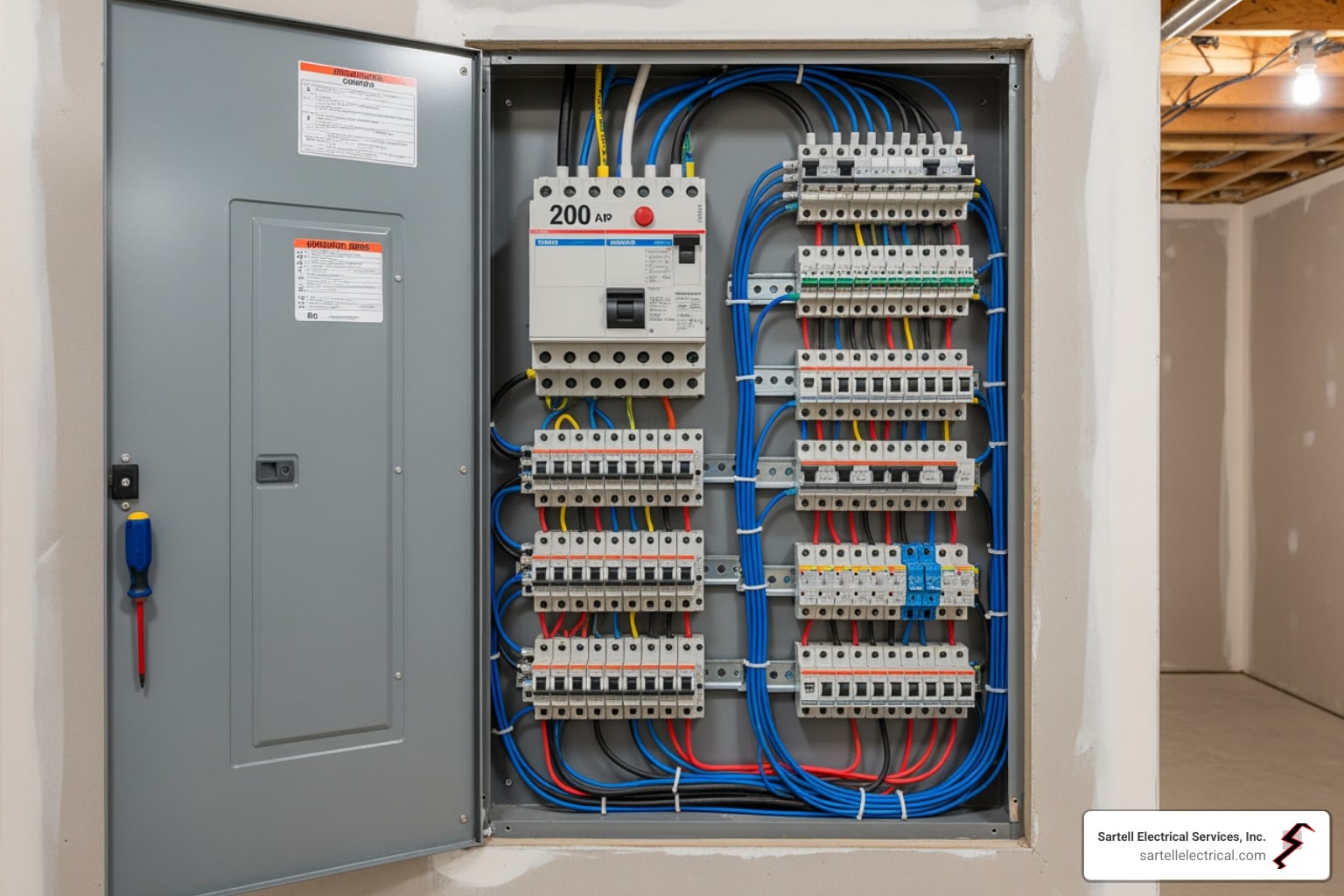
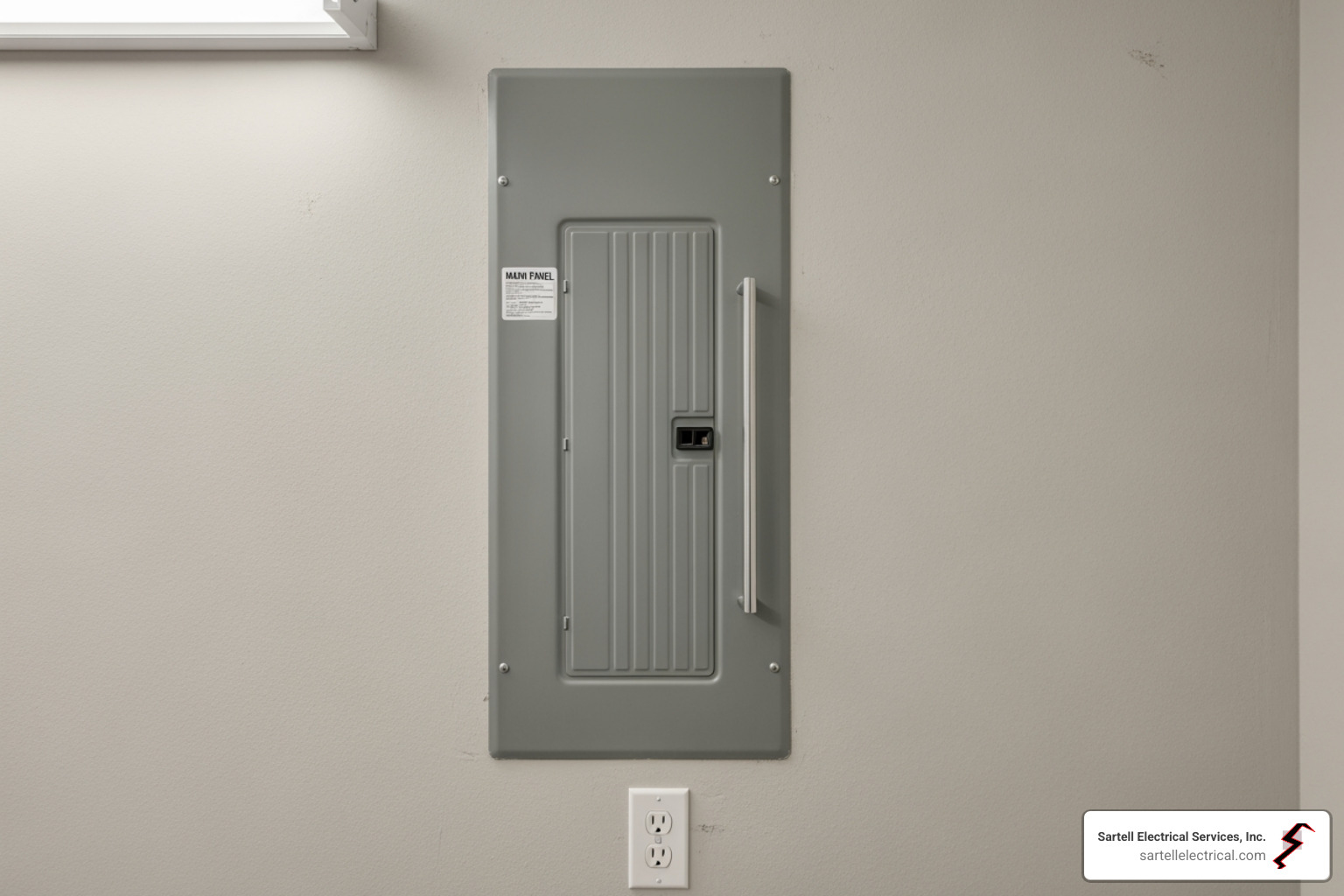
A 200 amp service upgrade involves replacing your home’s main electrical panel and service cables to increase its electrical capacity from a lower amperage (like 100 amps) to 200 amps. This upgrade enables your home to safely power modern appliances, EV chargers, and smart home devices simultaneously, preventing overloaded circuits and tripped breakers.
Quick Answer: Is a 200 Amp Service Upgrade Right for You?
You likely need a 200 amp service upgrade if:
Your breakers trip frequently when running multiple appliances
You’re adding an EV charger, hot tub, or other high-power equipment
Your home has an outdated fuse box or 60-100 amp panel
You’re planning a major renovation or home addition
Your lights dim when large appliances turn on
Average Cost: $1,500 to $4,000 (including permits, labor, and materials)
Timeline: 1 day for installation, 2-4 weeks total with permits and utility coordination
While 100-amp panels were once standard, they often can’t handle the demands of modern households, which include everything from central air conditioning to home offices and EV chargers. Upgrading to 200 amps is a crucial step for safety, home value, and future-proofing your property for tomorrow’s technology.
I’m Ed Sartell, President of Sartell Electrical Services. Since 1985, I’ve specialized in 200 amp service upgrades, and I’ve seen how the right electrical system transforms a home’s safety and functionality.
Understanding 200-Amp Service: The New Standard for Modern Homes
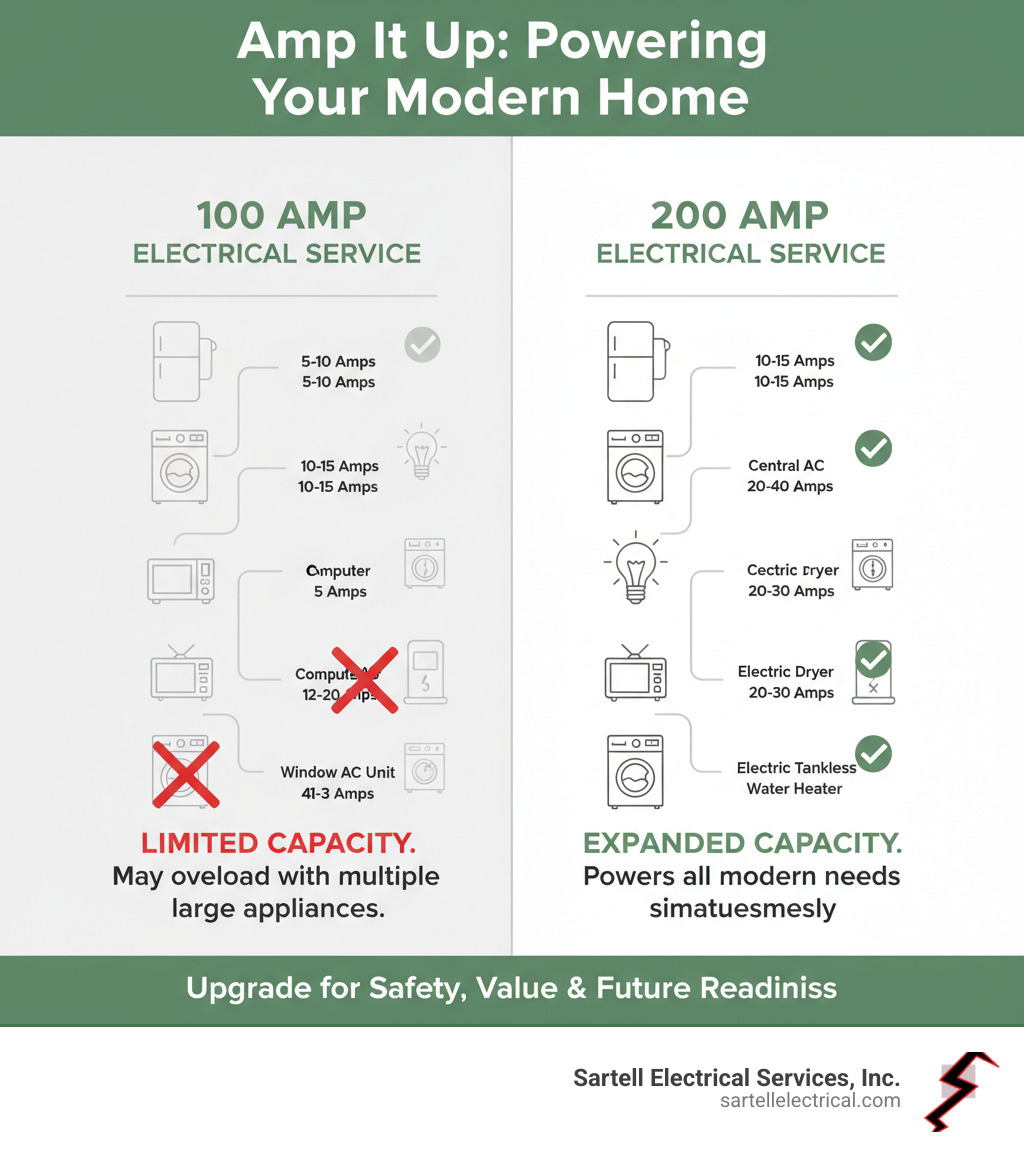
Amperage, or “amps,” measures the flow of electrical current into your home. Think of it like a water pipe: a bigger pipe allows more water through. A 200 amp service upgrade essentially doubles the size of your home’s electrical “pipe” from the old 100-amp standard.
A 100-amp service provides about 24,000 watts of power, which was sufficient for homes in the 1980s. Today, with high-demand appliances, that’s often not enough. A 200-amp service delivers 48,000 watts, providing ample power for modern needs. For example, a Level 2 EV charger can use 40-50 amps, an electric dryer 30 amps, and central air 20-30 amps. These can quickly max out a 100-amp system.
That’s why 200 amps is the new standard. It’s not a luxury; it’s a necessity for meeting today’s electrical demands and future-proofing your home for additions like solar panels or backup generators. A 200 amp service upgrade provides the capacity to grow. For a detailed look at the investment, see our guide on Home Electrical Panel Upgrade Cost.
Signs Your Current Electrical Service is Insufficient
Your home will give you warning signs when its power capacity is too low. Don’t ignore them:
Frequent breaker trips: If running the microwave and toaster at the same time causes a trip, your panel is overloaded.
Flickering or dimming lights: When large appliances turn on and lights dim, it means your system is strained.
Outdated fuse box: Fuse boxes are obsolete technology and lack modern safety features. A Fuse Box Replacement is a critical safety upgrade.
Overheating outlets or switches: Outlets that are hot to the touch or show scorch marks are a serious fire hazard.
Buzzing sounds from your electrical panel: A properly working panel is silent. Buzzing can indicate loose connections or an overloaded circuit.
Reliance on extension cords: If you depend on power strips because you lack outlets, your electrical infrastructure is outdated.
Planning major additions: An EV charger, hot tub, or home addition requires a capacity assessment. You can use this residential load calculator to assess your needs and see where you stand.
Key Benefits of Upgrading
A 200 amp service upgrade offers more than just convenience. Here are the key benefits:
Increased Capacity: Run multiple high-power appliances simultaneously without worry. No more “appliance roulette.”
Improved Safety: Modern 200-amp panels include advanced safety features like Arc Fault (AFCI) and Ground Fault (GFCI) circuit interrupters, which protect against electrical fires and shock.
Fire Risk Reduction: Upgrading an old, undersized panel is one of the most effective ways to reduce the risk of an electrical fire in your home.
Increased Home Value: A modern 200-amp service is a major selling point for homebuyers, signaling that a home is well-maintained and ready for their needs.
Energy Efficiency: A properly sized system distributes power more effectively and allows for the seamless integration of energy-saving technologies.
Code Compliance: An upgrade brings your home’s electrical system up to the current National Electrical Code (NEC) standards, which is important for insurance, permits, and safety.
Explore more ways to modernize your home with our Residential Electrical Upgrades services. We’ve been helping Massachusetts homeowners make these improvements for over three decades, and we’d be happy to help you too.
The Anatomy of a 200 Amp Service Upgrade
A 200 amp service upgrade is a complex job that must be performed by a licensed electrician to comply with the National Electrical Code (NEC) and ensure your family’s safety. At Sartell Electrical Services, we’ve been performing these upgrades in Massachusetts for over 30 years, adhering to the highest standards. For a deeper dive, see our Main Electrical Panel Upgrade Complete Guide.
Step 1: Professional Assessment and Planning
A successful upgrade begins with a thorough plan. Our process includes:
Initial Consultation: We discuss your current electrical issues and future plans, like adding an EV charger or finishing a basement.
Load Calculation: We perform a precise calculation of your home’s total electrical load to confirm that 200 amps is the right size for your needs. You can get a preliminary idea using this residential load calculator.
System Evaluation: We inspect your existing panel, meter, service cables, and grounding system to identify any outdated or unsafe components.
Panel Location Assessment: We determine the best location for the new panel based on accessibility and code requirements.
Service Type Review: We identify whether you have overhead or underground service, as this impacts the scope and cost of the project.
Challenge Identification: We look for potential issues, like old wiring or structural constraints, to ensure a smooth installation. A full review of your Residential Electrical Service is key.
Step 2: Permits, Inspections, and Utility Coordination
We handle all the administrative work for you. This is a critical part of the process that ensures your upgrade is safe and legal.
Permitting: A 200 amp service upgrade requires a permit from your local Massachusetts building department. We manage the entire application process to ensure full compliance. An electrician who suggests skipping permits is a major red flag.
Utility Coordination: We work directly with your utility company to schedule a power disconnection on the day of the upgrade. This appointment can take 2-4 weeks to schedule, so planning ahead is essential. The power will be off for 4-8 hours during the installation. The utility may also need to assess their equipment to support the increased load.
Step 3: The Upgrade Process
On installation day, our team executes the plan efficiently and safely.
Power Shut-Off: The utility company disconnects power to your home to ensure a safe work environment.
Old Panel Removal: We carefully remove your old panel and label every circuit.
New 200-Amp Panel Installation: We install the new, modern panel, which includes advanced safety features like AFCI and GFCI breakers.
Service Entrance Cable Replacement: We replace the old, smaller wires with new, larger cables rated for 200 amps.
Meter Base Upgrade: We often replace the meter base to accommodate the higher amperage and meet current codes.
Grounding System Update: We upgrade your home’s grounding system to meet modern safety standards, protecting against shock and fire.
Final Inspection & Reconnection: A local electrical inspector must approve the work. Once it passes, we coordinate with the utility company to restore your power.
Let’s talk numbers. A 200 amp service upgrade is an investment, and you deserve to understand what goes into the cost. Nationally, most homeowners pay between $1,500 and $4,000 for a complete upgrade, though complex situations can push costs higher.
What makes one upgrade cost more than another? Several factors come into play. Labor costs represent a large portion of the bill, covering the licensed electricians with specialized training to work safely. Material costs include the new 200-amp panel, breakers, and cables. Permit fees vary by municipality, and the complexity of your job (like having underground service) also affects the price. For a detailed breakdown, check out our guide on Change Electrical Panel from 100 to 200 Cost.
Cost Factor
Typical Range
Notes
Total Project Cost
$1,500 – $4,000+
Varies significantly based on job complexity
Labor
$800 – $2,500
Licensed electrician rates, includes utility coordination
Materials
$400 – $1,200
Panel, breakers, cables, meter base, grounding equipment
Permits & Inspections
$150 – $400
Varies by Massachusetts municipality
Service Type
Varies
Underground service typically costs more than overhead
Additional Wiring
$500 – $2,000+
If existing wiring needs updates to handle new capacity
One thing I always tell homeowners: if a quote seems too good to be true, it probably is. Electrical work requires proper licensing and permits, and anyone offering to do it on the cheap is putting your home at risk.
How an Upgrade Boosts Home Value and Safety
This upgrade is about more than just cost; it’s about adding tangible value and protection.
Improved Safety: The primary benefit is eliminating the fire risk associated with overloaded, outdated electrical systems. Modern panels include AFCI and GFCI protection to prevent fires and electrical shock.
Return on Investment: Real estate experts agree that an upgraded electrical system increases home value. It’s a key feature for today’s homebuyers, who expect a home to be ready for EV chargers and smart technology.
Increased Buyer Appeal: A 200-amp panel signals to potential buyers that your home is modern, safe, and move-in ready, which can lead to a faster sale at a better price.
Insurance Benefits: Many insurance companies offer lower premiums for homes with updated, code-compliant electrical systems and may even require an upgrade for coverage on older homes.
After nearly four decades in this business, I’ve seen that the peace of mind from a safe, modern electrical system is worth every penny. Learn more about the process on our Home Electrical Panel Upgrade page.
Why Your Home’s Electrical System Matters More Than Ever
A 200 amp service upgrade increases your home’s electrical capacity (typically from 60–100 amps to 200 amps) by replacing the main panel and service entrance cables. The result is safer, reliable power for modern loads like EV chargers, HVAC, and smart home tech—without nuisance trips.
Quick Answer: Is a 200 Amp Service Upgrade Right for You?
Breakers trip when multiple appliances run
You’re adding an EV charger, hot tub, or other high-power equipment
Your home has a fuse box or 60–100 amp panel
You’re planning a renovation or addition
Lights dim when large appliances start
Average Cost: $1,500 to $4,000 (permits, labor, materials)
Timeline: 1 day for installation; 2–4 weeks total with permits and utility coordination
Bottom line: 200 amps is today’s practical standard. It boosts safety, supports home value, and prepares your property for future electrification.
I’m Ed Sartell, President of Sartell Electrical Services. Since 1985, we’ve helped Massachusetts homeowners complete safe, code-compliant 200 amp service upgrades.
Understanding 200-Amp Service: The New Standard for Modern Homes
Amperage is the amount of electrical current your home can draw—more amps mean more available power. Moving from 100 amps (about 24,000 watts) to 200 amps (about 48,000 watts) is now the practical standard, especially with EV chargers, electric dryers, central air, and other high-demand appliances. For costs, see Home Electrical Panel Upgrade Cost.
Signs Your Current Electrical Service is Insufficient
Frequent breaker trips or the need to juggle appliances
Warm or scorched outlets/switches; buzzing at the panel
Heavy reliance on power strips/extension cords
Planning an EV charger, hot tub, or addition
Not sure? Use this residential load calculator to assess your needs and see where you stand: https://douglashelmer.com/calculators/electrical/residential-service/index.htm
Key Benefits of Upgrading
Increased capacity for simultaneous high-demand use
Modern safety (AFCI/GFCI) and reduced fire risk
Higher buyer appeal and potential home value boost
Better integration of energy-saving and smart-home tech
Code compliance today and flexibility for tomorrow
A 200 amp service upgrade is not DIY. It involves high-voltage work, strict National Electrical Code (NEC) compliance, permits, and utility coordination. For a full overview, see our Main Electrical Panel Upgrade Complete Guide.
Step 1: Professional Assessment and Planning
Initial consultation: current issues and future plans (EVs, additions)
Load calculation to confirm 200 amps is right for your home
System evaluation: panel, meter, service cables, grounding
Panel location checked for accessibility and code compliance
Service type review (overhead vs. underground) and scope/cost impacts
Identify challenges (space constraints, old wiring, etc.)
Most homeowners spend $1,500–$4,000 for a complete 200 amp service upgrade, depending on labor, materials, permits, access, and whether the service is overhead or underground. For a deeper breakdown, see Change Electrical Panel from 100 to 200 Cost.
Typical cost components:
Labor: largest portion of the project
Materials: 200-amp panel, breakers, cables, meter base, grounding
Permits/inspections: varies by municipality
Complexity: underground service, long meter-to-panel runs, or remediation of outdated wiring increase costs
How an Upgrade Boosts Home Value and Safety
Safety: modern AFCI/GFCI protection and reduced fire risk
Buyer appeal: move-in-ready capacity for EVs and smart tech
Insurance: updated, code-compliant systems may improve eligibility and rates
Future-proofing: room for renovations, solar, backup power