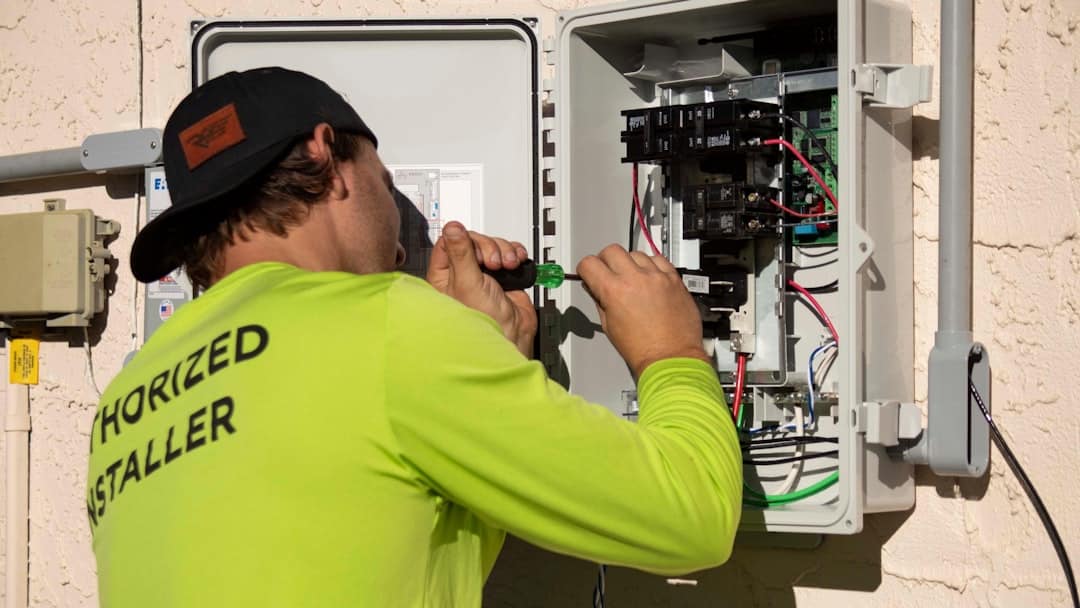
Is Your Electrical Panel Holding Your Home Back?
Panel box replacement is one of the most important electrical upgrades a homeowner can make. Here's a quick overview of what it typically involves:
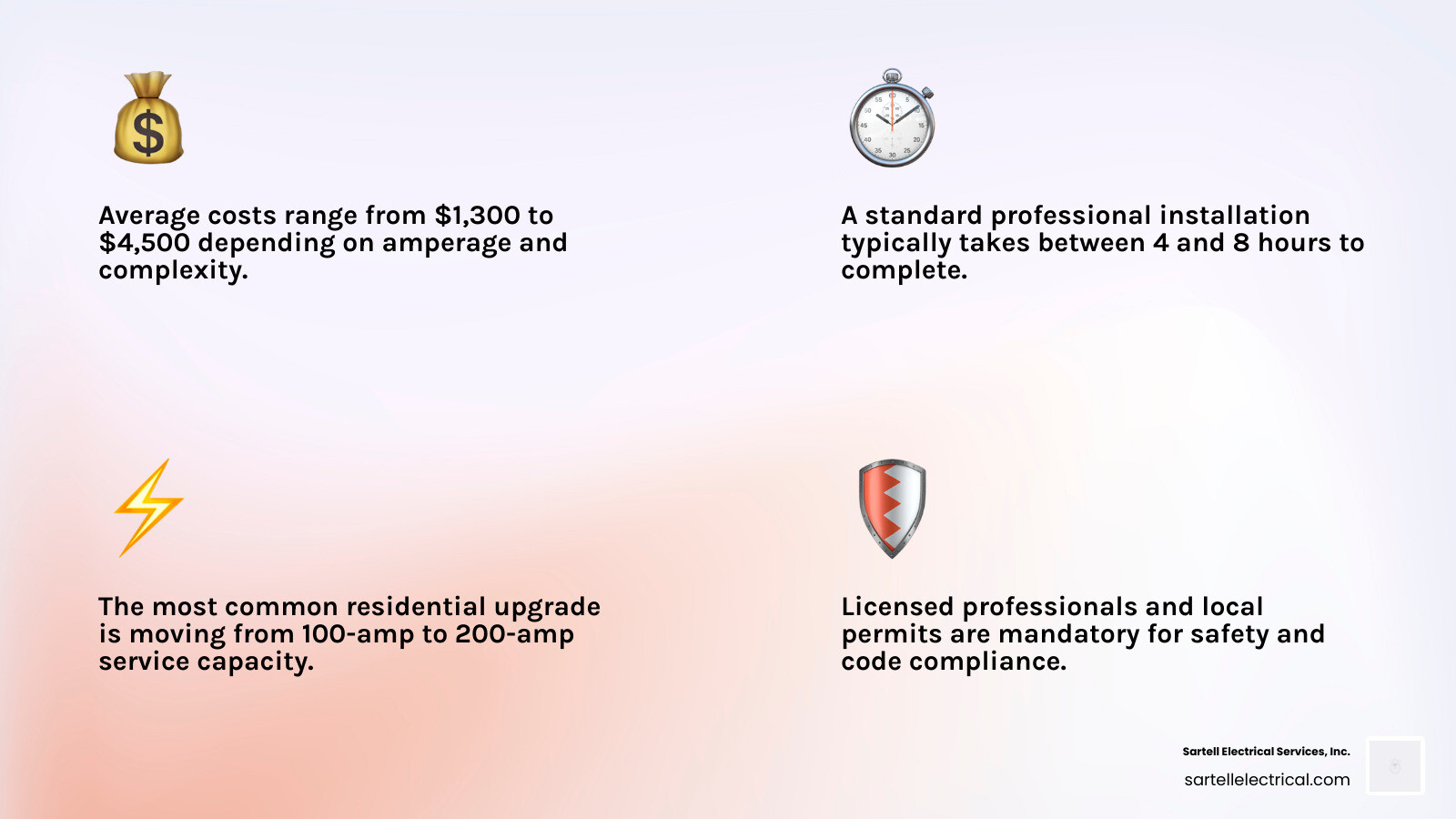
- Average cost: $1,300–$4,500 depending on amperage and complexity
- Time to complete: 4–8 hours for a standard swap; up to several weeks including permits and utility coordination
- Most common upgrade: 100-amp to 200-amp service
- Permit required: Yes, in virtually every U.S. jurisdiction
- DIY safe? No — always hire a licensed electrician
Your home's electrical panel is its power hub. Every light, outlet, appliance, and device depends on it. But most panels were designed decades ago — for a world without EV chargers, smart home systems, or heat pumps.
Today's homes demand more power than ever. And when your panel can't keep up, you don't just get flickering lights. You get safety hazards, insurance headaches, and a home that's stuck in the past.
The good news? Understanding what replacement actually costs — and what drives those costs — puts you in control.
I'm Ed Sartell, President of Sartell Electrical Services in Reading, Massachusetts, and I've been overseeing panel box replacement projects for homeowners and businesses across the state since 1985. In this guide, I'll walk you through everything you need to know — from realistic pricing to choosing the right panel for your home's future.
Handy Panel box replacement terms:
- Electrical Contractor Service
- safe electric registered electrical contractor
- registered electrician near me
Understanding the Cost of Panel box replacement
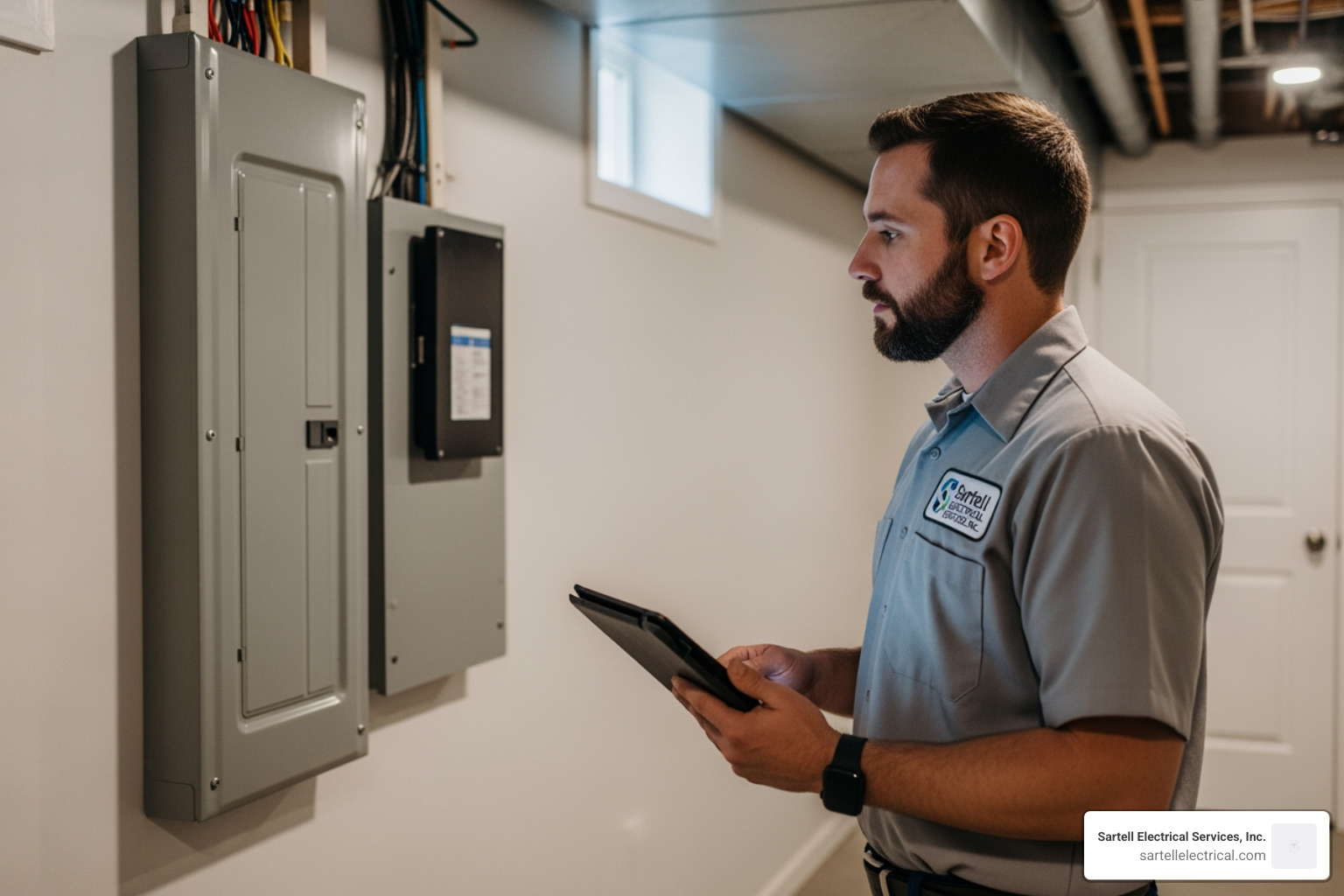
When we talk to homeowners in the Greater Boston area, the first question is always about the price tag. As of May 2026, the average cost for a standard panel box replacement generally falls between $2,000 and $4,000. However, if you are simply doing a "like-for-like" swap of a damaged unit without increasing capacity, you might see prices as low as $1,300.
On the other hand, if your project involves a full service upgrade—meaning we aren't just changing the box, but also the meter socket and the service mast—costs can climb. For large homes requiring 400-amp service, or those needing underground wiring updates, the investment can range from $5,000 to $25,000.
| Service Level | Typical Cost Range | Best For |
|---|---|---|
| 100-Amp Replacement | $1,200 – $2,500 | Small homes with gas appliances |
| 200-Amp Upgrade | $2,500 – $4,500 | Modern homes, EVs, heat pumps |
| 400-Amp Upgrade | $5,000 – $15,000+ | Large estates, multiple EV chargers |
For a deeper dive into these numbers, check out Your Guide to Electrical Panel Replacement Costs and our resource on Main Service Panel Replacement: Scope, Steps, and Standards.
Factors Influencing the Final Price
The price isn't just about the metal box on the wall. Several technical variables impact the labor and material costs:
- Wiring Complexity: If your home has older cloth-insulated wiring or knob-and-tube remnants, we often have to perform additional rewiring to safely connect to the new panel.
- Panel Location: Moving a panel from a cramped closet to an accessible area (like a garage or basement) can add $1,000 to $2,700 due to the need to reroute every single circuit in the house.
- Modern Safety Breakers: Current National Electrical Code (NEC) standards often require Arc-Fault Circuit Interrupter (AFCI) and Ground-Fault Circuit Interrupter (GFCI) breakers. These high-tech breakers cost significantly more than standard ones—sometimes adding $400 to $800 to the total material cost.
- Labor Rates: In Massachusetts, especially in Middlesex and Essex counties, licensed labor rates typically range from $100 to $250 per hour.
You can learn more about these variables in our guide on Electrical Breaker Box Installation Cost.
Hidden Costs and Potential Savings
Many homeowners forget to budget for the "aftermath" of a panel box replacement. If we have to cut into walls to move wires, you'll need to account for drywall repair and painting, which can cost $1.50 to $3.00 per square foot. Additionally, local utility companies may charge a fee to disconnect and reconnect your service at the street.
However, there is good news! Under the current federal energy guidelines (as of May 2026), many homeowners qualify for tax credits when upgrading their panels to support electrification (like installing a heat pump). You might also find that a new panel lowers your homeowners insurance premiums, especially if you're replacing a dangerous legacy brand. For more on the specific financial breakdown, see the Cost to Change Out Electrical Panel.
When to Replace Your Electrical Panel
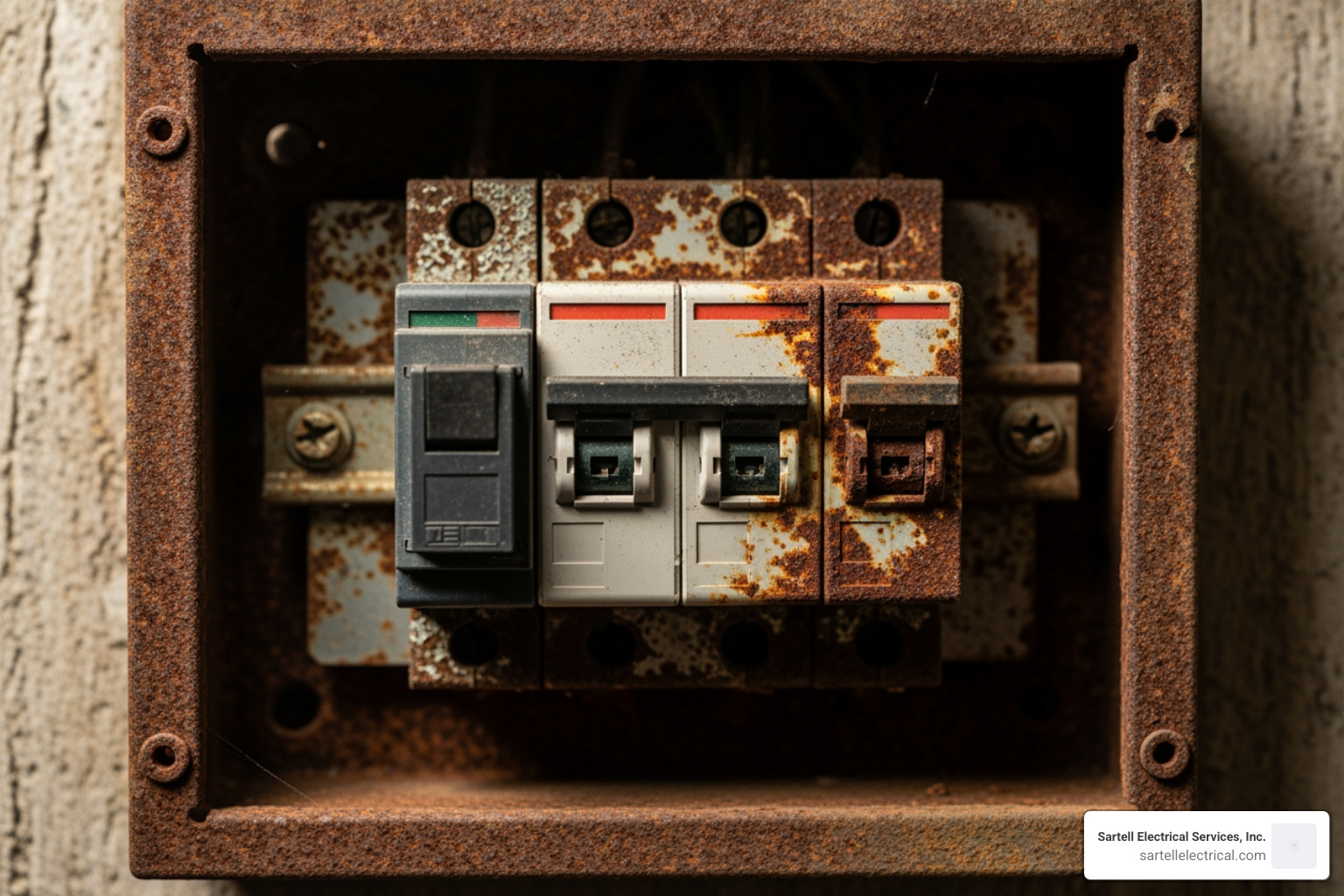
Electrical panels are durable, but they aren't immortal. Most units have a reliable lifespan of 25 to 40 years. If your home was built before 1990 and still has its original equipment, you are likely nearing the end of that window. Beyond age, insurance companies in Massachusetts are becoming increasingly strict, often requiring a panel box replacement before they will issue or renew a policy on an older home.
To understand the full scope of your home's system, read our Residential Main Electrical Panel Complete Guide.
Signs You Need a Panel box replacement
Don't wait for a fire to tell you there's a problem. Keep an eye (and ear) out for these red flags:
- Flickering Lights: If your lights dim when the vacuum or microwave kicks on, your panel is struggling to distribute the load.
- Frequent Tripping: Breakers that trip often aren't just annoying; they are a sign that the circuit is overloaded or the breaker itself is failing.
- Physical Damage: Rust, corrosion (common in coastal towns like Salem or Gloucester), or visible burn marks are signs of moisture or overheating.
- Strange Noises: A healthy panel is silent. If you hear buzzing, hissing, or crackling, call us immediately.
For a checklist of these symptoms, refer to our Electrical Panel Upgrade Cost Guide 2025.
Dangerous Legacy Brands to Avoid
Some panels were "born" with defects. If you see these names on your panel door, we recommend immediate replacement regardless of whether they "seem" to be working:
- Federal Pacific Electric (FPE): Famous for the "Stab-Lok" breaker, which has a high failure rate of not tripping during a short circuit.
- Zinsco: These panels often have bus bars that corrode and breakers that melt onto them.
- Challenger: Known for overheating issues that can lead to fires.
These brands are documented fire hazards. You can find more details on why these systems fail in our Main Electrical Panel Upgrade Complete Guide.
Choosing the Right Amperage for Your Home
Selecting the right capacity is the most critical decision in the panel box replacement process. In 2026, a 100-amp panel is considered the bare minimum. While it might suffice for a small home with gas heating and no major power-hungry hobbies, it leaves zero "headroom" for future growth.
A 200-amp service is now the standard for modern residential living. It provides enough power for central air, electric ovens, and modern laundry suites simultaneously. For the cost difference between 100 and 200 amps, see our comparison: Change Electrical Panel from 100 to 200 Cost.
Future-Proofing with Panel box replacement
We always advise our clients in Reading and the Greater Boston area to think 10 years ahead. Are you planning to buy an EV? Are you considering a heat pump to replace an old oil furnace? Do you want to add solar panels? All of these require significant electrical capacity.
Upgrading to 200 or even 400 amps now prevents you from having to pay for a second upgrade in five years. This "future-proofing" is a major selling point for home resale value. Learn more about preparing your home for the next decade here: Home Electrical Panel Upgrade.
Main Breaker Panels vs. Subpanels
During a panel box replacement, we also look at how power is distributed.
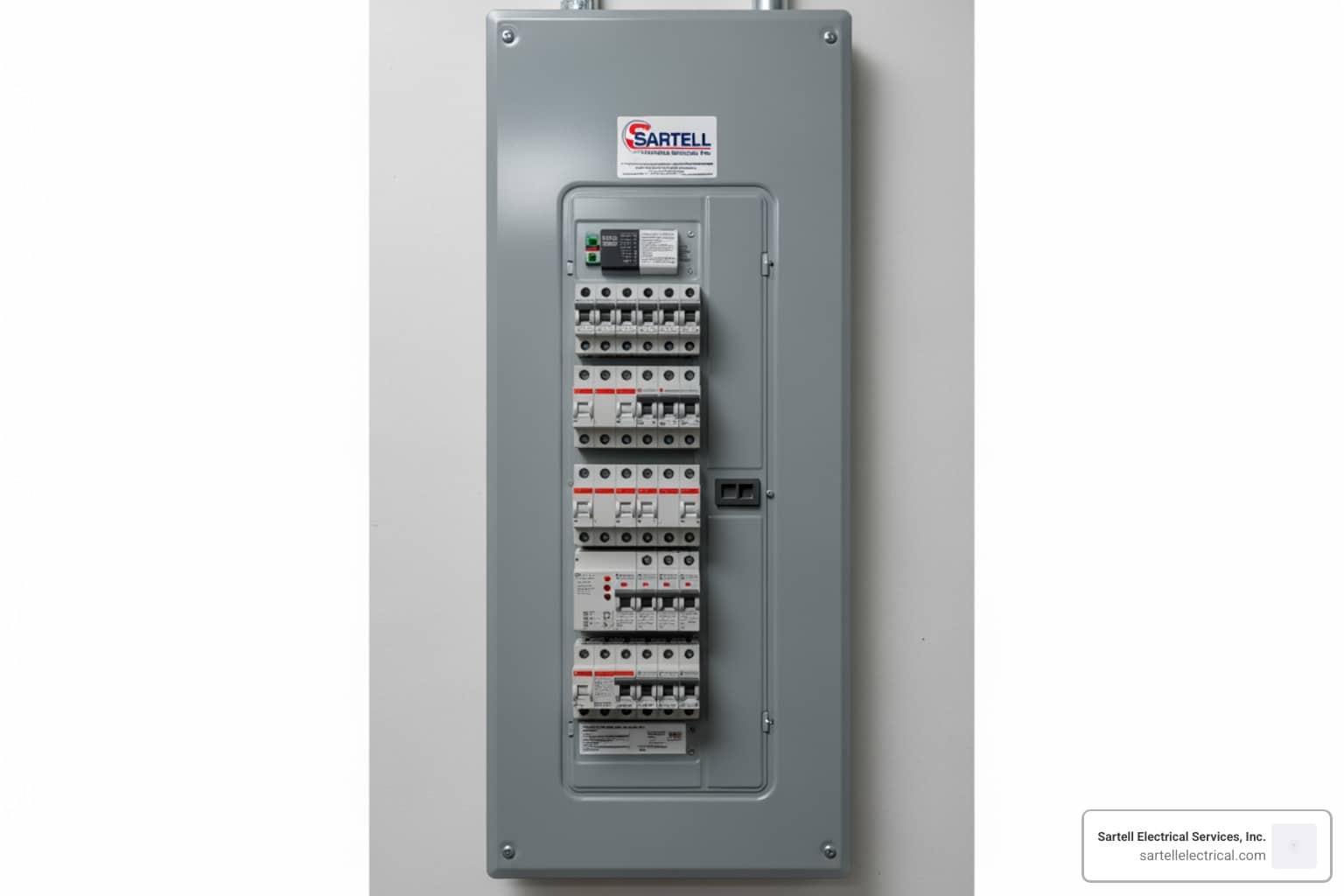
- Main Breaker Panel: This is the "boss" box that controls all the power coming into the home.
- Subpanel: This is a smaller box used to add more circuit space in a specific area, like a garage workshop or a new home addition.
If your main panel is in good shape but just out of room, a subpanel like the GE PowerMark Plus 125 Amp 6-Space 12-Circuit Indoor Main Lug Circuit Breaker Panel might be a cost-effective alternative to a full upgrade.
The Professional Replacement Process and Code Compliance
Replacing a panel is a highly regulated process. In Massachusetts, we follow the latest NEC standards, which currently emphasize surge protection and emergency disconnects. When we perform a panel box replacement, we don't just swap the box; we ensure the entire grounding system is up to code, often involving the installation of two ground rods 6-8 feet apart.
For complex installations involving multiple enclosures, we use high-quality accessories like the Square D Panelboard Enclosure Pull Box to keep the wiring organized and compliant.
Why Licensed Professionals are Essential
Electrical work is not a DIY project. The risks include:
- Electrocution: You are working with the main service lines that cannot be turned off by a simple switch.
- Fire Hazards: An improperly torqued wire can arc and start a fire behind your walls.
- Insurance Denial: If a fire occurs and the work wasn't done by a licensed pro with a permit, your insurance company may refuse to pay the claim.
- Resale Issues: Home inspectors will flag unpermitted electrical work, which can tank a home sale.
Read more about why professional installation is the only safe choice: Electrical Panel Change Cost Guide.
Permitting and Utility Coordination
A panel box replacement is a team effort between the electrician, the local building department (the AHJ), and the utility company (like National Grid or Eversource).
- Permit Filing: We secure the permit before work begins.
- Scheduling: We coordinate with the utility to "cut" the power.
- Installation: We perform the swap (usually taking 4–8 hours).
- Inspection: A local inspector must verify the work.
- Reconnection: The utility restores power once the inspector gives the "green tag."
This process ensures your home is safe and legal. For a breakdown of the timeline, see Understanding the Price Tag of Your Electrical Panel Upgrade.
Frequently Asked Questions about Panel Box Replacement
How long does the replacement process typically take?
The actual time your power is out is usually between 4 and 8 hours. However, the "end-to-end" process—including getting permits, scheduling the utility company, and the final inspection—can take 2 to 4 weeks. If your home requires extensive rewiring due to its age, the labor phase could extend to several days.
Can I electrify my home without a full panel upgrade?
Sometimes! If you have a 100-amp or 125-amp panel that is in excellent condition, you may be able to add an EV charger or heat pump by using "smart" circuit-sharing devices or energy-efficient appliances. However, if your panel is under 100 amps or is a dangerous brand, a full panel box replacement is mandatory for safety.
What are the most reliable brands for new breaker boxes?
We typically recommend industry leaders like Square D (Schneider Electric), Siemens, Eaton, and GE. These brands offer excellent warranties, are widely available, and meet the highest safety standards for modern residential use.
Conclusion
At Sartell Electrical Services, Inc., we’ve seen it all—from 100-year-old fuse boxes in historic Boston brownstones to high-tech 400-amp systems in Reading. With over 30 years of experience serving Massachusetts, we pride ourselves on making the panel box replacement process transparent, safe, and efficient.
Don't let an outdated panel put your family at risk or limit your home's potential. Whether you're in Middlesex, Essex, or Norfolk County, we are here to help you modernize your power hub.
Schedule your professional panel assessment today and ensure your home is ready for whatever the future brings.