Why the Cost for Upgrading Electrical Panel Matters to Your Bottom Line
The cost for upgrading electrical panel systems typically ranges from $1,300 to $3,000 for most residential and commercial properties, though your final price depends on several critical factors:
Additional costs may include permits ($50–$300), rewiring, panel relocation ($800–$3,000), or specialized breakers.
Your facility’s electrical panel is the central nervous system of your operation. When you’re managing a commercial building, healthcare facility, or industrial project, an outdated or undersized panel isn’t just an inconvenience—it’s a liability that threatens project timelines, safety compliance, and your budget.
Modern power demands have changed dramatically. Electric vehicle charging stations, smart building systems, advanced HVAC controls, and increasingly sophisticated equipment all require electrical capacity that panels from even 15 years ago weren’t designed to handle. For business and institutional clients, the question isn’t whether to upgrade, but when and how much.
Understanding the true cost for upgrading electrical panel systems means looking beyond the sticker price. You need to factor in labor rates, permit requirements, the condition of your existing wiring, and whether your project requires additional services like rewiring or panel relocation. For critical facilities like hospitals or data centers, you also need to consider minimal downtime and coordinated installation schedules.
I’m Ed Sartell, and since founding Sartell Electrical Services in 1985, I’ve helped hundreds of businesses and institutions steer the cost for upgrading electrical panel systems while maintaining strict project timelines and budgets. Whether you’re planning a facility expansion or addressing code compliance issues, understanding these costs upfront helps you make informed decisions that protect your investment.
Know your cost for upgrading electrical panel terms:
Key Factors Influencing the Cost for Upgrading Electrical Panel
Upgrading an electrical panel is a significant investment in your property’s safety, functionality, and future. However, the exact cost for upgrading electrical panel can fluctuate widely based on several key factors. We’ve seen projects in Massachusetts range from a few hundred dollars to tens of thousands, depending on the complexity and scope. Understanding these variables is crucial for accurate budgeting and avoiding unexpected expenses.
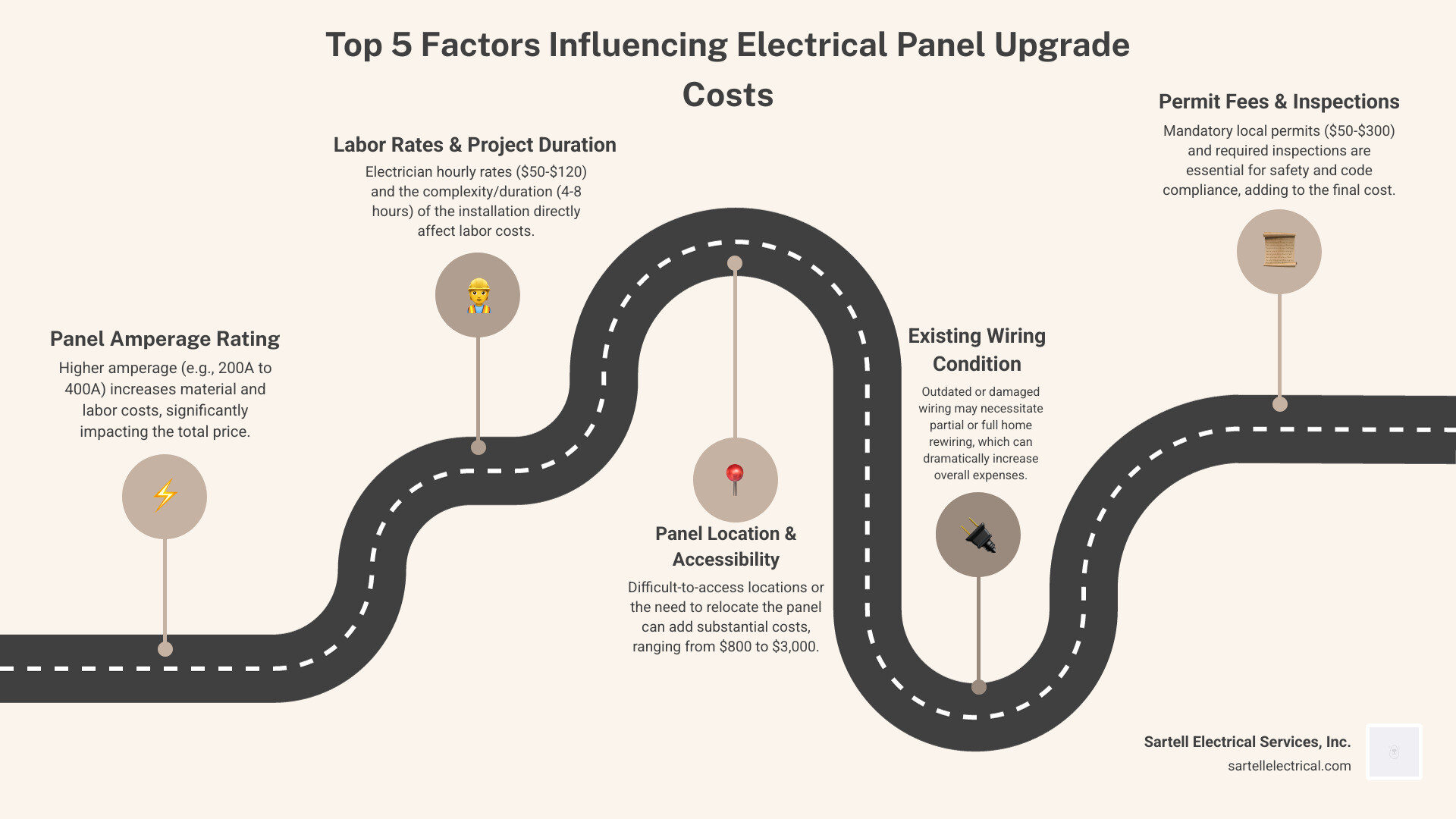
The primary factors influencing the cost include:
Amperage: The size of the new panel (e.g., 100A, 200A, 400A) is a major cost driver. Higher amperage panels are generally more expensive.
Labor Rates: The hourly rate of a licensed electrician and the estimated time for the job significantly impact the total.
Panel Location: Whether the panel is indoors or outdoors, and its accessibility, can affect labor time and potential additional work.
Wiring Condition: If existing wiring is old, damaged, or not up to code, additional rewiring will be necessary, adding to the cost.
Permits: Local building codes in Massachusetts require permits for electrical work, and these fees vary by municipality.
The electrician’s labor rate is often the largest component of your electrical panel upgrade cost. In Massachusetts, licensed electricians typically charge between $50 and $120 per hour. However, this can vary based on experience, reputation, and the complexity of the job. For instance, a complex industrial upgrade will command a different rate than a standard residential panel swap.
A typical electrical panel upgrade can take anywhere from four to eight hours for the actual panel swap. However, the overall project, including planning, utility coordination, and inspections, can extend over several days. The cost of labor is usually set by local standards, with organizations like the National Electrical Contractors Association influencing industry benchmarks.
Choosing a qualified and experienced electrician is paramount. Not only do they ensure the job is done safely and according to code, but their expertise can also prevent costly mistakes down the line. Our team at Sartell Electrical Services prioritizes safety and efficiency in all our projects, from Electrical Installation and Maintenance to complex upgrades, ensuring your system meets all local regulations in Massachusetts.
Cost Breakdown by Panel Amperage
The amperage of your electrical panel dictates how much electricity your property can safely draw at one time. Upgrading to a higher amperage is often necessary to accommodate modern electrical demands. Here’s a general breakdown of costs based on common amperage levels:
Amperage
Panel Only Cost
Panel Plus Installation Cost
New Installation Cost (if applicable)
100A
$100–$200
$800–$1,500
$1,200–$1,600
200A
$250–$350
$1,300–$3,000
$1,800–$2,500
300A
$350–$500
$1,800–$3,500
$2,000–$4,500
400A
$500+
$2,000–$4,000
$4,000–$6,000
Note: These ranges are averages and can vary based on specific project requirements and regional costs within Massachusetts.
The most common residential upgrade we perform in Massachusetts is from 100 amps to 200 amps, which typically averages $1,300 to $3,000. This upgrade provides sufficient power for most modern homes, including common additions like central air conditioning, electric vehicle chargers, and multiple high-demand appliances. For larger homes or those with extensive electrical needs, a 300-amp or 400-amp service might be necessary.
Beyond the main panel, you might also need specialty breakers. Arc Fault Circuit Interrupters (AFCI) and Ground Fault Circuit Interrupters (GFCI) are crucial safety devices that prevent fires and electrocution, respectively. These specialty breakers typically cost $35–$60 each.
For detailed information on a 200 amp upgrade, check out our guide on 200 Amp Service Upgrade.
Additional Costs and Services to Consider
When budgeting for the cost for upgrading electrical panel, it’s important to account for potential additional services that might be required. These can sometimes significantly increase the overall price.
Permit Fees: Most municipalities in Massachusetts require permits for electrical panel upgrades to ensure the work meets local building codes and safety standards. These fees typically range from $50 to $300. Your electrician should handle the permitting process, but it’s always good to confirm whether this cost is included in their estimate.
Full Home Rewiring: If your existing wiring is old, unsafe (like knob-and-tube or aluminum wiring common in older Massachusetts homes), or simply inadequate for the new panel’s capacity, a full home rewiring project might be necessary. This is a substantial undertaking, with costs that can range from $6 to $10 per square foot, potentially reaching $12,000 to $20,000 for an entire house.
Relocating a Panel: Sometimes, the existing electrical panel is in an inconvenient or non-compliant location. Moving it can add $800 to $3,000 to the total cost. This includes additional wiring, potential wall modifications, and subsequent drywall repairs. Moving a panel outdoors, a common requirement for safety and accessibility, can also fall into this range.
Subpanel Installation: If you’re adding a new space like a garage, home office, or a separate apartment unit, installing a subpanel can be an efficient way to distribute power without overhauling your main panel. Subpanel installation costs typically range from $500 to $1,750, depending on its amperage (50A, 100A, 150A) and distance from the main panel.
Fuse Box Replacement: Many older homes in Massachusetts still operate with fuse boxes, which are outdated and often insufficient for modern electrical demands. Replacing a fuse box with a circuit breaker panel typically costs between $1,500 and $4,500. This upgrade is crucial for safety and can significantly improve your property’s value and functionality. You can learn more about this process in our Fuse Box Replacement guide.
Meter Box Upgrade: The meter box, which houses your electric meter, might also need an upgrade or replacement, especially if it’s old or damaged. The meter box itself can cost $50–$250, but with installation, the total can be $1,800–$3,500, particularly if it involves utility coordination.
Is an Electrical Panel Upgrade Worth the Investment?
Absolutely! While the initial cost for upgrading electrical panel might seem significant, it’s an investment that pays dividends in safety, capacity, property value, and future-proofing your home or business in Massachusetts.
7 Telltale Signs You Need an Upgrade
How do you know if your electrical panel is crying out for attention? Here are seven telltale signs we often encounter during our residential and commercial electrical inspections in Massachusetts:
Frequent Breaker Trips: If your circuit breakers are constantly tripping, especially when you use multiple appliances, it’s a clear sign your panel is overloaded and can’t handle your power demands.
Flickering or Dimming Lights: Lights that flicker or dim, particularly when a large appliance turns on, indicate an insufficient power supply or an overloaded circuit.
Burning Smell or Scorch Marks: A burning odor coming from your electrical panel, or visible scorch marks on the panel itself or around outlets, is a serious fire hazard and requires immediate attention.
Buzzing or Crackling Sounds: Unusual sounds like buzzing, crackling, or sizzling emanating from your electrical panel are red flags that indicate loose connections or internal damage.
Your Home Has a Fuse Box: While charmingly vintage, fuse boxes are outdated and can’t provide the safety or capacity of modern circuit breaker panels. If your property still has one, an upgrade is highly recommended.
You’re Planning a Major Renovation or Appliance Addition: Adding a hot tub, central air conditioning, an electric vehicle charger, or a new kitchen full of high-power appliances will likely exceed your current panel’s capacity. Proactive upgrading saves headaches later.
Your Panel is Over 25 Years Old: Electrical panels have a lifespan of about 25-40 years. If your panel is approaching or has exceeded this age, its components are likely degrading, increasing the risk of malfunctions and safety issues.
The Benefits: Why the cost for upgrading electrical panel is justified
The benefits of an electrical panel upgrade extend far beyond simply keeping the lights on. It’s about securing your property and enhancing its capabilities for years to come.
Fire Prevention and Electrical Safety: Outdated or overloaded panels are a leading cause of electrical fires. Each year, electrical issues cause over 51,000 fires in the U.S. Upgrading ensures your system can safely handle your electrical load, significantly reducing the risk of fire and electrocution.
Increased Power Capacity: A new, higher-amperage panel provides the necessary power for modern appliances, smart home technology, and electric vehicle charging. This means no more tripping breakers when the microwave and hairdryer are on simultaneously.
Support for Modern Technology: From energy-efficient HVAC systems to advanced medical equipment in healthcare facilities, contemporary technology demands consistent and ample power. An upgraded panel ensures smooth operation and prevents damage to sensitive electronics.
Increased Property Value: An updated electrical system is a major selling point. Studies show that over 50% of home buyers would pay more for a home with an updated electrical system. It signals to potential buyers or tenants that the property is safe, well-maintained, and ready for modern living or business operations.
Lower Homeowners Insurance: Some insurance providers may offer reduced rates for properties with updated electrical systems, recognizing the decreased risk of electrical fires and related damage.
Future-Proofing: With the increasing trend towards electrification and smart technologies, an upgraded panel prepares your property for future innovations and energy demands. This proactive approach saves you money and hassle down the road.
For more insights into modernizing your property’s electrical system, check out our resources on Residential Electrical Upgrades.
The Upgrade Process: What to Expect
Undertaking an electrical panel upgrade can feel daunting, but with a clear understanding of the process and the right professionals, it’s a smooth and manageable project. From our experience in Massachusetts, a typical residential panel upgrade takes about one to three days, while larger commercial or industrial projects might require more extensive planning and execution.
When it comes to electricity, there’s no room for DIY. Attempting to upgrade an electrical panel yourself is incredibly dangerous and can lead to severe consequences:
Electrocution Risk: Working with live electrical systems carries a high risk of severe injury or even death by electrocution.
Fire Hazard: Improper wiring or installation can create fire hazards, putting your property and its occupants at extreme risk. The National Fire Protection Association highlights the significant number of electrical fires each year, often due to faulty wiring or systems.
Code Violations: Electrical work must comply with strict national and local building codes. DIY installations almost always result in code violations, which can lead to fines and require expensive professional remediation.
Voiding Insurance: Most homeowner’s or commercial property insurance policies will not cover damages resulting from unpermitted or improperly performed electrical work.
For these critical reasons, an electrical panel upgrade should only be performed by a Licensed Home Electrician or a certified commercial electrician. Our team is fully licensed and insured, ensuring that all work is completed safely, correctly, and up to code in all our Massachusetts service areas.
A Typical Project Timeline
While every project has its unique nuances, here’s a general timeline for an electrical panel upgrade:
Consultation and Quote (1-3 days): We start with an on-site evaluation to assess your current electrical system, discuss your needs, and provide a detailed quote. This typically takes 15-30 minutes for the initial assessment.
Permitting Process (1-2 weeks): Once you approve the quote, we handle all necessary permit applications with your local municipality in Massachusetts. This ensures the work complies with all local regulations.
Installation Day (4-8 hours for power outage, 1-3 days total):
Day 1: Inspection and Disconnection: We coordinate with your utility company to temporarily disconnect power to your property. This is a crucial safety step. The old panel is removed, and preparations are made for the new one. Expect a power outage for 4-8 hours on this day. We recommend keeping refrigerators and freezers closed to preserve food.
Day 2 (if needed): Installation: The new electrical panel is installed, all circuits are carefully wired, and the system is thoroughly tested.
Day 3 (if needed): Inspection and Final Testing: The municipal inspector will review the work to ensure it meets all codes. Once approved, power is permanently restored, and we conduct final tests to confirm everything is working perfectly.
For commercial and industrial clients, we work closely with you to schedule work during off-peak hours or planned shutdowns to minimize disruption to your operations.
How to Save on the cost for upgrading electrical panel
While an electrical panel upgrade is an essential investment, there are ways to manage and potentially reduce the overall cost for upgrading electrical panel:
Federal Tax Credits: Homeowners in Massachusetts (and nationwide) can take advantage of the Energy Efficient Home Improvement Credit. This credit allows you to save up to 30% of the project’s cost, with a limit of $600 for electrical panel upgrades that enable certain energy efficiency improvements. Always consult with a tax professional to understand eligibility.
Local Utility Rebates: Check with your local utility providers in Massachusetts (e.g., Eversource, National Grid) for any available rebates or incentive programs for energy-efficient electrical upgrades. These programs can sometimes offer significant savings.
Get Multiple Quotes: Always obtain detailed quotes from at least three licensed and insured electricians in your area. This allows you to compare pricing, scope of work, and ensure you’re getting a fair market rate for the services. Be wary of quotes that are significantly lower than others, as they might indicate shortcuts or hidden costs.
Accurate Load Calculation: Work with your electrician to accurately calculate your current and future electrical load. This ensures you choose the appropriate panel size – avoiding the unnecessary expense of an oversized panel, or the need for another upgrade too soon.
Long-Term Perspective: While not a direct saving on the upfront cost, remember the long-term savings from improved energy efficiency, reduced risk of costly repairs, and increased property value. Thinking of it as an investment rather than just an expense can help justify the cost.
Frequently Asked Questions about Electrical Panel Upgrades
How much does it cost to upgrade from 100 to 200 amps?
Upgrading an electrical panel from 100 amps to 200 amps is one of the most common residential upgrades we perform in Massachusetts. This upgrade typically costs between $1,300 and $3,000. It’s often necessary for homes built before 2000 that are now incorporating modern appliances, central air conditioning, or electric vehicle chargers. A 200-amp service is now the standard for new home construction and provides ample capacity for most contemporary electrical needs. For more details, see our guide on Change Electrical Panel From 100 to 200 Cost.
How long does an electrical panel upgrade take?
The actual installation of an electrical panel typically takes a licensed electrician between 4 to 8 hours. However, the total project duration, from initial consultation to final inspection, can range from 1 to 3 days for residential properties. This timeline accounts for planning, obtaining necessary permits, coordinating with the utility company for power disconnection and reconnection, and the final municipal inspection. Factors like the complexity of the existing wiring, the need for additional rewiring, or extensive panel relocation can extend this timeline. For commercial and industrial projects, careful scheduling and coordination are paramount to minimize downtime.
Does upgrading my electrical panel increase my home’s value?
Yes, absolutely! Upgrading your electrical panel significantly increases your home’s value. An updated electrical system is a major asset for several reasons:
Increased Safety and Code Compliance: It reduces the risk of electrical fires and ensures your home meets current safety standards, which is a big plus for potential buyers and insurance companies.
Improved Appeal to Buyers: Modern homebuyers are looking for properties that can support their tech-heavy lifestyles, including smart home devices, multiple electronics, and potentially electric vehicles. An upgraded panel makes your home more attractive and marketable.
Enables Modern Amenities: Many desirable home features, like hot tubs, advanced kitchen appliances, and EV chargers, require a robust electrical system. An upgraded panel means buyers won’t have to factor in this additional expense after purchase.
Return on Investment: While specific ROI can vary, many real estate experts agree that electrical upgrades are a smart investment, often yielding a good return due to improved safety, functionality, and market appeal.
Conclusion: Powering Your Home Safely and Efficiently
Navigating the cost for upgrading electrical panel might seem complex, but understanding the factors involved—from amperage and labor rates to permits and additional services—empowers you to make informed decisions. While the average cost for a typical residential upgrade (100 to 200 amps) falls between $1,300 and $3,000, this investment is crucial for the safety, functionality, and long-term value of your property in Massachusetts.
Prioritizing safety, ensuring adequate power capacity for modern demands, and choosing a licensed professional are paramount. Don’t let an outdated electrical panel be a hidden liability.
For a professional evaluation and a detailed quote on your Main Panel Upgrade Cost, contact our expert team at Sartell Electrical Services. With over 30 years of experience serving residential, commercial, industrial, telecom, and healthcare clients across Massachusetts, we’re committed to delivering excellence and ensuring your electrical system is safe, efficient, and ready for the future.
Sartell Electrical Services, Inc.
236 Ash St Reading, MA 01867 (By Appointment Only)