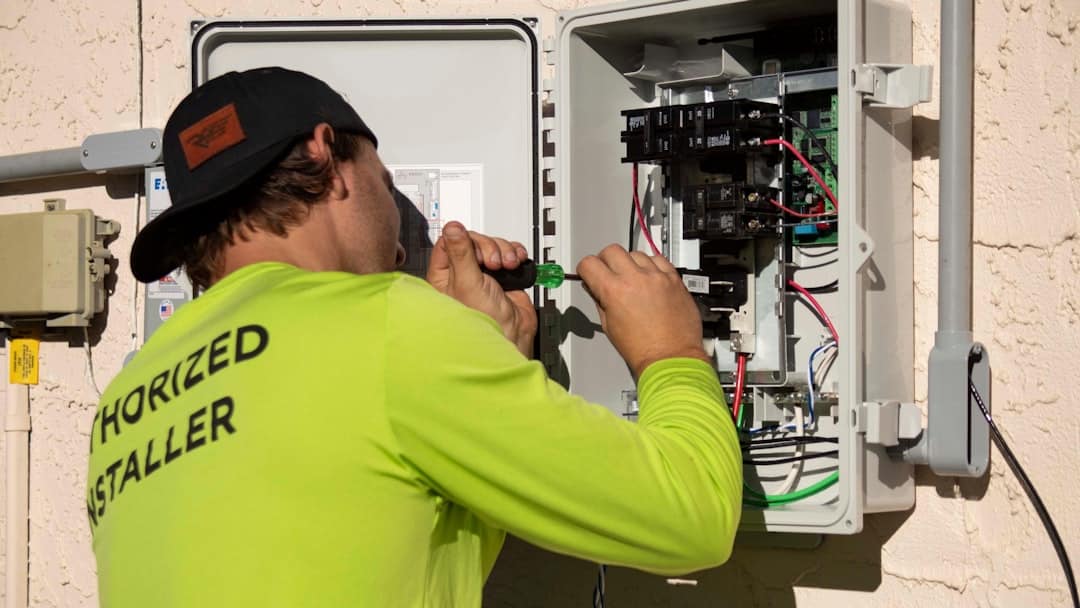

Why Safe Generator House Wiring Can Mean the Difference Between Power and Disaster
Generator house wiring is the process of connecting a backup generator to your home's electrical system — safely, legally, and without putting anyone at risk. Done right, it keeps your lights on during outages. Done wrong, it can kill.
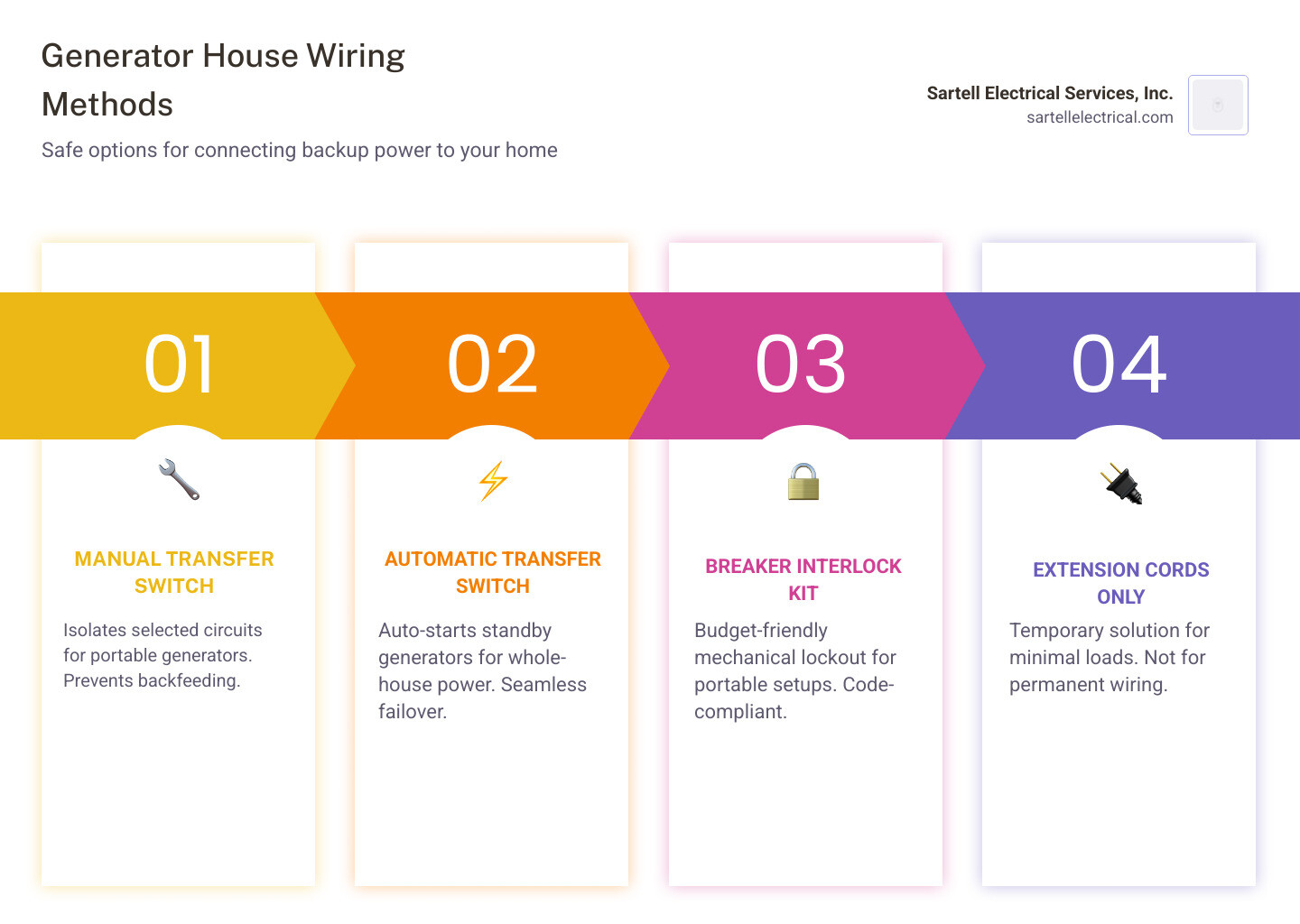
Here's a quick overview of your main options:
| Method | Best For | Approx. Cost | DIY-Friendly? |
|---|---|---|---|
| Transfer switch (manual) | Portable generators, selected circuits | $800–$2,000 installed | No — hire an electrician |
| Automatic transfer switch (ATS) | Standby/whole-house generators | $3,000+ installed | No — hire an electrician |
| Breaker interlock kit | Portable generators, budget-conscious homeowners | $400–$900 installed | Sometimes, with permits |
| Extension cords only | Temporary, minimal loads | Low | Yes |
The single most important rule: Never connect a generator directly to a wall outlet or your panel without a proper transfer switch or interlock. This causes backfeeding — a dangerous condition that can send high voltage back onto utility lines and endanger linemen working to restore power.
Power outages are becoming more common. Weather-related events caused 80% of major U.S. outages between 2000 and 2023, with frequency nearly doubling over the last decade. More homeowners are turning to generators — but not all of them are wiring those generators safely.
I'm Ed Sartell, President of Sartell Electrical Services, Inc., and I've been handling generator house wiring projects across Massachusetts since 1985. In the sections below, I'll walk you through exactly how to do this right — from choosing equipment to staying code-compliant.
Generator house wiring terms to know:
Understanding the Risks of Improper Generator House Wiring
When the lights go out in Middlesex or Essex County, the first instinct is often to get power back by any means necessary. However, cutting corners with generator house wiring creates a "backfeeding" scenario that is both illegal and lethal.

The Deadly Physics of Backfeeding
Backfeeding occurs when you plug a generator into a standard wall outlet or wire it directly into your panel without a disconnect. A transformer works in both directions. If you feed 240 volts from your generator into your home's wiring, the neighborhood transformer will "step up" that voltage. That 240V can become 4,160V or higher on the utility lines outside.
Utility workers—linemen who are fathers, mothers, and neighbors—expect those lines to be dead when they are working to restore your power. A single DIY backfeed can electrocute a worker blocks away. Beyond the human cost, backfeeding is a major fire hazard; if the utility power suddenly returns while your generator is backfeeding, the massive surge can cause an electrical explosion or fire in your home.
Legal and Safety Standards
According to weather-related events causing 80% of major U.S. outages, the grid is under more stress than ever. To manage this safely, the National Electric Code (NEC) mandates a physical "break" between your home and the grid when a generator is in use. Failing to follow these codes isn't just a safety risk; it carries significant legal liability. If your improper wiring causes an injury or a fire, insurance companies may deny your claim, and you could face criminal negligence charges.
How a Transfer Switch Works for Generator House Wiring
A transfer switch is the "brain" of a safe setup. It is a permanently installed device that switches your home’s load from the utility grid to the generator.
- Manual Transfer Switch: This is a sub-panel that allows you to choose specific circuits (like your fridge, well pump, and furnace) to power. You manually flip the switches when the power goes out.
- Automatic Transfer Switch (ATS): Usually paired with whole-house standby units, this senses a power loss and switches over automatically within seconds.
For a deeper look at how these integrate into your home, check out this Simple Guide to Installing a Generator Hook Up or explore our residential electrical services page.
Using a Breaker Interlock Kit for Portable Generator House Wiring
If a full transfer switch isn't in your budget, a breaker interlock kit is a fantastic, code-compliant alternative. It consists of a sliding metal plate installed on your main electrical panel.
The interlock physically prevents the "Main" breaker and the "Generator" breaker from being on at the same time. You cannot turn the generator breaker on unless the main breaker is off. This mechanical lockout ensures you never accidentally backfeed the grid. It offers more flexibility than a transfer switch because it allows you to choose any circuit in your panel to power, provided you don't exceed the generator's capacity. You can learn more about this method in this guide on How To Connect Generator To House Without Transfer Switch.
Choosing the Right Equipment and Calculating Power Needs
Before we pull any wire, we need to know what we’re trying to achieve. Are you looking to keep the beer cold and the WiFi running, or do you need to run the central AC and the electric range?
Calculating Your Load
We use two numbers: Running Watts (what an appliance uses to stay on) and Surge Watts (the extra kick needed to start a motor, like a refrigerator compressor or a sump pump).
| Appliance | Running Watts | Surge (Startup) Watts |
|---|---|---|
| Refrigerator/Freezer | 800 | 2,400 |
| Sump Pump (1/3 HP) | 800 | 1,300 |
| Well Pump (1/2 HP) | 1,000 | 2,500 |
| Furnace Fan (Blower) | 600 | 1,200 |
| LED Light Bulb | 10 | 10 |
| Microwave | 1,200 | 1,200 |
The 80% Rule: We never want to run a generator at 100% capacity for long periods. If your generator is rated for 5,000 watts, we aim to keep your total load around 4,000 watts to prevent overheating and engine wear.
Essential Circuits to Prioritize
In Massachusetts, our priorities often shift with the seasons. In the winter, your furnace or boiler pump is #1 to prevent frozen pipes. If you’re in a rural area like Boxford or Groton, your well pump is a necessity for water. In the summer, a sump pump is vital during those heavy thunderstorms that cause 80% of our outages.
Step-by-Step Guide to a Safe Generator Installation
Installing a generator house wiring system involves more than just the panel. We have to consider where the machine sits and how it breathes.
1. Placement and the 20-Foot Rule
Carbon monoxide (CO) is a silent killer—it’s colorless and odorless. You must place your portable generator at least 20 feet away from any doors, windows, or vents. We’ve seen tragic cases where generators were run in a garage with the door open, only for the fumes to seep into the bedrooms above. Always point the exhaust away from the house. For more on this, watch this video on generator safety and placement.
2. Installing the Power Inlet Box
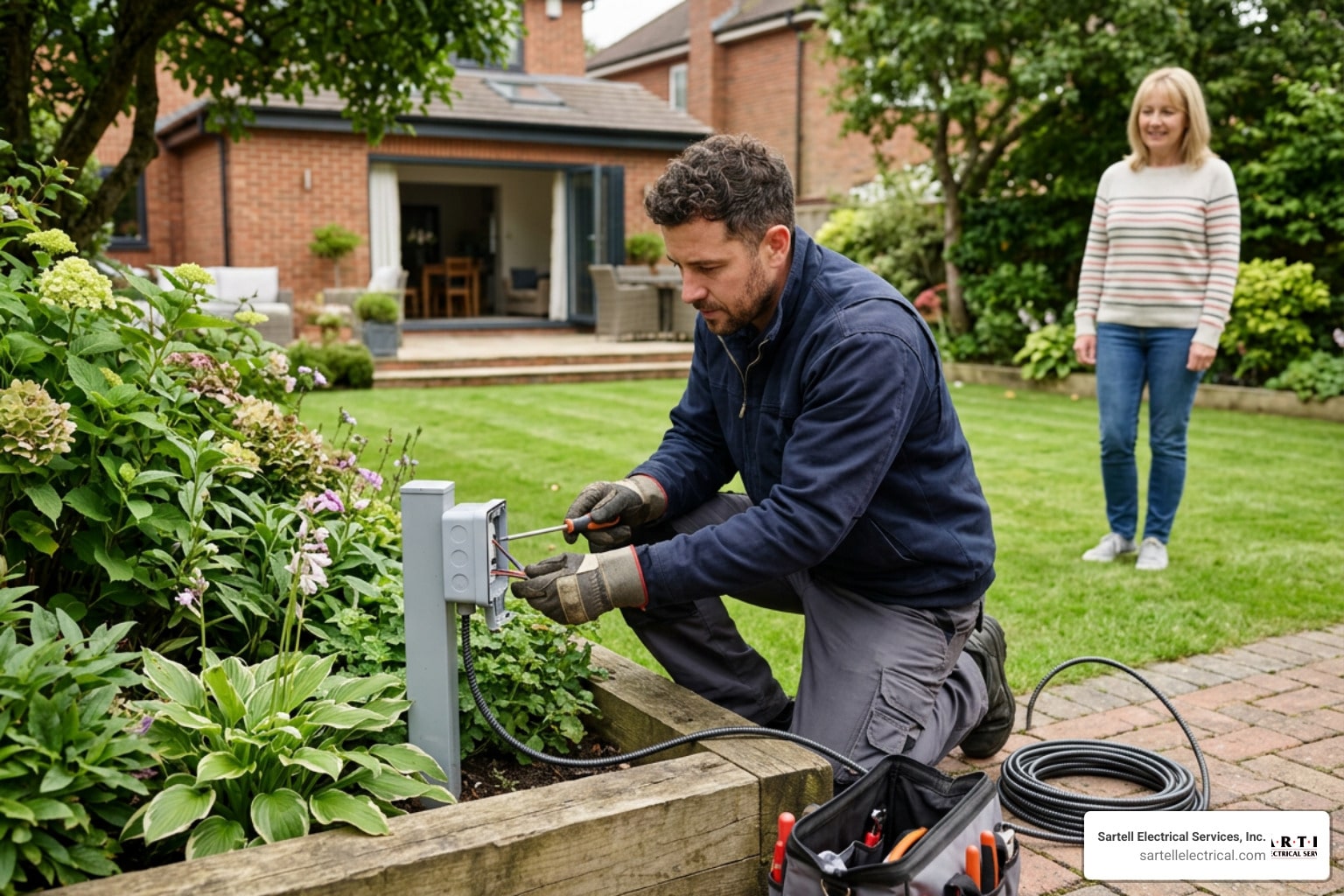
Instead of running extension cords through a cracked window (which lets in CO and cold air), we install a weatherproof power inlet box on the outside of your home. We use high-quality copper wiring to connect this inlet to your transfer switch or interlock kit inside.
3. Grounding and Fuel Selection
Proper grounding is essential to prevent electrical shocks. Most portable generators have a grounding terminal that should be connected to a copper ground rod or your home's grounding system, depending on the generator's design.
As for fuel, most portables run on gasoline, but many homeowners are switching to dual-fuel (propane) or even natural gas conversions. Propane is cleaner and doesn't "gum up" the carburetor like old gasoline does. If you're looking for a larger-scale solution, our industrial-generator-services-complete-guide/ covers high-capacity systems.
Professional Installation, Costs, and Local Codes
While we love a good DIY project, generator house wiring is one area where professional help is non-negotiable for most.
The Cost of Peace of Mind
Here’s a general breakdown of installation costs:
- Portable Hookup (Interlock/Inlet): $400–$900.
- Manual Transfer Switch: $800–$2,000.
- Whole-House Standby (Unit + Install): $8,000–$22,000+.
The price varies based on the distance from your panel to the inlet box and the complexity of your electrical system. For a tailored estimate for your Massachusetts home, visit our generator-installation-ma/ page.
Permits and Inspections
In towns like Reading, Andover, or Newton, you are legally required to pull an electrical permit for this work. Once the installation is complete, a local building inspector will visit to ensure everything meets the NEC and local safety codes. This inspection is your final "safety net" to ensure your family is protected.
Maintenance and Testing for Reliable Backup Power
A generator that won't start during a blizzard is just an expensive paperweight. Maintenance is key.
- Monthly Test Runs: Run your generator for 20 minutes once a month. This keeps the battery charged and ensures oil circulates through the engine.
- Fuel Management: If using gasoline, use a fuel stabilizer and never store fuel for more than six months.
- The "Dry Run": Don't wait for a storm to learn how to use your transfer switch. Once a year, do a full practice run. Turn off the main breaker, plug in the generator, and go through the steps of powering your home.
- Safety First: Generator safety: Knowing these tips can save your life provides excellent reminders on refueling and cord safety.
Frequently Asked Questions about Generator Connections
Can I power my entire house with a portable generator?
Technically, yes, if you have a large enough unit (like a 12,000-watt portable) and a 50-amp inlet. However, you'll still need to practice "load management." You might be able to run the AC, but you may need to turn it off before using the electric dryer or oven. Balancing the "phases" (ensuring you aren't pulling all the power from just one side of your panel) is something we handle during the design phase.
Is it legal to connect a generator without a transfer switch?
In Massachusetts and across the U.S., it is illegal to connect a generator to your home's permanent wiring without a "means of isolation" (a transfer switch or interlock). Using a "suicide cord" (a cord with two male ends) to plug a generator into a wall outlet is extremely dangerous, illegal, and a major fire risk.
How do I test my generator setup safely before an outage?
- Turn off all large appliances (AC, electric heat).
- Flip your home's Main Breaker to the "OFF" position.
- Connect your generator to the inlet box using a proper heavy-duty cord.
- Start the generator and let it warm up for 2 minutes.
- Flip the Generator Breaker (on your interlock) or the individual switches on your transfer switch.
- Check your outlets with a voltage meter to ensure you're getting a steady 120V/240V.
Conclusion
At Sartell Electrical Services, Inc., we've spent over 30 years helping our neighbors in Reading, MA, and throughout the Greater Boston area stay safe and powered up. Whether you need a simple interlock kit for your portable unit or a complex whole-house standby system, our commitment to excellence ensures your generator house wiring is done right the first time.
Don't wait for the next "Nor'easter" to scramble for a solution. Contact us today for a professional consultation and ensure your home is ready for whatever the Massachusetts weather throws our way. For more information on how we can help, visit our residential electrical services page.