
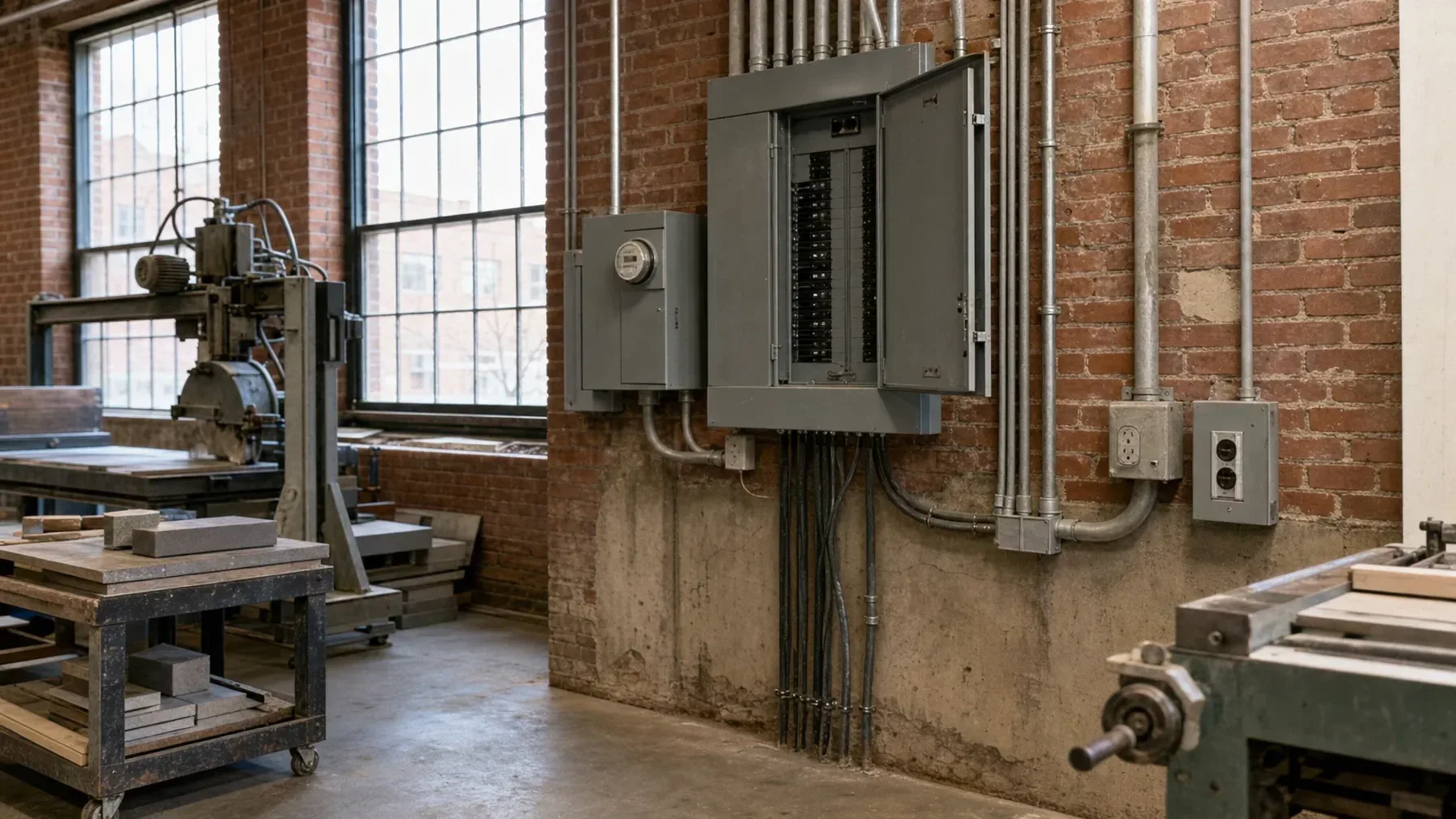
Before Buying Industrial Equipment: What to Check About Building Power
Before committing to a machine purchase or relocation, gather enough information for an electrician to compare the equipment’s requirements with the proposed building and installation location. The question is not simply whether the building has power. It is whether the available supply and proposed connection are suitable for that particular machine and how you intend to use it.
Treat this as an information-gathering task, not a reason to assume an upgrade is necessary. Bring together the manufacturer’s documentation, available facility records and your operating plans. Ask the electrician to identify what is confirmed, what remains unknown and what would need to change before installation.
Start with the exact machine, not a general product listing
Ask the supplier for electrical and installation documentation for the actual model and configuration being offered. If the machine is used or being relocated, ask whether its electrical configuration has changed and whether the available drawings reflect those changes. Mark anything the seller cannot confirm as unresolved rather than filling in the gap yourself.
- Equipment identity: manufacturer, model, serial identification if available, and the options or accessories included in the purchase.
- Electrical requirements: the manufacturer’s stated voltage, phase, frequency and electrical load information, including any stated starting or operating requirements.
- Installation documents: the installation manual, electrical drawings and manufacturer’s instructions for the incoming power connection.
- Supporting equipment: documentation for any separately powered accessories or support equipment needed to operate the machine.
- Controls: documentation describing connections to other equipment, external controls or shared stopping functions, if applicable.
Request a clear equipment-label photograph from the supplier when available, but send it with the installation documents rather than treating it as a complete specification. Ask the supplier to resolve conflicting information in writing so the electrician is not assessing different versions of the proposed machine.
Describe where and how the equipment will operate
Give the electrician a marked floor plan or a clear description of the intended location. Distinguish a preferred position from a position that cannot change. If you are considering different buildings or machine locations, identify them as alternatives that need separate assessment.
- Explain the planned operating schedule and which existing machines or building systems will run at the same time.
- State whether the machine replaces existing equipment or adds to the operation. Identify equipment that will actually be removed from service.
- Include planned additions that should be considered with this purchase, rather than presenting the machine as an isolated change.
- Describe the work area, including relevant dust, moisture, cleaning practices or other conditions, without trying to select electrical equipment for those conditions yourself.
- Identify who can provide building access and who handles landlord or property-management coordination if the space is leased.
Collect facility records, but keep their status clear
Share existing electrical drawings, panel schedules, records of electrical modifications and any previous capacity assessments available through your facility files or property manager. Note whether each document is current, historical or of uncertain accuracy. If records are missing, say so at the outset.
Keep documented information separate from assumptions. A drawing may describe an earlier arrangement, while a seller’s statement may describe the machine’s former installation. Ask the electrician which details need site verification and whether additional records or assessment are needed.
Note Do not open electrical enclosures, remove covers, test supply characteristics or attempt a temporary hookup to establish compatibility. Leave site verification and connection decisions to the electrician.
Questions to put to the electrician
Use the assembled information to request an assessment of the proposed installation, not just confirmation that the building has a particular type of power. Ask for answers tied to the exact equipment, location and operating plan.
- Supply characteristics: Does the verified supply at the proposed location meet the manufacturer’s requirements? Which details remain unconfirmed?
- Available capacity: Can the existing infrastructure support the proposed equipment alongside the loads expected to operate with it? Is further assessment needed?
- Connection requirements: What installation work, if any, is needed between the existing infrastructure and the machine’s specified connection point?
- Control interfaces: Do connections to surrounding equipment or external controls need clarification from the manufacturer before the work can be scoped?
- Scope boundaries: What is supplied with the machine, what is the equipment supplier responsible for, and what would fall within the building electrical work?
Do not treat three-phase availability, an unused breaker position or an equipment label alone as confirmation of compatibility or sufficient capacity. Ask for the proposed installation to be assessed as a whole.
Separate the possible outcomes before committing
A useful review should make the next decision clearer. Ask the electrician to distinguish between suitable existing infrastructure, unresolved questions and a defined need for electrical modification.
- Existing infrastructure is suitable: Clarify what connection or installation work is still required. Suitability does not mean the machine is ready to connect without professional work.
- Further assessment is needed: Identify the missing documentation, site verification or supplier clarification, and assign responsibility for obtaining it.
- Electrical modification is needed: Request a defined scope and identify any dependencies that could affect the purchase or relocation decision.
If a critical compatibility question remains unanswered, treat it as an open purchase decision rather than assuming it can be resolved after delivery. Ask what evidence is needed to close it and whether another equipment configuration or location should be assessed.
A reusable pre-purchase information checklist
Use this checklist as the cover note for the documents you send to the equipment supplier and electrician. Mark missing items as unknown and name the person responsible for following up.
- Machine: exact model and configuration, manufacturer documentation, electrical specifications and any known modifications.
- Location: proposed building and equipment position, plus any alternatives under consideration.
- Operation: intended use, simultaneous equipment operation, replacement or added load, and planned additions.
- Facility records: available drawings, schedules and previous assessments, with their accuracy or currency noted.
- Interfaces and responsibilities: accessory equipment, external controls, supplier contact and property-management contact.
- Decision requested: confirmed suitability, unresolved questions, or a scoped modification needed before installation.
Planning an equipment purchase in Greater Boston
Sartell Electrical’s offering includes three-phase power, equipment controls and upgrades for light-industrial spaces. Based in Reading, the company serves Greater Boston across Essex, Middlesex and Norfolk counties.
When contacting Sartell Electrical, share the checklist and available documents so the conversation starts with the proposed machine and facility conditions. For broader service information, see the industrial electrical services page. The immediate goal is a clear compatibility decision, not an assumed upgrade.