Residential Electrical Service Amps: Unlock 200-Amp Safety
Understanding Your Home's Electrical Power Capacity
Residential electrical service amps determine how much electrical power your home can safely handle at any given moment. Most homes have electrical service ranging from 100 to 200 amps, with newer constructions typically featuring 200-amp service as the standard.
Quick Answer for Residential Electrical Service Amps:
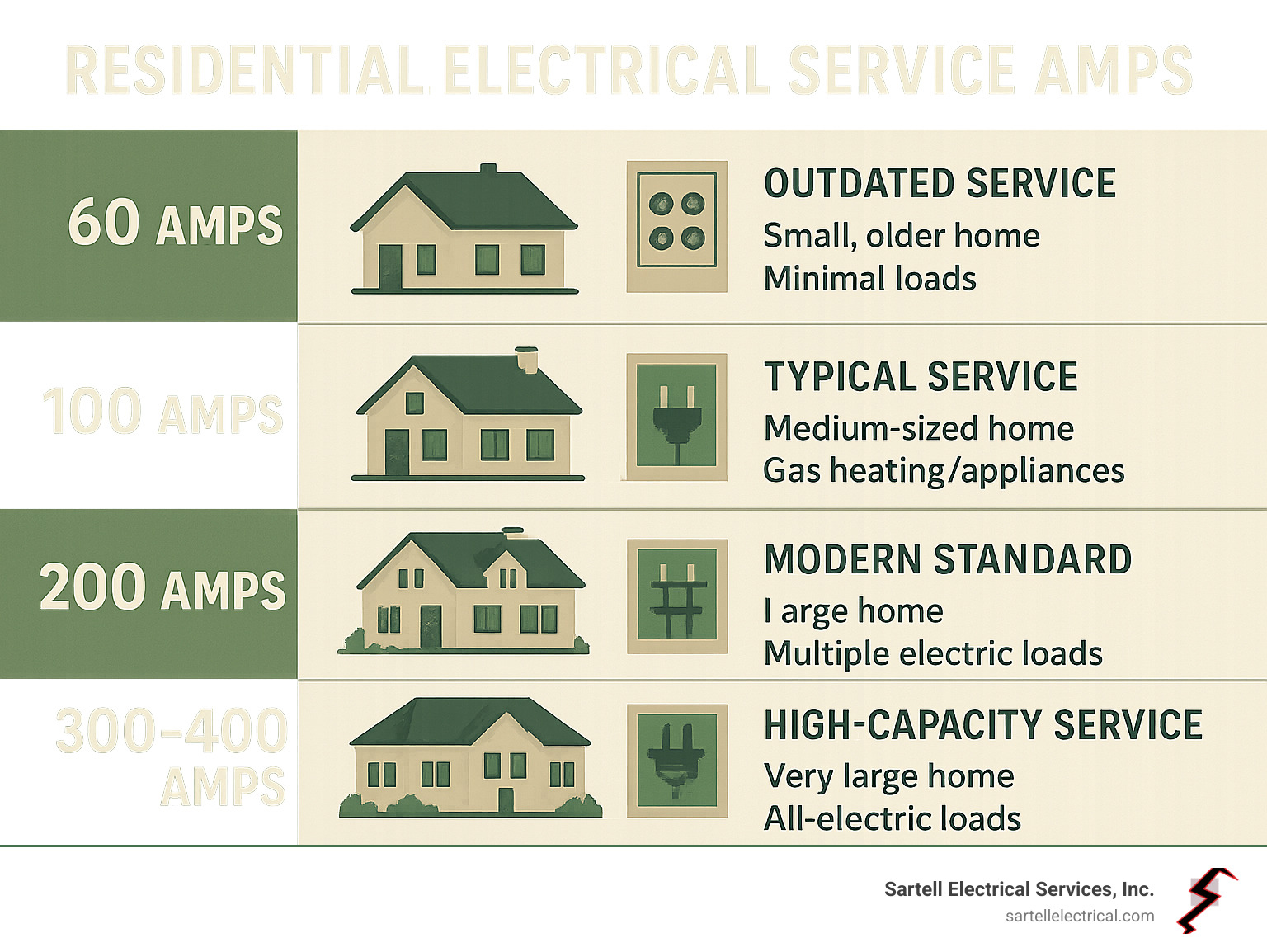
- 60-amp service: Outdated, found in older homes with fuse panels
- 100-amp service: Common in existing homes, adequate for gas heating/appliances
- 200-amp service: Modern standard for new construction and renovations
- 300-400-amp service: Required for large homes or all-electric properties
Your electrical service size is determined by the smallest rating among three components: your service entrance cable, main electrical panel, and main circuit breaker. The main breaker in your electrical panel typically displays this amperage rating clearly.
Understanding your home's amperage capacity is crucial for safety, planning renovations, and determining if you can add high-demand appliances like EV chargers or electric heat pumps. Undersized electrical service can lead to frequent breaker trips, flickering lights, and serious fire hazards.
I'm Ed Sartell, and I've been helping Massachusetts homeowners understand and upgrade their residential electrical service amps since 1985. Through nearly four decades of electrical work, I've seen how proper amperage sizing protects homes and enables modern electrical demands.
How to Determine Your Current Electrical Service Size
Figuring out your residential electrical service amps is actually simpler than you might think. It's like checking the horsepower of your car engine – once you know where to look, the information is right there waiting for you.
Your home's electrical service size depends on three key components: your main circuit breaker, your electrical panel, and the service entrance cable. The smallest rating among these three determines your actual capacity. Think of it like a garden hose – if you have a fire hose connected to a tiny spigot, you're still limited by that small connection point.
Let's walk through the process step by step, so you'll know exactly what you're working with.
Step 1: Locate Your Main Electrical Panel
Your main electrical panel is the command center of your home's electrical system. This is where all the power from your utility company first arrives before getting distributed to every outlet, light, and appliance in your house.
Here's an important distinction: Your main panel controls your entire home's power capacity. If you see a smaller panel somewhere else in your house – maybe in the garage or basement – that's likely a subpanel. Subpanels are great for adding more circuits to specific areas, but they don't increase your total available power. Only the main panel's rating tells you your true residential electrical service amps.
Most main panels live in predictable spots. Check your basement first – that's the most common location. If not there, try the garage, a utility closet, or even on an exterior wall near your electric meter.
Can't find it? Follow the thick cables coming from your electric meter. These service wires will lead you straight to your main panel like a treasure map.
Safety first: While finding your panel is perfectly safe, never remove the cover or touch anything inside unless you're a licensed electrician. There's serious voltage in there that can hurt you.
For more background on how electrical panels work, here's a helpful resource: What is an electrical panel?
Step 2: Read the Main Circuit Breaker
Once you've found your main panel, look for the biggest switch – usually at the top and often labeled "Main" or "Service Disconnect." This is your main circuit breaker, and it's about to tell you everything you need to know.
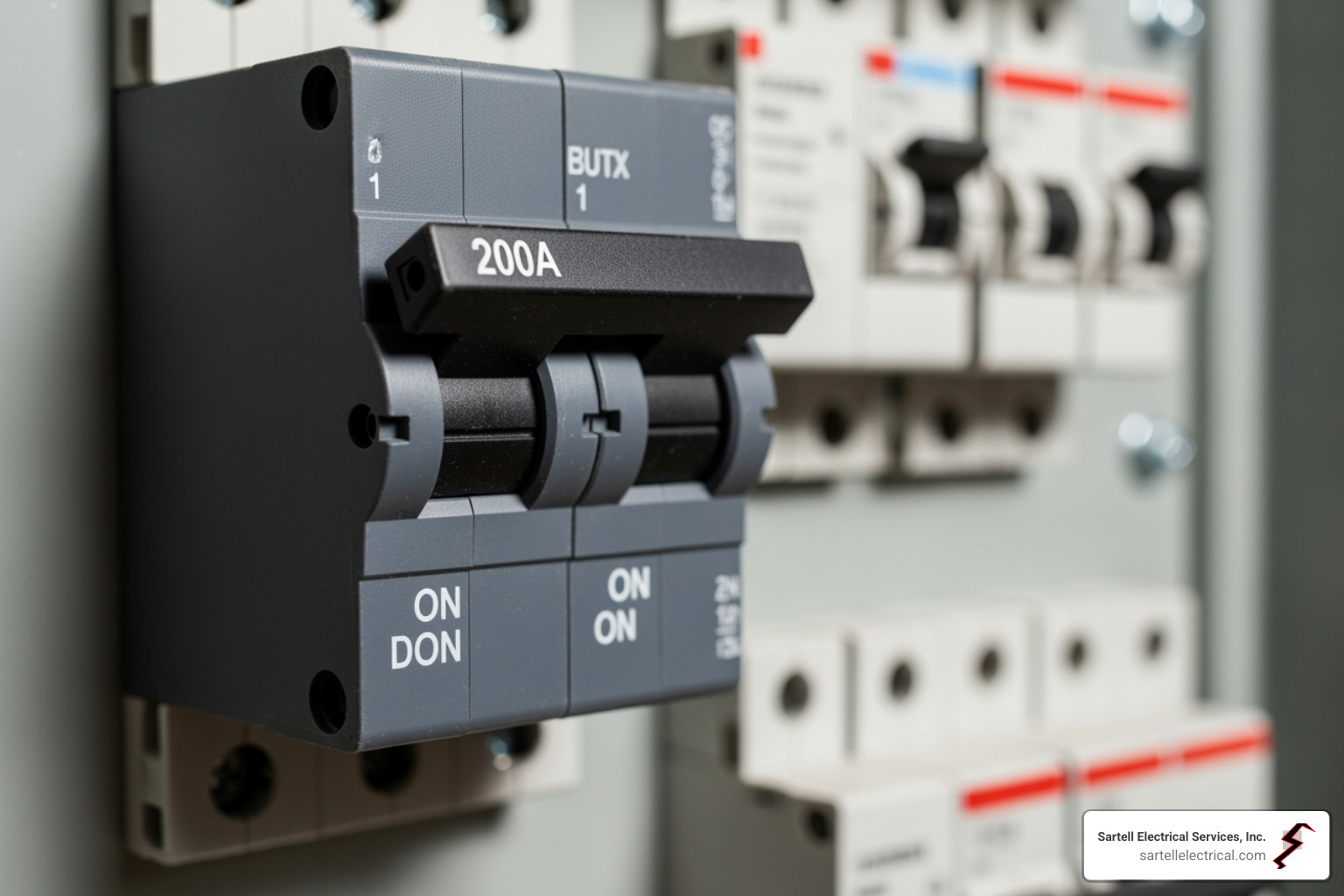
This main breaker is actually two breakers connected together (called a double-pole breaker) because it controls both sides of your home's electrical service. Right on the handle, you'll see a number stamped or printed clearly – something like "100," "150," "200," or even "400."
That number is your answer. If it says "200," congratulations – you have 200-amp service. This represents the maximum amount of electrical current your entire home can safely draw at one time.
This method works about 95% of the time and gives you the most reliable reading of your residential electrical service amps. But sometimes, the story gets a bit more complicated.
Step 3: Inspect the Service Wires and Meter (Secondary Method)
Sometimes you need to play detective. Maybe the number on your main breaker is hard to read, or you want to double-check your findings. That's where looking at your service wires and meter comes in handy.
The service entrance cable – those thick wires bringing power into your home – can tell you a lot. A 100-amp cable is typically about 1 inch thick, while a 200-amp cable measures closer to 1.5 inches across. If you see cables that look much thinner than what your main breaker suggests, that's a red flag worth investigating.
Your electric meter might also have helpful information printed on its face or body. Some meters display the service amperage right on them, though this varies by utility company and meter age.
Here's the catch: If your service wires are smaller than your main breaker rating, the wires become your limiting factor. It's like having a 200-amp breaker connected to 100-amp wiring – you're still limited to 100 amps, and there might be safety concerns.
When in doubt, contact your utility company. They keep records of what service capacity they've provided to your home and can often clear up any confusion. For the most thorough assessment, especially if you're planning major electrical work, a licensed electrician can evaluate your entire system and give you the complete picture.
Understanding Common Residential Electrical Service Amps
Think of your home's electrical service like the main water pipe coming into your house. Just as a narrow pipe limits water flow, your electrical service size determines how much power can flow through your home at once. Over the decades, our electrical appetites have grown tremendously – what powered a 1950s home wouldn't even handle today's kitchen appliances.
The evolution from fuse boxes to modern circuit breaker panels tells the story of our changing electrical demands. Where families once made do with a few lights and basic appliances, today's homes buzz with computers, large-screen TVs, electric vehicles, and smart home devices. Understanding common residential electrical service amps helps you see where your home fits in this electrical timeline.
Modern electrical demands have pushed many homeowners toward electrification – replacing gas appliances with electric ones for environmental and efficiency reasons. This shift makes understanding your service capacity more critical than ever, especially as home size and electrical needs continue to grow.
Outdated & Insufficient Services (60-Amp)
If you live in a home built before the mid-1960s, you might be dealing with a 60-amp service – or even a 30-amp service in pre-1950s homes. These older systems typically use fuse panels instead of modern circuit breakers, where blown fuses must be replaced rather than simply reset.
Here's the reality: 60-amp service is marginal at best for modern living. These systems create genuine fire hazards, especially when homeowners install oversized fuses or overload circuits. I've seen too many close calls where overheating wires could have sparked house fires.
Insurance issues often follow these outdated systems. Many insurance companies in Massachusetts flag homes with fuse panels, sometimes requiring upgrades before providing coverage. The risk simply isn't worth it when you consider the safety of your family.
These older services are inadequate for modern appliances – try running a microwave, electric dryer, and air conditioning simultaneously on a 60-amp service, and you'll quickly understand the limitations. Many of these systems also have knob-and-tube wiring association, an outdated wiring method that lacks proper grounding and poses additional safety concerns.
The Old Standard (100-Amp Service)
The 100-amp service ruled residential electrical for decades, particularly in homes built between the 1960s and 1980s. It's still common in older homes and can adequately power smaller houses that rely on gas appliances for heating, hot water, and cooking.
But here's where things get tricky. A 100-amp service shows its limitations with new technology pretty quickly. Add a central air conditioner, electric vehicle charger, or modern electric appliances, and you'll bump against capacity limits fast.
The truth is, 100-amp service is quickly becoming insufficient for modern homes. While it might handle basic needs, it leaves little room for growth or the electrical demands of contemporary living. If you're planning any major additions or appliance upgrades, 100 amps will likely hold you back.
The Modern Standard (200-Amp Service)
Welcome to the current gold standard. 200-amp service has become the new construction standard for good reason – it supports most family homes comfortably without constantly worrying about overloading circuits.
With 200 amps, you have capacity for electric ranges, HVAC, and some high-draw items running simultaneously. Want to cook dinner while running the air conditioning and charging your phone? No problem. Planning to add a hot tub or electric vehicle charger? You've got options.
The real beauty of 200-amp service lies in future-proofing. It gives you breathing room for life's changes – whether that's a kitchen remodel, home addition, or switching from gas to electric appliances. You're not constantly calculating whether you can turn on one more device.
High-Capacity Services (300-Amp & 400-Amp)
Some homes need serious electrical muscle. Large homes over 3,000 square feet, all-electric homes, or properties with luxury amenities often require 300-amp or 400-amp service.
Think multiple HVAC systems for different zones, dual EV chargers for a two-car family, indoor hot tubs, workshop spaces, or secondary suites with their own full kitchens. These features add up quickly in electrical demand.
A 400-amp service typically involves installing two linked 200-amp panels, creating substantial power capacity for even the most demanding electrical loads. In Massachusetts, I've seen growing demand for these higher capacities, especially in custom homes where homeowners want every electrical convenience without compromise.
The investment in high-capacity service pays off when you never have to choose between running your hot tub and charging your car, or worry about adding that dream workshop to your garage.
When to Consider an Electrical Service Upgrade
Your home's electrical needs aren't set in stone – they grow and change just like your family does. Maybe you've added a home office during the pandemic, or perhaps you're dreaming of that kitchen renovation you've been planning for years. Whatever the case, there comes a time when your current residential electrical service amps might simply not be enough anymore.
The good news is that your electrical system will usually give you plenty of warning signs before anything serious happens. Think of it like your car making strange noises before it breaks down – your home's electrical system has its own way of telling you it needs attention.
Signs Your Current Residential Electrical Service Amps are Insufficient
After nearly four decades of electrical work in Massachusetts, I've learned that homes have their own way of "talking" to us. Your electrical system will send clear signals when it's struggling to keep up with your family's demands.
Frequent circuit breaker trips are probably the most obvious sign. If you find yourself constantly resetting breakers, especially when using everyday appliances, your circuits are working overtime. It's like trying to pour a gallon of water through a straw – something's got to give.
Flickering or dimming lights tell their own story. When your lights dim every time someone turns on the microwave or vacuum cleaner, it means your electrical system is being stretched thin. This isn't just annoying – it's your home asking for more power capacity.
Listen carefully to your electrical panel too. A properly functioning panel should be as quiet as a sleeping baby. Any buzzing sounds from the panel are red flags that shouldn't be ignored. These sounds often indicate loose connections or an overloaded system trying to handle more than it was designed for.
Here's where things get serious: burning smells or scorch marks around outlets, switches, or your electrical panel. If you notice these, don't wait – this is your home's way of screaming for help. Overheated wires can lead to electrical fires, and this requires immediate professional attention.
Take a look around your home. Are you constantly hunting for outlets and relying heavily on extension cords and power strips? Over-reliance on extension cords isn't just inconvenient – it's a sign that your home's electrical infrastructure hasn't kept pace with your needs. Extension cords are meant for temporary use, not as permanent solutions.
Finally, outlets that feel warm to the touch are concerning. A slight warmth from a device that's plugged in is normal, but if the outlet itself feels hot, that's excessive heat buildup indicating potential overloading or wiring issues.
If your home still has an old fuse box instead of modern circuit breakers, or if your insurance company has raised questions about your electrical system, it's definitely time to consider an upgrade.
Planning for Future Power Needs
Smart homeowners don't just think about today's electrical needs – they plan for tomorrow's too. I've seen countless families who thought their current service was "just fine" until they decided to make some exciting changes to their home.

EV chargers are becoming incredibly popular, and for good reason. But installing a Level 2 charger in your garage can easily push a 100-amp service beyond its limits. It's like adding another major appliance that runs for hours at a time.
Heat pumps and central air conditioning systems are substantial power users that need dedicated high-amperage circuits. With Massachusetts incentives for heat pump installations, many homeowners are making the switch from gas to electric heating – but this often requires more electrical capacity.
Planning a kitchen remodel? Modern kitchens are electrical powerhouses. Induction cooktops, double ovens, high-powered microwaves, and all those small appliances can quickly overwhelm an older electrical service. I've seen beautiful new kitchens where the homeowners couldn't run their dishwasher and oven at the same time.
Home additions and major renovations naturally increase your electrical load. Whether you're finishing the basement, adding a new bedroom, or converting the garage into a workspace, you're adding lights, outlets, and potentially heating systems that all draw power.
Don't forget about those luxury additions that make life more enjoyable. Hot tubs and saunas are wonderful, but they're also significant electrical loads that require careful planning and adequate service capacity.
Even solar panel installations, while they generate electricity, often require electrical service upgrades to safely integrate with your home's existing system and handle the bidirectional flow of power.
The Importance of a Professional Load Calculation
Here's where experience really matters. Determining the right residential electrical service amps for your home isn't guesswork – it's a science based on the National Electrical Code (NEC).
A professional load calculation takes into account everything in your home: every light fixture, outlet, appliance, and planned addition. It's like creating a detailed budget for your home's electrical appetite. This calculation ensures your upgraded service won't just barely meet your needs – it'll provide a comfortable safety margin for future growth.
I've seen homeowners try to skip this step or rely on rough estimates, only to end up with persistent electrical problems later. The load calculation isn't just about meeting code requirements – it's about ensuring your family's safety and your home's long-term electrical reliability.
For those curious about how this process works, there's a convenient calculator tool that can help you understand the basics. However, for your actual upgrade, trust a licensed electrician to perform the detailed analysis your home deserves.
The investment in a proper load calculation pays dividends in peace of mind, knowing your electrical system can handle whatever your family throws at it – today and for years to come.
Frequently Asked Questions about Residential Electrical Service Amps
After nearly four decades of electrical work in Massachusetts, I've heard just about every question homeowners have about their electrical service. Let me share the answers to the most common questions we get at Sartell Electrical Services about residential electrical service amps.
What is the difference between a main panel and a subpanel?
This is probably the question that causes the most confusion, and I completely understand why. Think of your main panel as the central hub that controls all the electricity coming into your home from the utility company. It's where your residential electrical service amps are determined - whether that's 100, 200, or 400 amps.
A subpanel is like adding extra rooms to your house - it gives you more space, but it doesn't make the house any bigger overall. The subpanel gets its power directly from the main panel through a feeder cable. You might install one in a workshop, garage, or home addition when you need more circuit slots in that specific area.
Here's the key point: adding a subpanel doesn't increase your home's total available amperage. If you have a 200-amp main service, that's still your total capacity regardless of how many subpanels you add. The subpanel just helps you organize and distribute that same power more conveniently.
What are the potential risks of an undersized electrical service?
I've seen what happens when homes try to operate on inadequate electrical service, and it's never pretty. The risks range from daily annoyances to serious safety concerns that keep me up at night.
On the frustrating side, you'll deal with frequent power interruptions as circuit breakers trip constantly. Your lights might dim every time the air conditioner kicks on, and you'll probably damage sensitive electronics from voltage drops. I've had customers lose expensive computers and entertainment systems this way.
The real danger, though, is fire risk. When your electrical system is constantly overloaded, wires overheat. This breaks down insulation and can lead to electrical fires - a risk that's simply not worth taking. Over the years, I've responded to too many emergency calls where overheating wires created scorch marks or worse.
Insurance companies understand these risks too, which is why many will flag homes with outdated electrical services or even require upgrades before providing coverage.
Is 200-amp service enough for an EV charger?
This is the question I'm hearing more and more these days, and I love that Massachusetts homeowners are thinking ahead about electric vehicles. The good news is that a 200-amp service can typically handle a Level 2 EV charger along with your normal household electrical loads.
Most modern homes with 200-amp service were designed with some spare capacity built in, anticipating future electrical needs. A typical Level 2 EV charger draws about 30-50 amps, which fits comfortably within a well-planned 200-amp system.
However - and this is important - every home is different. If you're already running an electric hot tub, have electric heat, or use multiple high-draw appliances regularly, you might be closer to your capacity limit than you think. That's especially true in older homes that were retrofitted with 200-amp service but still have the original electrical loads.
A professional load calculation is essential to confirm your system can safely support an EV charger. We always recommend this assessment because it gives you peace of mind and ensures your electrical system will reliably support your new investment for years to come.
Conclusion: Ensuring Your Home is Safely and Adequately Powered
After nearly four decades of electrical work in Massachusetts, I've learned that understanding your residential electrical service amps isn't just about numbers on a breaker panel. It's about creating a safe, comfortable home that can grow with your family's needs.
Think of your electrical service as the foundation of your home's power system. Just like you wouldn't build a house on a weak foundation, you shouldn't rely on an undersized electrical service to power your modern lifestyle. Whether you're dealing with flickering lights when the microwave runs or dreaming of installing an EV charger, your electrical service capacity determines what's possible.
Electrical safety isn't negotiable. The National Electrical Code and Massachusetts electrical codes exist for one reason: to protect you and your family. When we see scorch marks around outlets or smell burning odors from electrical panels, we know these are serious warning signs that require immediate professional attention. These aren't problems you can ignore or tackle yourself.
That's exactly why professional assessment matters so much. A licensed electrician can perform the proper load calculations, identify potential hazards, and ensure your electrical system meets current codes. We've seen too many DIY electrical projects that created dangerous situations – electricity simply isn't forgiving of mistakes.
At Sartell Electrical Services, Inc., we've been helping Massachusetts homeowners steer these electrical challenges since 1985. From Reading to Andover, from Chelsea to communities throughout Essex and Middlesex Counties, we've upgraded countless electrical services and helped families power their homes safely and efficiently.
Whether you're finding that your 100-amp service can't handle your new induction cooktop, or you're planning ahead for solar panels and an electric vehicle, we understand the unique electrical needs of New England homes. Our commitment to excellence means every project – from a simple service upgrade to a complete electrical overhaul – gets the same careful attention to safety and quality.
Don't let an outdated electrical system hold back your home's potential. Your family deserves reliable power that keeps up with modern life, delivered safely through properly sized residential electrical service amps.
Ready to find what your home's electrical system can really do? We're here to help you every step of the way.
For more information about our residential electrical services and how we can assist you, please visit our website: More info about Residential Electrical Services