
Wire for house wiring is the foundation of every electrical system in your home. Whether you’re planning a renovation, troubleshooting an electrical issue, or working with contractors on a new build, understanding the basics can save you time, money, and ensure safety.
Quick Reference for House Wiring Wire Types:
Most Common Cable Types:
The average home contains nearly 2 miles of cable running through walls, floors, and ceilings. This network powers everything from light switches to major appliances, making proper wire selection critical for both safety and performance.
Understanding wire types isn’t just about technical specifications – it’s about safety, code compliance, and reliability. The National Electrical Code (NEC) sets strict standards for wire materials, installation methods, and applications to prevent fires, electrical shock, and system failures.
As Ed Sartell, President of Sartell Electrical Services since 1985, I’ve seen how proper wire for house wiring selection can make or break electrical projects across Massachusetts. With nearly four decades in the electrical trade, I’ve guided countless homeowners, builders, and businesses through complex wiring decisions that ensure both safety and long-term reliability.
Wire for house wiring word guide:
Walking into an electrical supply store can feel overwhelming – rows of spools with different numbers, colors, and cryptic letter combinations printed on them. But once you understand the language of wire for house wiring, it becomes much clearer. Think of it like learning to read a map – intimidating at first, but incredibly useful once you know what the symbols mean.
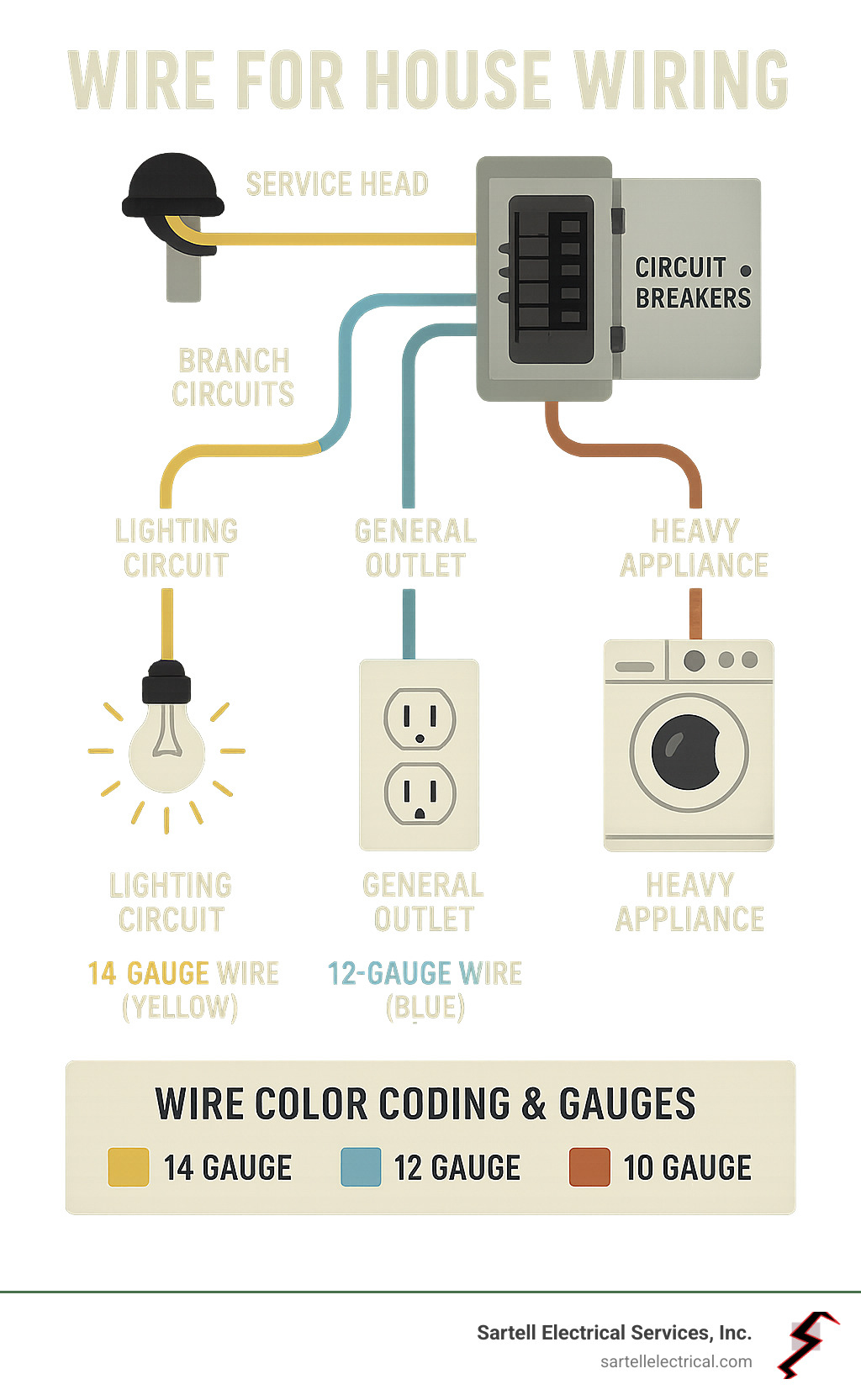
Here’s something that trips up almost everyone at first: American Wire Gauge (AWG) works backwards from what you’d expect. The higher the gauge number, the smaller the wire. So 14-gauge wire is actually thinner than 12-gauge wire, and 10-gauge is thicker than both. I like to tell homeowners it’s like golf scores – lower numbers are better (or in this case, bigger).
This inverse relationship matters because wire thickness directly affects how much electrical current it can safely carry. The amperage capacity of a wire determines what appliances and devices you can power with it. Push too much current through a wire that’s too small, and you’re asking for trouble – overheating, damaged insulation, and potentially fire.
Wattage loads work hand-in-hand with amperage. Since watts equal amps times volts, a 15-amp circuit on standard 120-volt household current can handle 1,800 watts. But here’s the safety catch – the National Electrical Code says you should only use 80% of that capacity for continuous loads, bringing you down to about 1,440 watts.
| Wire Gauge (AWG) | Max Amperage | Typical Circuit Breaker Size | Common Applications |
|---|---|---|---|
| 14 | 15 Amps | 15-amp | Lighting circuits, basic outlets |
| 12 | 20 Amps | 20-amp | General outlets, small appliances |
| 10 | 30 Amps | 30-amp | Electric dryers, window AC units |
| 8 | 40 Amps | 40-amp | Electric ranges, central air conditioning |
| 6 | 55 Amps | 50-60 amp | Large HVAC systems, subpanels |
When you’re running wire for house wiring over long distances – say, more than 80 feet – you might need to bump up to a thicker gauge to prevent voltage drop. It’s like water pressure in a garden hose – the longer the run, the less pressure you have at the end.
Imagine trying to work on your car if every wire under the hood was the same color. That’s exactly why electrical wiring follows a strict color code system. It’s not just for convenience – it’s a critical safety feature that helps prevent dangerous mistakes.
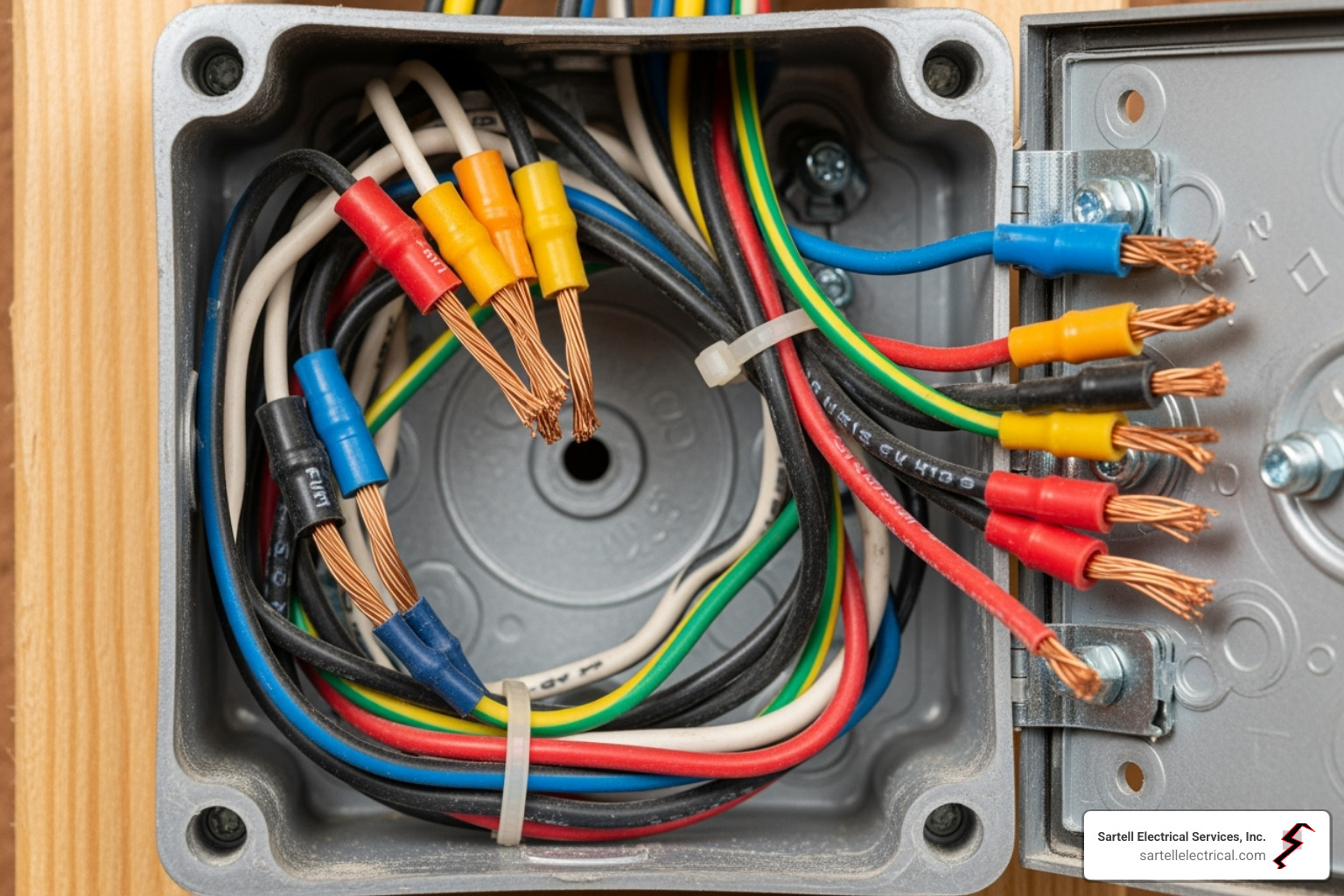
Hot wires carry the live electrical current from your panel to switches and outlets. Black wires are the workhorses here – they’re almost always hot when the circuit is energized. Red wires often serve as secondary hot wires, especially useful for 240-volt appliances like electric dryers or in three-way switch setups where you need that extra control wire.
Neutral wires complete the electrical circuit by carrying current back to the panel. White wires fill this role in almost every residential application. Don’t let the name fool you though – neutral doesn’t mean safe. These wires can still carry current and should always be treated with respect. Gray wires sometimes serve as neutrals too, though they’re less common in homes.
Ground wires are your safety net. Green wires and bare copper wires provide a safe path for electrical faults to follow back to your panel, tripping the breaker and protecting you from shock.
You might occasionally see blue or yellow wires in more complex wiring situations. Blue often shows up as a traveler wire in multi-way switch configurations, while yellow might indicate a switched outlet or specialized control circuit.
Every piece of wire for house wiring comes with its resume printed right on the jacket – a series of letter codes that tell you exactly what that wire can handle. These aren’t random abbreviations; they’re standardized codes that follow National Electrical Code requirements.
The letter T indicates thermoplastic insulation – the modern plastic coating that makes today’s wire so reliable. When you see H, that wire can handle heat up to 167°F, while HH means it’s rated for even higher temperatures up to 194°F.
The W designation is crucial for outdoor or underground applications – it means the wire is designed for wet locations and won’t break down when exposed to moisture. The letter N indicates a tough nylon coating that provides extra protection against abrasion and chemicals.
Most residential wire carries a 600-volt rating, which is more than adequate for household applications that typically run on 120 or 240 volts.
THHN wire combines high heat resistance with that protective nylon coating, making it popular for conduit installations. THWN wire adds wet-location capability to the mix. Many modern wires are dual-rated as THHN/THWN-2, giving you the best of both worlds – heat resistance and moisture protection.
Understanding these codes helps ensure you’re choosing the right wire for each specific application in your home. It’s like reading the care label on your clothes – ignore it at your own risk.
When you’re planning any electrical work in your home, from adding a simple outlet to wiring an entire room addition, choosing the right wire for house wiring can feel overwhelming. But here’s the good news: once you understand the basics, it becomes much more straightforward. The key is matching the wire type to your specific environment and electrical needs.
Think of it like choosing the right tool for a job. You wouldn’t use a screwdriver to hammer a nail, and you shouldn’t use indoor wiring for outdoor applications. Each type of electrical cable is designed with specific conditions in mind, and using the wrong one can create serious safety hazards down the road.
Walk through any modern home, and you’ll find that most of the electrical work relies on just a few main types of cable. Each one has its own personality and purpose, designed to handle different environments and electrical demands safely.
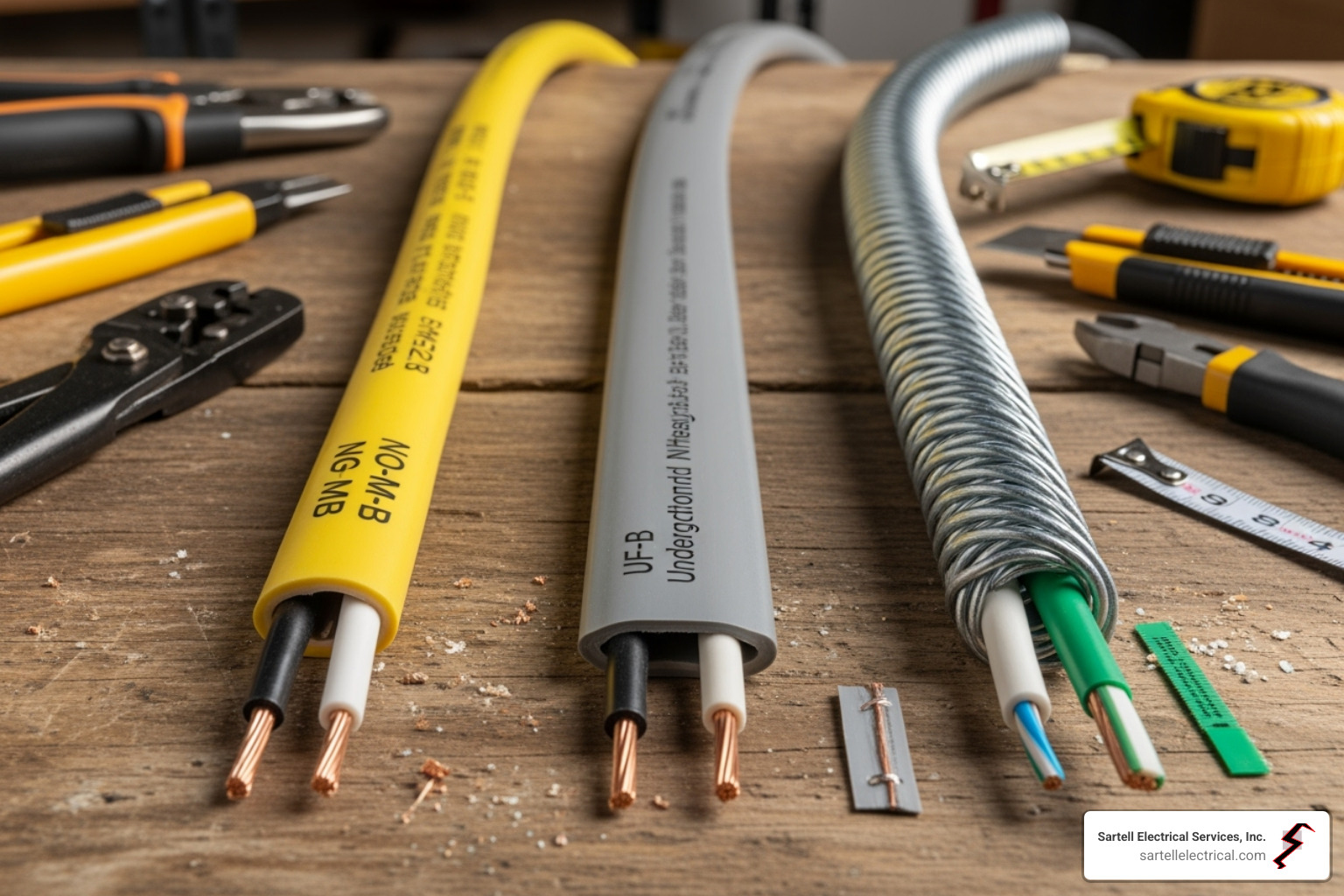
Non-Metallic (NM-B) cable is the superstar of residential wiring. You might know it by its brand name “Romex,” and it’s probably running through the walls of your home right now. This cable bundles together hot, neutral, and ground wires inside a flexible plastic sheathing that’s easy to work with and install.
The beauty of NM-B cable lies in its color-coded outer sheathing, which acts like a visual shortcut for electricians. White sheathing means 14-gauge wire inside (perfect for lighting circuits), yellow sheathing indicates 12-gauge wire (your go-to for general outlets), orange sheathing houses 10-gauge wire (for bigger appliances like water heaters), and black sheathing contains the heavy-duty 8-gauge and larger wires for major appliances.
But here’s the catch with NM-B: it’s strictly an indoor, dry-location wire. Take it outside or expose it to moisture, and you’re asking for trouble. The plastic sheathing just isn’t built to handle wet conditions long-term.
Underground Feeder (UF-B) cable is NM-B’s tough cousin. Instead of separate wires bundled together, UF-B embeds each conductor directly into solid, moisture-resistant plastic. This makes it incredibly durable and perfect for those challenging outdoor jobs. Need to run power to a detached garage? UF-B. Want to add landscape lighting? UF-B. This cable can be buried directly in the ground without conduit, making it a real time-saver for outdoor projects.
Metal-Clad (MC) cable brings extra protection to the table with its flexible metal armor wrapped around the conductors. While you’ll see it more often in commercial buildings, MC cable has its place in residential work too, especially where wires might face physical damage. Think exposed runs in unfinished basements or areas where extra protection is worth the investment.
Beyond these power cables, your home likely uses several types of low-voltage wires for specialized functions. Coaxial cable brings your TV signals, with its distinctive thick design and central conductor. Ethernet cable (like Cat 5e or Cat 6) handles your internet and networking needs, using twisted pairs of wires to carry data signals reliably.
Don’t forget about the smaller players: thermostat wire connects your heating and cooling controls, doorbell wire powers traditional wired doorbells, and landscape cable handles low-voltage outdoor lighting systems. Each serves a specific purpose in making your home comfortable and functional.
If you’re considering upgrades to your electrical system, our Residential Electrical Upgrades can help you choose the right approach for your specific needs.
Let’s dive deeper into what makes each type of wire for house wiring special, because understanding these differences can save you headaches (and potentially dangerous situations) later.
Non-Metallic (NM-B) cable earned its popularity through simplicity and reliability. The “B” designation tells us it can handle temperatures up to 194 degrees Fahrenheit, which covers most residential applications comfortably. Its flexible plastic sheathing makes it easy to pull through walls and around corners, which is why contractors love working with it.
But remember that crucial limitation: NM-B is for indoor, dry locations only. I’ve seen too many DIY projects go wrong when someone tried to use regular NM-B cable in a damp basement or outdoor application. The insulation just isn’t designed for moisture, and over time, it can break down and create serious safety hazards.
Underground Feeder (UF-B) cable solves the moisture problem completely. By embedding the conductors directly in solid thermoplastic, manufacturers created a cable that laughs at wet conditions. You can bury this stuff directly in your yard without conduit (following proper depth requirements, of course), and it’ll keep delivering power reliably year after year.
The solid construction of UF-B does make it a bit stiffer to work with than NM-B, but that’s a small trade-off for its durability. Whether you’re running power to an outdoor outlet, connecting a detached shed, or installing landscape lighting, UF-B handles damp areas and direct burial applications that would destroy other cable types.
Metal-Clad (MC) cable brings a different kind of protection to the table. That flexible metal armor provides excellent physical protection for the conductors inside, making it ideal when cables might face damage from impact or abrasion. Unlike older armored cables that used the metal sheath for grounding, modern MC cable includes a separate green or bare copper ground wire, which makes it much safer and more reliable.
While MC cable costs more than NM-B, there are situations where the extra protection is worth every penny. Exposed runs in mechanical rooms, areas where cables might get knocked around, or applications requiring extra durability all benefit from MC cable’s robust construction.
Choosing the wrong cable type isn’t just about performance—it’s about safety and code compliance. For complex electrical work or ongoing Building Electrical Maintenance, working with experienced professionals ensures you get the right materials for each specific application.
Let’s be honest – electricity can be intimidating, and for good reason. When we’re dealing with wire for house wiring, we’re working with a force that demands respect. After nearly four decades in the electrical trade, I’ve seen what happens when safety takes a backseat to convenience or overconfidence. The good news? Most electrical accidents are completely preventable when you follow proper safety protocols.
Think of electrical safety like driving a car. You wouldn’t hop behind the wheel without checking your mirrors, fastening your seatbelt, and knowing the rules of the road. The same mindset applies to electrical work – preparation and caution aren’t just recommended, they’re essential.
The foundation of safe electrical work starts before you even pick up a wire stripper. Turn off the power at the circuit breaker – this isn’t negotiable. I can’t tell you how many times I’ve heard “I thought the switch would be enough.” Light switches control fixtures, not entire circuits. Head to your main electrical panel, identify the correct breaker for your work area, and flip it to the “OFF” position.
But here’s where many people make a critical mistake: they assume the power is off just because they flipped a breaker. Use a voltage tester every single time. These inexpensive tools can literally save your life. Test every wire in the box, even the ones you’re certain aren’t live. I’ve encountered situations where circuits were miswired or where multiple circuits fed into the same box. Trust but verify – your safety depends on it.
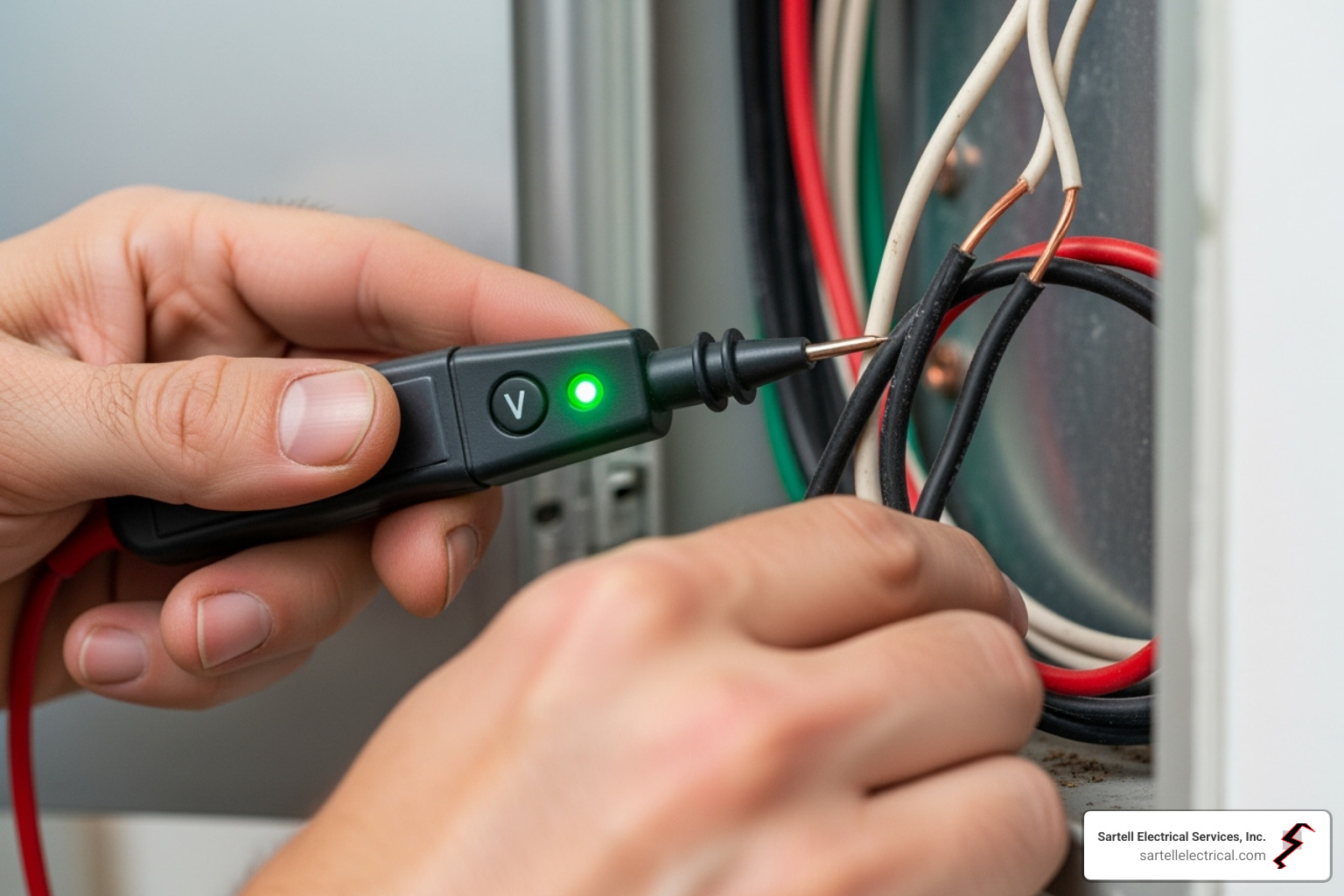
Use electrical boxes for all connections – no exceptions. Those metal or plastic boxes aren’t just suggestions; they’re required by code for good reason. They protect wire connections from physical damage, contain sparks if something goes wrong, and prevent accidental contact with live wires. Any connection made outside an approved electrical box is a code violation and a safety hazard.
Don’t overload circuits – your electrical system has limits for a reason. Each circuit is designed to handle specific loads based on its wire for house wiring gauge and breaker size. When circuits are overloaded, wires heat up, insulation can melt, and fires can start. Tripping breakers are your electrical system’s way of saying “slow down!” If a breaker keeps tripping, don’t just keep resetting it. That’s like ignoring your car’s check engine light. Something’s wrong, and it needs attention.
Leave extra wire length when making connections – at least 3 inches sticking out of the box. This gives you room to work safely and makes future repairs much easier. I’ve seen too many situations where someone tried to save a few inches of wire and created a nightmare for the next person who had to work on that circuit.
Understanding Ground Fault Repair issues is crucial, especially in areas like bathrooms, kitchens, and outdoor spaces where water and electricity might meet. Ground faults occur when electricity takes an unintended path, often through a person, creating a serious shock hazard. This is why GFCI outlets and breakers exist – they’re lifesavers, literally.
Here’s some friendly advice from someone who’s been in the trade since 1985: knowing your limits isn’t admitting defeat – it’s smart. While understanding wire for house wiring basics helps you make informed decisions, some projects require professional expertise, specialized tools, and years of experience.
Complex projects like adding new circuits, upgrading electrical panels, or working with service entrances aren’t weekend DIY projects. These jobs involve intricate knowledge of load calculations, code requirements, and safety procedures that take years to master. When you’re dealing with the main electrical service to your home, you’re working with enough power to be lethal.
Permit requirements and code compliance go hand in hand, and they’re more important than many homeowners realize. Here in Massachusetts, our electrical code has specific requirements that differ from other states. For instance, we have particular GFCI protection requirements and specific permit timelines – typically 12 months to complete permitted work. Trying to bypass permits might seem like a shortcut, but it can create problems when you sell your home or file insurance claims.
Aluminum wiring issues deserve special mention. If your home was built between the mid-1960s and mid-1970s, you might have aluminum wiring, which presents unique fire hazards due to how aluminum expands and contracts with temperature changes. This isn’t a DIY repair – it requires specific techniques and materials that only experienced electricians should handle.
Service panel work is always professional territory. The electrical panel is where the utility company’s power enters your home, and the voltages and amperages present can be fatal. Even experienced DIYers should leave panel work to Licensed Home Electrician professionals.
When you’re experiencing persistent electrical problems – outlets that don’t work, breakers that keep tripping, or any unusual smells or sounds from electrical components – it’s time to call in the experts. These symptoms often indicate underlying issues with your home’s wiring that require professional diagnosis and repair.
At Sartell Electrical Services, we’ve been helping Massachusetts homeowners steer electrical challenges safely for decades. We understand the local codes, have the proper licensing and insurance, and most importantly, we prioritize your family’s safety above all else. Sometimes the best DIY decision is knowing when to call a professional.
Understanding wire for house wiring is like learning the language of your home’s electrical system. Throughout this guide, we’ve explored how wire gauge directly impacts safety and performance, with thicker wires handling more current and preventing dangerous overheating. We’ve decoded the color-coding system that keeps electricians safe and systems organized – black and red for hot wires, white for neutral, and green or bare copper for ground.
The letter codes on wire jackets tell important stories too. THHN and THWN ratings indicate whether a wire can handle heat, moisture, or both. These seemingly small details make the difference between a system that works reliably for decades and one that creates hazards.
Choosing the correct wire for each application is absolutely critical. NM-B cable works beautifully for dry indoor locations, while UF-B cable handles wet and underground installations. MC cable provides extra protection when conditions demand it. Each type serves specific purposes, and using the wrong one can compromise both safety and performance.
The importance of safety cannot be overstated when working with electricity. Always turn off power at the breaker, verify it’s off with a voltage tester, and make connections inside proper electrical boxes. These simple steps prevent accidents that can be life-threatening.
For residents in Massachusetts, complex installations and ensuring code compliance are best left to professionals. Our state’s electrical code includes specific amendments that require expert knowledge to steer properly. What seems like a straightforward project can quickly become complicated when permits, inspections, and code requirements come into play.
At Sartell Electrical Services, we’ve spent over three decades helping homeowners across Massachusetts make smart decisions about their electrical systems. From our base in Reading, we’ve seen how proper wire for house wiring selection and installation creates homes that are both safe and reliable. Whether you’re planning a simple outlet addition or a complete electrical upgrade, we’re here to guide you through the process.
For expert help with your home’s electrical needs, explore our Residential Electrical Services. We believe every homeowner deserves an electrical system that powers their life safely and effectively.

236 Ash St Reading, MA 01867
(By Appointment Only)
