

Telecom infrastructure solutions are the systems and services that build, maintain, and optimize the networks enabling modern communication—from 5G and fiber optics to data centers and small cells.
Key Telecom Infrastructure Solutions:
Demand for data is at an all-time high. Every smart device, video call, and cloud application relies on a backbone of cables, towers, and data centers. As 5G, IoT, and AI reshape our world, the networks supporting them must become faster and more reliable.
However, many organizations struggle with the complexity of modern telecom projects. A sobering fact is that inferior cabling systems contribute to nearly 70% of network failures, making quality infrastructure mission-critical.
This guide explores the core components, services, and technologies of telecom infrastructure, and how to choose the right partner. Understanding these solutions is essential for building networks that meet today’s demands and tomorrow’s opportunities.
I’m Ed Sartell, President of Sartell Electrical Services. For nearly four decades, my team has delivered dependable electrical and telecom infrastructure solutions across Massachusetts. We’ve seen how critical quality infrastructure is to keeping organizations connected.
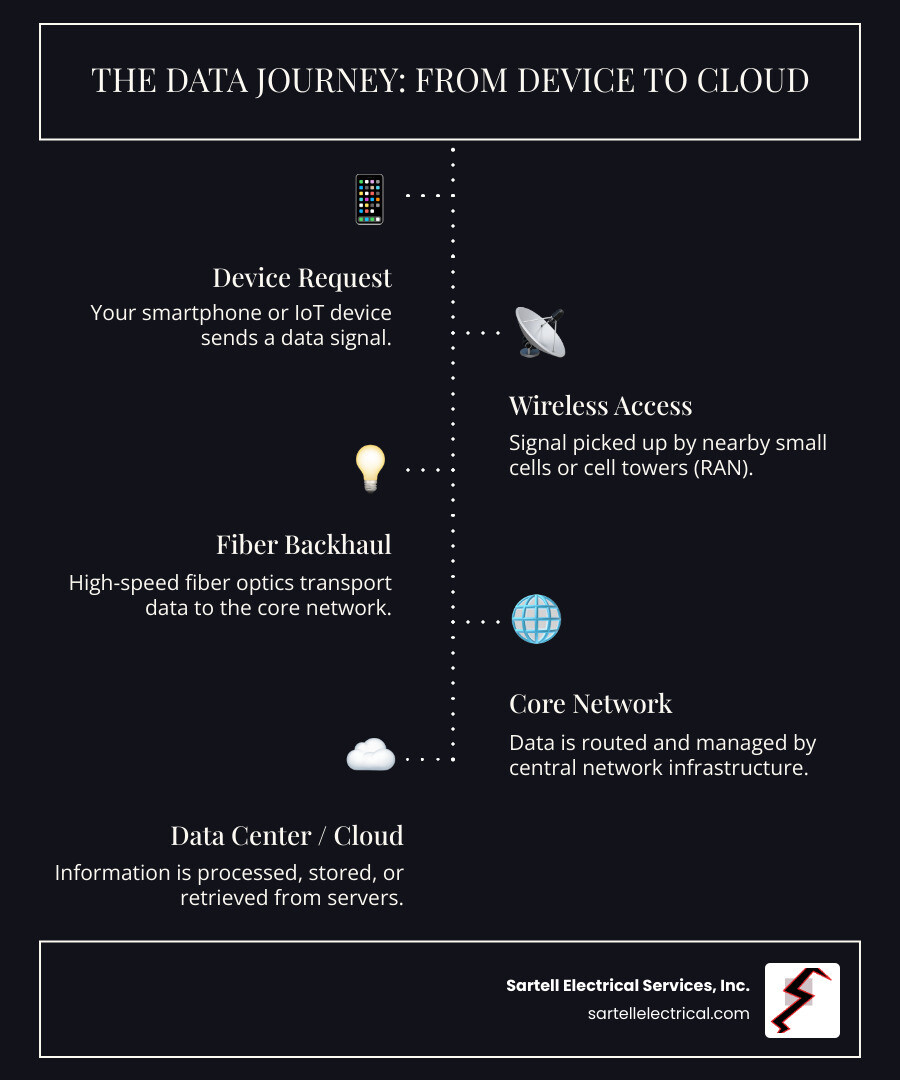
Modern telecom infrastructure solutions form the nervous system of our digital world. The foundation includes visible macro sites like cell towers, but also the underlying Radio Access Network (RAN), the intelligent Core Network, and long-haul Transport Networks that work together to ensure seamless connectivity.

Fiber optics are the internet’s backbone, using light pulses to transmit data at speeds copper can’t match. With virtually unlimited bandwidth and minimal signal loss, fiber is essential for high-speed data transmission. The industry is rapidly deploying Fiber to the x (FTTx) solutions, with over 5 million homes now connected and more than 6,500 kilometers of new fiber built annually.
For Massachusetts businesses, this expansion means faster, more reliable internet. At Sartell Electrical Services, our data cabling services provide the precise installation required to leverage this technology, as even the best fiber is useless if not installed correctly.
While fiber is the backbone, wireless infrastructure connects devices on the go. The arrival of 5G technology requires network densification—placing many more antennas closer together. This is where small cells and Distributed Antenna Systems (DAS) are critical. These compact antennas are mounted on streetlights and buildings to fill coverage gaps, boost capacity, and deliver the ultra-fast speeds and low latency that define 5G.
To meet this demand, over 2,254 wireless and small cell sites have been designed. These installations are essential for reliable mobile connectivity in dense urban areas and communities like Woburn, MA.
Every digital action relies on data centers, massive facilities housing the servers and storage that power our digital lives. Over 12 new data centers are installed each year to keep pace with demand. However, for applications like autonomous vehicles, the latency of sending data to a distant center is too high.
Edge computing solves this by placing processing power closer to where data is generated. This distributed approach is essential for real-time applications. Understanding these modern telecom infrastructure blocks helps businesses plan for responsive, powerful networks. Together, fiber, wireless, and data centers form a complete ecosystem requiring expert installation and maintenance.
Building a modern network is complex, which is why many organizations seek turnkey solutions from a single partner. A turnkey provider manages the entire project lifecycle, from concept to commissioning, eliminating the need to juggle multiple vendors and ensuring accountability.

Every successful network begins with a solid plan. This pre-construction phase includes site acquisition, creating precise CAD drawings, and navigating the complexities of permit and zoning management. Coordinating with local authorities and utilities is critical to avoid delays. The result is a custom network design custom to the specific needs of your location, whether it’s a complex project in Boston, MA or a smaller installation.
With plans in place, the physical work begins. Structured cabling is the foundation, with over 75,000+ Km installed annually across the industry. Teams handle both aerial and underground construction and ensure reliable power supply installation for all network components. Our contribution to 67,542,261 Meters of Plant Implemented demonstrates our commitment to building robust infrastructure. Our expertise in data cabling installation in Boston ensures every connection is made with precision.
A sobering statistic reveals that inferior cabling systems contribute to nearly 70% of network failures. This highlights the importance of quality materials and installation. Beyond the initial build, network testing and certification verify that the system performs to industry standards.
Even the best networks can face issues, which is why 24/7 emergency restoration is crucial. However, a proactive approach is better. Proactive maintenance, including regular inspections and monitoring, prevents problems before they cause outages. Security measures like DDoS countermeasures are also essential. Our comprehensive telecommunications electrical services cover all these aspects, ensuring we build reliable networks and support them for the long haul.
The telecom landscape is constantly evolving, driven by innovations that make networks faster, smarter, and more resilient. Understanding these technologies is crucial when planning telecom infrastructure solutions.
At the forefront are 5G, with its ultra-low latency; Fiber Optics, the champion for raw speed and capacity; and Small Cells, which provide targeted coverage in dense environments.
| Feature | 5G | Fiber Optics | Small Cells |
|---|---|---|---|
| Speed | Up to 10 Gbps peak | Up to 100 Gbps+ | Up to 10 Gbps (depending on backhaul) |
| Latency | Ultra-low (1 ms) | Extremely low | Low |
| Range | Short (for high-band 5G) | Long-haul, metropolitan, last-mile | Short (tens to hundreds of meters) |
| Use Case | Mobile broadband, IoT, autonomous vehicles, AR/VR | Core network backbones, FTTx, data centers | Urban densification, indoor coverage, specific venues |
Beyond physical tech, software-defined networking (SDN) and Network Functions Virtualization (NFV) are decoupling network functions from proprietary hardware, allowing for more agile and cost-effective networks.
5G is a foundational technology enabling a new era of connectivity. Its ultra-low latency supports real-time applications, while massive device connectivity is key for IoT. Network slicing allows carriers to create custom virtual networks on shared infrastructure. This revolution places immense demands on infrastructure, requiring more fiber and denser small cell deployments. Nokia reports a threefold surge in 5G traffic, highlighting the strain on existing networks. To stay ahead, explore next-generation network solutions that are scalable and efficient.
Despite the excitement around wireless, fiber optics remain indispensable. With virtually unlimited bandwidth potential and future-proofing capabilities, fiber is the essential backhaul for 5G networks. All wireless signals rely on fiber to transport data quickly and reliably. As we expand our fiber footprint in areas like Cambridge, MA, we are laying the groundwork for decades of digital growth.
Historically, network components were proprietary, locking providers into a single vendor. The trend toward open networks decouples hardware from software, offering greater flexibility, vendor choice, and a lower Total Cost of Ownership (TCO). Initiatives like OpenRAN (Open Radio Access Network) promote interoperability and innovation. This shift allows for more dynamic networks, and it’s worth exploring open telecom ecosystems to understand how they create more flexible infrastructure.
Building modern networks isn’t just about deploying the latest technology—it’s about solving real-world problems that affect how people live, work, and connect. From bringing high-speed internet to underserved rural communities to managing explosive data growth in crowded cities, the telecom industry faces challenges that require both creativity and determination.
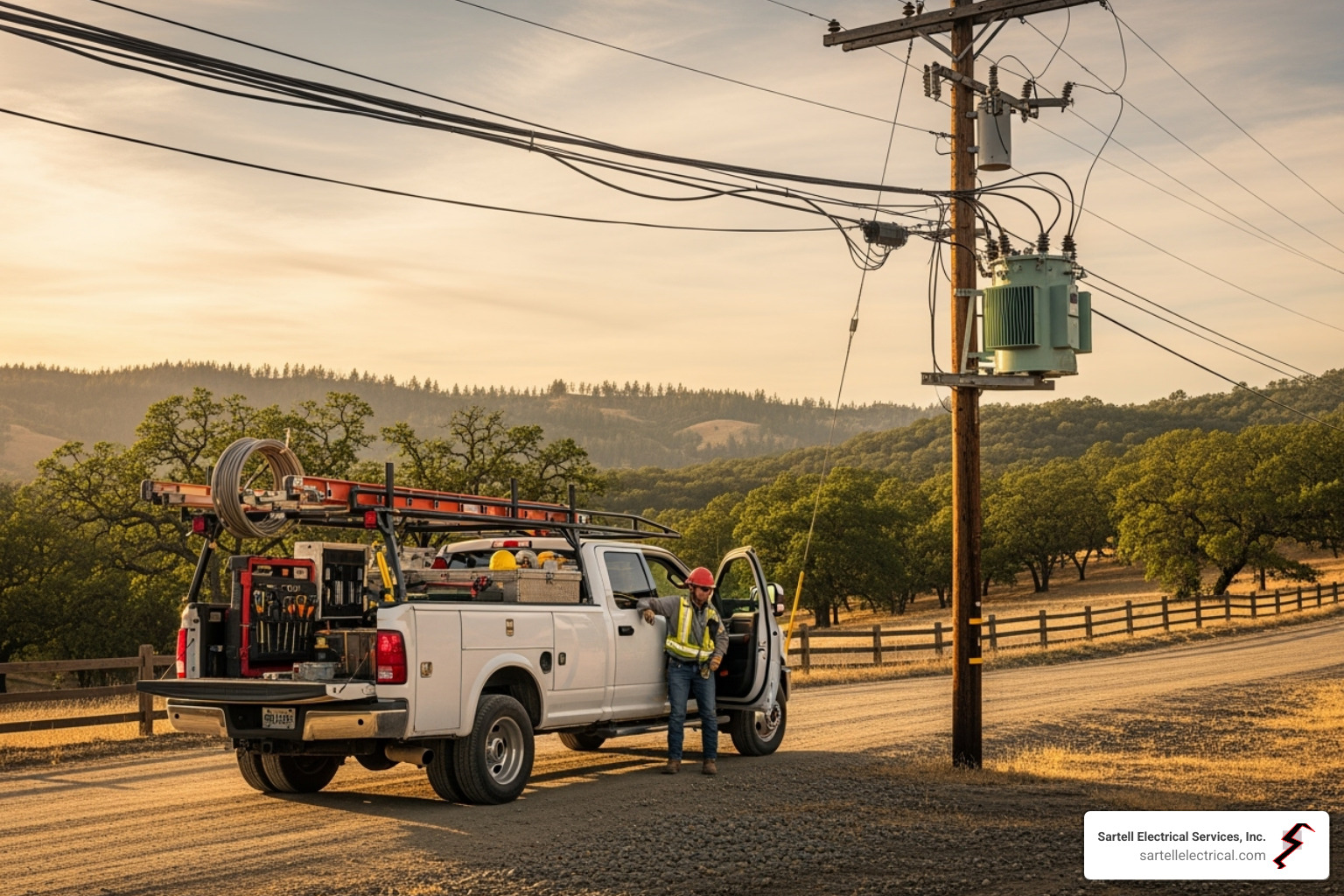
The digital divide remains one of the most stubborn challenges in telecommunications. Many rural areas—often called “dark zones”—lack reliable connectivity simply because traditional deployment models don’t make economic sense in sparsely populated regions. The cost of running fiber miles into the countryside or erecting cell towers for a handful of homes can be prohibitive.
But necessity breeds innovation. We’re seeing exciting developments in cost-effective deployment strategies that make rural connectivity more feasible. Coverage as a Service models allow multiple providers to share infrastructure, spreading costs across users. For areas without reliable electricity, off-grid network power solutions using solar panels and battery systems keep networks running even in the most remote locations.
These aren’t just technical solutions—they’re lifelines for communities that deserve the same digital opportunities as their urban counterparts. Whether it’s a farming community needing access to precision agriculture tools or a small town in Framingham, MA looking to attract remote workers, connectivity is no longer a luxury—it’s essential infrastructure.
Meanwhile, cities face their own connectivity challenges. Network densification in urban areas means finding creative ways to add capacity without cluttering skylines with towers. Small cells mounted on lampposts, building facades, and utility poles help meet the insatiable demand for bandwidth. And as companies and governments set ambitious ESG targets (Environmental, Social, and Governance goals), there’s increasing pressure to build networks that are not only powerful but also sustainable and energy-efficient.
The technologies changing telecom infrastructure today sound like science fiction—but they’re very real, and they’re reshaping how networks operate.
Artificial Intelligence is revolutionizing network management in ways that would have been impossible just a few years ago. AI-powered systems can predict when equipment might fail before it actually does, allowing maintenance teams to fix problems proactively rather than reactively. This approach, known as AIOps (AI for IT Operations), helps networks self-optimize, automatically adjusting to traffic patterns and rerouting data around congestion or failures.
Automation is equally transformative, handling everything from routine maintenance to complex deployment tasks. Instead of technicians manually configuring thousands of network components, automated systems can deploy and update equipment at scale, reducing human error and dramatically accelerating service delivery. This doesn’t replace skilled workers—it frees them to focus on more complex, strategic challenges.
Looking further ahead, quantum technologies promise to revolutionize not just telecommunications but computing and security as well. While still in early stages, quantum communication could enable virtually unhackable networks, while quantum computing might solve optimization problems that today’s supercomputers can’t touch.
And yes, even as we’re still rolling out 5G, the industry is already discussing 6G development. Early concepts envision seamlessly blending virtual and physical realities, with holographic communication and truly immersive experiences. These aren’t just incremental improvements—they’re reimagining what connectivity means. If you’re interested in being part of these forward-looking conversations, consider the opportunity to join global leaders at Fyuz 2025.
Here’s something we’ve learned over three decades: even the most brilliant technology fails without excellent project management. Large-scale telecom infrastructure solutions involve dozens of moving parts—permits, utility coordination, equipment procurement, installation schedules, testing, and commissioning. When one piece falls behind, the entire project can derail.
That’s why turnkey project management is so valuable. Having a single, experienced partner manage everything from concept to completion eliminates the coordination headaches that plague projects with multiple disconnected vendors. It ensures accountability, maintains schedules, and ultimately saves money by preventing costly delays and miscommunications.
What really makes modern project management effective, though, is data. Not just any data—accurate, validated, actionable data. We’re talking about knowing exactly what assets exist, where they are, what condition they’re in, and how they’re performing. Data validation and asset assessment might sound mundane, but they’re absolutely critical.
Consider this: some large-scale infrastructure projects have achieved an 18% improvement in data accuracy simply by implementing rigorous validation processes. When you’re managing millions of assets—and we’re talking about 3,515,294 Telecom Assets Assessed by major providers—that accuracy translates directly into better decisions, faster repairs, and more efficient upgrades.
This data-driven approach is something we bring to every project, whether it’s a modest office installation or a major infrastructure deployment across communities like Waltham, MA. When you know exactly what you’re working with, you can plan better, execute faster, and deliver results that truly meet your needs.
When it comes to telecom infrastructure solutions, choosing the right partner can make or break your project. It’s one of those decisions that keeps facility managers and IT directors up at night—and for good reason. The partner you select will directly impact not just whether your network works, but how well it performs, how long it lasts, and how much headache (or peace of mind) you’ll have along the way.
I’ve seen projects succeed brilliantly and others stumble badly, and the difference almost always comes down to the partner. You’re not just looking for someone who can pull cable or mount equipment—you need a team that understands the bigger picture, anticipates problems before they happen, and stands behind their work when challenges arise.
Key considerations when choosing a partner include their depth of experience with complex telecom projects, their commitment to rigorous safety protocols, proper licensing and industry certifications, intimate knowledge of local regulations and permitting processes, the ability to scale with your needs, true turnkey capabilities from design through maintenance, and—perhaps most importantly—a genuine dedication to customer service and clear communication.
The best partnerships aren’t transactional. They’re collaborative relationships where your provider becomes an extension of your own team, invested in your success as much as their own.
Experience matters enormously in this field. Telecommunications infrastructure has evolved dramatically over the past few decades—from copper to fiber, from 3G to 5G, from centralized data centers to edge computing. A partner who’s weathered these changes and adapted successfully brings invaluable perspective to your project.
Look for providers with a proven track record spanning years, not just months. Companies with 30+ years of experience have seen technologies come and go, learned from countless installations, and developed the judgment that only comes from doing this work day in and day out. They’ve made mistakes (we all have), learned from them, and refined their processes to prevent repeating them.
End-to-end project management—what we call turnkey capabilities—is another crucial factor. When one team handles everything from initial site surveys and design through permitting, installation, testing, and ongoing maintenance, you avoid the coordination nightmares that plague projects split among multiple contractors. Everyone’s on the same page, communication flows smoothly, and accountability is clear.
Client testimonials and case studies offer valuable insights into how a provider actually performs when the pressure’s on. At Sartell Electrical Services, we’ve built our reputation over three decades by delivering on our promises, whether it’s a complex fiber deployment or a small cell installation in communities like Newton, MA. Our clients return to us project after project because they know we’ll be there when they need us.
Here’s something many people overlook: telecom projects are local. What works in one municipality might not fly in another. Permit requirements vary. Utility coordination processes differ. Even the soil conditions and weather patterns affect how you build.
A partner with deep local expertise understands these nuances instinctively. They know which city officials need to be consulted, how long permits typically take, and what common obstacles to anticipate. They’ve built relationships with local utilities and transportation departments, smoothing the path for faster approvals and fewer surprises.
Understanding local regulations isn’t optional—it’s essential. The wrong approach to permitting can delay your project by months. Failing to coordinate properly with municipalities can result in stop-work orders or expensive rework. A knowledgeable local partner steers these waters confidently, keeping your project on schedule and on budget.
Adherence to safety standards protects everyone—your team, ours, and the public. Reputable providers emphasize safety at every stage, maintaining affiliations with respected industry bodies like the National Electrical Contractors Association (NECA) and the International Brotherhood of Electrical Workers (IBEW). These affiliations signal a commitment to professional standards and ongoing training.
For us at Sartell Electrical Services, operating throughout Massachusetts means we’ve developed an intimate understanding of the regulatory landscape across the region. Whether we’re working in Andover, MA or anywhere else in Greater Boston, we bring that local knowledge to every project. We know the people, the processes, and the peculiarities that make each community unique. That expertise translates directly into smoother projects, fewer delays, and better outcomes for our clients.
We’ve journeyed through the fascinating world of telecom infrastructure solutions, uncovering the essential systems that keep our digital lives humming along. From the fiber optic cables quietly carrying terabytes of data beneath our streets to the small cells dotting our cityscapes, and the data centers working around the clock—these networks are the invisible threads connecting us all.
What makes this moment particularly exciting is how everything is coming together. Fiber, 5G, artificial intelligence, and even quantum technologies are converging to create networks that are faster, smarter, and more capable than we ever imagined. This isn’t just about streaming movies or video calls anymore—we’re talking about autonomous vehicles, remote surgery, smart cities, and innovations we haven’t even dreamed up yet.
But here’s the thing: with all this possibility comes real complexity. Building networks that can handle tomorrow’s demands while serving today’s needs isn’t simple. It requires partners who truly understand both the technology and the ground-level realities—from navigating local permits to ensuring every connection meets the highest quality standards.
This is where experience really matters. After spending over 30 years working on electrical and telecom projects across Massachusetts, I can tell you that the difference between a network that performs flawlessly and one that constantly needs troubleshooting often comes down to the quality of the initial installation and the expertise of the team behind it. That’s why we at Sartell Electrical Services take such pride in our work, whether we’re installing structured cabling for a small business or coordinating a complex multi-site deployment.
We’ve seen how critical quality infrastructure is—not just for businesses trying to stay competitive, but for communities trying to stay connected. Every project we take on, we approach with the same commitment to excellence, leadership, and customer service that’s guided us for three decades. Because at the end of the day, you’re not just building a network. You’re building the foundation for everything that comes next.
If you’re planning a telecom infrastructure project, we’d love to talk with you about it. Contact a Boston-based telecommunications electrical contractor today and let’s discuss how we can help you build a network that’s ready for whatever the future brings.

236 Ash St Reading, MA 01867
(By Appointment Only)
