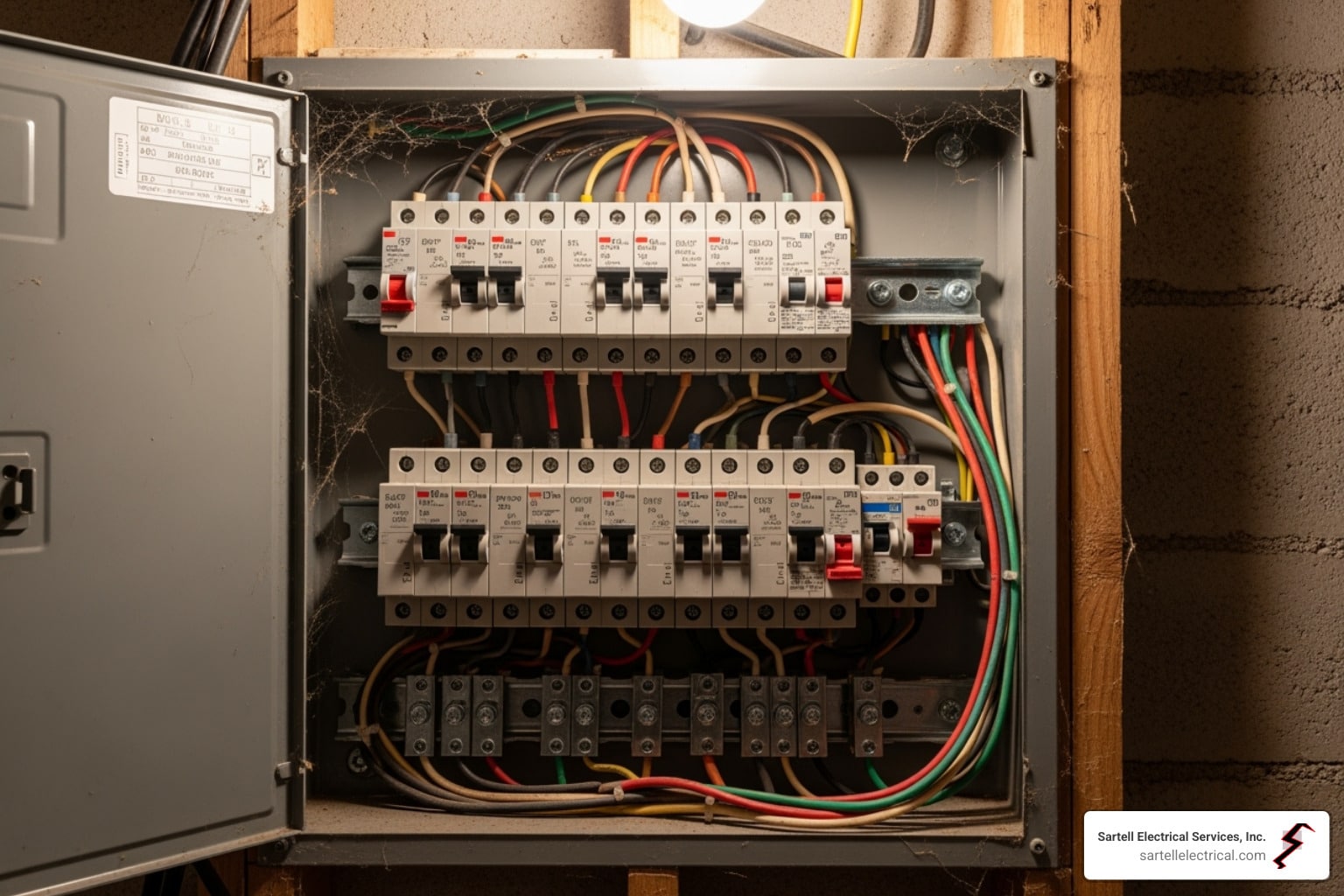
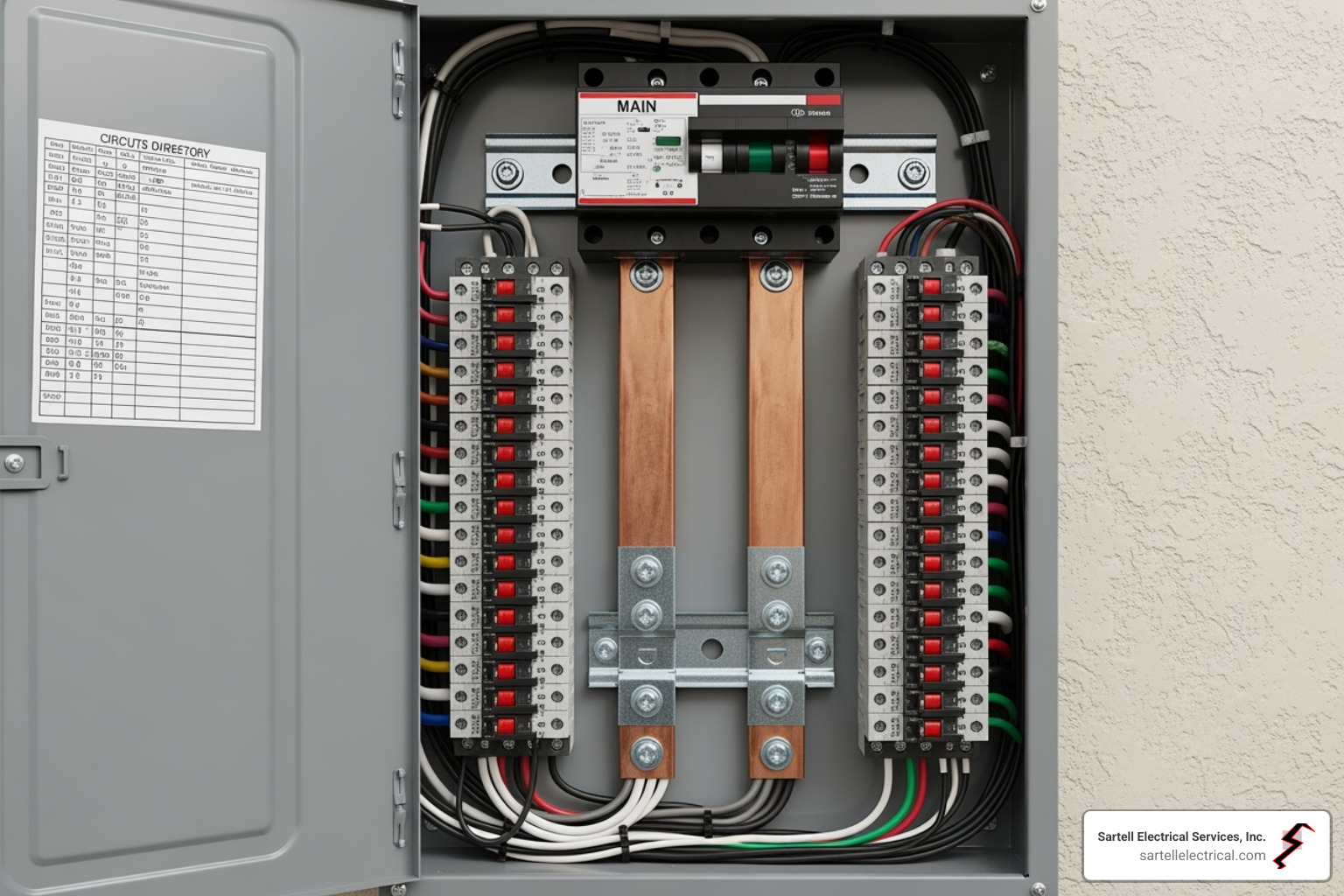
A residential main electrical panel is the central hub for all electricity in your home. It routes power from the utility company to every outlet, light, and appliance through circuits protected by breakers.
Key Functions of Your Residential Main Electrical Panel:
Think of your electrical panel as your home’s electrical brain. It controls and protects every circuit, so when you flip a switch, the electricity flows through your main panel first.
Most homes built after 1980 have 200-amp panels to handle modern demands like air conditioning and electronics. Older homes may have 60-amp or 100-amp services that struggle with today’s needs.
As Ed Sartell, President of Sartell Electrical Services since 1985, I’ve seen thousands of residential main electrical panel upgrades across Massachusetts. Understanding your home’s electrical heart is crucial for safety, whether you’re replacing a fuse box or upgrading for modern appliances.
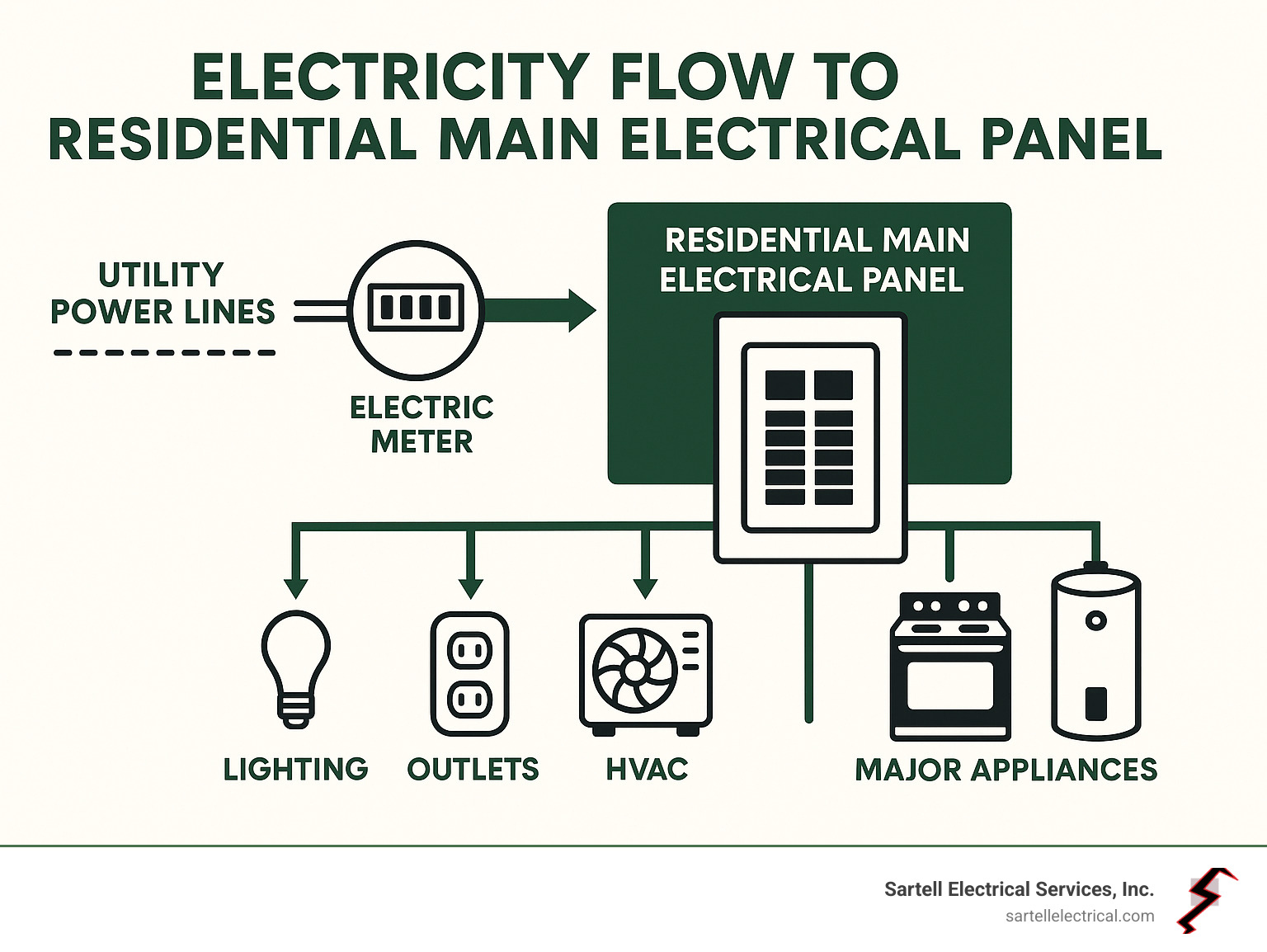
Your residential main electrical panel directs the flow of electricity in your home. When power arrives from the utility company, it passes through your outdoor electric meter and into the main panel. Inside this metal box, the panel distributes the incoming power through individual circuit breakers to create “branch circuits.” These circuits power everything in your house.
Beyond distribution, the panel is your home’s electrical bodyguard. Each circuit breaker protects a circuit, flipping off instantly during an overload or short circuit. This action prevents wires from overheating and causing fires, keeping your home safe.
To find your residential main electrical panel, first locate the electric meter on the outside of your house; the panel is often on the other side of that same wall. Common indoor locations include the garage, basement, or a utility closet.
If you see multiple electrical boxes, you can identify the main panel by finding the thick service wires coming directly from the meter. Subpanels receive power from a breaker in the main panel and are usually located closer to high-demand areas like workshops. When in doubt, call a professional electrician for safety.
A panel’s “size” is its amperage rating—how much electrical current it can safely handle. Think of it like a water pipe: a bigger pipe allows more flow.
Here’s how different panel sizes stack up:
| Panel Amperage | Typical Home Size | Common Appliances Supported | Suitability for Modern Needs |
|---|---|---|---|
| 60-Amp | Small, older homes (pre-1960s) | Basic lighting, small appliances | Severely inadequate; prone to overloads |
| 100-Amp | Average older homes, small modern homes | Standard lighting, refrigerator, washer, dryer, oven (gas) | Often insufficient for multiple high-demand appliances; may require upgrades |
| 150-Amp | Medium-sized homes | All 100-Amp appliances plus central A/C, electric water heater | Good for homes with moderate electrical demands |
| 200-Amp | Most new homes, larger homes (2000+ sq ft) | All 150-Amp appliances plus EV charger, hot tub, multiple large electronics | Standard for modern living; ample capacity |
| 400-Amp | Very large homes, homes with workshops, multiple A/C units, high-demand equipment | All 200-Amp appliances, multiple EV chargers, specialty equipment (e.g., greenhouses) | For high-energy consumers; rare for typical residential use |
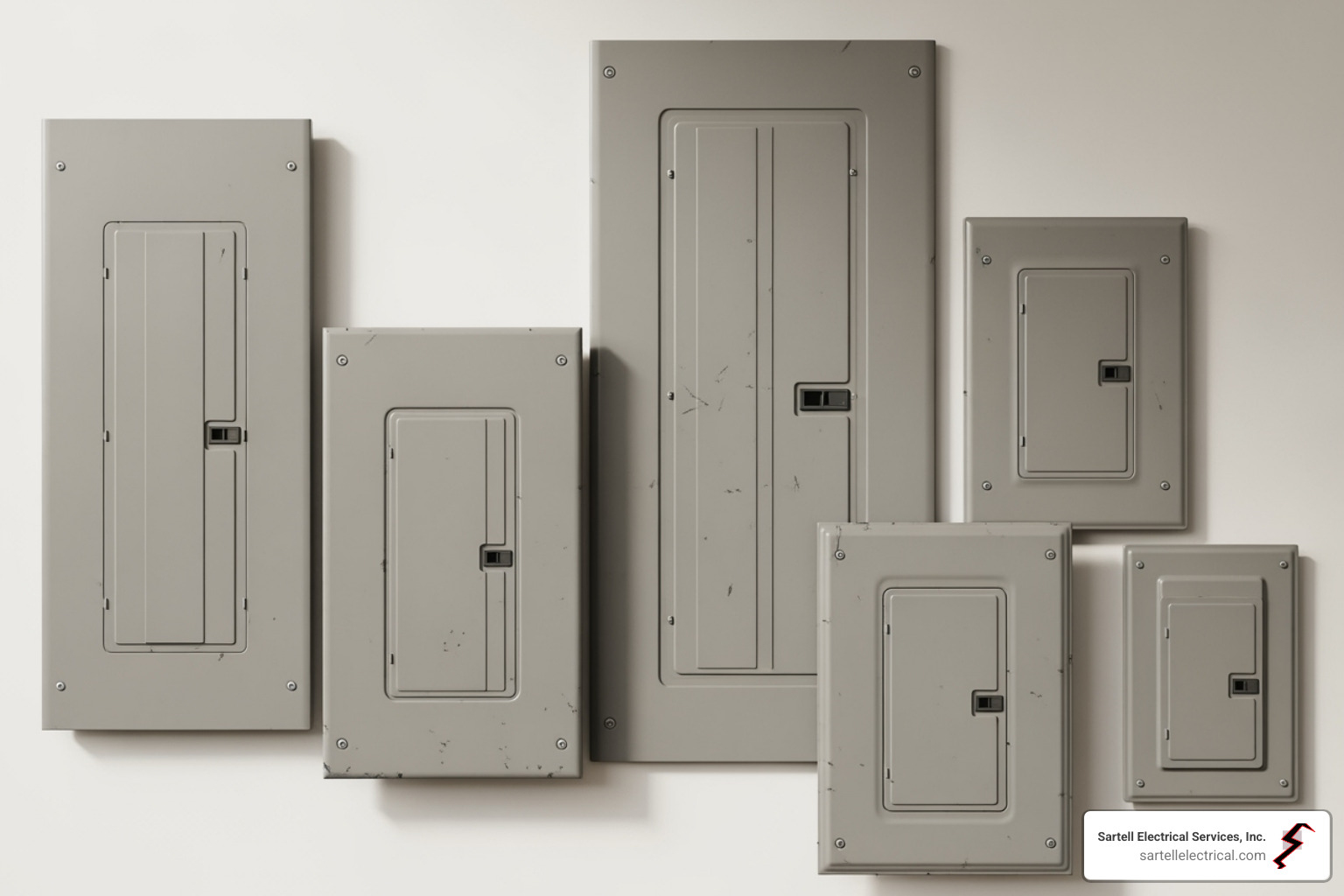
Opening your residential main electrical panel reveals the organized heart of your home’s power system. Each part has a specific job to keep your home powered safely.
Homes built before the 1960s may have a fuse box instead of a modern residential main electrical panel with circuit breakers.
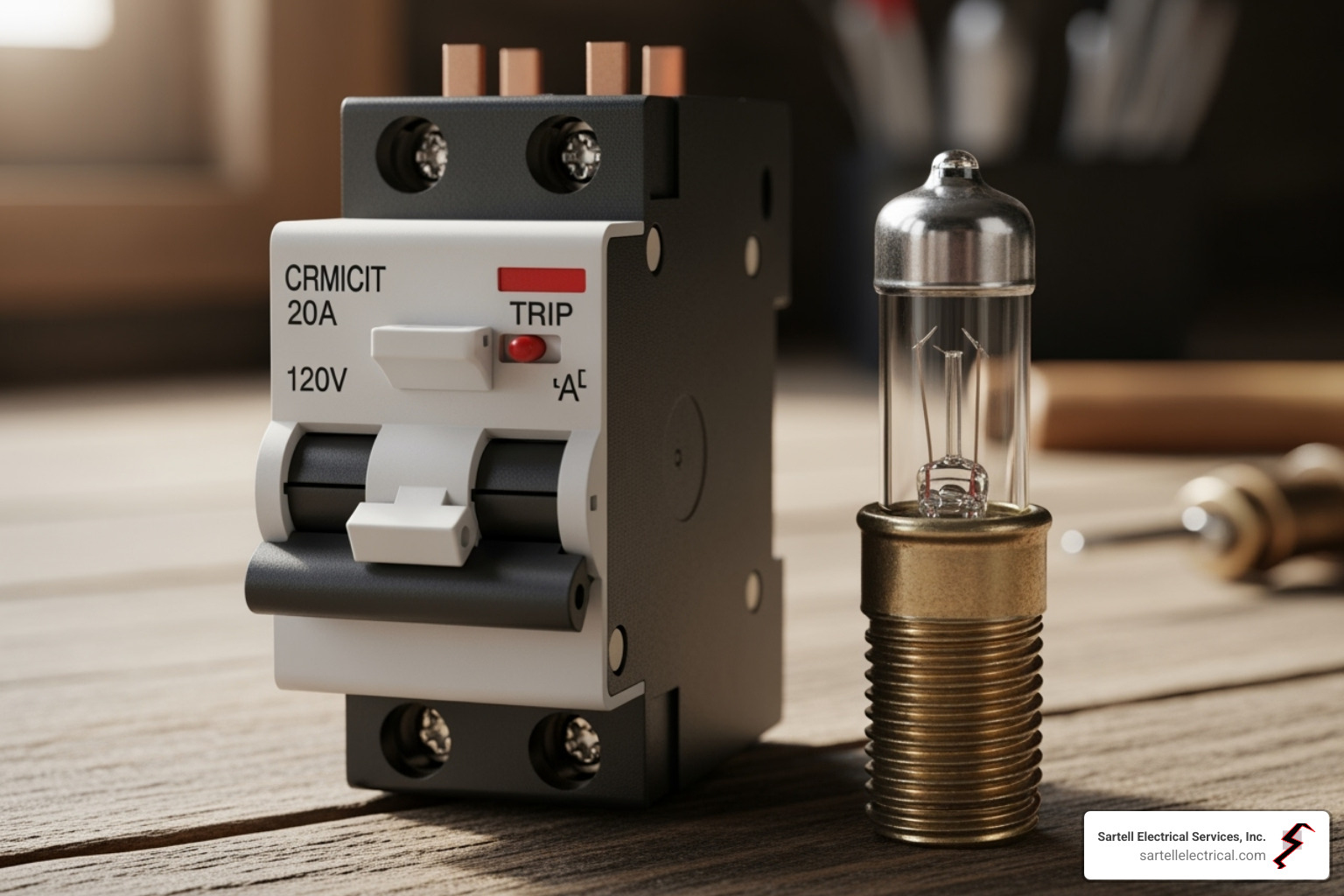
Fuse boxes use fuses that melt and must be replaced when they “blow” due to an overload. This is inconvenient and can be dangerous if homeowners use the wrong size fuse, creating a fire hazard.
Circuit breakers are reusable switches. When an overload occurs, the breaker trips to an “off” position. After fixing the issue, you simply flip it back “on.” They provide more reliable and convenient protection and are the modern standard.
Modern panels use specialized breakers for improved safety, as required by the National Electrical Code (NEC).
These advanced breakers have significantly improved home electrical safety, dramatically reducing injuries and fires.
Your residential main electrical panel has a lifespan of 25 to 40 years. As it ages or as your power needs grow, it can show signs of strain. Ignoring these signals can lead to safety hazards and power disruptions.
Watch for performance issues like flickering lights, frequent power surges, or circuit breakers that trip often. These suggest your system is under stress. Also, look for physical signs of distress, including:
Any of these signs warrant a professional inspection.
Specific circumstances often require a panel upgrade.
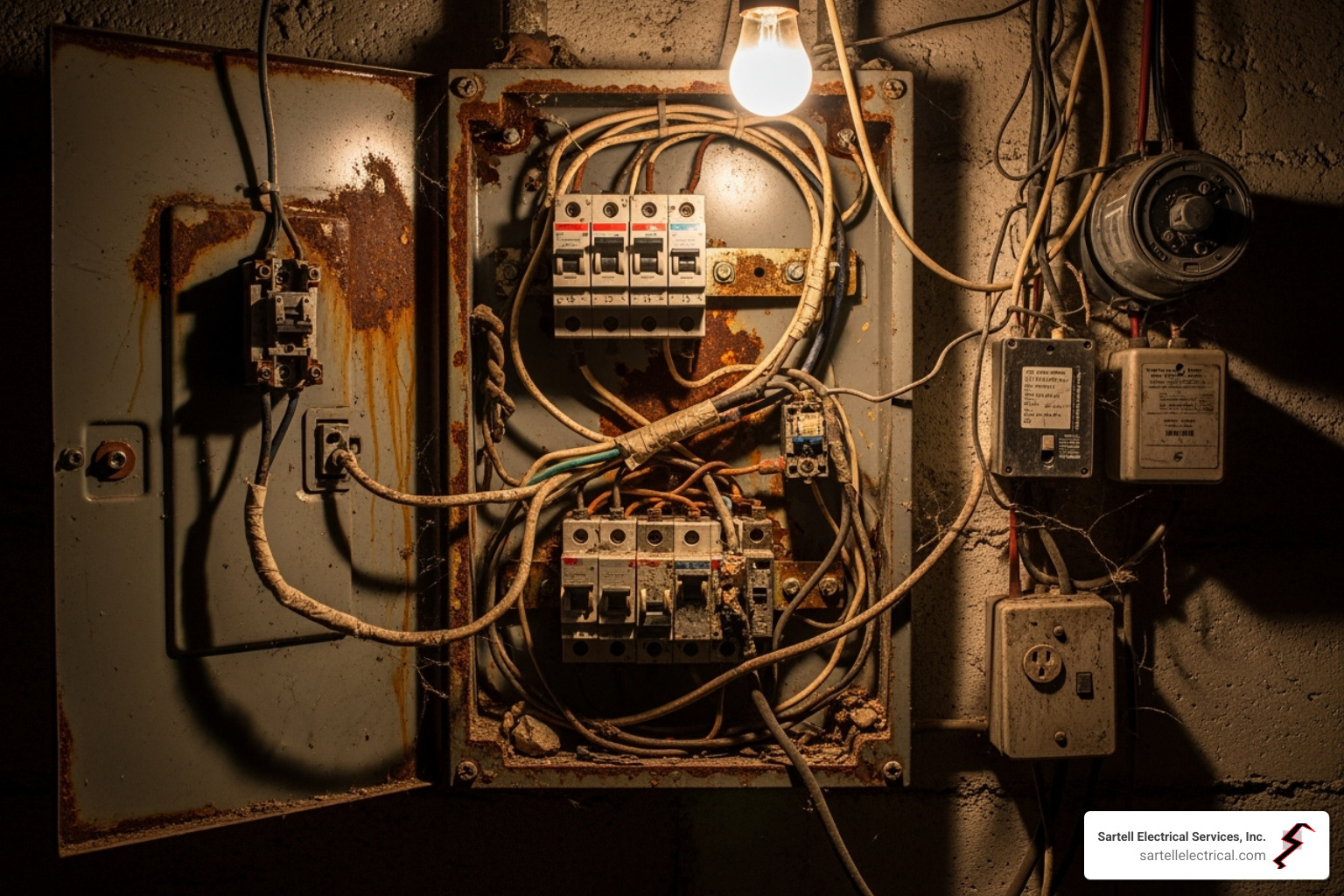
Working on a residential main electrical panel is extremely dangerous and is not a DIY project. The risk of severe electric shock, electrocution, and fire requires a licensed electrician.
The cost to upgrade or replace a panel typically ranges from $1,100 to $1,300, depending on the job’s complexity. This investment covers the new equipment, expert labor, and safety checks.
Major electrical work requires permits and inspections to meet local codes. Sartell Electrical Services is familiar with all Massachusetts electrical codes and permitting processes in Essex, Middlesex, Norfolk, and Suffolk Counties, ensuring your upgrade is safe and compliant.
As your home’s electrical needs grow, you may find your residential main electrical panel is at capacity. Fortunately, there are smart ways to expand your system.
At Sartell Electrical Services, we help homeowners find the right solution for their needs, whether it’s a simple addition or a comprehensive upgrade. The best choice depends on your current setup and future plans.
If your panel is full, you have several practical solutions:
Subpanels are a popular and practical way to manage electrical expansions, bringing power distribution closer to where it’s needed. They are ideal for powering detached garages, large kitchen remodels, or outdoor living spaces.
Beyond subpanels, smart electrical panels are revolutionizing home energy management. These advanced panels offer features like:
While a traditional residential main electrical panel is the foundation, smart technology transforms it into an intelligent energy hub, offering unprecedented control and efficiency.
At Sartell Electrical Services, we get a lot of questions about residential main electrical panels. Here are answers to some of the most common ones.
A residential main electrical panel typically lasts 25 to 40 years. Its lifespan depends on several factors, including:
If your panel is over 25 years old, it’s wise to have it professionally evaluated.
There is no difference. Terms like “breaker box,” “electrical panel,” “breaker panel,” and “load center” are used interchangeably to refer to the same component that houses your home’s circuit protection.
A typical 200-amp residential main electrical panel has 40 to 60 circuit slots. The actual number of circuits depends on a few things:
A 200-amp panel usually provides ample capacity for a modern home, including future additions.
Your residential main electrical panel is the heart of your home’s electrical system, distributing power and protecting your family from hazards. Understanding its function and recognizing warning signs like flickering lights or frequently tripping breakers is key to maintaining a safe home.
With today’s high electrical demands from EV chargers and smart home devices, ensuring your panel is up to the task is crucial. Modern 200-amp panels with GFCI and AFCI protection offer the safety and capacity needed for contemporary life, a significant upgrade from outdated fuse boxes.
For over 30 years, Sartell Electrical Services has helped Massachusetts homeowners with their electrical needs. Serving Essex, Middlesex, Norfolk, and Suffolk Counties from our Reading, MA base, we are experts in local and state electrical codes.
We provide clear explanations and honest assessments for projects of any size. If you’ve noticed warning signs, are planning a renovation, or want the peace of mind of a professional evaluation, don’t leave your home’s safety to chance.
Contact us for your residential electrical needs and let us ensure your home is safely and efficiently powered for the future.

236 Ash St Reading, MA 01867
(By Appointment Only)
