
Understanding residential electrical upgrades is key to a safe and efficient home. As our lives become more connected and power-hungry, your home’s electrical system needs to keep up.
What do residential electrical solutions involve? They typically include:
Your home’s electrical system is like its heartbeat. If it’s old or struggling, it affects everything. Today’s homes use much more power than those built decades ago. Older homes, especially those built before the 1970s, often have systems not designed for modern needs. This can lead to safety risks and frequent problems.
Upgrading your electrical system means a safer, more reliable, and more valuable home. It helps you avoid dangers like electrical fires and keeps your daily life running smoothly.
Think of your home’s electrical system like its nervous system. It sends out signals when something isn’t quite right! Ignoring these little hints can lead to bigger problems, and even safety risks. So, how can you tell if your home is ready for some much-needed residential electrical upgrades? Keep an eye out for these common red flags:
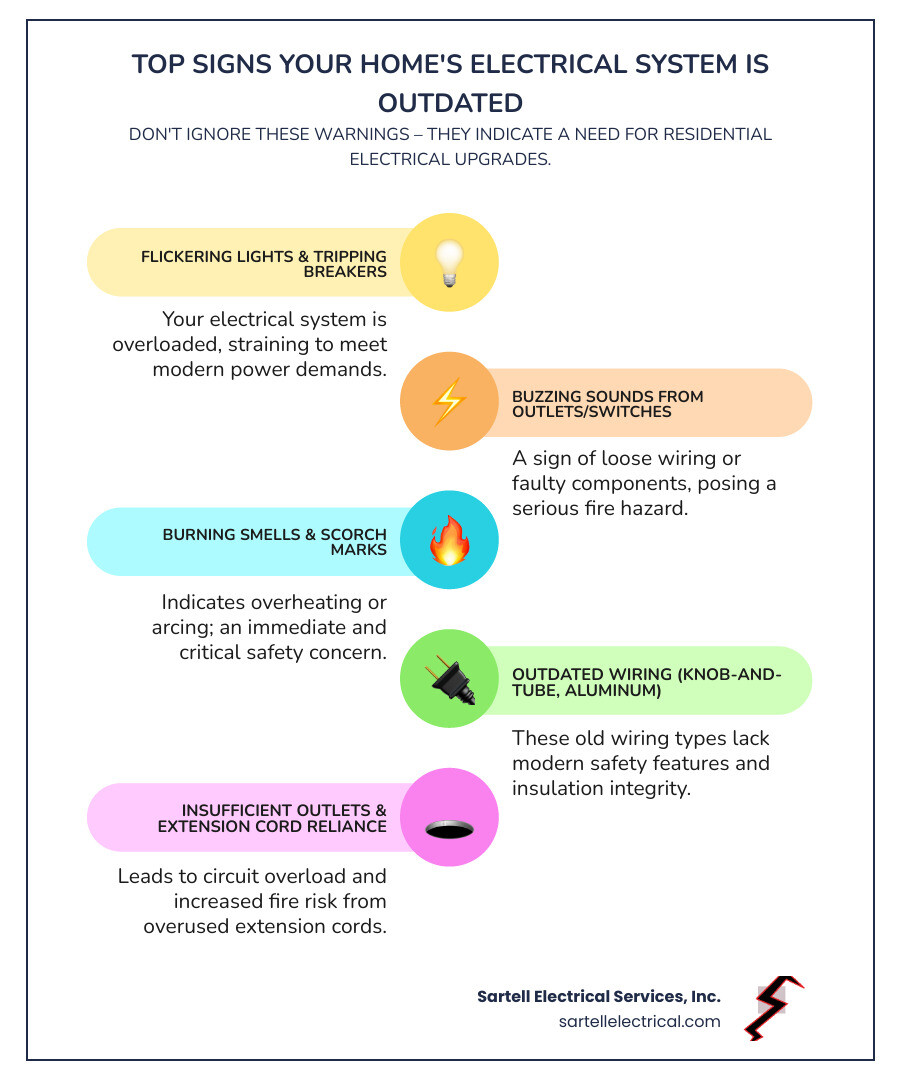
First, pay attention to your lights. Are they often flickering or dimming, especially when a big appliance kicks on? That’s your system telling you it’s working overtime. Another big sign is frequent circuit breaker trips or blown fuses. These safety devices are doing their job by cutting power when a circuit is overloaded, but if it happens often, your system can’t handle your power needs.
Next, listen up! Do you hear buzzing sounds from outlets or the electrical panel? While a soft hum from your panel might be normal, loud buzzing, sizzling, or crackling sounds are definitely not. These can mean loose wiring or overloaded circuits, which are serious fire dangers. And speaking of fire, never ignore burning smells or scorch marks near outlets, switches, or your electrical panel. That’s a huge warning sign of overheating and needs immediate attention.
Look around your home. Do you have outdated wiring like knob-and-tube wiring (found in homes built before the 1950s) or aluminum wiring (used in some homes from the mid-1960s to early 1970s)? These older types of wiring are known fire hazards and are prime candidates for an upgrade. Finally, if you’re constantly relying on extension cords because you have insufficient outlets, it’s a clear sign your home isn’t built for modern electrical demands. Extension cords are for temporary use, and too many can create a fire risk. And if you ever get a little shocking experience or a tingle when touching an appliance or switch, that’s an urgent warning of a grounding problem.
Imagine trying to run a marathon while carrying a piano. That’s pretty much what your home’s electrical system is doing when you constantly experience circuit breaker trips or flickering lights. It usually means your circuits are overloaded. This happens when too many appliances or devices try to draw power from the same circuit all at once. Your electrical panel, which is like the brain of your home’s power system, might simply not have enough capacity for today’s needs.
Think about it: our homes are filled with power-hungry gadgets these days. From big-screen TVs and gaming consoles to modern kitchen appliances, electric vehicle chargers, and smart home devices – they all need electricity! An older electrical system, perhaps designed when a toaster and a single lightbulb were the main draws, simply can’t keep up. These frequent trips and flickers aren’t just annoying; they’re clear warning signs. They show your system is strained and could be overheating. Addressing these issues with targeted residential electrical upgrades is super important for your home’s safety and how well it functions. We’re always here to help if you need more information about our electrical repair services. More info about our electrical repair services
When you step into an older home, you often see signs of its past, and sometimes that includes electrical parts that are well past their prime. Take two-prong outlets, for example. They’re a clear sign that your system lacks proper grounding. That third hole in modern outlets is for a grounding wire, which is a crucial safety feature. It helps protect you from electrical shocks and your appliances from damage.
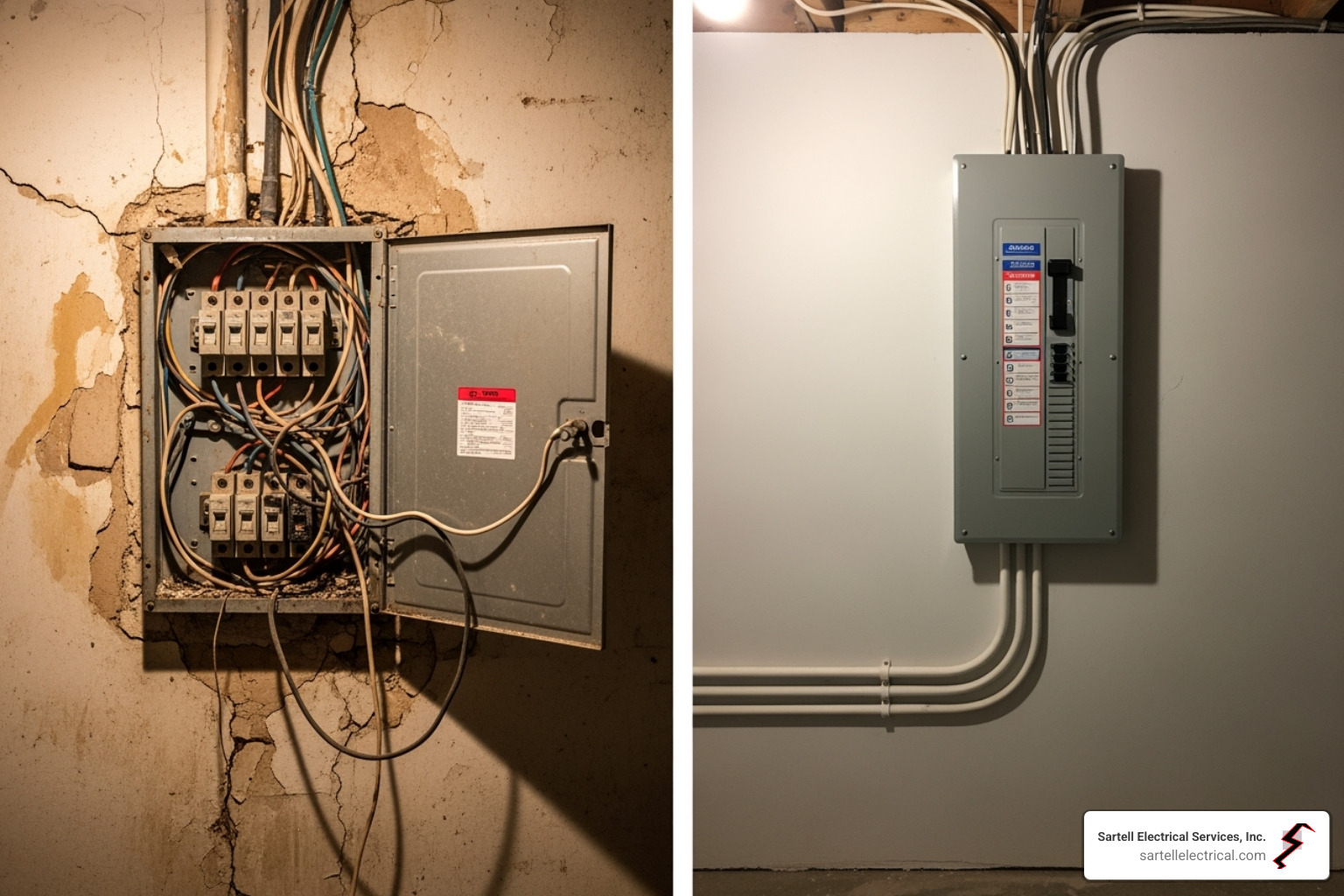
Many older homes also still use fuse boxes instead of modern circuit breaker panels. While fuses technically work, they’re much less convenient and don’t offer the same level of protection as circuit breakers. If your home has knob-and-tube wiring (common before the 1950s) or aluminum wiring (from the 1960s and 70s), you’re dealing with serious safety risks. Both types are known fire hazards. Aluminum wiring, especially, can expand and contract, leading to loose connections and overheating.
Lastly, if your home was built decades ago, it probably wasn’t designed for the sheer number of electrical devices we use today. This often means there aren’t enough outlets, forcing you to rely heavily on extension cords. While they seem handy, extension cords are meant for temporary use. Overloading them can quickly lead to overheating and become a significant fire hazard. It’s always safest to have dedicated, properly wired outlets rather than “daisy-chaining” power strips. The National Fire Protection Association (NFPA) constantly points out the dangers of old wiring and overloaded circuits, urging homeowners to upgrade for safety. The danger of old wiring according to the NFPA
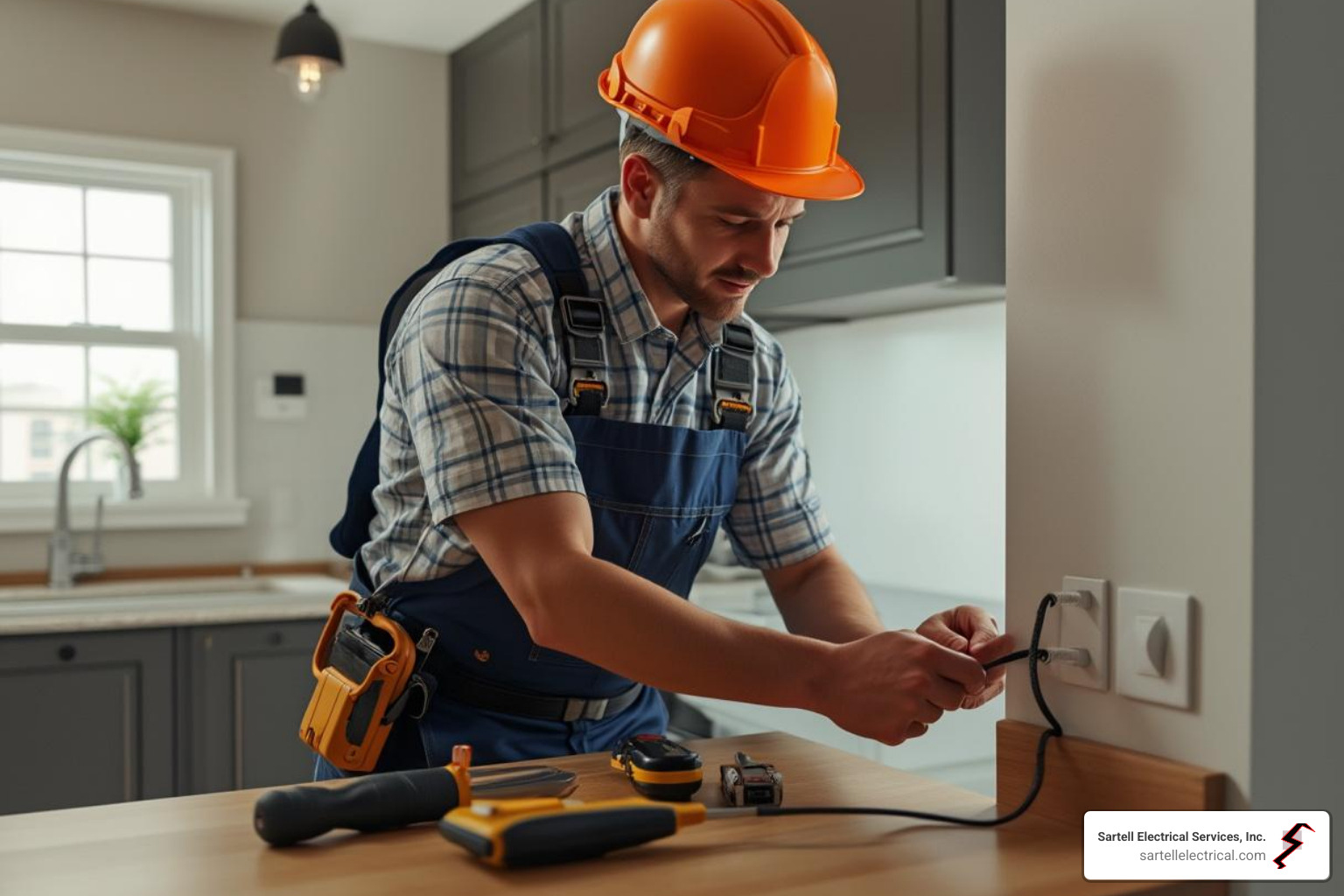
Now that we’ve chatted about the signs your home’s electrical system might be feeling a bit under the weather, let’s dive into the exciting part! This is where we talk about how residential electrical upgrades can truly transform your home. These aren’t just about fixing problems; they’re about making your home safer, boosting its functionality, increasing its value, and even saving you money on those energy bills. Think of it as bringing your home fully into the 21st century and getting it ready for whatever the future holds.
When we talk about the most impactful electrical upgrades, we often focus on key areas. These include upgrading your electrical panel, which is truly the heart of your home’s electrical system. We also look at updating old wiring to new, safer copper. Installing modern safety devices like GFCI and AFCI outlets is crucial for protecting against shocks and fires. And for a touch of modern convenience and efficiency, we consider smart home technology and energy-efficient lighting.
Imagine your electrical panel as the main highway for all the power in your home. If it’s old or too small, it’s like having a tiny country road trying to handle rush-hour traffic! Most older homes were built with 60-amp or 100-amp service. That was perfectly fine back when a toaster and a lightbulb were about it for electrical demands. But today? Our homes use so much more power. In fact, the average household uses a whopping 400% more energy today than in the 1960s! The average household uses 400% more energy today This huge jump in demand means that an electrical panel upgrade, usually to 200-amp service, is often the very best residential electrical upgrade you can make.
Upgrading your electrical panel gives your home the increased capacity it needs. This means it can comfortably handle all your modern appliances. Think air conditioners, electric ranges, hot tubs, and even dedicated EV charging stations. Without enough power, you might still experience frequent breaker trips or flickering lights. And it could even put your appliances at risk. A 200-amp panel is now the standard for new homes. It’s truly essential for future-proofing your home, especially if you plan to add an electric vehicle charger or switch to new electric appliances. Did you know that new appliances can even improve your home’s value by 3-7%? new appliances It’s a smart move all around!
Beyond the main electrical panel, the actual wiring running through your walls is just as important. If you have old or damaged wiring, like the knob-and-tube type or aluminum wiring, a full rewiring with modern copper wiring is a must-do residential electrical upgrade for safety. Copper wiring is much more stable and reliable. It’s simply better at handling today’s electrical loads without getting too hot.
Once your wiring is in top shape, installing modern safety devices is the next crucial step. We’re talking about Ground Fault Circuit Interrupters (GFCIs) and Arc Fault Circuit Interrupters (AFCIs).
And finally, consider a whole-home surge protector. While those small surge strips protect individual electronics, a whole-home unit safeguards all your home’s appliances and electronics. It protects them from damaging power surges, whether they come from lightning strikes or even smaller internal fluctuations caused by large appliances turning on and off. It’s a really smart investment to keep all your valuable electronics safe.
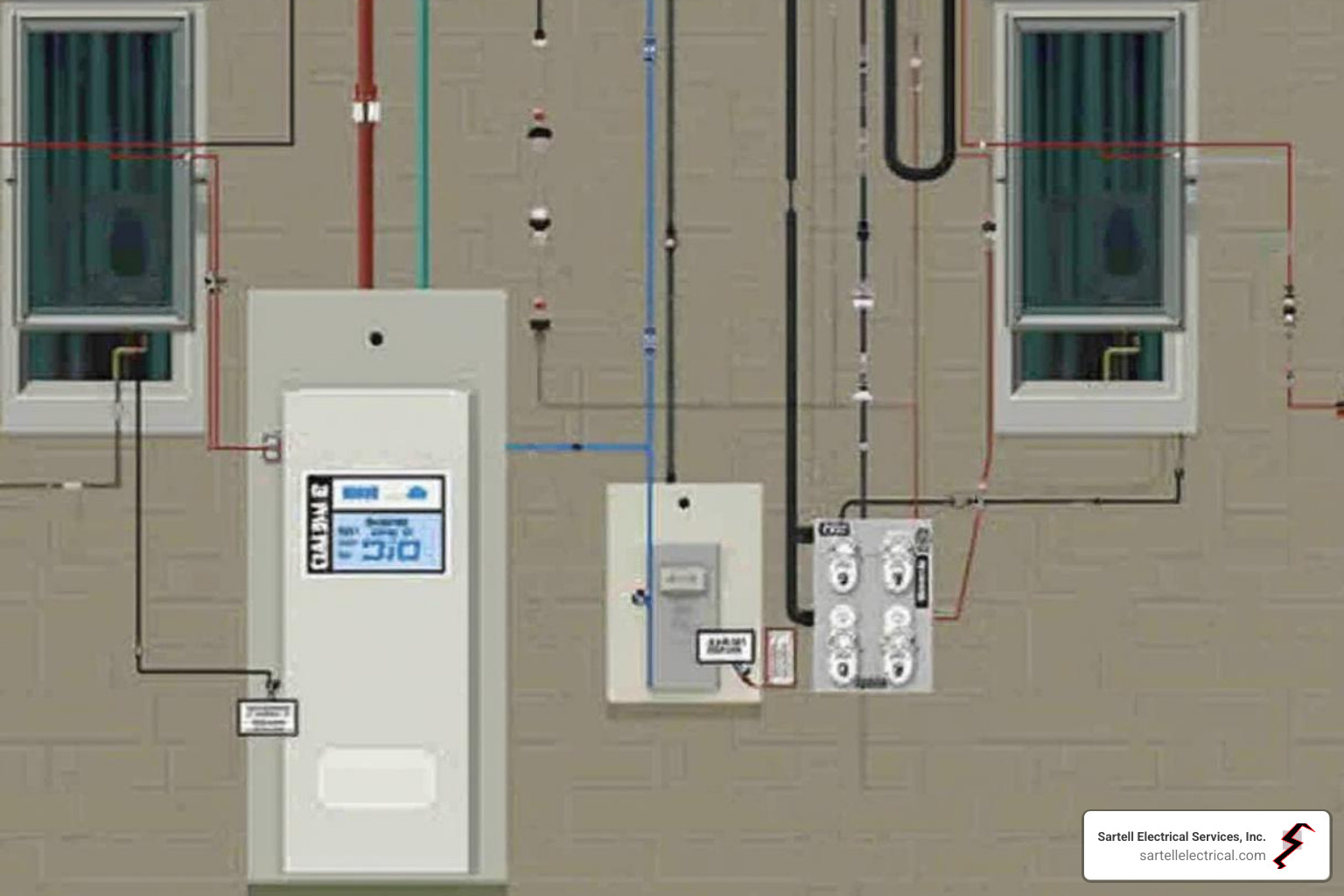
The future is definitely here, and smart home technology is making our lives so much more convenient, secure, and energy-efficient. Adding smart home features is a very popular and impactful residential electrical upgrade. This can mean installing smart switches that let you control lights and appliances right from your phone, even when you’re not home! Or maybe smart thermostats that learn how you like your home’s temperature and save energy. You can even integrate smart security systems. Imagine turning off all the lights with a tap on your phone after you’ve left the house, or setting the perfect mood with just your voice – it’s all totally possible! Smart switches
A big part of making your home more functional also involves upgrading your lighting. Switching to LED lighting is one of the easiest and most effective ways to save energy. LED bulbs use about 75% less energy and last up to 25 times longer than old incandescent bulbs. That means significantly lower electricity bills! Beyond saving money, modern lighting solutions can make your home look better, work better, and give you more control over your environment.
For ultimate convenience, we can also install USB outlets directly into your walls. No more hunting for those bulky adapter blocks! And as electric vehicles become more and more common, installing a dedicated Level 2 EV charger in your garage or driveway is a fantastic way to future-proof your home and add real value. Level 2 chargers can give you 10-30 miles of range per hour, which is a huge step up from the slower Level 1 chargers that just use a standard wall outlet.
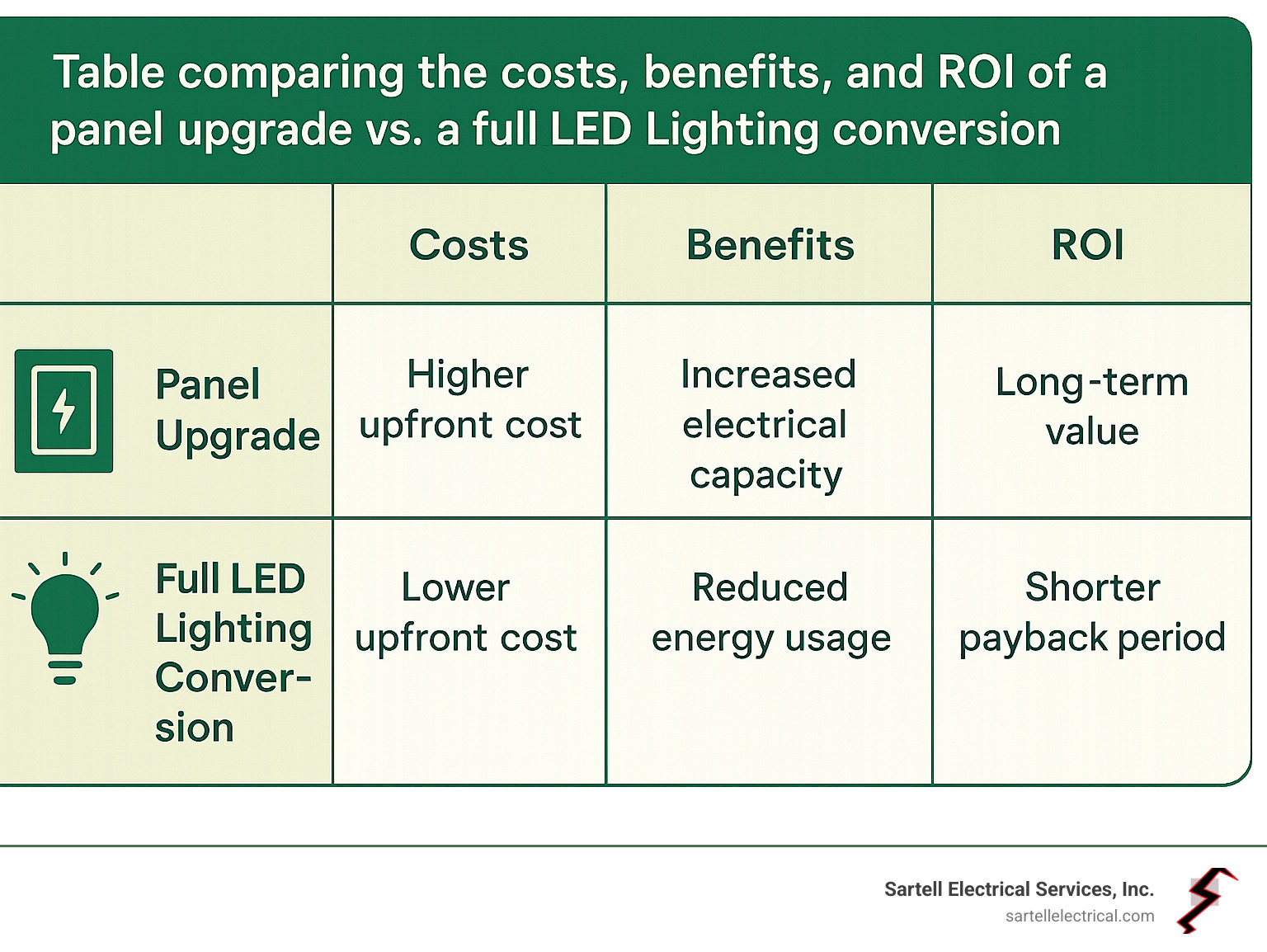
When you think about residential electrical upgrades, it’s natural for your mind to jump to the cost. But here at Sartell Electrical Services, we encourage you to view these projects not as expenses, but as smart investments in your home. Think of it as giving your home a financial hug that pays you back in safety, efficiency, and long-term value. You’re not just getting a service; you’re securing peace of mind, saving on energy bills, and potentially boosting your home’s worth.
So, what does it cost to bring your home’s electrical system up to speed? The truth is, it varies quite a bit! The final price tag for your residential electrical upgrades depends on a few key factors: how big the job is, how old your current electrical system is, and what the labor rates are in your local Massachusetts area.
For example, a common electrical panel upgrade to bring your home from an older 100-amp service to a robust 200-amp system usually falls in the range of $1,300 to $3,000. However, if your home needs a more extensive “service upgrade” that involves work from the utility company (like replacing an old transformer or bringing new lines to your property), those costs can jump significantly, anywhere from $5,000 to $25,000. For most standard panel upgrades, you’re looking at about $2,000 to $4,000.
If your home needs a full rewiring, that’s a bigger project. The cost will depend on the size of your home and how complex the existing wiring is, but it’s a significant investment that drastically improves your home’s safety. Beyond the big projects, remember to factor in labor rates (licensed electricians typically charge between $50 and $120 per hour) and permit fees. These fees, usually between $50 and $300 in Massachusetts, are super important. They ensure all work meets strict local building codes and safety standards, protecting you and your family.
Lastly, the age of your home can play a big role. Older homes sometimes hide surprises like outdated wiring behind the walls, which can add to the complexity and cost. Also, how easy it is for our electricians to access the wiring — say, in an unfinished basement versus a fully finished living space — can impact the price. Don’t worry, we believe in full transparency! We’ll always provide you with a clear, itemized quote so you know exactly what you’re paying for.
Investing in residential electrical upgrades offers a truly impressive return on investment (ROI). It’s more than just fixing problems; it’s about adding tangible value to your property and your daily life.
One of the biggest financial perks is an increased resale value for your home. Homes with updated electrical systems can see a 5-10% boost in their market value. In Massachusetts’ competitive housing market, a modern, safe electrical system is a huge selling point. It makes your home much more attractive to potential buyers and can even lead to a faster sale.
Then there are the energy efficiency savings. Upgrades like switching to LED lighting or installing smart home technology can noticeably reduce your monthly electricity bills. While there’s an initial cost, the long-term savings really add up. For instance, LED bulbs use about 75% less energy and last a lot longer than old incandescent bulbs, putting money back in your pocket year after year.
Crucially, these upgrades help in avoiding costly repairs and damages. Proactive upgrades prevent major electrical failures, which can be incredibly expensive to fix. Even more importantly, they drastically reduce the risk of electrical fires. The National Fire Protection Association (NFPA) highlights electrical failures as a leading cause of house fires, so preventing one can save you from catastrophic damage to your home and possessions. Some insurance companies even offer lower insurance premiums for homes with updated electrical systems, recognizing the reduced risk.
But perhaps the most invaluable return you get is simply peace of mind. Knowing your home is safe, efficient, and ready for whatever the future holds — whether it’s adding new smart gadgets or an electric vehicle charger — that’s a priceless feeling.
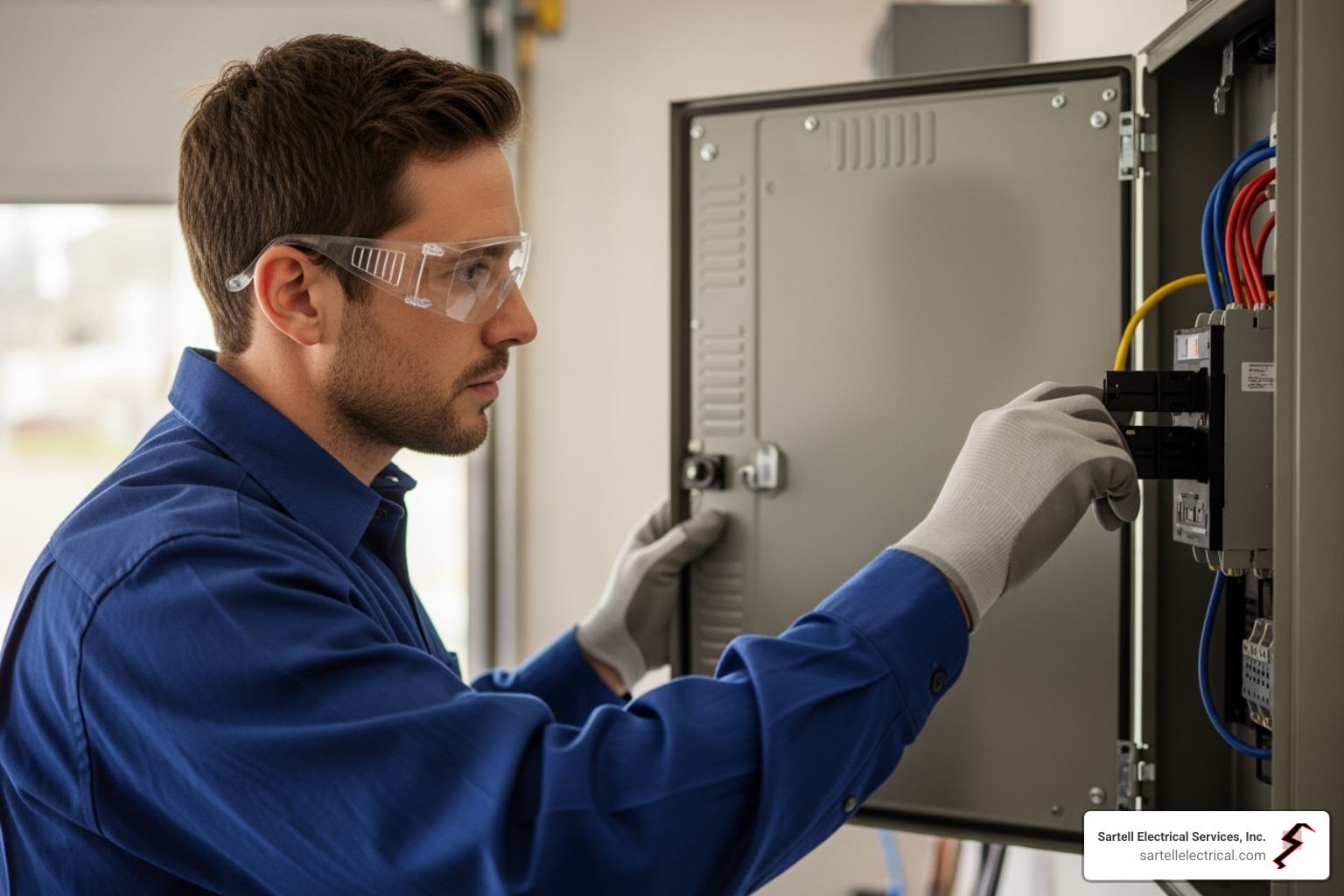
When it comes to electricity, we always say: safety first! While some minor electrical tasks might seem tempting for the DIY enthusiast, anything beyond changing a lightbulb or resetting a breaker should be left to a licensed professional. The risks of DIY electrical work are simply too high.
At Sartell Electrical Services, we have over 30 years of experience serving homeowners across Massachusetts, including communities like Reading, Andover, and the greater Boston area. Our licensed and experienced electricians are committed to excellence, ensuring every residential electrical upgrade we perform is safe, reliable, and fully compliant with all local and state codes. We pride ourselves on our leadership in the field and our dedication to customer service, handling projects of all sizes with professionalism and expertise. Our licensed residential electrical services
We understand you likely have some questions when considering improvements to your home’s electrical system. It’s a big decision, and we’re here to provide clear, straightforward answers. Here are some of the most common questions we hear about residential electrical upgrades:
Think of your home’s electrical system like your car’s engine – it needs regular check-ups to run smoothly and safely! We generally recommend having a professional electrician inspect your electrical system every 5 to 10 years. This is a great way to catch small issues before they become big, expensive problems.
However, if your home is older, or if you’ve been noticing any of the warning signs we talked about earlier – like flickering lights, frequent breaker trips, or strange smells – it’s definitely wise to have it inspected sooner. A thorough inspection can uncover hidden defects and potential hazards, giving you peace of mind and preventing major headaches down the road.
This is a common and very important question! Upgrading your electrical panel, perhaps from an older 100-amp service to a more robust 200-amp service, typically ranges from $1,300 to $4,000.
Now, why the range? Several factors can influence the final cost. It depends on the complexity of the job, whether your home needs any additional wiring updates, and if a service upgrade from the utility company is required. The specific labor rates right here in Massachusetts can also play a role. We always provide a clear, detailed quote so you know exactly what to expect.
Absolutely, yes! Investing in residential electrical upgrades is a smart move that can significantly boost your home’s appeal and value. Homes with updated electrical systems can often see a notable 5-10% increase in resale value.
Why is that? Well, for potential buyers, a modern electrical system signals safety, reliability, and the ability to comfortably support today’s technology and appliances. It shows that your home is well-maintained, ready for the future, and won’t present immediate electrical headaches. It’s a major selling point that can make your home stand out in the market!
So, after exploring all the signs and solutions, it’s clear: investing in residential electrical upgrades is one of the smartest moves you can make for your home. It’s more than just fixing wires; it’s about building a foundation of safety for your family, boosting your home’s efficiency to save you money, and ensuring it’s ready for all the technology that makes modern life so convenient.
Imagine the peace of mind knowing your home is safe, reliable, and perfectly equipped for today’s needs and tomorrow’s innovations. These upgrades aren’t just about preventing problems; they’re about creating a more comfortable, efficient, and valuable home for years to come.
Here at Sartell Electrical Services, we deeply understand the unique electrical needs of homes right here in Massachusetts. For over 30 years, we’ve been dedicated to excellence, ensuring every home we touch has an electrical system that’s not only safe and reliable but also fully up to code and ready to serve your family well.
We’re passionate about helping you power your home safely and efficiently into the future. Why not reach out? We’d be delighted to discuss your home’s electrical needs and help you take the next step. Contact us today to discuss your home’s electrical needs
236 Ash St Reading, MA 01867
(By Appointment Only)
