Understanding the Critical Need for Ground Fault Repair
Ground fault repair is essential to prevent electrical shock, fires, and equipment damage. Before the widespread adoption of ground fault interrupters (GFI), nearly 1,000 Americans died annually from electrocution; now, that rate is under 200 thanks to modern ground fault protection.
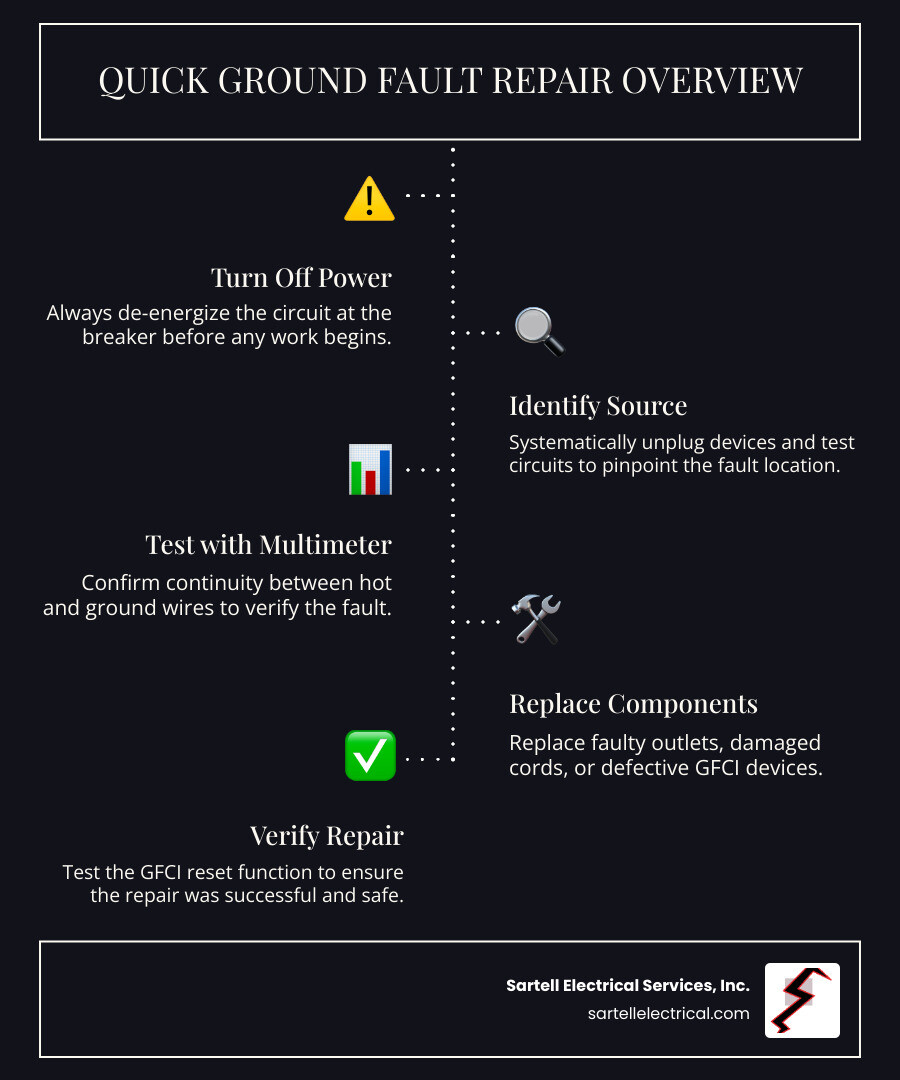
Quick Ground Fault Repair Overview:
Turn off power at the circuit breaker before any work
Identify the source by unplugging devices and testing circuits systematically
Test with a multimeter to confirm continuity between hot and ground wires
Replace faulty components like damaged outlets, cords, or GFCI devices
Verify repair by testing the GFCI reset function
Call professionals for complex wiring issues or persistent faults
A ground fault occurs when electricity takes an unplanned path to ground. This is dangerous because you could become that path.
GFCIs detect tiny current leaks (as little as 5 milliamps) and shut off power in milliseconds. These life-saving devices don’t last forever, typically needing replacement every 10-15 years.
For commercial, industrial, and healthcare facilities, ground faults mean costly downtime, safety violations, and liability. Proper diagnosis and repair are crucial for maintaining safe, compliant operations.
Understanding Ground Faults: Causes, Dangers, and Detection
In a normal circuit, power flows from the hot wire, through an appliance, and back via the neutral wire. The ground wire is a safety backup.
What is a Ground Fault and Why is it Harmful?
A ground fault happens when electrical current finds an unintended electrical path to the ground. For example, if a hot wire inside an appliance touches the metal appliance casing, the casing becomes electrically “hot.” Anyone touching it could complete the circuit to ground, leading to severe dangers.
Electrocution risk: This is the primary concern. Becoming the path to ground can be fatal. It only takes 10 milliamps—less than a small Christmas bulb—to disrupt the heart’s rhythm.
Fire hazards: The stray current generates heat, which can melt insulation and ignite nearby materials, causing fires.
Equipment damage: Ground faults can destroy expensive appliances, electronics, and your home’s wiring, leading to costly repairs.
A ground fault differs from a short circuit. A short circuit is when a hot wire touches a neutral wire, causing a massive current surge. A ground fault is when current flows to the earth through an unintended path.
Common Causes of Electrical Ground Faults
Ground faults are typically caused by wear, damage, or environmental factors. Understanding them helps with prevention and ground fault repair.
Damaged insulation: This is a leading cause. Insulation breaks down from age, heat, physical stress, or pests, exposing the live wire.
Water damage: Water and moisture are dangerous conductors. In Massachusetts, temperature fluctuations can drive moisture into electrical boxes, especially in basements.
Faulty appliances: Both old and new appliances can have internal wiring problems or manufacturing defects that cause ground faults.
Loose wiring connections: Connections can loosen over time as homes settle, a common issue in old wiring systems.
Pest damage: Rodents chewing on wires is a common, unexpected cause.
Dust and debris in outlets: Dust, especially with moisture, can create a conductive path in an outlet.
How GFCIs Detect Faults and Protect You
A Ground Fault Circuit Interrupter (GFCI) is a safety device that constantly compares the current on the hot wire to the current on the neutral wire. Normally, these are equal. During a ground fault, some current leaks to ground, creating a current imbalance that the GFCI detects instantly.
GFCIs are sensitive enough to detect an imbalance of just 5 milliamps. Their millisecond trip time (about 1/40th of a second) cuts power fast enough to prevent serious injury, making them true life-saving devices.
GFCIs come in two forms: GFCI outlets (with “Test” and “Reset” buttons) protect the outlet and others downstream. GFCI breakers are installed in the main panel to protect an entire circuit.
The National Electrical Code (NEC) standards mandate where GFCIs must be installed, especially near water. At Sartell Electrical Services, we ensure all installations meet these safety standards. Our Residential Electrical Services team can handle any GFCI installation, replacement, or repair to keep your family safe.
Locating the Source: A Step-by-Step Troubleshooting Guide
Locating a ground fault can be tricky, but a systematic approach makes it manageable. Finding the fault is often the hardest part of the ground fault repair.
Essential Tools and Safety Gear
Before you begin, gather the right tools and safety gear:
Multimeter: Essential for measuring voltage, current, and resistance.
Voltage tester: Quickly confirms if a wire is live.
Circuit tracer: Helps identify which breaker controls which circuit.
Insulated screwdrivers and wire strippers.
Personal Protection: Use Proper work gloves and wear rubber-soled shoes.
The “Divide and Conquer” Method for Finding the Fault
This systematic method breaks the problem down into manageable pieces.
Start at the tripped GFCI or circuit breaker.
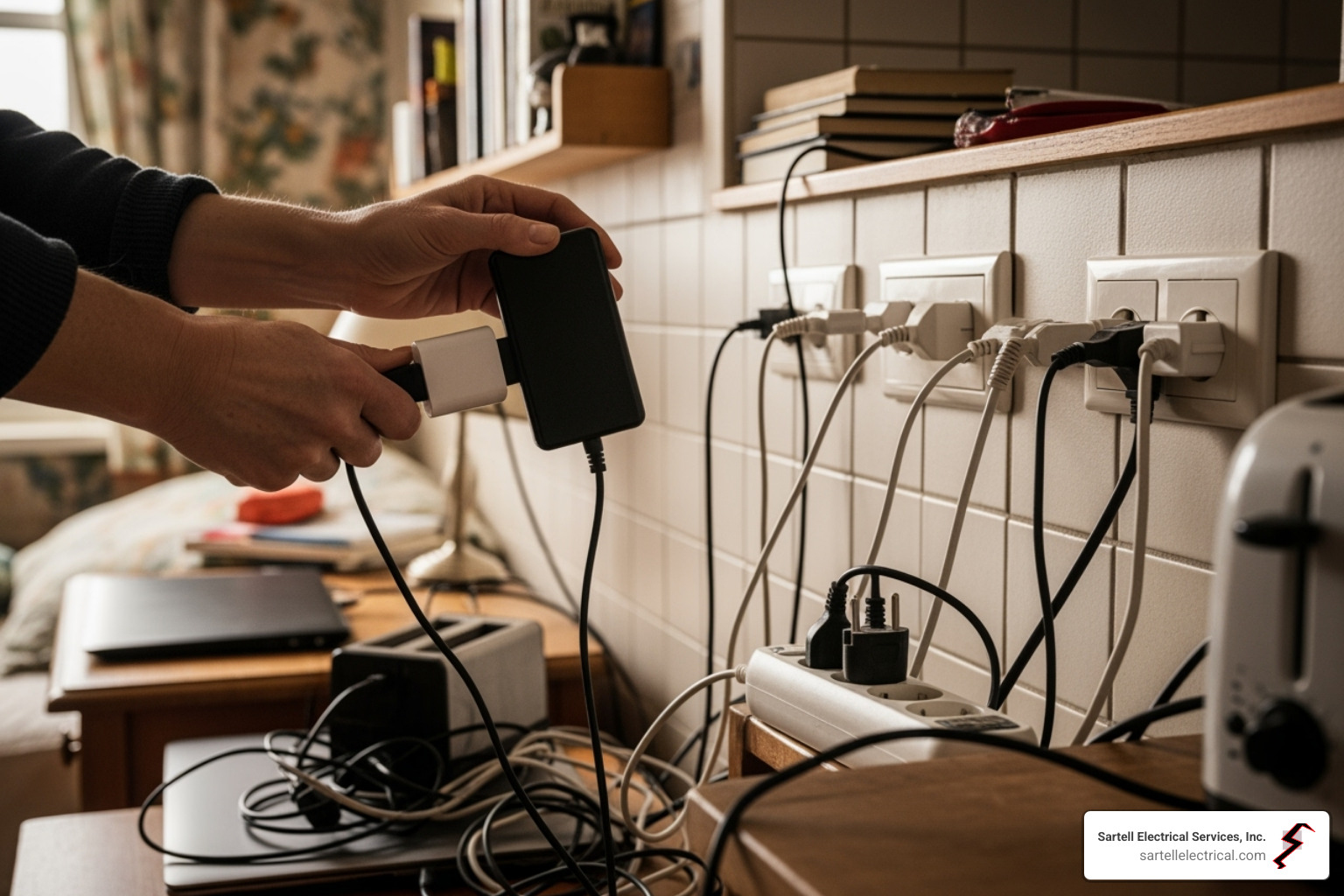
Unplug everything from the affected circuit—lamps, chargers, appliances, etc.
Try to reset the GFCI or breaker. If it stays on, the fault is in an unplugged device. If it trips again, the problem is in the wiring.
If the GFCI stays on, plug devices back in one by one. The one that trips the GFCI is the culprit.
If the fault is in the wiring, you may need to isolate circuit segments by disconnecting parts of the circuit to narrow down the location. This often requires a professional.
Remember to check permanently wired fixtures like ceiling fans and outdoor lights, as they are common sources of ground faults.
Using a Multimeter to Confirm the Fault
Once you’ve isolated the area, use a multimeter to confirm the fault. Always turn off the power at the breaker and verify it’s off with a voltage tester first.
Continuity Test: Set your multimeter to continuity mode. At an outlet, test between the hot slot and the ground hole. A beep or zero resistance reading confirms a ground fault. To test an appliance, unplug it and check for continuity between the hot prong on the plug and its metal casing.
Interpreting Readings: Continuity (a beep or low resistance) indicates a fault. Infinite resistance means no fault.
Check for continuity between hot and ground and neutral and ground to accurately pinpoint the problem area.
If the fault is in your home’s wiring, it’s time to call a professional. Our team at Sartell Electrical Services has the expertise for complex wiring issues.
The Complete Guide to Ground Fault Repair
Once you’ve found the fault, it’s time for the repair. Some basic ground fault repair tasks are DIY-friendly, but many require a professional. Here’s how to proceed safely.
Critical Safety Precautions Before You Begin
Electricity is unforgiving. These safety steps are requirements, not suggestions.
Turn off power at the circuit breaker panel. Flip the correct breaker to “OFF.” For commercial work, use Lockout/Tagout procedures.
Verify the power is off with a voltage tester. Test between hot and neutral, and hot and ground. A zero reading confirms it’s safe.
Wear Personal Protective Equipment (PPE), including insulated gloves, rubber-soled shoes, and safety glasses.
Keep the work area dry and inform others you are working on the electrical system.
How to Perform a Basic Ground Fault Repair
With safety covered, here are common ground fault repair scenarios.
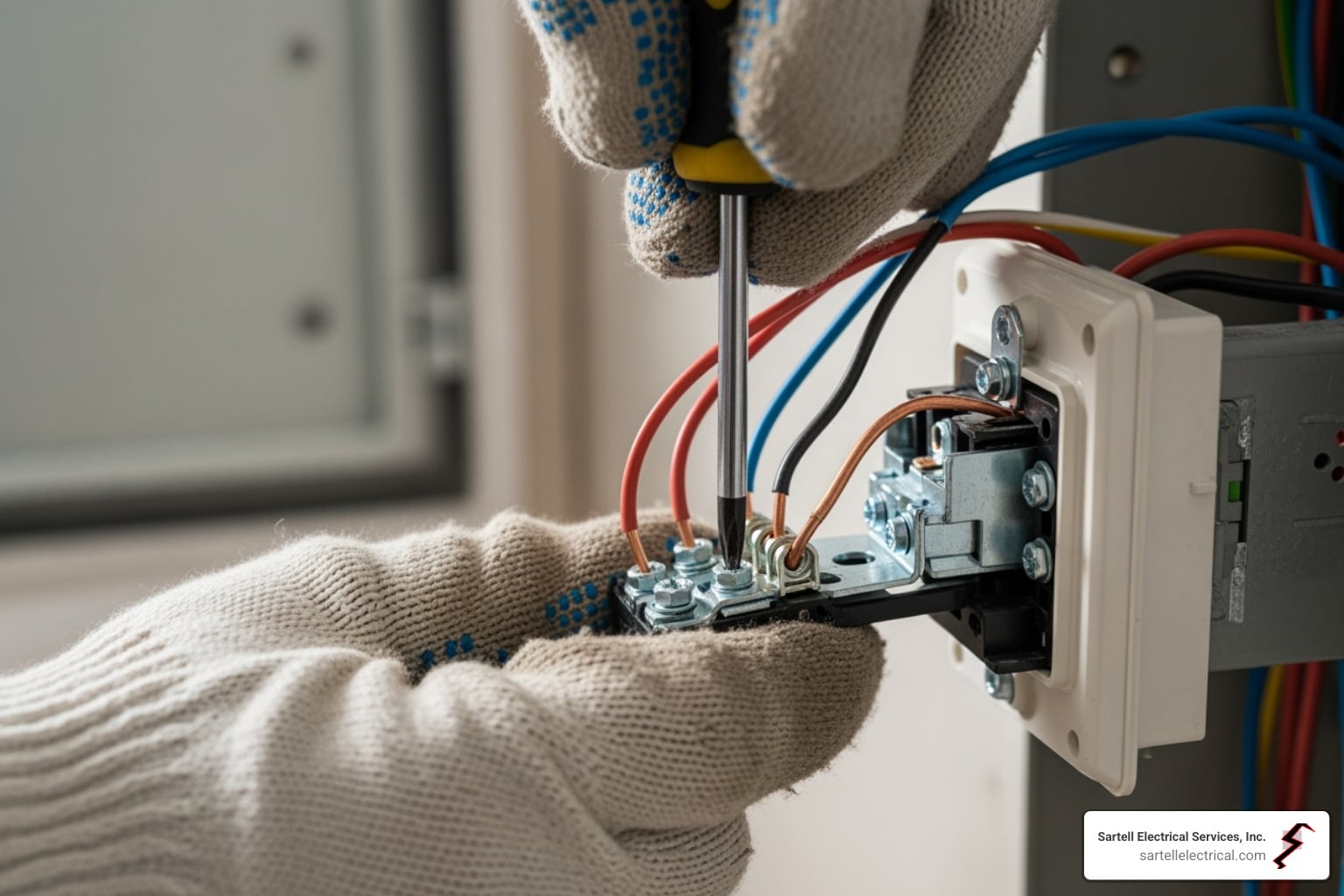
Tightening loose wire connections: This is often the simplest fix. With the power off, remove the outlet or switch cover, check for loose wires at the terminal screws, and tighten them with an insulated screwdriver.
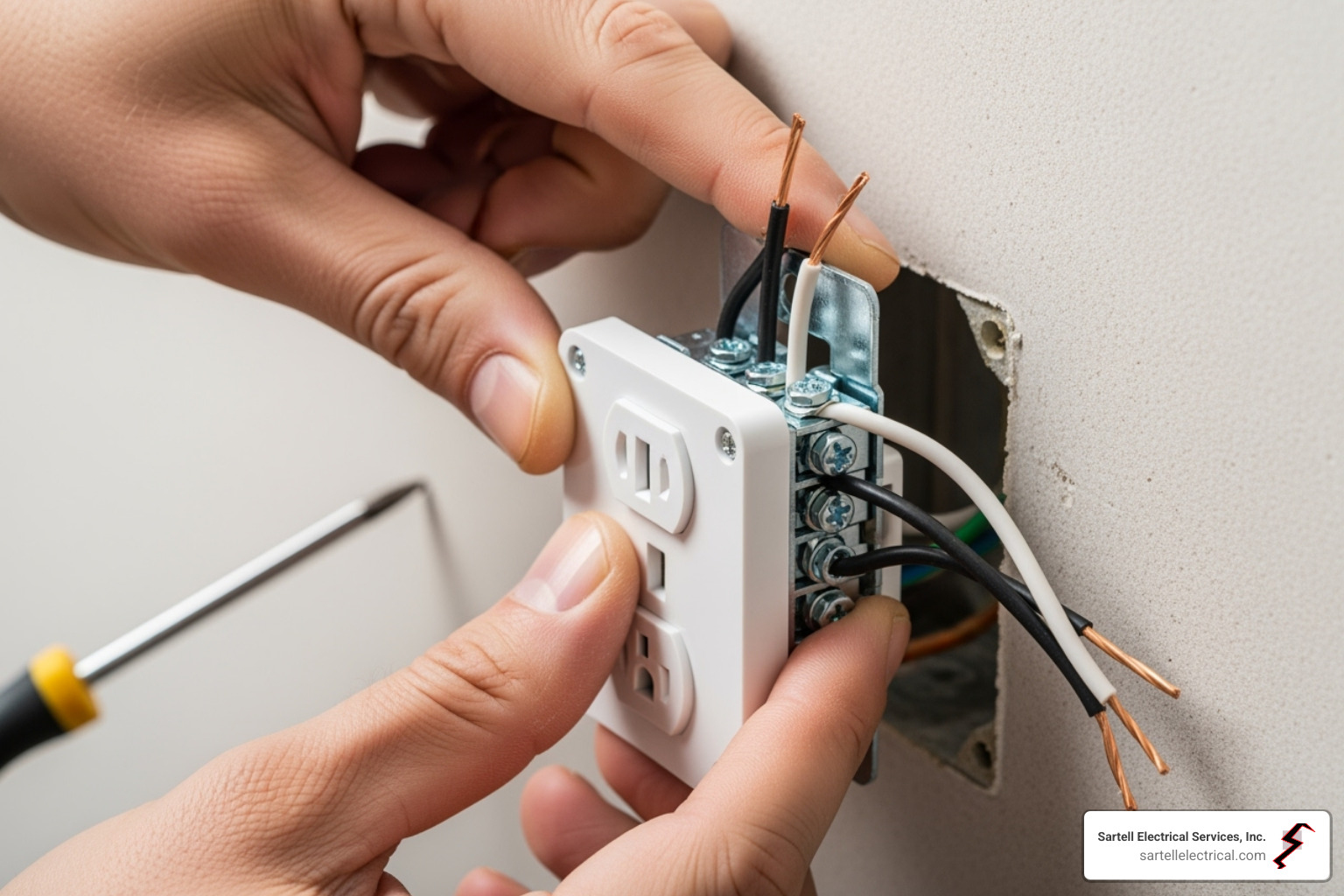
Replacing a faulty outlet: With the power off, remove the old outlet. Take a photo of the wiring to help you remember the connections. Connect the new outlet following the color code: black (hot) to brass screws, white (neutral) to silver, and copper/green (ground) to green. For GFCIs, correctly connect the line and load wires.
Repairing a damaged appliance cord: For minor nicks in the outer insulation, electrical tape can be a temporary fix. For serious damage, it’s safer to replace the entire cord or the appliance. Do not attempt complex internal repairs unless qualified.
Ensure all repairs have secure connections and proper wire insulation to prevent future faults.
Troubleshooting a GFCI Outlet That Won’t Reset
A GFCI that won’t reset is a warning sign. GFCIs have a lifespan of 10-15 years and can fail sooner. Here’s how to troubleshoot:
Check for power: Ensure the circuit breaker is on; flip it off and on again to be sure. Also, check if an upstream GFCI has tripped.
Look for a downstream ground fault: This is the most common cause. The GFCI is doing its job. Unplug everything on the circuit and try to reset it. If it works, plug devices in one by one to find the faulty one.
Check for moisture:Moisture in the outlet box, especially outdoors or in bathrooms, can cause tripping. With the power off, use a hair dryer to gently dry the box.
Verify wiring:Reversed line and load wires are a common installation error that prevents a GFCI from working. The wiring must be corrected with the power off.
Consider its age: If the GFCI is over 10 years old and won’t reset with no load, it has likely reached the end of its 10-15 year lifespan. The internal mechanism or reset button may have failed.
If these steps don’t work, you likely have a complex wiring issue that requires a professional.
Best Practices for Ground Fault Prevention
Preventing ground faults is easier and cheaper than ground fault repair. Your electrical system needs regular attention to remain safe.
Regular Inspections and Maintenance
Test your GFCI outlets monthly. Press the “Test” button; power should cut off. Then press “Reset” to restore it. If it fails the test, replace it immediately.
Visually inspect cords and plugs regularly for fraying, cracks, or discoloration. Replace any damaged cords.
Look for warning signs like scorch marks, discoloration, or a burning smell around outlets. These indicate dangerous overheating and require immediate professional attention.
Keep outlets clean and dry, especially in kitchens, bathrooms, and outdoors. Dust and moisture can combine to cause a ground fault.
These simple maintenance steps can prevent major issues. See examples of our proactive work in Our Electrical Projects.
Proper Installation in At-Risk Areas
The National Electrical Code (NEC) requires GFCIs in high-risk areas where water and electricity are likely to meet. These include:
Kitchens: All countertop receptacles and any within 6 feet of a sink.
Bathrooms and Garages: All receptacles.
Unfinished basements and crawl spaces: All receptacles.
Outdoor receptacles, laundry areas, and wet bars near sinks.
Proper installation is crucial for safety and code compliance, especially for businesses. Learn more about our Commercial Electrical Services.
When to Call a Professional for Ground Fault Repair
While some tasks are DIY-friendly, some electrical work is best left to professionals. Call an electrician for:
Persistent GFCI tripping after basic troubleshooting. This indicates a fault in the wiring.
Any fault in the home’s wiring. This is dangerous work that requires expertise.
Scorch marks or burning smells. These are emergencies. Turn off the power and call an electrician immediately.
An entire circuit is dead and the breaker won’t reset.
Uncertainty about the cause of an electrical problem. It’s always safer to call.
Complex electrical systems in commercial, industrial, or healthcare settings, which require specialized knowledge like our Healthcare Electrical Services.
Improper electrical work is dangerous and can void your insurance. When in doubt, call a licensed electrician.
Frequently Asked Questions about Ground Faults
Here are answers to common questions we receive about ground faults, particularly regarding outdoor lighting.
Why does my outdoor lighting keep tripping the GFCI?
It’s a common frustration when outdoor lighting repeatedly trips a GFCI. Outdoor lighting circuits are exposed to the elements, and common causes for tripping include:
Moisture in fixtures: Rain or condensation can get inside light housings, creating a path to ground.
Damaged underground wiring: In Massachusetts, shifting soil from freeze-thaw cycles, digging, or pests can damage buried cables.
Faulty light fixture: Internal components degrade over time from exposure to the elements.
Incorrect installation: Improperly sealed connections or incorrect burial depth can lead to future faults.
Use the “divide and conquer” method: disconnect fixtures one by one to isolate the one causing the trip.
Is a ground fault the same as a short circuit?
No, though both are dangerous. A short circuit occurs when a hot wire touches a neutral wire, causing a massive current surge that trips a standard breaker to prevent fire.
A ground fault occurs when a hot wire touches a grounded object (like an appliance’s metal case), creating an unintended path to earth. This current can be small but is dangerous because a person can become part of that path. GFCIs are specifically designed to detect these small ground faults that a standard breaker might miss but are still large enough to cause electrocution.
How often should GFCI outlets be replaced?
GFCI outlets are life-saving devices with a limited lifespan, typically 10 to 15 years, but they can fail in as little as five years. Frequent tripping, power surges, and harsh conditions cause wear.
Monthly testing is crucial. Press “Test” to cut power, then “Reset” to restore it. If it fails the test or shows physical damage, it must be replaced immediately. Proactively replacing aging GFCIs is a smart investment in your safety. Ground fault repair often means replacing the GFCI; do not delay this, as your safety depends on it.
Conclusion
Ground faults are serious electrical hazards that can cause electrocution, fires, and equipment damage. They demand careful attention. This guide has covered what ground faults are, their causes, and how GFCIs provide protection. We’ve outlined the “divide and conquer” troubleshooting method and how to use a multimeter to locate faults.
For any ground fault repair, safety is paramount. Always follow precautions like turning off the power and using PPE. While some simple repairs are DIY-friendly, it’s crucial to know when to call a professional. Signs like persistent GFCI tripping, scorch marks, or faults in your home’s wiring indicate a deeper problem that requires an expert. This is especially true for complex commercial, industrial, or healthcare electrical systems.
For over 30 years, Sartell Electrical Services, Inc. has been a trusted electrical contractor across Massachusetts. Our commitment to excellence ensures we handle every job, from simple repairs to complex installations, correctly and safely.
If you have a stubborn ground fault, are planning an upgrade, or need professional maintenance, we are here to help. Your safety and satisfaction are our promise.