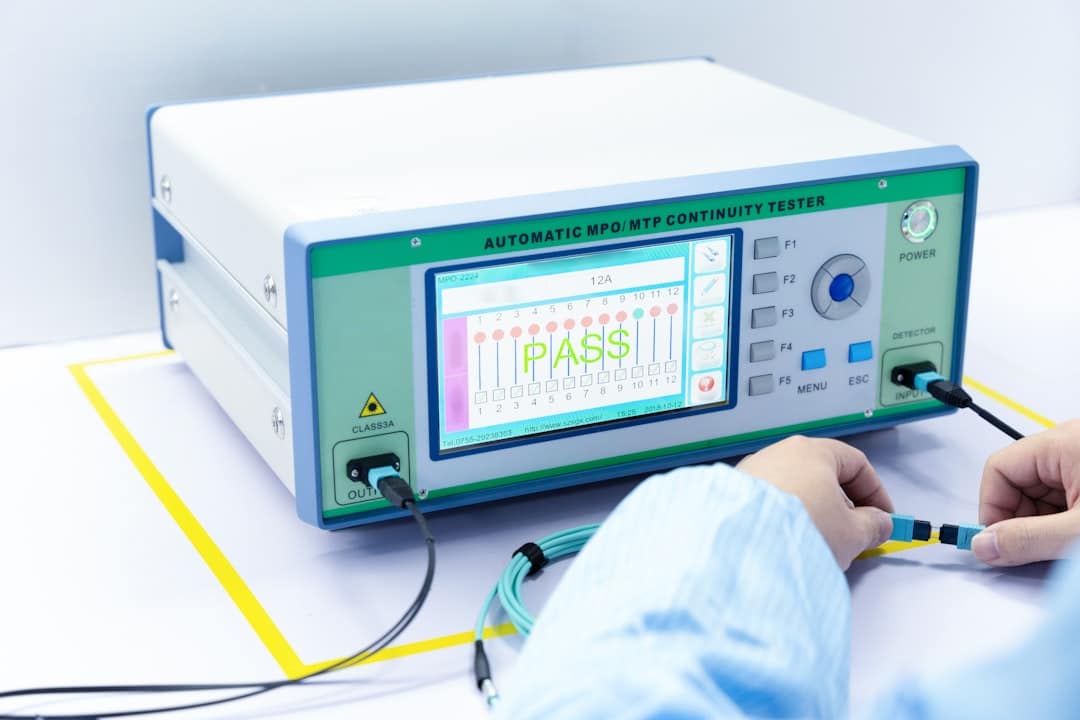
Electro medical services encompass two critical components that keep healthcare facilities operating safely and effectively. These services include both the maintenance and repair of medical equipment, as well as the specialized electrical infrastructure that powers modern healthcare facilities.
Quick Overview: What Electro-Medical Services Include
The stakes couldn’t be higher in healthcare settings. When a TENS unit fails during pain management therapy or when a hospital’s power system experiences issues, patient care is directly affected. As one industry expert noted, “Electrical system issues can directly impact productivity, profitability, and competitive standing” – and in healthcare, this translates to patient safety and treatment outcomes.
Modern medical facilities rely on increasingly sophisticated equipment, from basic rehabilitation devices to complex diagnostic systems. The global electrotherapy market alone was valued at $5.1 billion in 2022, highlighting the massive scale of equipment requiring specialized maintenance and support.
I’m Ed Sartell, and as President of Sartell Electrical Services since 1985, I’ve seen how critical proper electro medical services are to healthcare facility operations. My nearly four decades of experience have taught me that successful medical facilities require both expertly maintained equipment and rock-solid electrical infrastructure to deliver the highest standard of patient care.
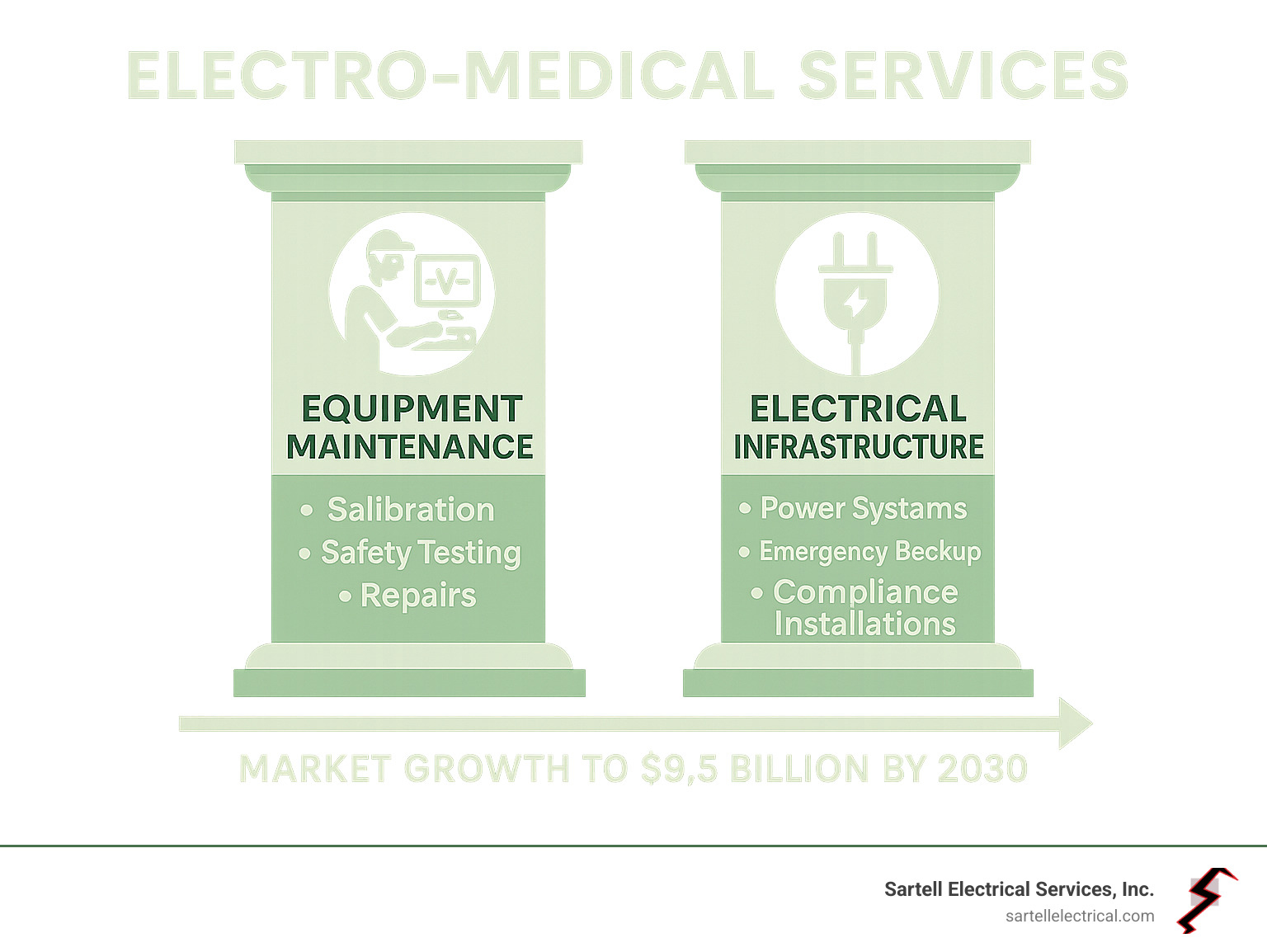
When healthcare professionals use a medical device, they rely on two deeply connected worlds working in harmony. Electro medical services encompass both the specialized care of medical equipment and the robust electrical systems that power entire healthcare facilities.
Think of it like a symphony: you need talented musicians (the medical equipment) and a solid concert hall with excellent acoustics and lighting (the electrical infrastructure). Without both working together, you can’t achieve the healing that patients deserve.
The first half of electro medical services focuses on keeping medical devices running perfectly. Biomedical technicians are the skilled professionals who ensure every piece of equipment performs exactly as it should.
Their work involves calibration to ensure devices give accurate readings every time. When an audiometer tests hearing or a TENS unit delivers pain relief, precision matters. These calibrations follow strict NIST traceability standards, meaning every measurement can be traced back to national standards for accuracy.
Safety testing is another crucial part of their routine. They perform thorough electrical safety tests and mechanical inspections to guarantee that equipment won’t harm patients or staff. It’s like a safety inspection where the stakes are much higher.
When equipment breaks, technicians handle parts replacement with precision. Whether it’s a power cord on rehabilitation equipment or a heating element in therapy modalities, they keep parts ready to minimize downtime. Many offer on-site service and mail-in options, following manufacturer guidelines to ensure repairs meet original specifications.
The goal is proactive care that keeps healing tools in peak condition. A TENS unit that’s slightly off calibration might not provide the pain relief a patient needs.
The second pillar of electro medical services is the complex electrical backbone that powers a healthcare facility. This is where licensed electricians with healthcare expertise are essential. While biomedical technicians focus on individual devices, electrical professionals ensure the entire facility has reliable power.
Power quality is central to this work. Medical equipment is incredibly sensitive, and small power fluctuations can damage expensive devices or disrupt critical procedures. A surgeon, for example, needs precise lighting with no room for flickering or surges.
Emergency power systems are perhaps the most critical aspect of healthcare electrical work. System installation of backup generators and power redundancy systems ensures that life-support equipment never loses power during utility failures.
Healthcare facilities also require specialized installations far beyond typical commercial buildings. This includes isolated power systems that protect patients from electrical shock and sophisticated data wiring for patient monitoring systems.
Code compliance in healthcare involves navigating regulations far more stringent than standard commercial requirements. These rules exist for life-support systems and sensitive equipment protection, which can be a matter of life and death.
This system synergy between equipment maintenance and electrical infrastructure creates the foundation for holistic patient care. The most advanced medical device is useless without reliable power, and the most robust electrical system can’t deliver results without properly functioning equipment.
For healthcare facilities looking to ensure their electrical foundation meets these demanding standards, our comprehensive health care electrical services provide the specialized expertise that patient safety requires.
When a patient relies on a TENS unit for pain relief or needs an audiometer test, the equipment must work perfectly every time. In healthcare, there’s no room for “almost right.” This is why electro medical services for equipment maintenance isn’t just about fixing machines—it’s about ensuring every patient receives the care they deserve.

Behind every working medical device is a biomedical technician treating it like a patient’s lifeline. Their preventative maintenance approach covers critical areas to keep equipment running safely and accurately.
Electrical safety tests are foundational, verifying proper grounding, checking insulation, and measuring current leakage to prevent shocks or fires. This testing is non-negotiable since patients are often connected directly to these devices.
Mechanical inspections examine every moving part and connection for wear that could lead to failure, catching problems before they affect patient care.
Calibration checks ensure a device delivers the precise treatment level specified. This is crucial for cardiac equipment and rehabilitation devices where incorrect settings could be harmful. Many facilities require NIST traceability for calibrations to meet ISO regulations and maintain accuracy.
Following manufacturer guidelines is essential for warranty coverage and optimal performance. Factory-trained technicians understand the details of each device, from complex audiometers like the GSI AUDIOSTAR PRO to specialized rehabilitation equipment.
Companies with over 40 years of experience in electro medical services often emphasize their JCAHO compliance, which represents the gold standard for healthcare quality and safety.
Meticulous equipment care benefits everyone in the healthcare facility. For patients with chronic pain, properly maintained electrotherapy devices offer relief without the side effects of medication.
Pain management through electrotherapy is an important alternative to pharmaceuticals. The global TENS market is projected to grow from $450 million in 2022 to $700 million by 2029, reflecting the growing recognition of electrotherapy as a safe alternative to medication. These devices use electrical impulses to mimic the body’s natural signals, modifying pain perception non-invasively.
Rehabilitation equipment maintenance directly impacts patient recovery. When therapeutic devices work consistently, physical therapists can focus on patient progress, not equipment reliability.
Accurate diagnostics depend on properly calibrated equipment. A miscalibrated audiometer could lead to incorrect hearing assessments and treatment decisions. Regular maintenance ensures trustworthy diagnostic results.
Healthcare professionals benefit from non-invasive treatment options that well-maintained equipment provides. These tools allow for effective care while minimizing patient discomfort. Reliable equipment builds confidence in both the treatment and the provider.
Most importantly, proper maintenance dramatically reduces unexpected equipment failures, keeping facilities running smoothly so staff can focus on patients.
Think of a hospital’s electrical system as the nervous system of the human body – it’s invisible, but absolutely everything depends on it working perfectly. Behind every beeping monitor, every bright surgical light, and every life-saving device is a network of carefully designed electrical infrastructure that never gets to take a break.
This isn’t your typical electrical work. When I started Sartell Electrical Services nearly four decades ago, I quickly learned that healthcare facilities operate in a completely different league. The stakes are higher, the regulations are stricter, and there’s simply no room for error.
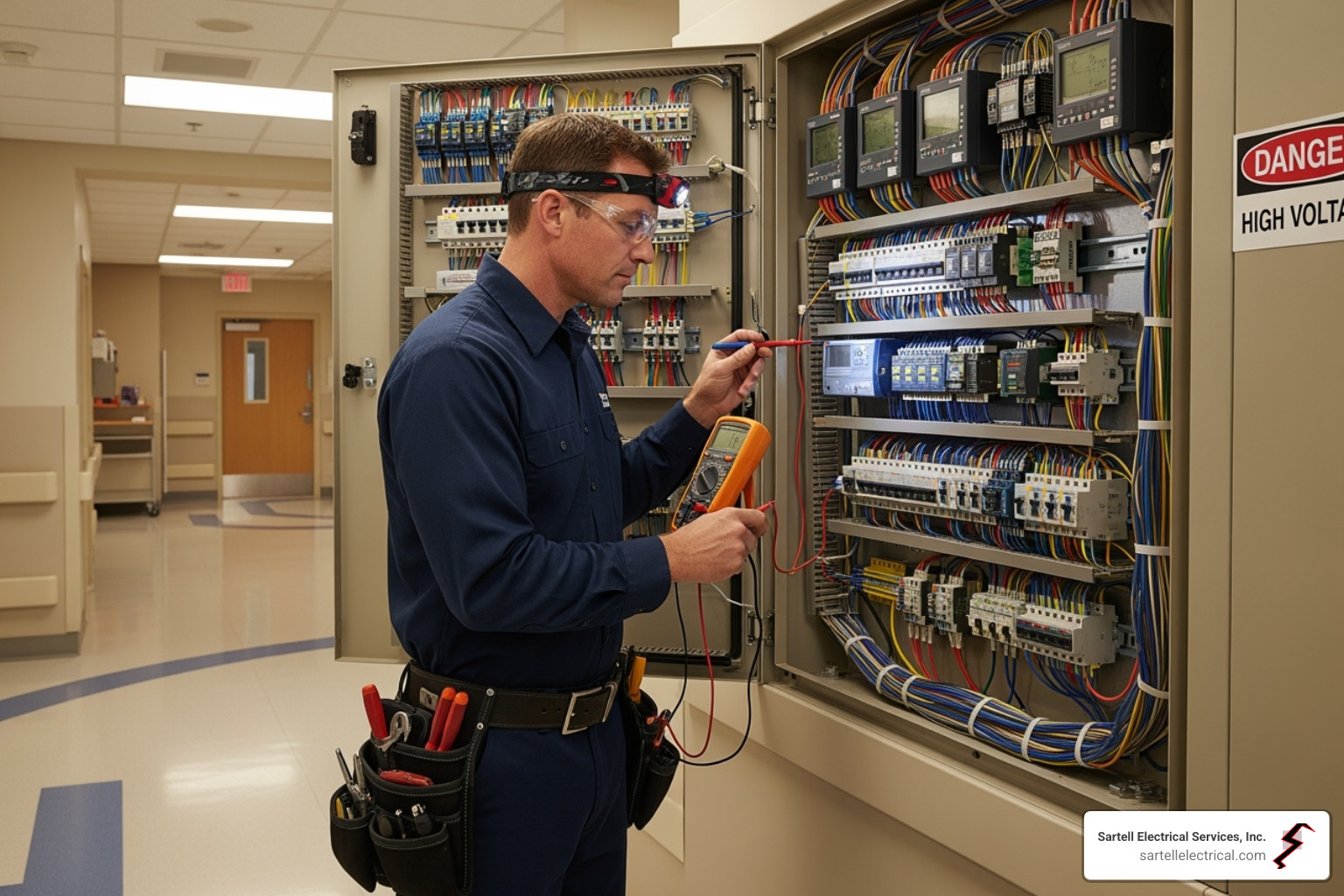
Here’s the reality: when the power flickers in your home, you might lose your Wi-Fi for a few minutes. When power issues occur in a hospital, lives hang in the balance. That’s why electro medical services require electrical contractors who understand the unique demands of healthcare environments.
Strict regulations govern every aspect of healthcare electrical work. We’re talking about NFPA 99 for Healthcare Facilities, the National Electrical Code, JCAHO compliance, and CDPH requirements. These aren’t suggestions – they’re mandatory standards that exist for one reason: patient safety. Over our 30+ years in business, we’ve made it our mission to stay current with these changing requirements.
Life-support systems create electrical demands unlike anywhere else. When someone’s life depends on a ventilator or dialysis machine, that equipment needs dedicated circuits, redundant power paths, and transfer switches that work flawlessly every single time. We’ve seen what happens when facilities try to cut corners – it’s not pretty, and it’s definitely not safe.
Sensitive equipment protection is another critical factor. Modern medical devices cost hundreds of thousands of dollars and are incredibly sensitive to power fluctuations. Even a minor surge can fry circuits, corrupt data, or throw off diagnostic readings. We design systems with advanced power conditioning and surge protection because replacing a damaged MRI machine isn’t exactly in most budgets.
Power redundancy isn’t just nice to have – it’s essential. Healthcare facilities need multiple layers of backup power, from generators to uninterruptible power supplies. Our goal is simple: ensure that healthcare facilities never experience the kind of power issues that could compromise patient care.
We provide specialized healthcare electrical work in Boston MA and throughout Massachusetts because we understand these unique challenges inside and out.
Our work goes far beyond basic electrical installation. We’re essentially building the foundation that makes modern healthcare possible. Emergency Power Supply Systems (EPSS) are probably the most critical component we install. These robust generator systems automatically activate within seconds of a power outage, ensuring uninterrupted power to operating rooms, intensive care units, and any equipment keeping patients alive.
Isolated Power Systems (IPS) represent another specialized area of our expertise. These systems are used in critical care areas like operating rooms and ICUs to minimize electrical shock risks for patients connected to multiple devices. They continuously monitor current leakage and provide an ungrounded system that dramatically improves safety.
Nurse call systems might seem simple, but they require precise low-voltage wiring and seamless integration throughout the facility. When a patient needs help, that call button has to work – period. We design these communication networks to be absolutely reliable.
Fire alarm and life safety systems in healthcare facilities are far more complex than standard buildings. These sophisticated systems integrate with ventilation controls, automated door systems, and emergency lighting to guide everyone to safety during emergencies. The complexity is staggering, but the safety benefits are worth every careful connection.
We also handle extensive data wiring and low-voltage systems that power everything from security systems to specialized communication networks. Modern healthcare relies heavily on digital systems, and all that technology needs rock-solid electrical infrastructure.
Our team brings over 30 years of commercial and industrial electrical experience to every healthcare project. We’ve learned that attention to detail isn’t just important – it’s literally a matter of life and death. Whether we’re working on electrical services for facilities in Cambridge MA or anywhere else in Massachusetts, we approach every project with the same commitment to excellence that has defined our company since 1985.
The world of electro medical services never stands still. Between breakthrough technologies that transform patient care and changing safety regulations, healthcare facilities face the ongoing challenge of staying current while maintaining the highest standards. It’s like trying to upgrade a plane while it’s flying – everything must work perfectly, even as improvements are being made.

When it comes to healthcare compliance, there’s no room for “close enough.” The standards governing electro medical services exist for one fundamental reason: patient safety. Every regulation, every certification requirement, and every inspection protocol serves as another layer of protection between patients and potential harm.
FDA approval forms the foundation for medical device safety in the United States. Before any electro-medical device can touch a patient, it must prove its safety and effectiveness through rigorous testing. This isn’t just paperwork – it’s a comprehensive evaluation that can take years to complete.
The Joint Commission Accreditation process takes this commitment even further. Healthcare organizations that achieve Joint Commission Accreditation demonstrate their dedication to meeting performance standards that cover everything from equipment maintenance schedules to emergency power protocols. It’s like earning a seal of approval that says, “We take patient safety seriously.”
ISO regulations provide the international framework that ensures consistency across borders. ISO 13485, specifically designed for medical devices, creates quality management systems that follow products from design through disposal. When a biomedical technician calibrates equipment to these standards, they’re connecting to a global network of safety practices.
CDPH compliance adds another layer of state-specific requirements, particularly in states like California where health department regulations dive deep into the details of equipment maintenance and facility electrical systems. These aren’t suggestions – they’re mandatory requirements that protect both patients and healthcare workers.
Perhaps most importantly, certified technicians bring human expertise to these technical standards. Whether it’s AMII Certified Technicians maintaining biomedical equipment or our licensed electricians ensuring power systems meet healthcare codes, certification means these professionals have proven their knowledge and skills through rigorous testing and ongoing education.
At Sartell Electrical Services, we understand that compliance isn’t just about passing inspections – it’s about creating an environment where healing can happen safely and effectively.
The exciting part about working in electro medical services is witnessing how innovation transforms patient care. New technologies aren’t just impressive gadgets; they’re tools that reduce pain, speed recovery, and improve outcomes in ways we couldn’t imagine just a few years ago.
Guided Biofilm Therapy represents a perfect example of how precision technology improves patient comfort. This systematic approach uses advanced AIRFLOW®, PERIOFLOW®, and PIEZON® technologies to remove biofilm, stains, and calculus with minimal discomfort. Instead of the traditional scraping and uncomfortable procedures many patients dread, GBT offers a gentler, more effective solution that patients actually appreciate.
Electrophysiology continues its remarkable growth, with the global market expanding from $7.1 billion in 2022 and projected to grow at 11.5% annually through 2030. This field focuses on the heart’s electrical activity, using advanced mapping systems and ablation technologies to treat dangerous arrhythmias. The precision required for these procedures demands not only expert medical teams but also flawlessly maintained equipment and rock-solid electrical infrastructure.
Guided Dolorclast Therapy brings targeted shockwave therapy to pain management, offering patients a non-invasive alternative for chronic musculoskeletal conditions. This technology delivers precise treatment that promotes healing while avoiding the side effects often associated with medication-based approaches.
The trend toward miniaturization and wireless technology continues reshaping how we think about medical devices. Smaller, more portable equipment means patients can move freely during treatment, receive care in more comfortable settings, and benefit from remote monitoring capabilities. However, these advances also create new challenges for electrical infrastructure – wireless devices still need power, and sophisticated monitoring systems require robust data networks.
These innovations highlight why the partnership between cutting-edge medical equipment and reliable electrical infrastructure becomes more critical every year. As devices become more sophisticated, they also become more sensitive to power quality issues and more dependent on uninterrupted electrical service. That’s where our expertise becomes invaluable – ensuring that tomorrow’s medical breakthroughs have the electrical foundation they need to transform patient care.
Over my nearly four decades in the electrical industry, I’ve fielded countless questions about electro medical services. These conversations often reveal how interconnected yet distinct the various aspects of healthcare facility operations really are. Let me share some of the most common questions we encounter and what I’ve learned along the way.
This is probably the question I hear most often, and it’s a great one because it highlights how teamwork makes healthcare facilities function safely. Think of it like a car – you need both a skilled mechanic to tune the engine and a reliable fuel system to keep everything running.
A biomedical technician (or “biomed” as they’re often called) is like that skilled mechanic. They focus entirely on the medical devices themselves – calibrating heart monitors, repairing defibrillators, maintaining infusion pumps, and ensuring imaging equipment works precisely as intended. Their expertise lies in understanding how each piece of medical technology functions internally and keeping it operating safely and accurately.
As a healthcare electrician, my role is quite different. We’re the ones who create and maintain that reliable fuel system – the electrical infrastructure that powers everything. We design and install the specialized circuits that feed power to medical equipment, maintain emergency backup generators, and ensure the entire facility has clean, stable electricity flowing exactly where and when it’s needed.
Here’s how I like to explain it to our clients: the biomed makes sure the life-saving equipment works properly, while we make sure that equipment gets the power it needs to save lives. Both roles are absolutely critical, and neither can succeed without the other.
The honest answer is “it depends” – but that’s not very helpful, is it? Let me break this down in a more practical way.
Critical diagnostic equipment like audiometers or therapeutic devices that deliver precise electrical energy typically need calibration annually, sometimes even more frequently if there are any concerns about accuracy. These devices directly impact patient diagnosis and treatment, so there’s no room for error.
Less critical equipment might have longer intervals between calibrations, but this varies significantly based on the manufacturer’s specific guidelines and how heavily the equipment is used. A TENS unit in a busy physical therapy clinic, for example, might need more frequent attention than one used occasionally.
The key is following manufacturer guidelines religiously, along with any requirements from regulatory bodies like the Joint Commission or FDA. Many experienced service providers recommend combining calibration with preventive maintenance checks – it’s more efficient and helps catch potential problems before they become expensive failures.
From an electrical perspective, we often see calibration issues that stem from power quality problems. Clean, stable power helps medical equipment maintain its calibration longer, which is another reason why proper electrical infrastructure is so important.
This question has become increasingly important as healthcare providers and patients look for alternatives to traditional pain medications. Electrotherapy has gained significant recognition as a safe, effective option for several compelling reasons.
Non-invasive treatment is perhaps the biggest advantage. Unlike medications that affect your entire system or surgical procedures that require recovery time, electrotherapy simply involves placing electrodes on the skin. There’s no cutting, no pills to swallow, and no systemic side effects to worry about.
The non-addictive nature of electrotherapy is particularly relevant today. With ongoing concerns about opioid dependence, healthcare providers are actively seeking alternatives that provide relief without the risk of addiction. Electrotherapy offers immediate pain relief without any pharmaceutical intervention whatsoever.
What’s fascinating is how electrotherapy works with your body’s natural systems. These devices use carefully developed electrical impulses that mimic your body’s own bio-electrical signals. Essentially, they help modify the “electrical language” your nervous system uses to communicate about pain, often stimulating your body’s natural pain-relieving mechanisms.
Many patients experience immediate effects during or right after treatment sessions, which is remarkable compared to medications that might take time to work or have unpredictable results. Over time, this approach can be significantly more cost-effective than long-term medication use or repeated medical interventions.
However, I always emphasize that electrotherapy isn’t appropriate for everyone. Patients with pacemakers, certain types of cancer, or those who are pregnant should avoid electrotherapy. This is exactly why these treatments should always be supervised by qualified healthcare professionals who can determine the best approach for each individual situation.
When you walk through a modern healthcare facility, you’re witnessing something remarkable – a symphony of technology working in perfect harmony to save lives and heal patients. Every beeping monitor, every precisely calibrated therapy device, and every brightly lit operating room depends on the seamless integration of electro medical services.
This isn’t just about keeping the lights on. It’s about creating an environment where medical miracles happen every day, where a properly maintained TENS unit helps someone walk without pain again, and where backup power systems ensure that life-support equipment never fails when it matters most.
The integrated approach we’ve discussed throughout this article – combining expert equipment maintenance with robust electrical infrastructure – represents the gold standard for modern healthcare. Equipment reliability means nothing without foundational safety, and even the most advanced electrical system can’t deliver its full potential without properly functioning medical devices.
Looking ahead, the trends are clear. The electrotherapy market’s growth to $9.5 billion by 2030 tells us that electrical-based treatments are becoming increasingly central to patient care. Future innovations like Guided Biofilm Therapy in dentistry and advanced electrophysiology systems will demand even more sophisticated electrical support and maintenance expertise.
At Sartell Electrical Services, we’ve spent over 30 years understanding what makes healthcare facilities tick. We know that when you’re responsible for patient care, there’s simply no margin for error. Every circuit we install, every emergency power system we maintain, and every electrical upgrade we complete becomes part of the invisible foundation that supports exceptional patient outcomes.
We take pride in being the unseen heroes who ensure your facility never experiences the kind of electrical issues that could compromise patient safety or treatment effectiveness. Our commitment to excellence isn’t just a business philosophy – it’s our contribution to the vital work you do every day.
Your patients deserve the peace of mind that comes with knowing their care is supported by rock-solid electrical systems. Your staff deserves equipment that works reliably, every single time. And you deserve a partner who understands the critical nature of healthcare electrical work.
Ready to ensure your facility’s electrical foundation is as strong as your commitment to patient care? Contact us for expert healthcare electrical services and let’s discuss how we can support your mission of healing and care.
236 Ash St Reading, MA 01867
(By Appointment Only)
