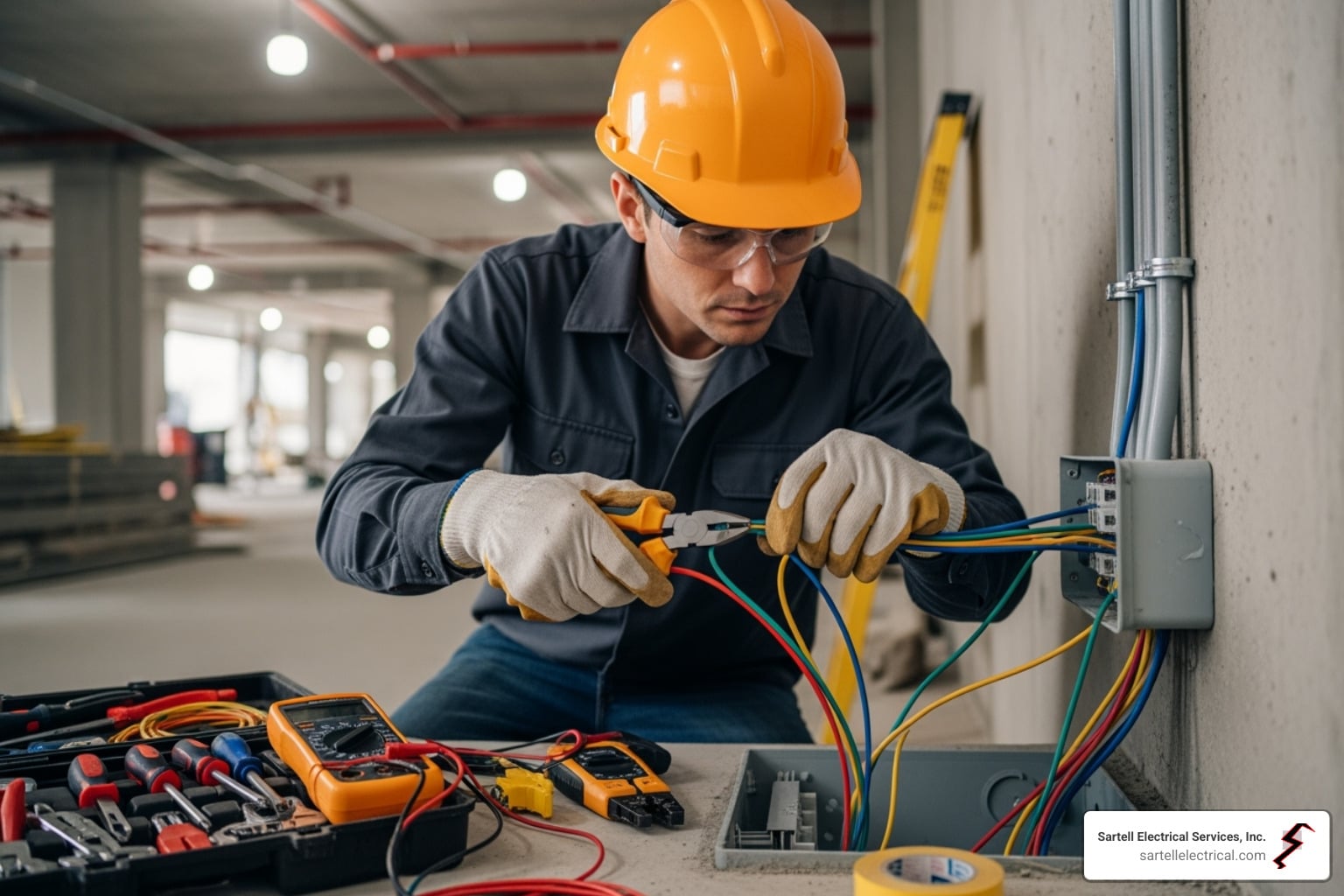
An electrician is a skilled tradesperson who handles all things electrical, from wiring buildings to keeping power systems running safely. They are essential to our modern world.
What is an Electrician?
Reliable electricity is crucial. Electricians are the unsung heroes who make sure homes, businesses, and industries have the power they need.
Their work demands precision and a deep understanding of complex systems. It’s a field always in high demand, especially as technology advances and our need for power grows.
This guide will walk you through the journey of becoming an electrician, from initial training to advanced certifications, with a special look at requirements in Massachusetts and broader Canadian standards.
Know your electrician terms:
The journey to becoming a licensed electrician is both challenging and rewarding, combining years of hands-on experience with comprehensive classroom learning. Think of it as building a house – you need a solid foundation before you can add the finishing touches.
Most aspiring electricians start with apprenticeship programs that typically run three to six years. During this time, you’ll spend about 80-90% of your training getting your hands dirty with real electrical work, learning from experienced journeymen who’ve been in your shoes. The remaining time is spent in the classroom, diving deep into electrical theory, safety protocols, and the ever-important electrical codes.

In Massachusetts, we take electrical safety seriously. The Board of State Examiners of Electricians oversees our licensing process, making sure every electrician meets strict standards before they can work independently. This isn’t just bureaucracy – it’s what keeps our communities safe.
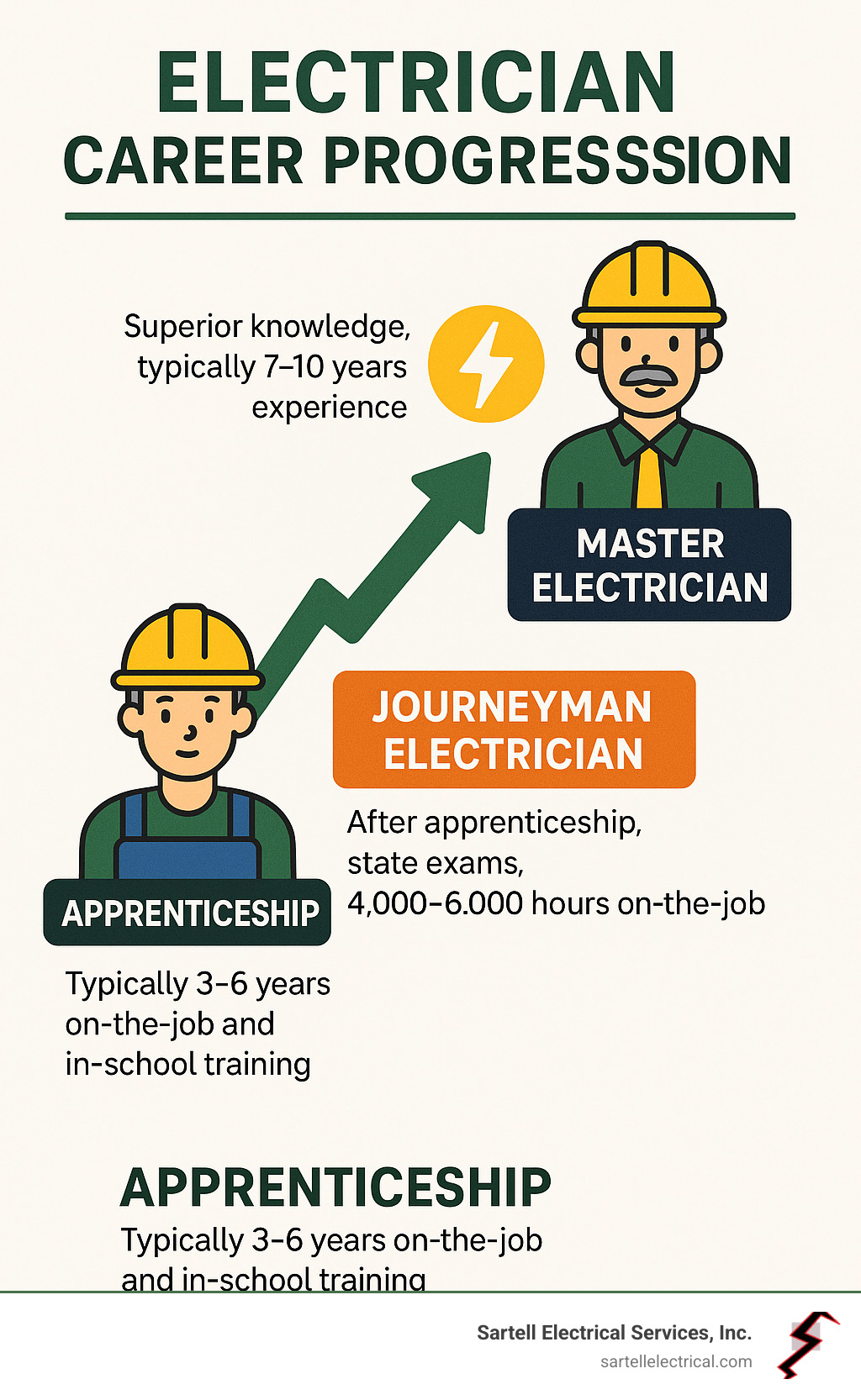
The licensing structure follows a clear progression: you start as an Apprentice, advance to Journeyman, and can eventually reach Master Electrician status. Each level comes with increased responsibilities and greater independence in your work.
What sets Massachusetts electricians apart is this commitment to thorough, structured training. When you hire a licensed electrician here, you’re getting someone who’s proven their skills through years of rigorous preparation.
Becoming a Journeyman Electrician is your first major milestone after completing your apprenticeship. It’s like getting your driver’s license after months of practice – suddenly, you have real independence.
To reach this level, you’ll need to log between 4,000 to 6,000 hours of on-the-job training. That might sound like a lot, but remember – you’re learning to work with systems that can be dangerous if handled incorrectly. Alongside those practical hours, you’ll complete about 144 hours of classroom instruction each year, covering everything from electrical theory to the latest safety practices.
Once you’ve put in the time, you’ll face the state examination. This comprehensive test covers both theoretical knowledge – like understanding the National Electrical Code – and sometimes includes practical demonstrations of your skills. It’s thorough, but fair.
As a Journeyman electrician, you can work independently on a wide scope of electrical projects. You’ll install new systems, maintain existing ones, and troubleshoot problems in residential, commercial, and industrial settings. While you might still work under a Master Electrician’s supervision on larger projects, you have the skills and legal authority to handle most electrical work on your own.
Don’t think your learning stops here, though. Continuing education requirements ensure you stay current with evolving codes, new technologies, and updated safety practices. The electrical field is always advancing, and staying sharp is part of being a professional.
Reaching Master Electrician status is the peak of individual certification in our trade. It’s not just about technical skills anymore – you’re stepping into leadership territory.
Before you can even attempt the Master exam, you need significant experience as a Journeyman. Most Master Electricians have seven to ten years of total experience in the trade. This isn’t arbitrary – those extra years expose you to complex challenges and help you develop the problem-solving instincts that separate good electricians from great ones.
The Master exam is considerably tougher than the Journeyman test. Beyond deep electrical knowledge, you’ll need to understand business operations, project management, and how to supervise other electricians effectively. It’s testing whether you can not just do the work, but lead others and run projects successfully.
Once you pass, a Master electrician certification opens doors to business ownership. You can obtain a contractor’s license, pull permits, and operate your own electrical contracting company. With this level comes supervisory roles – you might oversee teams of Journeymen and apprentices, design electrical systems, and ensure all work meets current codes and safety standards.
The responsibility is significant, but so are the rewards. Master Electricians are the leaders in our field, the ones who mentor the next generation and push our industry forward. It requires continuous learning and adaptation, but for those who reach this level, it’s incredibly fulfilling work.
An electrician’s daily work is incredibly diverse, encompassing a wide array of tasks that keep our modern world powered. At its core, an electrician’s duties involve the installation, maintenance, and repair of electrical systems. This includes everything from laying out and assembling wiring to connecting components, testing circuits, and systematically troubleshooting faults. A deep understanding of blueprints, drawings, and specifications is crucial, as is an unwavering adherence to the latest electrical codes, such as the National Electrical Code (NEC) in the U.S. These codes are not just guidelines; they are the bedrock of electrical safety.
What makes the electrician trade so versatile is the ability to specialize across various sectors. Whether it’s powering your home, keeping a busy office building running, or ensuring the complex machinery in an industrial plant operates seamlessly, there’s an electrician for the job.
When it comes to our homes, the electrician plays a vital role in ensuring safety, comfort, and functionality. Residential electricians specialize in the electrical systems found in houses, apartments, and small dwellings. Their tasks are broad, ranging from planning and installing the initial wiring in new constructions to diagnosing and repairing faults in existing systems.
Common duties include:
At Sartell Electrical Services, our commitment to providing top-tier Residential Electrical Services ensures that your home’s electrical needs are met with expertise and care. We understand that your home is your sanctuary, and safe, reliable electricity is paramount.
Commercial electricians are the backbone of businesses, ensuring that retail spaces, office buildings, restaurants, and other commercial properties have the robust and reliable electrical infrastructure they need to operate. The demands of commercial electrical systems are often far greater and more complex than residential ones, requiring specialized knowledge and skills.
Their work involves:
We pride ourselves on offering comprehensive Commercial Electrical Services that keep businesses in Massachusetts running smoothly, ensuring minimal disruption and maximum safety.
Beyond residential and commercial settings, electricians dig into highly specialized and critical environments, particularly in industrial and healthcare sectors. These fields present unique challenges and demand an even higher level of expertise, precision, and adherence to specialized codes.
In industrial environments, an electrician works with powerful machinery, complex control systems, and high-voltage applications. This can include:
We are proud to offer specialized Industrial Electrical Services to support the complex needs of manufacturing and other industrial operations across Massachusetts.
The healthcare sector introduces another layer of complexity and criticality. Here, an electrician’s work directly impacts patient safety and life-saving operations.
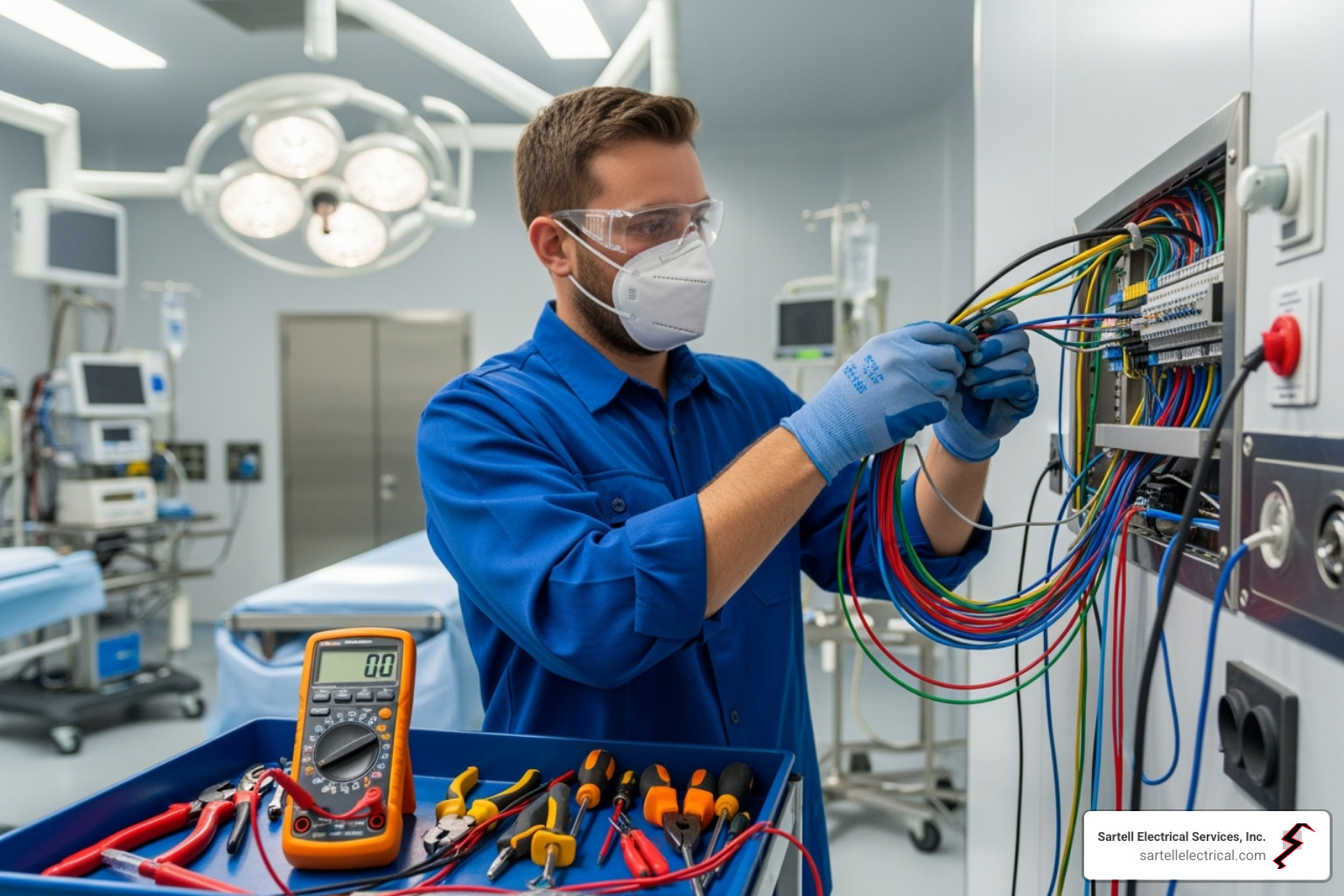
Tasks in healthcare facilities include:
Our expertise extends to vital Health Care Electrical Services, where we understand that precision and reliability are not just important, but absolutely essential.
The electrician trade offers one of the clearest career paths in the skilled trades. It’s like climbing a well-defined ladder where each rung represents greater expertise, responsibility, and earning potential. Starting as an eager apprentice, you’ll progress to become a skilled journeyman, and potentially reach the pinnacle as a master electrician.
Let’s talk money for a moment—because we know that matters. Entry-level apprentices might start around $14 per hour, but don’t let that discourage you. With experience and advancement, electrician wages can climb into the high $30s per hour. Specialized roles, particularly in industrial settings, often command even higher rates, with average salaries around $25 per hour. Union positions typically offer the best compensation packages, including excellent benefits.
The journey from journeyman to master electrician represents more than just a pay bump—it’s a fundamental shift in responsibility and professional standing. Understanding these distinctions is crucial for anyone considering this rewarding career path.
| Feature | Journeyman Electrician | Master Electrician |
|---|---|---|
| Requirements | Completion of apprenticeship (4,000-6,000+ hours on-the-job, classroom hours), passing state exam. | Extensive Journeyman experience (7-10 years), additional coursework, passing advanced Master exam. |
| Scope of Work | Performs electrical installations, maintenance, and repairs independently. | Designs, plans, and oversees complex electrical projects; can pull permits; supervises other electricians. |
| Authority | Works under general supervision or as part of a contracting team. | Can operate own electrical contracting business; legally responsible for project compliance. |
| Knowledge | Strong understanding of electrical codes, theory, and practical application. | Superior knowledge of codes, theory, business management, and advanced electrical systems. |
| Responsibility | Responsible for the quality and safety of their individual work. | Bears ultimate legal and professional responsibility for all work performed by their company or under their supervision. |
Think of becoming an electrician as earning your stripes in a time-honored tradition. Each level builds upon the last, creating a solid foundation of knowledge and experience.
Apprentices are where everyone starts—and it’s actually a pretty sweet deal. You’re literally earning while you learn, working alongside experienced professionals who guide you through real-world challenges. During this phase, you’re soaking up everything: basic electrical theory, safety protocols that could save your life, and the hands-on skills that textbooks simply can’t teach. You’ll work under direct supervision, but don’t worry—everyone understands you’re there to learn.
Journeyman electricians represent the backbone of the electrical industry. After completing their apprenticeship and passing rigorous state exams, they’ve earned the right to work independently on a wide range of electrical projects. A journeyman electrician has developed solid troubleshooting skills and deep knowledge of electrical codes. They’re trusted to handle complex installations and repairs, though they may still collaborate within larger teams or work under an electrical contractor’s umbrella.
Master electricians sit at the top of the individual certification ladder. These professionals possess not just superior technical knowledge, but also the business acumen to run their own operations. They can design intricate electrical systems, pull permits, and bear the legal responsibility for ensuring all work meets the highest standards. Most importantly, they mentor the next generation of electricians, passing down decades of accumulated wisdom.
It’s worth noting that there’s a difference between individual certification and business licensing. A Licensed Electrical Contractor is actually a business entity legally authorized to contract electrical services. A master electrician might own such a business, but the contractor license is separate from their individual certification.
While we’re based here in Massachusetts, it’s fascinating to look at how other countries approach electrician standards. Canada’s Red Seal Program offers an excellent example of national consistency in skilled trades certification.
The Red Seal endorsement serves as a gold standard, ensuring that an electrician certified in one Canadian province can work anywhere in the country without additional provincial certification. It’s like having a passport for skilled tradespeople—once you’ve earned it, doors open across the entire nation.
This program emphasizes the importance of interprovincial standards and worker mobility. An electrician with Red Seal certification has demonstrated they meet national qualification standards, not just local ones. It’s a testament to the value of standardized, high-quality training systems that benefit both workers and employers.
The Red Seal approach shows how national standards can lift an entire profession, ensuring consistent quality and facilitating career growth across geographic boundaries. While we operate under different regulations here in Massachusetts, the principles behind such comprehensive certification programs highlight the professionalism and expertise that define the modern electrician trade.
Being an electrician is a hands-on job that can be quite demanding. It often means climbing ladders, lifting heavy gear, and sometimes squeezing into tight spots. An electrician might find themselves in all sorts of places – from a clean, new office building to a dusty factory, or even a tight crawl space in your home. It’s definitely not a desk job!
But beyond the physical challenge, the most important part of an electrician’s work environment is dealing with electrical hazards. Electricity is powerful, and working with it carries serious risks. These include:
These aren’t just scary stories; they’re real dangers. Sadly, studies show that electrical workers, including electricians, faced a significant risk. For example, 34% of all construction trade worker electrocutions in the U.S. between 1992 and 2003 involved electrical workers. This serious statistic shows why safety rules are so incredibly vital.
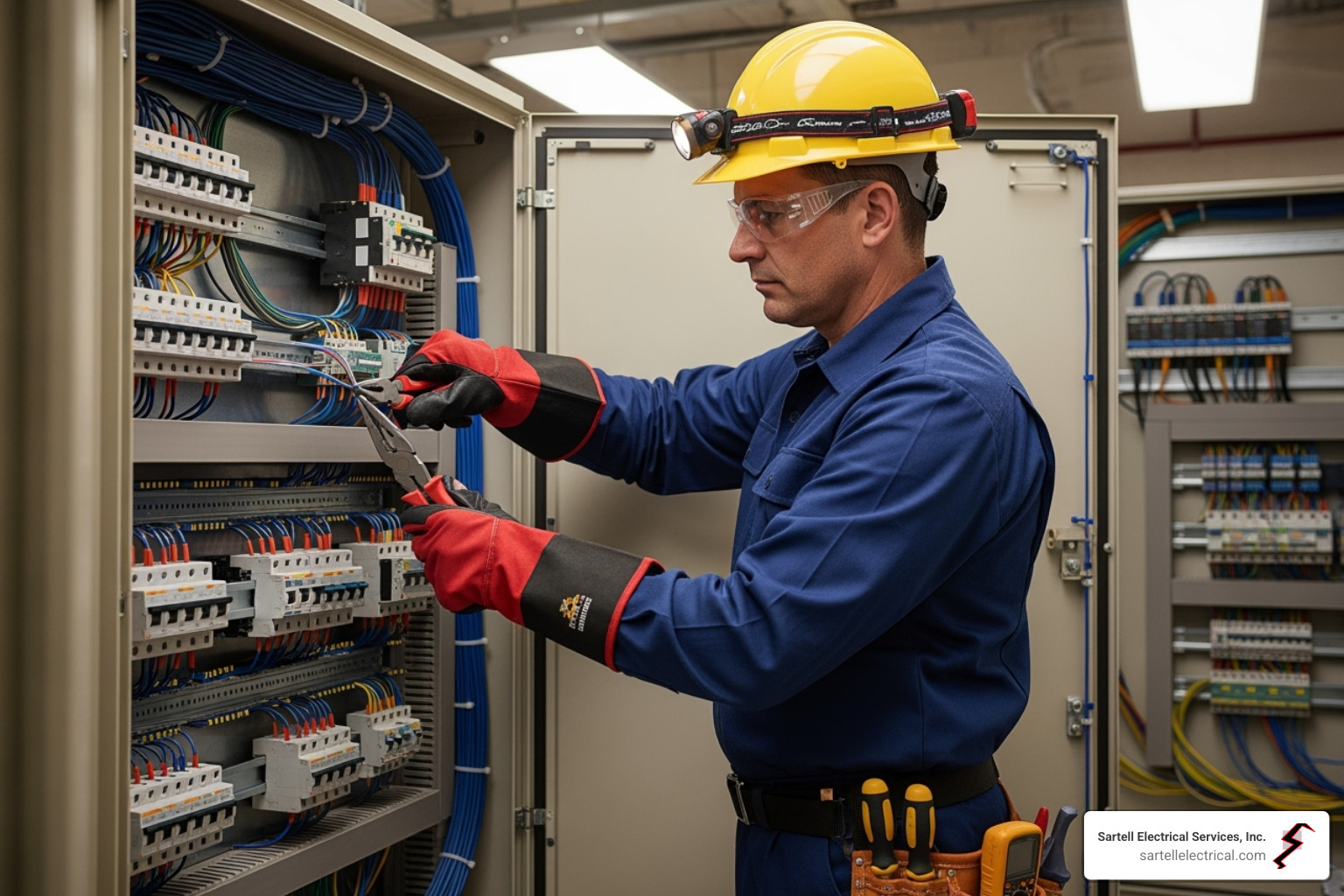
To keep everyone safe, electricians follow very strict safety rules. They use procedures like Lockout/Tagout, which makes sure power is turned off and stays off while they work. They also rely heavily on Personal Protective Equipment (PPE). This includes special gear like insulated gloves, fire-resistant clothes, sturdy work boots with electrical protection, and hard hats. They even regularly test their safety equipment, like those rubber gloves, to make sure it’s always ready to protect them.
Proper grounding of electrical systems is also key. This helps prevent dangerous electrical build-ups. And, of course, every electrician must stick strictly to national codes, like the National Electrical Code (NEC), and all local regulations. These codes are the blueprints for safe electrical work.
At Sartell Electrical Services, safety isn’t just a rulebook; it’s how we do everything. We make sure all our electricians are highly trained in the newest safety methods. They are always equipped with the right PPE to do their job safely, protecting themselves and your property with every project.
It’s natural to have questions about a profession as vital and specialized as an electrician. Whether you’re considering a career in the trade or simply curious about what goes into making sure your lights stay on, we often hear some common questions. Let’s shine a light on them!
The journey to becoming a fully qualified electrician is a commitment, but it’s incredibly rewarding. Typically, it involves an apprenticeship program that spans anywhere from three to six years. Think of it as “earning while you’re learning!”
A significant portion of this time—around 80-90%—is spent getting valuable hands-on experience right there on the job, working alongside seasoned professionals. The remaining 10-20% is dedicated to classroom training, where you dive deep into electrical theory, codes, and safety practices. For instance, in some regions, an electrical apprenticeship can involve over 8,000 hours of practical work and hundreds of hours in the classroom. This rigorous blend ensures that aspiring electricians gain both the practical skills and the rock-solid theoretical knowledge needed to truly excel in the trade.
Being a successful electrician isn’t just about knowing how to wire a circuit; it’s a fantastic blend of technical expertise, sharp thinking, and even a bit of physical prowess.
First and foremost, technical knowledge is key. You need a deep understanding of electrical theory, how different wiring methods work, and the ins and outs of controls, transformers, and electronics. Being able to read and interpret complex schematics and blueprints is like reading the secret language of buildings! Beyond that, strong problem-solving skills are absolutely essential. Electricians are often like detectives, systematically diagnosing faults and troubleshooting complex electrical issues. This is where the real magic happens – figuring out why something isn’t working and then making it right!
It’s also not a desk job, so physical stamina is a must. You’ll often find yourself climbing ladders, lifting equipment, bending, and working in all sorts of positions, sometimes in tight or challenging spaces. Attention to detail is critical too. In electrical work, even tiny errors can have big consequences, so being meticulous and precise is non-negotiable. And don’t forget communication skills! Electricians need to talk clearly with clients, explain technical issues in a way that makes sense, and work seamlessly with their team on projects. Finally, a thorough and up-to-date code comprehension of the National Electrical Code (NEC) and local regulations is paramount for ensuring every job is safe and compliant.
This is a common question, and it’s an important distinction, especially when you’re looking to hire someone for your electrical needs.
A licensed electrician refers to an individual person. This is someone who has completed all the necessary training, like an apprenticeship, passed their state-mandated exams (such as Journeyman or Master exams), and holds a valid license to perform electrical work. This license is personal to them, certifying their individual competence and allowing them to physically do the work.
An electrical contractor, on the other hand, is a business entity or a company. This business is legally authorized to bid on projects, sign contracts, and perform electrical work. This means they hold a separate business license (like a contractor’s license in Massachusetts). While an electrical contractor employs many skilled and licensed electricians, the contractor license is what enables the business to offer services to the public, manage projects, and carry the necessary insurance and bonding.
In simple terms, an individual electrician is certified to perform the work, while an electrical contractor is licensed to run a business that performs electrical work. When you choose a reputable company like Sartell Electrical Services, you’re engaging with a licensed electrical contractor that employs highly skilled, licensed electricians. This ensures your project is completed safely, legally, and to the highest standards.
Wow, what a journey we’ve taken through the electrician! It’s clear that becoming an electrician isn’t just a job; it’s a true calling. It’s a path that asks for a lot, from hard work in apprenticeships to constant learning and a deep commitment to safety. But in return, it offers a truly rewarding career. Electricians are the unsung heroes who keep our lights on, our businesses humming, and even our hospitals running smoothly. They bring power to our homes, our offices, and even the biggest factories.
Because the work of an electrician is so important and can be complex, choosing the right professional is key. When it comes to your electrical needs, you want someone who truly knows their stuff, someone with the right training, licenses, and a real commitment to doing things safely and correctly.
That’s where Sartell Electrical Services comes in. For over 30 years, we’ve been proudly serving Massachusetts, including Reading, MA, and the entire Greater Boston area. We pour our commitment to excellence, strong leadership, and amazing customer service into every single project. Whether you need a simple light fixed at home, a big electrical setup for your business, or a super specialized solution for an industrial site or healthcare facility, we’re here to help. We believe in quality work and giving you peace of mind, knowing your electrical systems are in expert hands.
So, when you’re ready for reliable, top-notch electrical services, remember us.
Contact us for all your electrical service needs – we’re excited to power your next project!
236 Ash St Reading, MA 01867
(By Appointment Only)
