Why Electrical Project Management is the Foundation of Successful Projects
Electrical project management is the systematic coordination of people, resources, and processes to deliver electrical construction projects safely, on time, and within budget. Industry research shows that projects with proper management achieve a 27% average gross profit margin, while poorly managed projects result in an average loss of 6%.
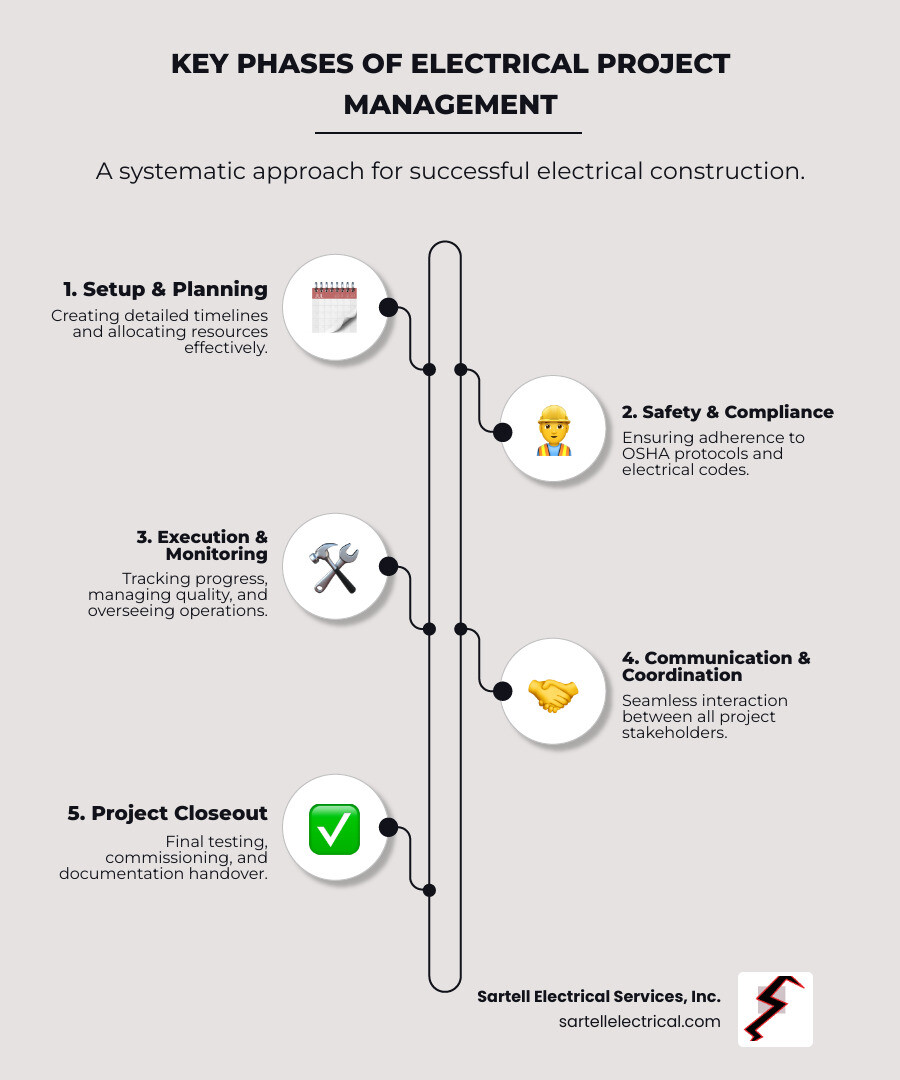
Effective electrical project management involves:
Planning and scheduling – Creating detailed project timelines and allocating resources.
Budget control – Managing costs for labor, materials, and equipment.
Safety compliance – Ensuring adherence to electrical codes and OSHA standards.
Quality assurance – Maintaining high installation standards and testing protocols.
Stakeholder communication – Coordinating between clients, contractors, and suppliers.
Risk mitigation – Identifying and addressing potential project obstacles.
The electrical construction industry faces unique challenges like supply chain disruptions, changing electrical codes, and the technical complexity of modern systems. These factors make skilled project management critical to prevent costly delays and rework.
As one industry expert notes, the project manager’s role is to “effectively plan, organize and schedule and… efficiently use labor, subcontractors, materials, time, installed equipment, budgets, construction equipment and company money.” Whether it’s a commercial build-out, industrial upgrade, or healthcare installation, effective management ensures your project delivers results while upholding the highest safety standards.
What is Electrical Project Management and Why is it Crucial?
Electrical project management is the systematic coordination of people, resources, and processes that keeps complex electrical installations from becoming expensive disasters. It’s the key to delivering a project safely, on time, and within budget.
Electrical projects are incredibly complex, involving intricate technical specifications, strict safety codes, multiple stakeholders, and precise material delivery schedules. Without proper management, projects can spiral out of control with scope creep, schedule slips, and ballooning costs. This is why electrical project management is absolutely crucial.
Well-managed electrical projects typically achieve profit margins around 27%, while poorly managed ones often result in losses. This impacts everyone, from contractors to building owners. At Sartell Electrical Services, our three decades of experience across Massachusetts has proven that effective project management is what separates successful installations from costly headaches.
The Core Responsibilities of an Electrical Project Manager
An electrical project manager is a strategist, diplomat, and problem-solver who ensures nothing falls through the cracks. Their core responsibilities include:
Planning and estimating: Creating detailed timelines, allocating resources, and developing realistic cost estimates before work begins.
Cost control: Tracking all expenses, managing change orders, and ensuring the project remains profitable.
Procurement: Coordinating with suppliers to ensure materials arrive when needed and having backup plans for supply chain issues.
Stakeholder communication: Constantly updating clients, coordinating with general contractors, and briefing their own teams to prevent misunderstandings.
Documentation and team leadership: Maintaining detailed records, tracking progress, and keeping crews focused and safe.
Essential Skills for Success in Electrical Project Management
While technical knowledge of electrical systems is important, success in electrical project management often hinges on soft skills.
Communication: The ability to clearly explain schedule changes or cost increases is vital. A Harvard Business Review study found that communication ability is a top predictor of success.
Leadership and conflict resolution: A good project manager keeps teams working together, resolves disputes, and maintains morale during challenging times.
Organizational skills: Juggling countless details like permits, inspections, material deliveries, and crew schedules is critical.
Risk assessment: Proactively identifying potential issues—like delivery delays or unexpected site conditions—and having contingency plans can save thousands of dollars.
The best electrical project managers combine solid technical knowledge with exceptional people skills, understanding that construction is ultimately about building strong relationships with clients, crews, and suppliers.
The Blueprint for Success: Best Practices Across Project Phases
Successful electrical project management requires a standardized approach through the entire project lifecycle. After 30 years serving Massachusetts, we’ve learned this methodical process makes all the difference. Projects that follow a structured management process achieve an average gross profit margin of 27%, while unstructured projects often lose money.
Meticulous planning prevents future headaches. This phase sets the foundation for the entire project.
Establish clear objectives: We work with clients to define the project scope, which is our best defense against scope creep.
Develop detailed drawings: System drawings showing conduit routing and cable grouping save significant labor and materials.
Create a baseline schedule: We set realistic timelines and milestones to track progress.
Identify risks: We proactively hunt for potential problems like material shortages or site access issues and develop contingency plans.
Procure materials: We identify and order long-lead items and specialized equipment early to keep the project on schedule.
Conduct a site walk-through: Before work begins, we document existing conditions to identify details that could impact the project.
Phase 2: Execution and On-Site Management
This phase turns plans into reality, focusing on safety, efficiency, and communication.
Prioritize safety: We strictly adhere to OSHA standards, conducting regular job walks to ensure everyone’s wellbeing.
Monitor progress: Regular site inspections and quality checks help us spot issues early. Our project managers are actively on-site, not behind a desk.
Keep daily job journals: Documenting daily progress creates a valuable record and helps identify patterns.
Manage change: We use a formal change management process to document every modification and secure approvals.
Use a three-week schedule: This detailed short-term plan gives foremen a clear roadmap for upcoming work, ensuring a smooth workflow. You can see an example here.
Maintain on-site presence: Our project managers visit sites regularly to stay informed, observe workflows, and solve problems before they escalate.
Update as-built drawings: We document changes as they happen, creating accurate records for a smooth handover and future maintenance.
Phase 3: Project Closeout and Handover
This final phase requires meticulous attention to detail to ensure a polished, successful completion.
Testing and commissioning: We verify that every system functions exactly as designed and meets all specifications.
Complete punch lists: We create pre-punch lists to proactively tackle quality issues before the final inspection.
Provide final documentation: We compile all project records, permits, warranties, and maintenance manuals into a comprehensive package.
Conduct client handover: We walk clients through their new systems, explain their operation, and ensure all closeout documents are delivered.
Hold lessons learned sessions: We analyze what went well and what could be improved, using this feedback to refine our process for future projects.
Optimizing Efficiency in Electrical Project Management
In electrical project management, efficiency is essential. At Sartell Electrical Services, we are dedicated to continuous improvement by focusing on clear communication, smart resource management, risk mitigation, and leveraging the latest technology. This approach is key to delivering successful projects, especially complex ones in sectors like healthcare.
Clear communication is the heartbeat of a successful project, preventing costly delays, mistakes, and safety issues. We prioritize keeping everyone, from our field teams to general contractors and clients, on the same page.
Active stakeholder management: We listen to all parties to understand their needs and expectations, building trust and keeping the project moving forward.
Regular meetings: Daily coordination meetings with clear agendas and actionable steps reduce delays and improve workflow.
Clear and detailed drawings: Providing accurate drawings to our field teams minimizes confusion and ensures installations are done correctly.
As experts like Ventura Consulting note, great communication is the bedrock of successful construction projects. You can learn more here: Ventura Consulting
The Role of Technology and Standardized Processes
Modern electrical project management is driven by technology that boosts efficiency and reduces errors.
Project management software: We use cloud-based platforms to centralize data and communications, helping track costs and standardize documents.
Collaborative Work Management (CWM) tools: Platforms like Smartsheet and Asana foster seamless teamwork by providing a central hub for the latest project information.
BIM (Building Information Modeling) integration: Integrating BIM design into our workflow helps prevent rework, a major profit killer. Combining field-first project management with BIM significantly reduces mistakes and ensures a smoother project delivery.
Strategic Resource and Risk Management
Proactive resource and risk management is fundamental to project success.
Long-lead items and supply chain: We identify and order special materials early and build a reliable supplier network to prevent delays.
Contingency planning: Having backup plans for material adjustments or unforeseen site conditions allows us to adapt quickly and minimize disruptions.
Safety protocols and OSHA compliance: We run a thorough job site safety program, conduct regular site visits, and ensure our team members are OSHA 10 certified to maintain the highest safety standards.
Measuring Success and The Path to Mastery
Successful electrical project management goes beyond finishing on time and within budget. True success includes ensuring safety, delivering exceptional quality, and achieving client satisfaction. At Sartell Electrical Services, our dedication to excellence is evident in every project, from residential upgrades to complex telecommunications installations.
Key Performance Indicators (KPIs) of a Well-Managed Project
We measure project success through several Key Performance Indicators (KPIs):
Profitability: Meeting or exceeding financial goals.
Customer Satisfaction: Happy clients lead to repeat business and strong relationships.
Safety Record: A project with zero accidents is a non-negotiable goal.
On-Time Completion: Adhering to the established schedule.
Quality of Work: Delivering excellent installations that stand the test of time.
Low Rework Rate: Minimizing fixes is crucial for profitability. We use tools like automated job costing to monitor expenses in real-time.
Continuous Improvement and Professional Development
The electrical construction industry is constantly evolving, and so are the demands of electrical project management. We believe in continuous learning to stay ahead.
Industry Training: Organizations like the National Electrical Contractors Association (NECA) offer comprehensive project management programs. Many of our project managers complete hours of NECA training annually to sharpen their skills.
Professional Certifications: Certifications like the Project Management Professional (PMP) demonstrate a commitment to industry best practices and professional excellence.
Post-Project Reviews: After each project, we conduct thorough reviews to establish a feedback loop, sharing what went well and identifying areas for improvement. This practice helps us fine-tune our processes for future projects.
The NECA Learning Center is an excellent resource for professional development: NECA Learning Center
Frequently Asked Questions about Electrical Project Management
Here are answers to some of the most common questions we hear about electrical project management.
What is the biggest challenge in electrical project management?
Even with meticulous planning, several challenges are common in electrical projects:
Scope creep: Gradual changes that expand a project’s original scope can derail timelines and budgets if not managed effectively.
Supply chain disruptions: Delays in receiving critical materials and equipment can significantly impact schedules and costs. Proactive procurement and contingency planning are essential.
Communication breakdowns: Poor information flow between the team, general contractor, and client can lead to costly errors and delays.
Adherence to changing codes: Electrical codes like the National Electrical Code (NEC) are updated regularly. Staying current and ensuring compliance requires constant vigilance and training.
How does electrical project management differ from general construction PM?
While sharing core principles, electrical project management has unique complexities:
Technical complexity: Electrical systems involve intricate wiring, power distribution, and specialized equipment, demanding a high level of technical expertise.
Stringent safety codes (NEC): The inherent hazards of electrical work require strict adherence to the NEC and other safety regulations, often involving more detailed protocols than other trades.
Specialized materials and equipment: Procuring items like transformers and switchgear involves unique lead times and handling requirements.
Power system integration: Projects often require integrating new systems with existing power infrastructure, which demands careful planning to avoid disruptions and ensure compatibility.
What qualifications are needed to be an electrical project manager?
A skilled electrical project manager typically has a combination of experience, education, and certifications:
Field experience: Practical experience as an electrician provides invaluable knowledge of installation processes and on-site challenges.
Education: A bachelor’s degree in electrical engineering or construction management provides a strong technical and logistical foundation.
Project management certifications: Industry-recognized certifications like the Project Management Professional (PMP) demonstrate a deep understanding of project management methodologies.
Safety Certifications: An OSHA Safety Certificate is often required, underscoring the critical importance of safety in all electrical work.
Conclusion
Effective electrical project management is the core of any successful electrical construction project. It transforms complex installations into orderly, profitable, and safe ventures. The difference between a project that achieves a 27% profit margin and one that loses money often comes down to the quality of its management.
Safety is paramount. Proper management ensures that every installation follows code and that safety protocols are observed, protecting both workers and the end-users of the electrical system.
Beyond safety, professional project management drives customer satisfaction and profitability. Clear communication, detailed planning, and quality workmanship build a reputation that fosters long-term client relationships.
At Sartell Electrical Services, we have spent over 30 years applying these principles across Massachusetts. From Greater Boston to Reading and Andover, we provide every project with the highest level of professional attention.
As the electrical industry evolves, the fundamentals of meticulous planning, clear communication, and a commitment to excellence remain the foundation of trust between contractor and client. When you’re ready to see the difference professional electrical project management can make, we are here to help power your community, one successful project at a time.