
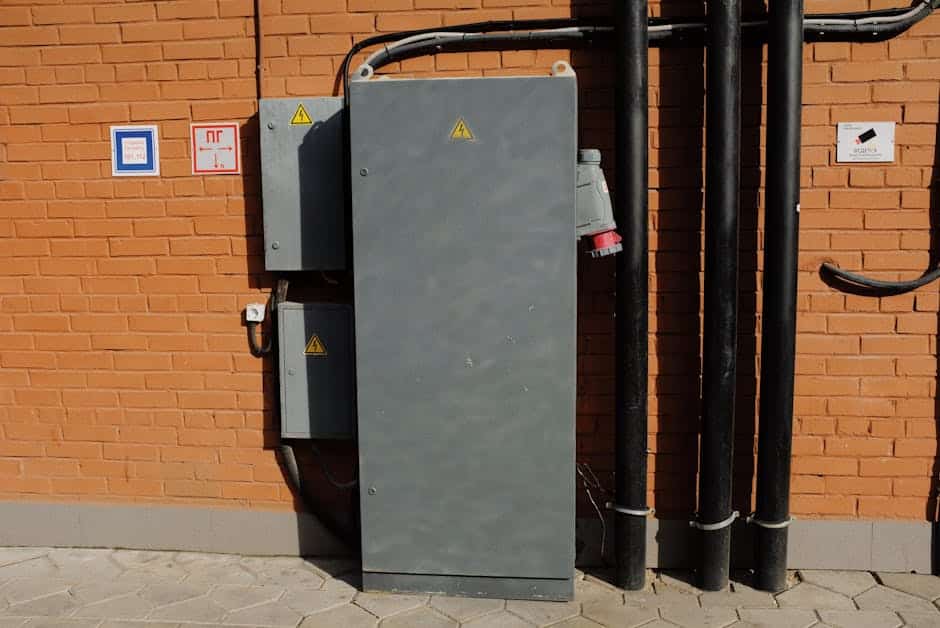
An electrical panel box for home use is the central hub that distributes electricity and protects your family from electrical hazards. It routes power from utility lines to individual circuits, prevents fire-causing overloads, and allows you to shut off power for maintenance. Common types include the main breaker panel (most common), main lug panels (separate disconnect), and sub-panels for additions. Panel sizes range from 100-amp for older homes to 200-amp (the modern standard) and 400-amp for large properties.
Understanding how your panel works helps you make better decisions about your home’s electrical safety and capacity. As Ed Sartell, President of Sartell Electrical Services since 1985, I’ve helped countless Massachusetts homeowners with their electrical panel box for home systems. With nearly four decades of experience, I know that proper panel maintenance and timely upgrades prevent dangerous situations and support modern electrical demands.
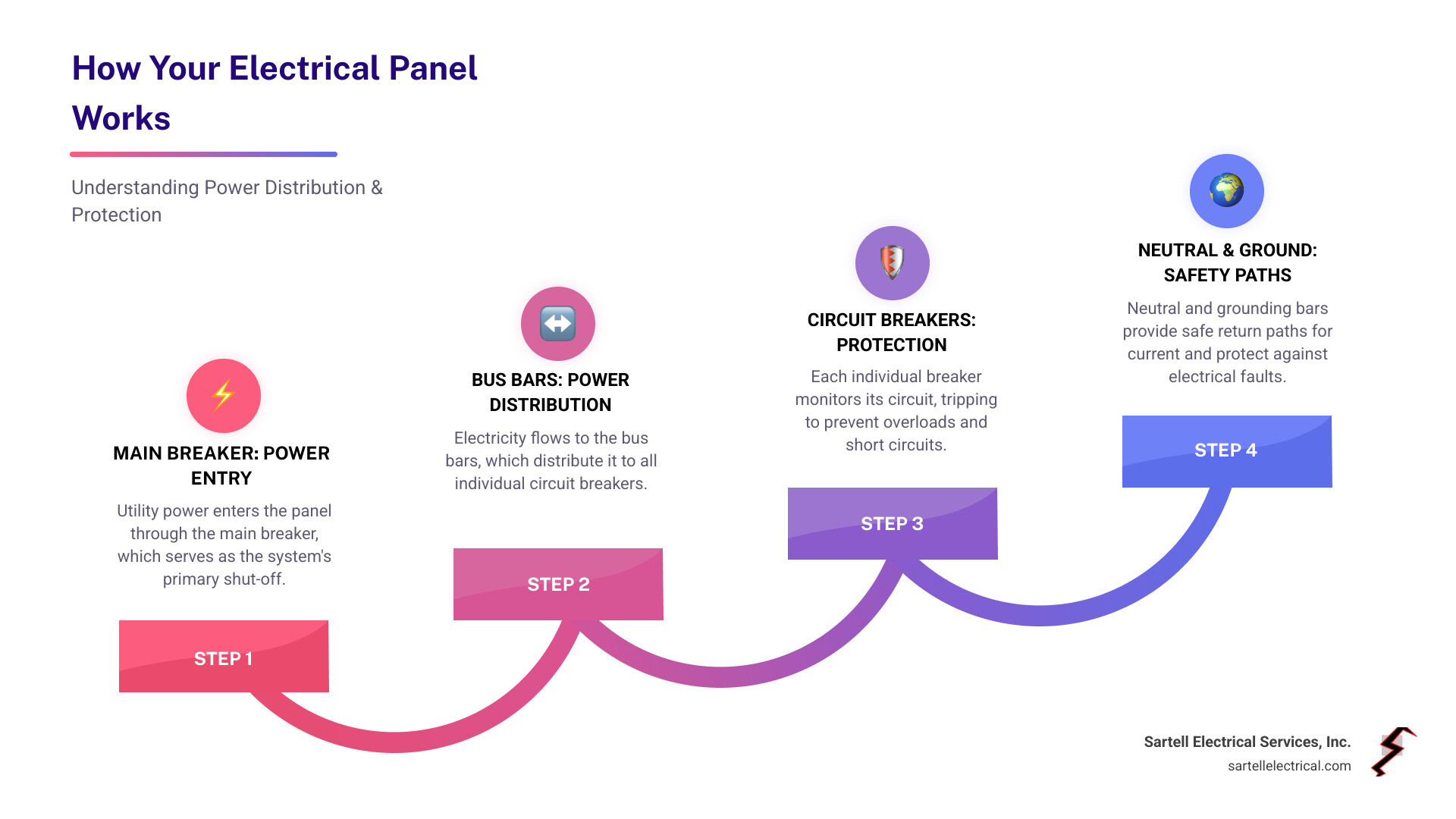
Think of your electrical panel box for home as the heart of your electrical system. It takes power from the utility grid and safely distributes it to every corner of your home through individual circuits that feed your lights, outlets, and appliances.
More importantly, your panel is your first line of defense against electrical disasters. The circuit breakers inside constantly monitor electrical flow. If they detect an overload (too many devices on one circuit) or a short circuit, they instantly shut off power to prevent fires and protect your family.
Most Massachusetts homes have electrical panels in the garage, basement, or a utility closet. The key is that it must be easily accessible and never blocked by storage or furniture. If you’re curious to dive deeper, check out this helpful resource about your home’s electrical system.
When you peek inside an electrical panel box for home, you’ll find a system of well-organized components.
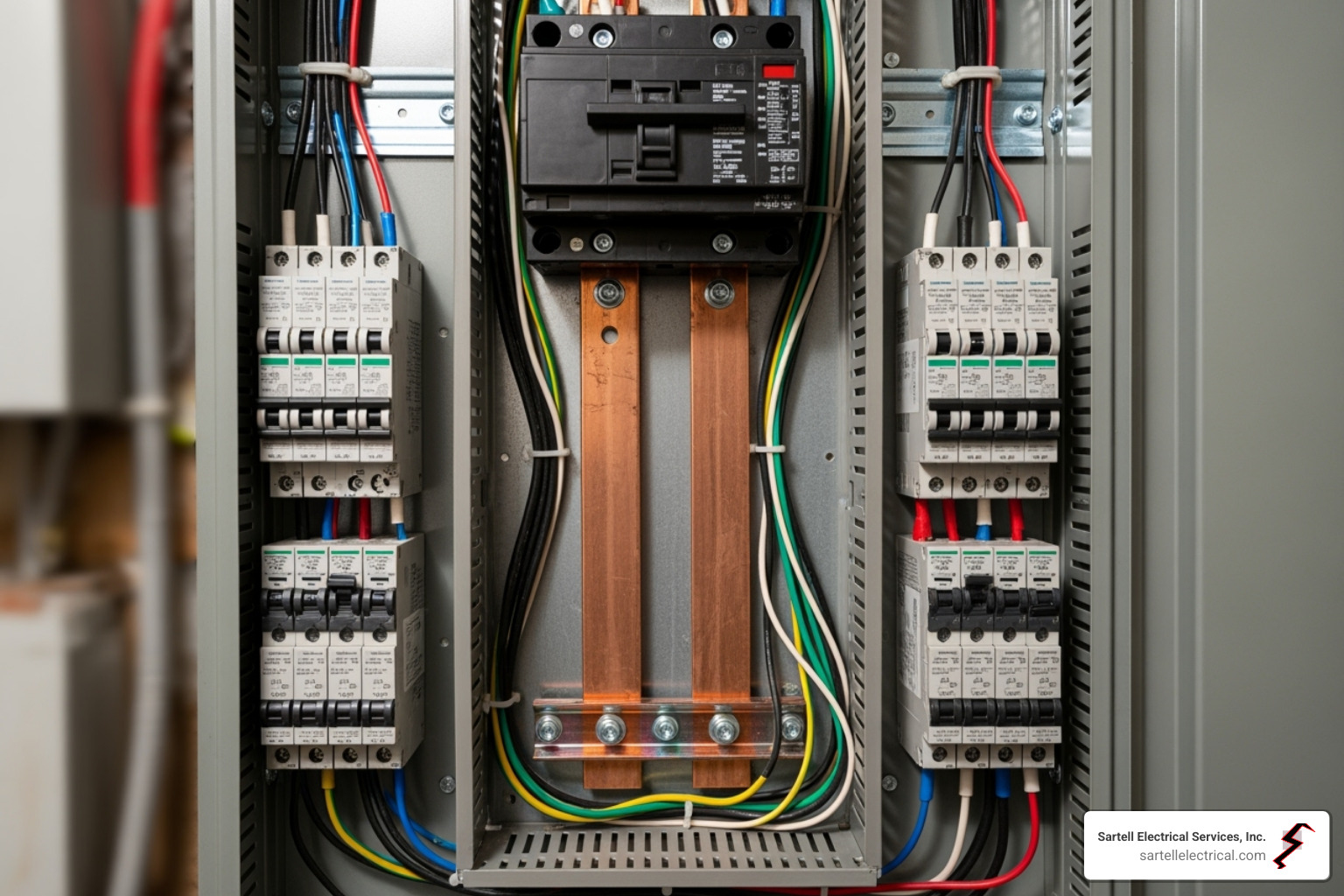
Your electrical panel box for home works around the clock as your family’s silent protector.
Circuit protection is its primary mission. When circuits get overloaded or experience a short circuit, breakers trip instantly. This quick action is your main fire prevention system, stopping overloaded wires from overheating and igniting nearby materials.
Your expensive appliances also benefit. Power surges and faults can destroy electronics, and a tripped breaker can save you thousands in replacement costs.
Modern panels include specialized protection like Ground Fault Circuit Interrupters (GFCI), which prevent dangerous shocks near water, and Arc Fault Circuit Interrupters (AFCI), which detect the electrical signature of dangerous arcing in damaged wires or loose connections. At Sartell Electrical Services, we’ve seen how these systems save homes and lives, which is why we always recommend keeping your panel up to current safety standards.
Knowing the different types of electrical panel box for home configurations can save you money and headaches. Most homes have a main breaker panel, where the main disconnect switch is built-in. Less common is the main lug panel, which requires a separate disconnect switch, usually near the electric meter.
Sub-panels are smaller electrical panels fed from your main panel. They are incredibly useful for adding capacity to specific areas like a detached garage, workshop, or home addition without overloading your main system. A sub-panel keeps circuits organized and can improve efficiency by reducing the distance electricity travels.
For comprehensive information about the electrical panel safety standards that guide our work, you can check out More on panel safety standards.
The difference between an old fuse box and a modern circuit breaker panel is like comparing a horse and buggy to a car. If your home was built before the 1970s, you might have a fuse box, which uses fuses that melt and must be replaced when they “blow.” A major safety risk is when homeowners install a higher-amperage fuse, which can lead to overheating and fires. Modern circuit breaker panels solve this. When a circuit overloads, the breaker simply flips off and can be reset. They are also compatible with modern safety devices like GFCI and AFCI breakers.
| Feature | Fuse Box (Older) | Circuit Breaker Panel (Modern) |
|---|---|---|
| Protection Mechanism | Fuses contain a metal wire that melts and breaks the circuit when current exceeds its rating. | Breakers are automatic switches that “trip” (switch off) when an overcurrent is detected, interrupting the circuit. |
| Reset/Replace | Fuses must be physically replaced with a new one after they “blow” (melt). | Breakers can be reset by simply flipping the switch back to the “on” position. |
| Safety | Risk of homeowners installing fuses with too high an amperage, bypassing safety. Older systems may lack grounding. | Designed for reusability and higher safety standards. Compatible with modern safety devices like GFCI and AFCI breakers. |
| Capacity | Often limited to 60 amps, typically with only a few circuits (e.g., four fuses in homes built 1950-1965). | Typically 100-400+ amps. A 200-amp panel usually has between 40 and 60 slots for circuits, accommodating modern electrical needs. |
| Cost | Lower initial cost for the box itself, but recurring cost of replacing blown fuses. | Higher initial installation cost, but no recurring fuse replacement cost. |
| Modern Needs | Generally inadequate for modern electrical demands (e.g., multiple high-power appliances, central AC, EV chargers). | Can easily handle the electrical loads of today’s homes, including smart home technology and electrification upgrades. |
The “size” of your electrical panel box for home refers to its amperage capacity—how much electrical current it can handle safely.
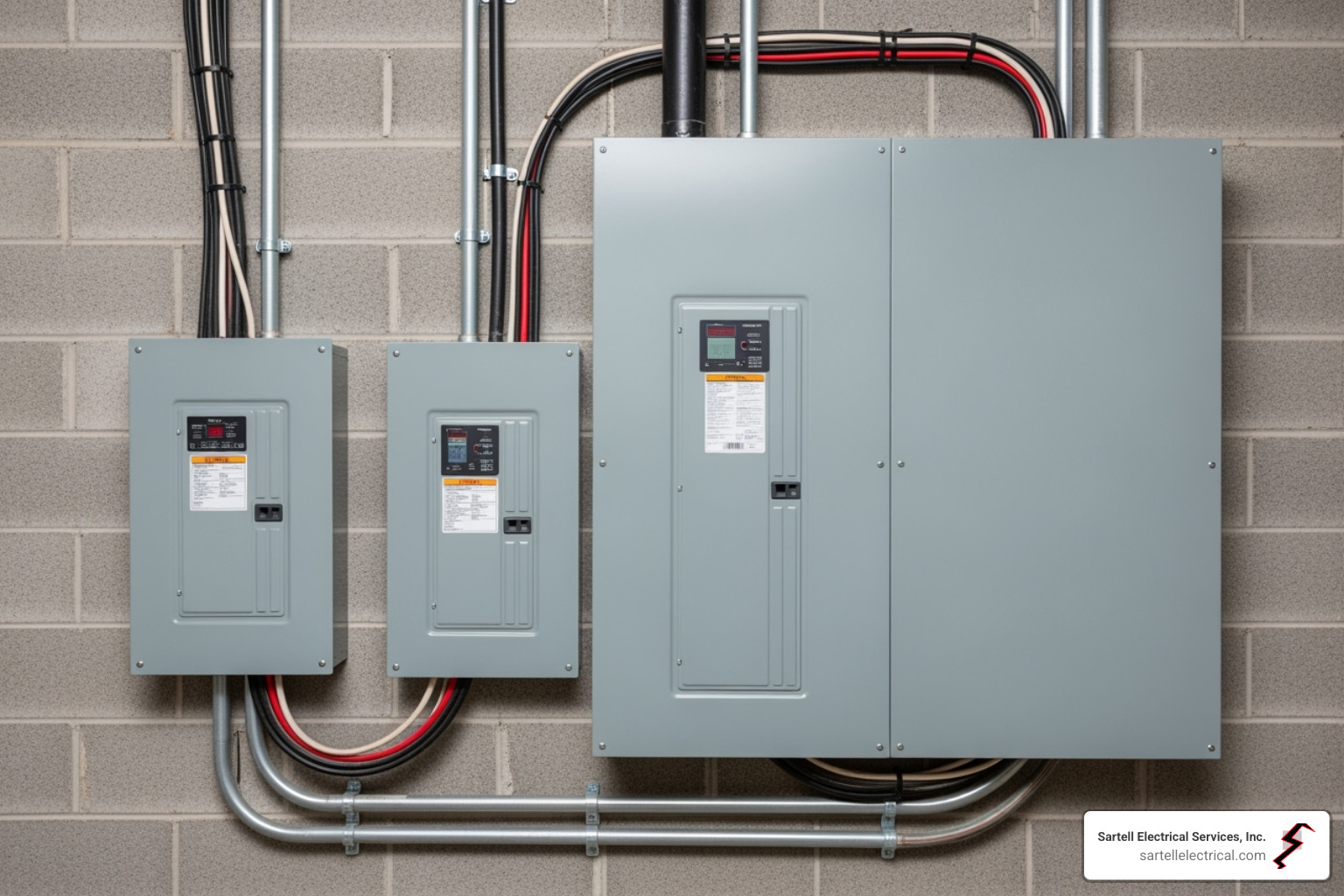
Choosing the right amperage requires an electrical load calculation, a systematic evaluation of your home’s size, appliances, and future plans to ensure your panel can handle the demand.
When it comes to your electrical panel box for home, safety is everything. While your panel is built to last, it requires professional attention. Attempting DIY repairs is extremely dangerous. The National Electric Code requires at least 36 inches of clear space in front of your panel for safe access during maintenance or emergencies.
At Sartell Electrical Services, our comprehensive residential electrical services include thorough panel inspections to catch problems before they become dangerous. Learn about our professional electrical services to see how we can help protect your home.
Your electrical panel will often signal when something is wrong. Look out for these warning signs:
Respect the power inside your electrical panel. Even experienced electricians approach panels with caution.
An older panel might still be “working,” but that’s different from working optimally for modern life. Upgrading your electrical panel box for home offers compelling benefits.
An upgrade can lead to increased home value, as buyers see a modern, code-compliant panel as a sign of a well-maintained home. You may also see reduced insurance premiums, as insurers reward proactive safety measures that lower the risk of electrical fires.
Most importantly, a new panel can handle the demands of modern appliances and technology, from energy-efficient heat pumps to smart home systems. It also prepares you for the future, providing the capacity for EV chargers and other high-demand additions.
The improved safety from a new panel, equipped with the latest circuit protection technology, provides invaluable peace of mind.
At Sartell Electrical Services, we’ve completed countless panel upgrades. You can see examples of our work by visiting Find out about our past work.
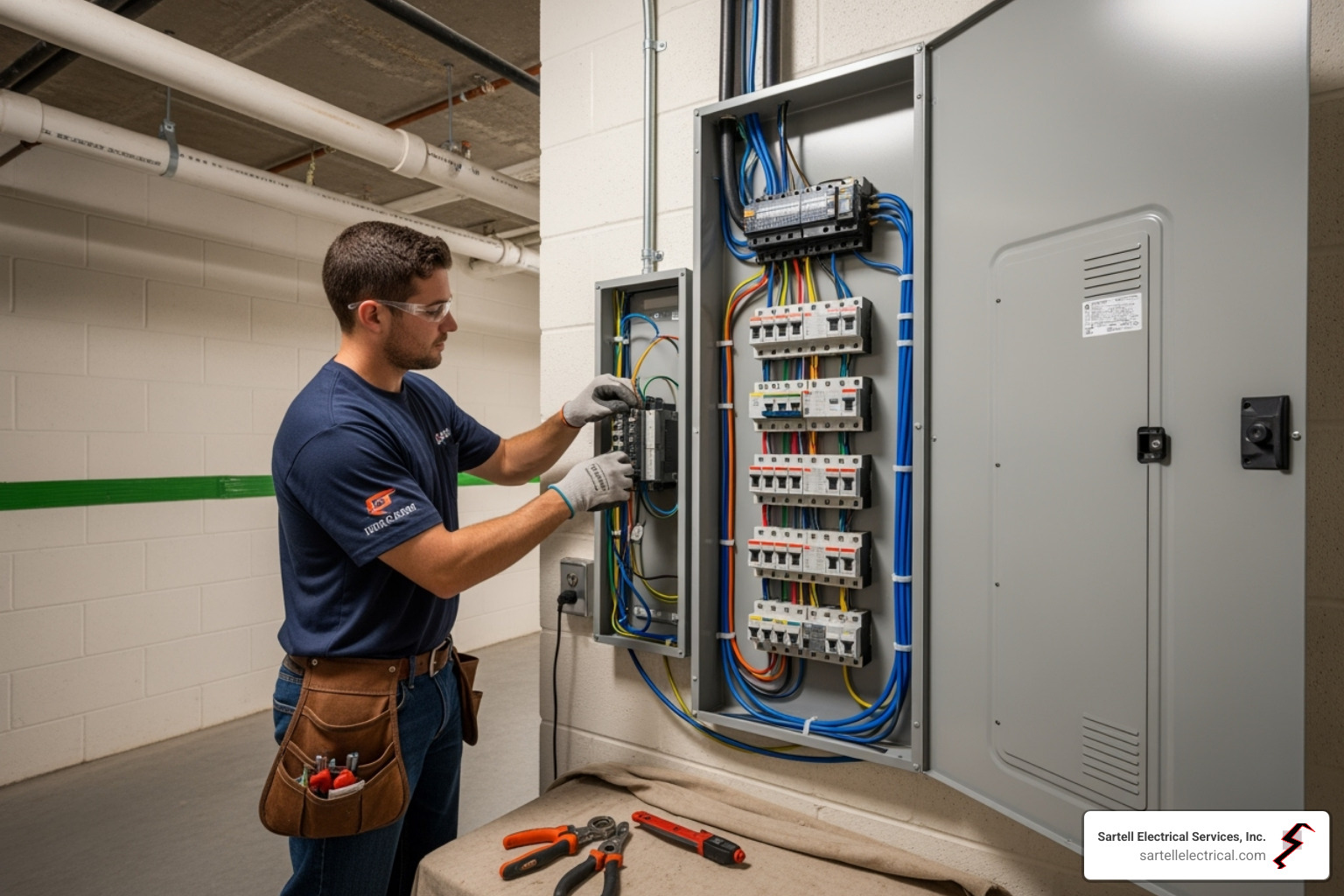
Beyond fixing obvious problems like frequently tripping breakers, there are several key reasons to upgrade:
Federal tax credits can help offset the cost. You may be eligible for a tax credit of 30% of the project cost (up to $600) for panel upgrades to 200 amps or more when installed with other energy-efficient improvements. This credit is available until the end of 2032, making now an excellent time to invest in your home’s electrical future.
Here are answers to some of the most common questions we receive at Sartell Electrical Services.
An electrical panel box for home typically lasts 25 to 40 years. However, its lifespan can be affected by several factors. Manufacturer quality plays a significant role, as does the environment—a panel in a damp basement will age faster than one in a dry closet. Simple wear and tear from decades of use also contributes. If your panel is over 25 years old, a professional inspection is a wise investment.
A typical 200-amp electrical panel box for home can hold 40 to 60 circuits. Standard single-pole breakers (for 120-volt circuits like lights and outlets) take up one slot each. Larger double-pole breakers (for 240-volt appliances like dryers and AC units) take up two slots. The generous capacity of a 200-amp panel is why we recommend it for most modern homes, as it provides plenty of room for current needs and future expansion.
While we admire the DIY spirit, our answer is an emphatic no. The main service wires in your panel are always live, even with the main breaker off, presenting a serious shock hazard. Furthermore, Massachusetts electrical codes require that panel work be performed by a licensed electrician. DIY work can create significant fire risks and may void your homeowner’s insurance. For your safety, please leave any work beyond resetting a tripped breaker to the professionals.
Your electrical panel box for home is the heart of your electrical system, the guardian that keeps your family safe while powering your modern life. We’ve covered how panels work, the warning signs that indicate a problem, and the significant benefits of upgrading to a modern system.
At Sartell Electrical Services, Inc., we have served Massachusetts homeowners for over three decades. From our base in Reading, we serve communities throughout Boston and across Essex, Middlesex, Norfolk, and Suffolk Counties. Our commitment to excellence, leadership, and customer service ensures every project meets the highest standards of safety and quality, in full compliance with Massachusetts electrical codes.
Today’s homes place unprecedented demands on electrical systems. An outdated panel isn’t just an inconvenience; it’s a safety risk. Whether you’re noticing flickering lights or simply want the peace of mind that comes with a professional inspection, we’re here to help. Don’t wait for a problem to become an emergency.
Contact us for a professional panel inspection or upgrade today, and let us ensure your home’s electrical system is safe, reliable, and ready for the future.

236 Ash St Reading, MA 01867
(By Appointment Only)
