Dental office lighting: Bright 2025 Guide
Why Proper Lighting Design Is Critical for Your Dental Practice
Dental office lighting affects three essential areas of your practice: patient comfort, clinical accuracy, and staff well-being. The right lighting system can reduce patient anxiety, improve diagnostic precision, and prevent practitioner eye strain and fatigue.
Key Requirements for Optimal Dental Office Lighting:
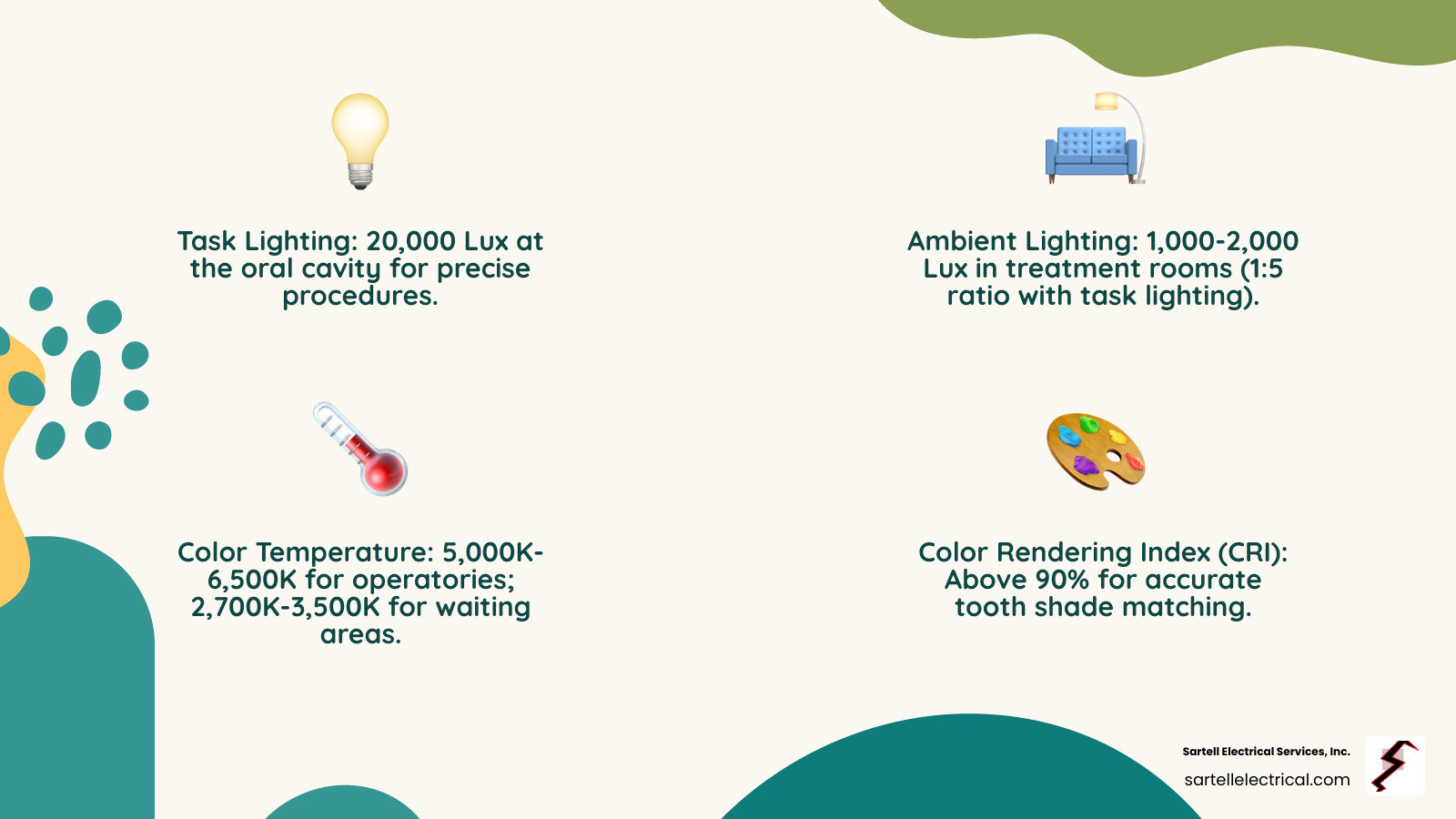
- Task Lighting: 20,000 Lux at the oral cavity for precise procedures
- Ambient Lighting: 1,000-2,000 Lux in treatment rooms (1:5 ratio with task lighting)
- Color Temperature: 5,000K-6,500K for operatories, 2,700K-3,500K for waiting areas
- Color Rendering Index (CRI): Above 90% for accurate shade matching
- Waiting Areas: 300-400 Lux with warm, welcoming light
Poor lighting choices create serious problems. Using standard fluorescent fixtures throughout your office creates a cold, clinical environment that increases patient anxiety. Inadequate task lighting forces practitioners to strain their eyes, leading to fatigue and potential diagnostic errors. Without proper color rendering, shade matching becomes unreliable.
The science is clear:
cooler light temperatures (5000K to 6500K) improve concentration and alertness during dental procedures, while warmer temperatures in reception areas help patients feel more relaxed. The Illuminating Engineering Society recommends specific lux levels for dental treatment rooms to ensure both safety and comfort.
I'm Ed Sartell, and I've been designing and installing electrical systems for healthcare facilities since 1985, including comprehensive
dental office lighting solutions that meet both clinical and patient comfort requirements. My team understands the unique electrical demands of modern dental practices and the critical role that proper illumination plays in successful patient outcomes.
The Science and Strategy of Dental Office Lighting
Creating the perfect
dental office lighting system isn't just about brightening up a room—it's about understanding how light affects everything from your ability to spot tiny cavities to whether your patients feel calm or anxious. The science behind lighting design can make or break the success of your practice.
The Core Functions: Task vs. Ambient Lighting
Think of lighting in your dental practice like a well-orchestrated symphony. You need both the powerful spotlight on the main performer and the gentle background lighting that sets the mood for the entire performance.
Task lighting is your clinical workhorse—the intense, focused beam that illuminates the patient's mouth during procedures. This isn't just any old light; we're talking about
20,000 Lux of precisely directed illumination that lets you see every detail with crystal clarity. Whether you're checking for early decay or matching the exact shade of a crown, this high-intensity lighting ensures you never miss a thing.
Ambient lighting plays the supporting role, but it's just as crucial. This general room illumination creates a comfortable atmosphere and prevents that harsh contrast between the super-bright work area and the surrounding darkness. Without proper ambient lighting, your eyes constantly strain to adjust between light and shadow, leading to fatigue and headaches by the end of a long day.
The magic happens when you get the balance right. The
recommended 1:5 ambient to task ratio means if your operating light delivers 20,000 Lux, your room's ambient lighting should provide around 4,000 Lux. This balance eliminates harsh shadows, reduces eye strain, and creates an environment where both you and your patients feel comfortable.
Understanding Light Quality and Its Impact
Not all light is created equal. Three key factors determine whether your lighting system will improve or hinder your clinical work:
light intensity, color temperature, and color rendering.
Light intensity, measured in Lux, tells you how much light actually reaches the surfaces you're working on. While 20,000 Lux might sound like overkill, research shows this is the sweet spot where visual acuity peaks for detailed dental work. Go below this level, and you're essentially working with one hand tied behind your back.
Color temperature is where things get interesting. Measured in Kelvin, this determines whether your light appears warm and cozy or cool and clinical. For operatories, you want
cooler temperatures between 5000K and 6500K—this daylight-like quality keeps you alert and provides the most accurate color representation for shade matching. Save the warmer 2700K-3500K temperatures for your waiting room, where they create a welcoming, relaxed atmosphere.
The
Color Rendering Index (CRI) might be the most critical factor you've never heard of. A CRI above 90 means your lighting reveals true colors almost as accurately as natural sunlight. This isn't just nice to have—it's essential for accurate shade matching and proper tissue assessment. Without high CRI lighting, that perfect crown match you thought you achieved might look completely different under natural light.
These factors work together to impact everything from
shade matching accuracy to
patient perception of your practice's professionalism. Proper lighting also keeps your staff alert and reduces eye strain during long procedures. Research on Adequate Dental Task Lighting confirms these specific requirements aren't just recommendations—they're necessities for optimal clinical outcomes.
Avoiding Common Lighting Pitfalls
Even with the best intentions, many practices fall into lighting traps that undermine their clinical work and patient comfort. Let me walk you through the most common issues we see—and how to avoid them.
Glare is probably the biggest culprit in patient discomfort. Picture lying back in a dental chair with a blazing light shining directly into your eyes—not exactly relaxing, right? Glare doesn't just annoy patients; it forces practitioners to work around visual obstacles and can cause serious eye strain.
Flicker is the silent saboteur. Many older fluorescent systems flicker at frequencies that, while not always visible, can trigger headaches and eye fatigue. It's like having someone rapidly turn the lights on and off all day—your brain notices, even when you don't consciously see it.
Shadows and poor uniformity create their own set of problems. When lighting isn't evenly distributed, you end up with dark spots that hide important details or force you into awkward positions just to see what you're working on. This leads to neck strain, missed diagnoses, and frustrated practitioners.
Incorrect color balance might seem minor, but it can completely sabotage your cosmetic work. Low CRI lighting or inappropriate color temperatures make accurate shade matching nearly impossible, leading to unhappy patients and costly remakes.
The good news? All of these issues are completely preventable with proper planning and professional installation. For comprehensive guidance on optimizing your practice's lighting system, check out our expertise in
commercial lighting installation contractor services.
Designing Lighting for Every Zone in Your Clinic
A dental practice isn't a single, uniform space. Each area serves a different purpose and, therefore, requires a distinct lighting approach. Our team, serving Massachusetts and the wider New England area, specializes in tailoring lighting solutions for every zone of your clinic.
The Waiting Room and Reception
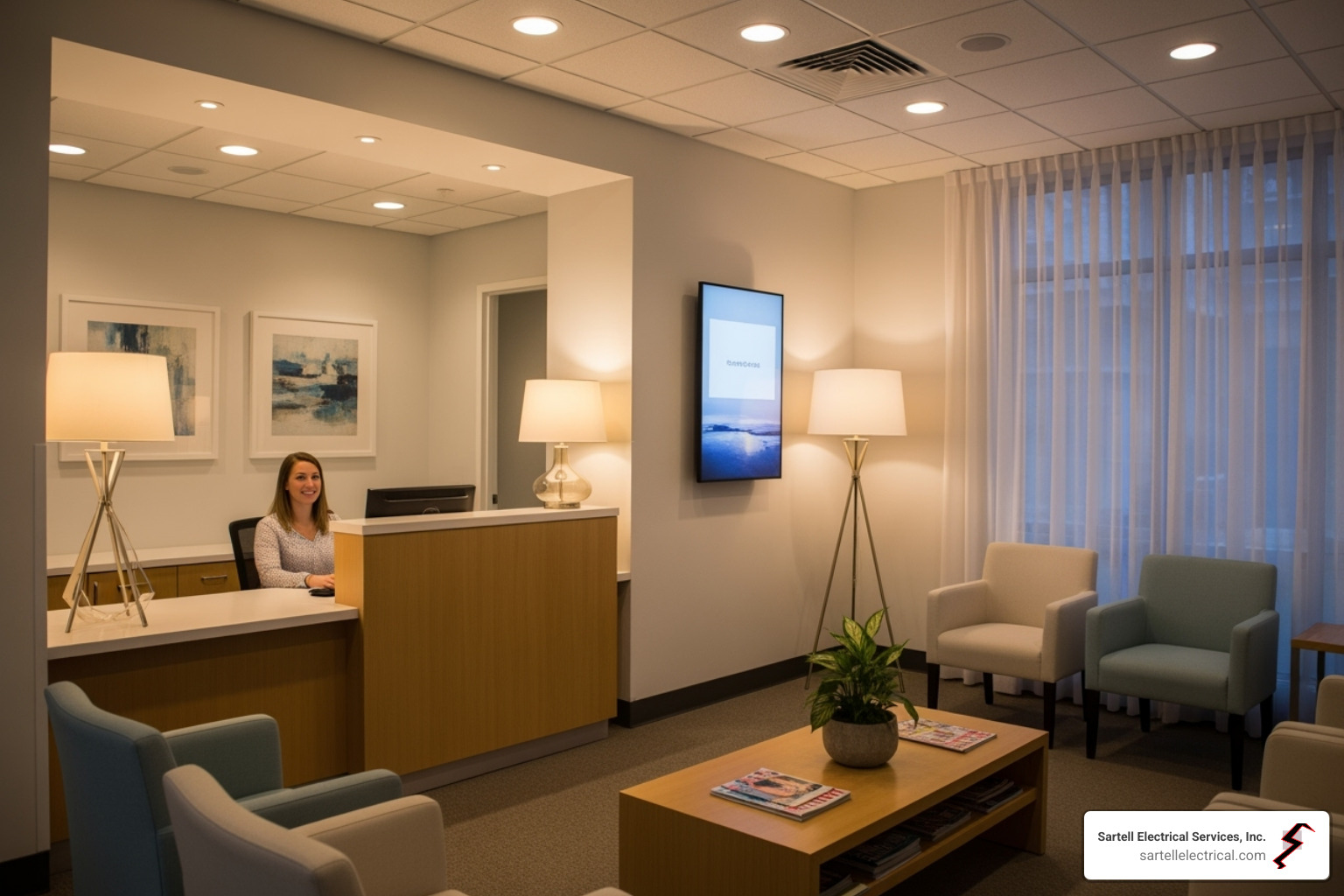
The waiting room and reception area are where first impressions are made. Here, the goal is to create a calming, welcoming environment that helps reduce patient anxiety before their appointment.
- Patient Comfort: We aim for lighting that feels less clinical and more like a comfortable living space. Soft, indirect lighting is preferred over harsh, direct overhead lights.
- Reducing Anxiety: Warmer color temperatures (2700K-3500K) promote relaxation and a sense of calm. This contrasts with the cooler lights of the operatory, gently preparing patients for the transition.
- Lower Light Levels: Waiting rooms should be at 300-400 Lux. This lower intensity, compared to clinical areas, contributes to a relaxed atmosphere. Standard room lights are about 200-700 Lux, so a waiting room falls comfortably within that range, leaning towards the lower end for comfort.
- Welcoming Atmosphere: Consider decorative light covers with calming imagery, or subtle wall sconces and accent lighting to improve the aesthetic appeal and create a soothing ambiance.
Key Considerations for Dental Office Lighting in the Operatory
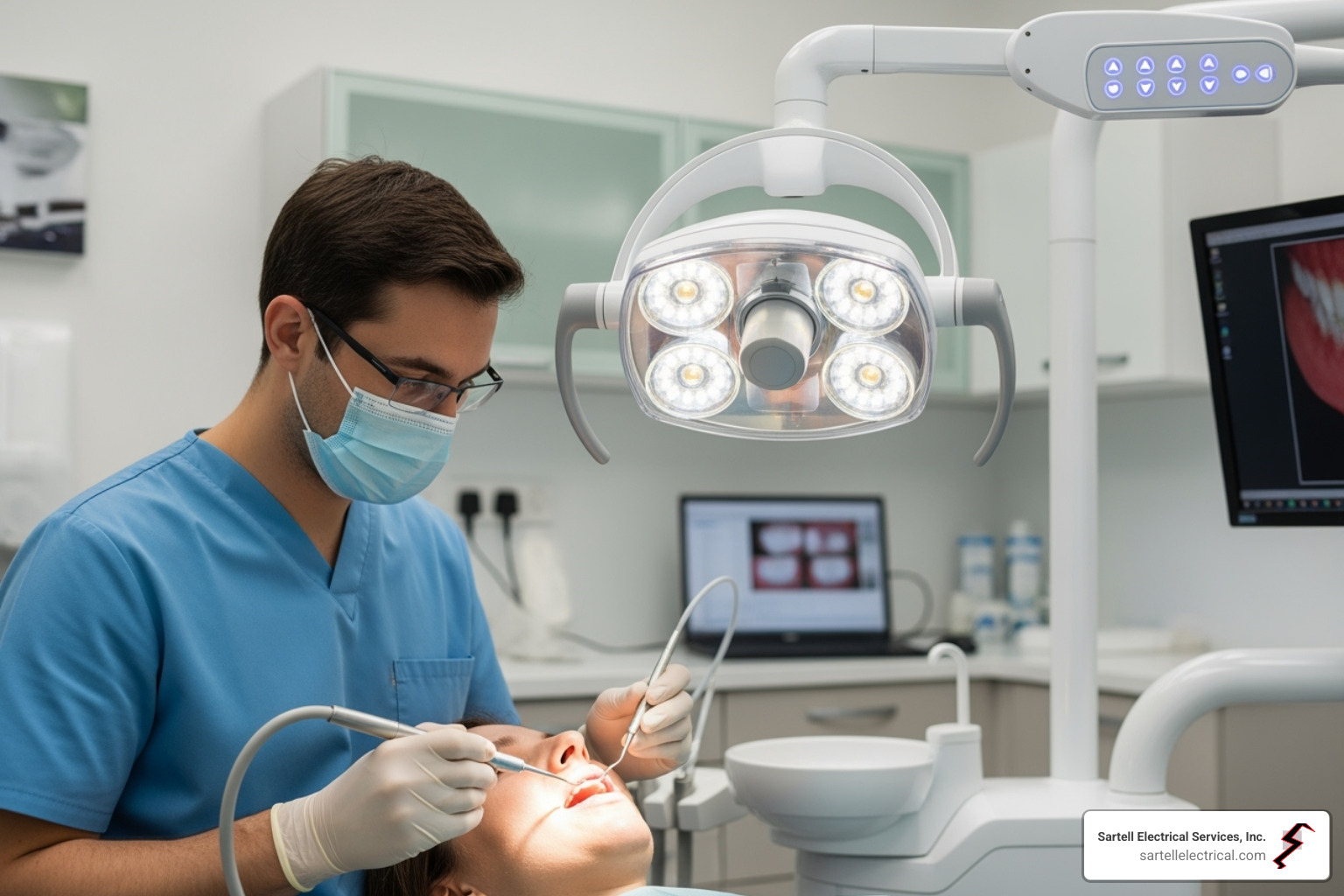
The operatory, or treatment room, is the heart of your practice. Here, lighting is a critical clinical tool that directly impacts the precision and success of procedures. This is where our expertise in healthcare electrical services truly shines.
- Task Lighting (20,000 Lux): As discussed, the dental operating light is paramount. It must provide intense, focused illumination (around 20,000 Lux) directly into the oral cavity. We work with practices to ensure these lights are optimally positioned and capable of delivering consistent, shadow-free illumination. Operating lights should typically give off around 20,000 Lux.
- Ambient Lighting (1000-2000 Lux): To support the task lighting and prevent eye strain, the surrounding operatory should have strong ambient lighting, ideally between 1000-2000 Lux. This creates a balanced visual field, reducing the harsh contrast that can fatigue the eyes.
- Daylight Color Temperature (5000K-6500K): For accurate shade matching and tissue assessment, the color temperature in the operatory must mimic natural daylight. Cooler temperatures within this range improve concentration and alertness for the dental team.
- High CRI (>90): A high CRI, preferably over 90%, is absolutely essential. This ensures that the colors of teeth, gums, and other tissues are accurately represented under artificial light, which is crucial for diagnostics, cosmetic procedures, and especially for matching the shade of crowns, veneers, and fillings. The Colour Rendering of Operating lights should be over 90 percent.
- Research and Technology: We stay updated on the latest advancements in dental operating lights research to recommend and install the best solutions for your practice. For comprehensive support with your facility's electrical needs, including specialized lighting, explore our healthcare electrical services.
Sterilization and Lab Areas
These areas demand bright, clear lighting to ensure precision, cleanliness, and safety.
- High Visibility: Sterilization rooms (sometimes called LDU or Laundry Decontamination Unit rooms) and dental labs require bright, uniform lighting to facilitate meticulous cleaning, organization, and detailed work. This ensures that instruments are properly sterilized and lab work is executed with accuracy.
- Cleanliness Perception: Cooler color temperatures, often up to 6500K, can improve the perception of cleanliness and sterility, aligning with the critical function of these spaces.
- Bright, Uniform Light: Levels should be consistently high to eliminate shadows and ensure all surfaces are clearly visible. We recommend task-oriented fixtures where needed to support specific cleaning or repair tasks.
- Infection Control: Lighting fixtures in these areas should be easy to clean and withstand rigorous disinfection protocols, contributing to overall infection control.
Technology and Best Practices for a Modern Practice
The world of dental lighting has transformed dramatically over the past decade. What once meant choosing between fluorescent or halogen options has evolved into a sophisticated landscape of energy-efficient, precision-engineered solutions that can truly lift your practice.
Modern Technology and Best Practices for Dental Office Lighting
The shift to
LED technology has revolutionized
dental office lighting, and for good reason. When I started in this business back in 1985, we were installing halogen systems that generated enough heat to make both patients and practitioners uncomfortable. Today's LED solutions have changed everything.
Energy efficiency stands out as one of the most compelling benefits. Switching from fluorescent to LED lighting can slash your energy consumption by up to 70%. For a busy dental practice running lights 10-12 hours daily, this translates to significant monthly savings on your electric bill.
The
longevity of LEDs is equally impressive. High-quality LED fixtures can operate for up to 80,000 hours, while even the best fluorescent systems typically reach only 17,000 hours. This means fewer interruptions to your schedule for bulb changes and lower long-term maintenance costs.
Low UV emission is particularly crucial in dental settings. Unlike traditional lighting sources, LEDs emit minimal ultraviolet radiation, which prevents the premature curing of light-sensitive dental materials during procedures. This gives you better control over your composite work and eliminates those frustrating moments when materials harden unexpectedly.
The
low heat output of LEDs creates a more comfortable environment for everyone. Patients no longer need to endure the intense heat from overhead lights during lengthy procedures, and your team can work more comfortably throughout long days.
Smart lighting controls are becoming increasingly popular in modern practices. Dimmer switches allow you to adjust lighting levels for different procedures or create a more relaxing atmosphere when needed. Some practices are even implementing wireless controls and app integration for ultimate flexibility.
| Feature |
LED Lighting |
Halogen Lighting |
| Energy Use |
Very Low (up to 70% energy savings) |
High |
| Lifespan |
Extremely Long (up to 80,000 hours) |
Shorter (around 2,000-4,000 hours) |
| Heat Output |
Very Low |
High |
| CRI |
Excellent (easily >90, often >95) |
Excellent (typically 100) |
| Color Temp. |
Wide range (easily adjustable, consistent) |
Warm (3000K-4500K), less adjustable |
| UV Emission |
Negligible |
Moderate |
| Durability |
High, solid-state |
Fragile (filament) |
| Flicker |
Flicker-free with quality drivers |
Generally no flicker |
Ergonomics and Practitioner Well-being
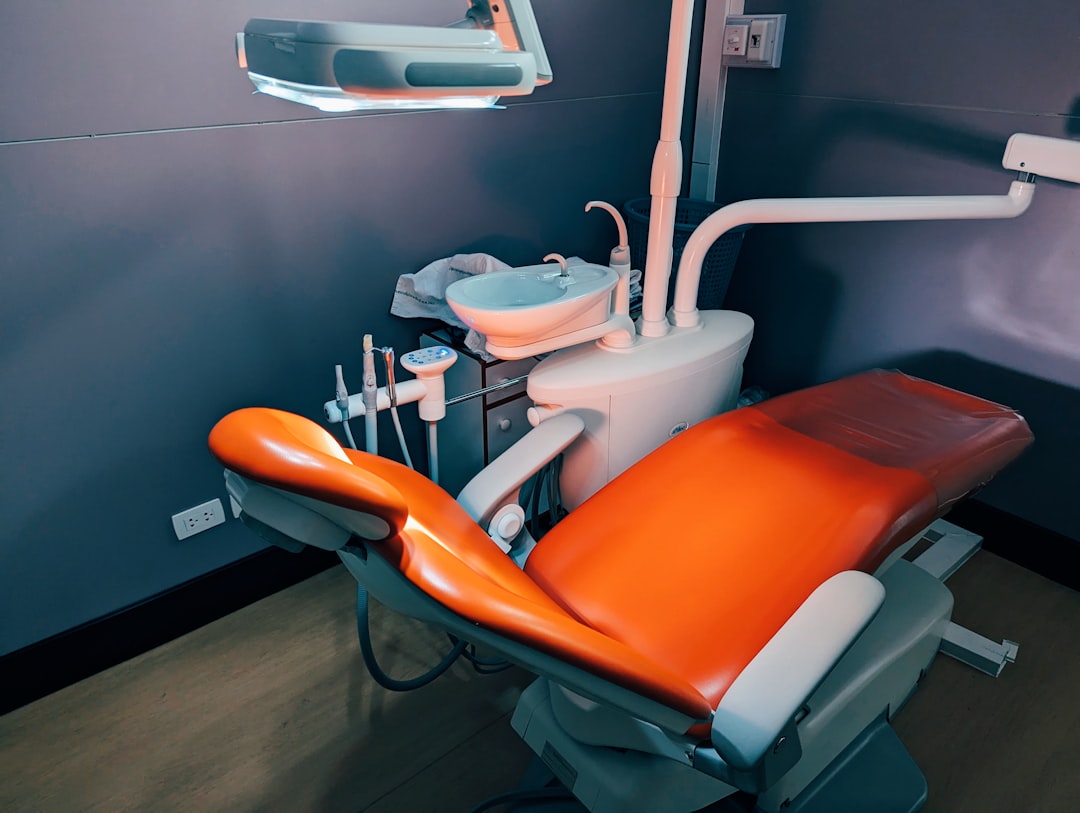
After three decades of working with healthcare facilities, I've seen how poor lighting affects dental professionals. The demanding nature of dental work means practitioners spend hours in precise positions, often straining to see clearly. Proper lighting isn't just about patient care—it's about preserving the health and career longevity of your dental team.
Eye strain and fatigue are serious occupational hazards in dentistry. Research shows that dentists and assistants look up and away from the oral cavity at least twice every minute, forcing their eyes to constantly adapt to changing light levels. Inadequate lighting compounds this problem, leading to dryness, headaches, and overall exhaustion by day's end.
Adjustable operating lights are essential for reducing physical strain. When practitioners can position lights precisely where needed, they avoid the awkward head tilting and body contorting that leads to chronic neck and back pain. The light should come to the dentist, not the other way around.
Proper ambient lighting plays a crucial supporting role. When the surrounding operatory has adequate illumination, it minimizes harsh shadows around the patient's head and neck area. This reduces the need for practitioners to lean in or crane their necks to achieve a clear view.
The
essential features for an ergonomic operating light include
adjustable intensity for different procedures,
smooth maneuverability that allows effortless positioning, and
wide, uniform light patterns that eliminate shadows across the entire working area.
Low heat emission prevents discomfort during long procedures, while
ergonomic handles that are both comfortable to grip and easy to sterilize support infection control protocols.
Some advanced systems now offer
variable color temperature settings, giving practitioners flexibility for different visual tasks.
Integrated features like HD cameras for documentation or hands-free sensors are becoming more common, though the core lighting performance remains the priority.
Balancing Natural and Artificial Light
The most successful
dental office lighting designs thoughtfully blend natural and artificial light sources. Natural light remains the gold standard for color accuracy and visual comfort, but it requires careful management to be truly effective.
North-facing windows are ideal for operatories because they provide consistent, soft light throughout the day without harsh direct sunlight. This steady illumination supports accurate shade matching and creates a pleasant working environment for your team.
Window treatments become crucial for controlling excessive brightness and preventing glare. Blinds or specialized films can regulate the amount of natural light entering the space while preventing the gradual discoloration of cabinetry and equipment over time.
Your
artificial lighting system should be robust enough to maintain consistent illumination regardless of weather or time of day. During bright afternoons, it can supplement areas where natural light doesn't reach effectively. On cloudy days or during evening hours, it becomes the primary light source.
The goal is creating a
consistent visual environment that doesn't force eyes to constantly readjust. This means your LED system should be flexible enough to dim when natural light is abundant, yet powerful enough to provide complete illumination when needed. Getting this balance right requires experience with both lighting design and the specific demands of dental practice workflows.
Frequently Asked Questions about Dental Lighting
Over the years, I've answered countless questions from dental professionals about creating the perfect lighting environment for their practices. Here are the most common concerns we address when designing
dental office lighting systems.
What is the best color temperature for a dental operatory?
The sweet spot for operatory lighting is
between 5000K and 6500K. This cooler color temperature range mimics natural daylight, which is absolutely critical for your daily work.
Here's why this matters so much: when you're matching tooth shades for crowns, veneers, or fillings, you need lighting that reveals true colors. While 4500K is often mentioned as ideal for viewing teeth specifically, the slightly cooler range of 5000K-6500K gives you that crisp, clear visibility you need for intricate procedures.
There's another benefit too -
cooler temperatures improve concentration and alertness during long procedures. Your eyes won't strain as much, and you'll maintain better focus throughout the day. In medical settings, the standard Color Temperature (CCT) range typically falls between 4000K to 5500K, so dental operatories lean toward the upper end of this spectrum for optimal performance.
How can lighting reduce patient anxiety?
The magic happens in two key areas of your practice, and it's all about creating the right mood for each space.
In your
waiting room and reception area, warmer color temperatures between 2700K and 3500K work wonders. These warmer hues feel like home lighting - comfortable, welcoming, and naturally calming. When patients walk into a space that feels more like a living room than a clinical environment, their stress levels drop significantly.
But don't forget about the operatory itself. Even though you need bright task lighting for procedures,
providing comfortable ambient lighting around 1000-2000 Lux makes a huge difference. The key is avoiding harsh glare directly in your patient's eyes.
Some practices we've worked with have added decorative light covers or ceiling-mounted screens as positive distractions. A nervous patient experiences everything more intensely, so thoughtful lighting design can genuinely improve their confidence and help them feel calmer throughout their visit.
Why is a high CRI important for dental work?
This is where the science of
dental office lighting gets really interesting. A
Color Rendering Index (CRI) above 90 isn't just a nice-to-have - it's absolutely essential for accurate clinical work.
Think of CRI as your lighting's ability to show true colors compared to natural sunlight. When you're looking at teeth, gums, and oral tissues, you need to see their actual colors, not distorted versions. Without high CRI lighting, colors can appear muted or completely wrong.
Here's a real-world example: imagine trying to match a filling shade under poor CRI lighting. You might think you've got a perfect match, but when your patient steps outside into natural light, the restoration looks completely off.
The Color Rendering of operating lights should be over 90 percent to prevent these costly mistakes.
High CRI lighting is particularly crucial for cosmetic procedures, diagnostics, and any restorative work where aesthetics matter. It's the difference between guessing at colors and knowing exactly what you're seeing.
Upgrade Your Practice with Professional Lighting Installation
Getting the perfect
dental office lighting setup isn't just about picking the right bulbs and calling it a day. You could try the DIY approach, but let's be honest – would you want someone without proper training working on your patients? The same logic applies to your electrical systems.
Professional installation makes all the difference between a lighting system that looks good on paper and one that actually transforms your practice.
Expert installation ensures everything works seamlessly from day one, without the headaches of flickering lights, uneven illumination, or worse – safety issues that could put your practice at risk.
Code compliance isn't optional in healthcare settings. Massachusetts has specific electrical codes for medical facilities, and our team knows every requirement inside and out. We've been navigating these regulations for over 30 years, so you won't have to worry about surprise inspections or costly retrofits down the road.
When it comes to
safety, there's no room for shortcuts. Dental offices have unique electrical demands – from high-powered equipment to specialized lighting systems that need to perform flawlessly during critical procedures. One electrical issue could disrupt your entire schedule and compromise patient care.
The
performance aspect is where our experience really shines. We don't just install lights; we create lighting environments that improve your clinical work. Every fixture placement, every dimmer setting, every control system is carefully planned to support your specific workflow and patient needs.
At
Sartell Electrical Services, we've spent over three decades perfecting our approach to healthcare electrical installations. Our team serves practices throughout Essex County, Middlesex County, Norfolk County, and Suffolk County, including the greater Boston area. Whether you're in Reading, Andover, or Chelsea, we bring the same commitment to excellence and customer service that has built our reputation.
We handle projects of all sizes – from single operatory upgrades to complete practice buildouts. Every installation is customized to your practice's unique needs, ensuring your investment delivers long-term value and reliability.
For a professional consultation on designing and installing the optimal lighting system for your practice, explore our
healthcare electrical services. Let us help you create a brighter, more efficient workspace that supports both exceptional patient care and your team's well-being.