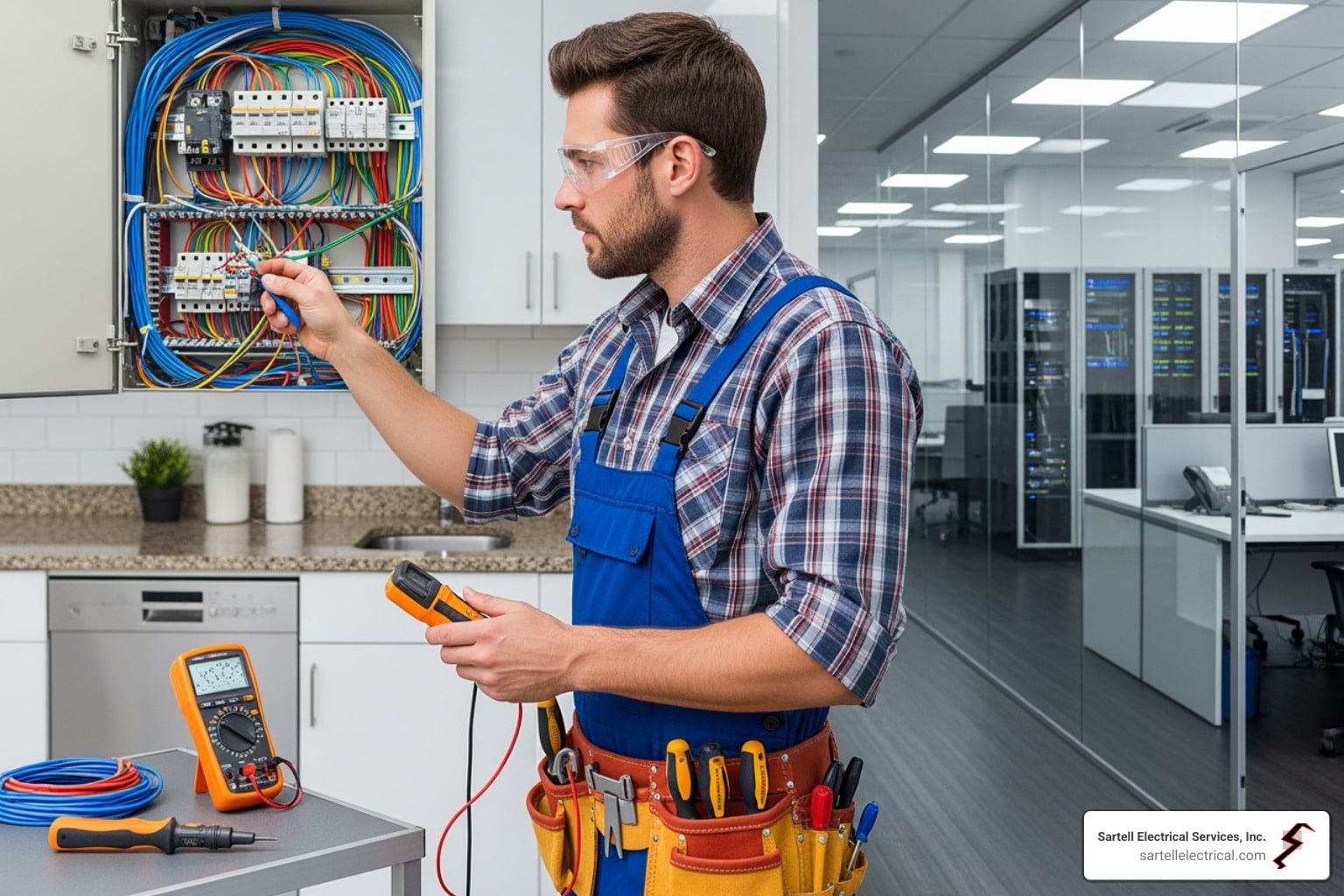
A commercial residential electrician is a licensed professional who specializes in electrical work for either commercial buildings (offices, retail spaces, industrial facilities) or residential properties (homes, apartments, condos). While some electricians work across both sectors, most specialize in one area due to the distinct skill sets, equipment, and regulations required for each environment.
Key Differences at a Glance:
When you’re searching for electrical services, understanding these differences is crucial. A residential electrician excels at home rewiring and smart device installations, while a commercial electrician is equipped for office build-outs and industrial systems.
The electrical trade isn’t one-size-fits-all. As one industry professional noted, “An electrician is not a ‘one size fits all’ profession because there are many differences among commercial, residential, and industrial electricians.” These specialists use different tools, work with varying voltage systems, and must comply with distinct safety codes.
Whether you’re planning a kitchen renovation or a complete office building electrical system, knowing which type of electrician to call can save you time, money, and ensure your project meets all safety requirements.
Understanding the differences between residential and commercial electricians can save you time, money, and headaches. Both are skilled professionals, but like doctors, they have different specialties—one is like a family physician for your home, while the other is a specialist for complex commercial buildings. Let’s explore what makes these two types of commercial residential electrician roles so different, from their work environments to the systems they handle.
The most obvious difference is where these electricians spend their days.
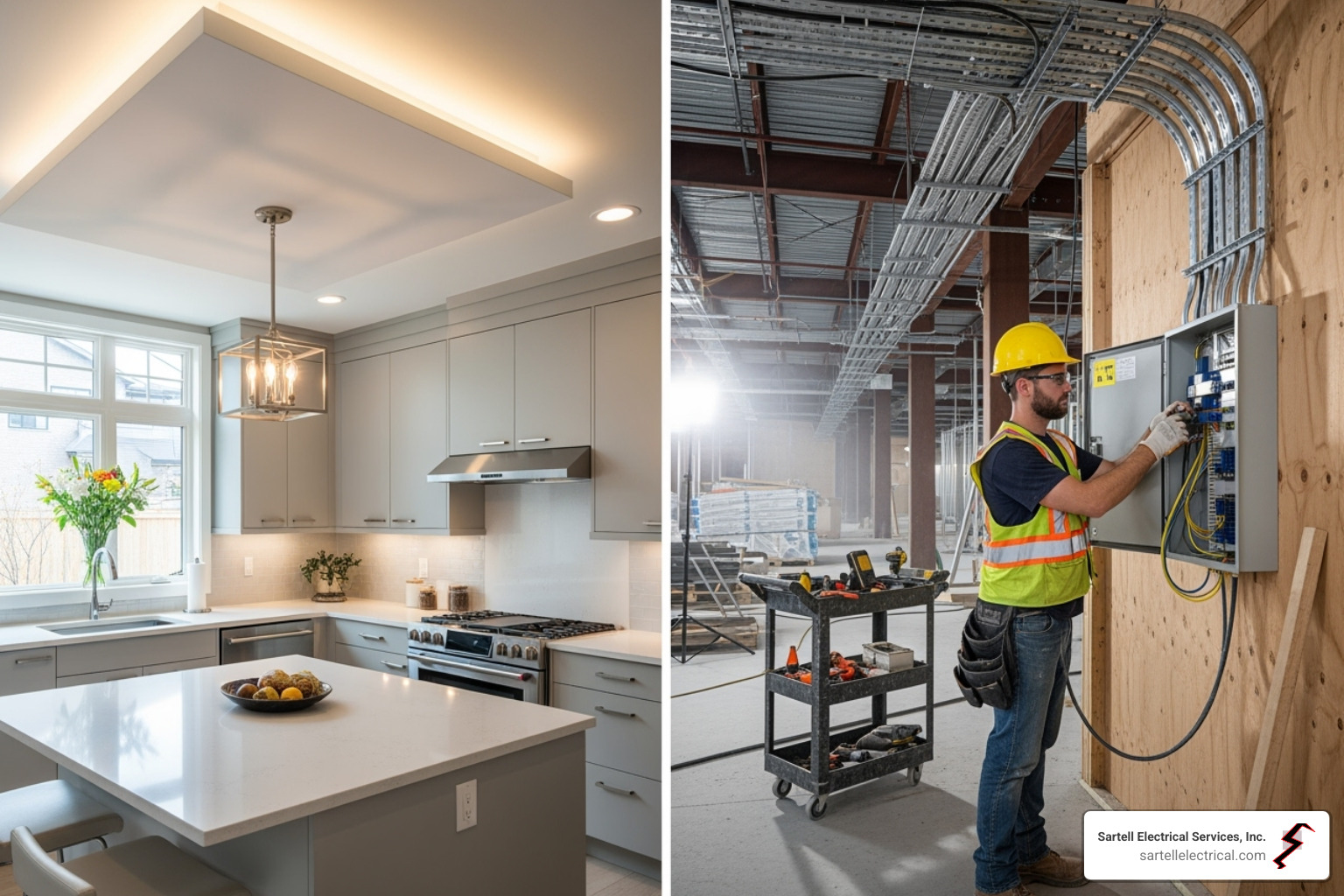
Residential electricians work in homes, apartments, and condos. They install fixtures, troubleshoot outlets, and typically work in clean, climate-controlled spaces during regular weekday hours. They become experts at working around families, installing smart home devices, or upgrading electrical panels during convenient hours.
Commercial electricians operate in a different world: busy retail spaces, construction sites, office buildings, and factories. The stakes are often higher and the environment more challenging. To avoid disrupting business operations, they often work evenings, weekends, and holidays, such as rewiring a restaurant kitchen after closing.
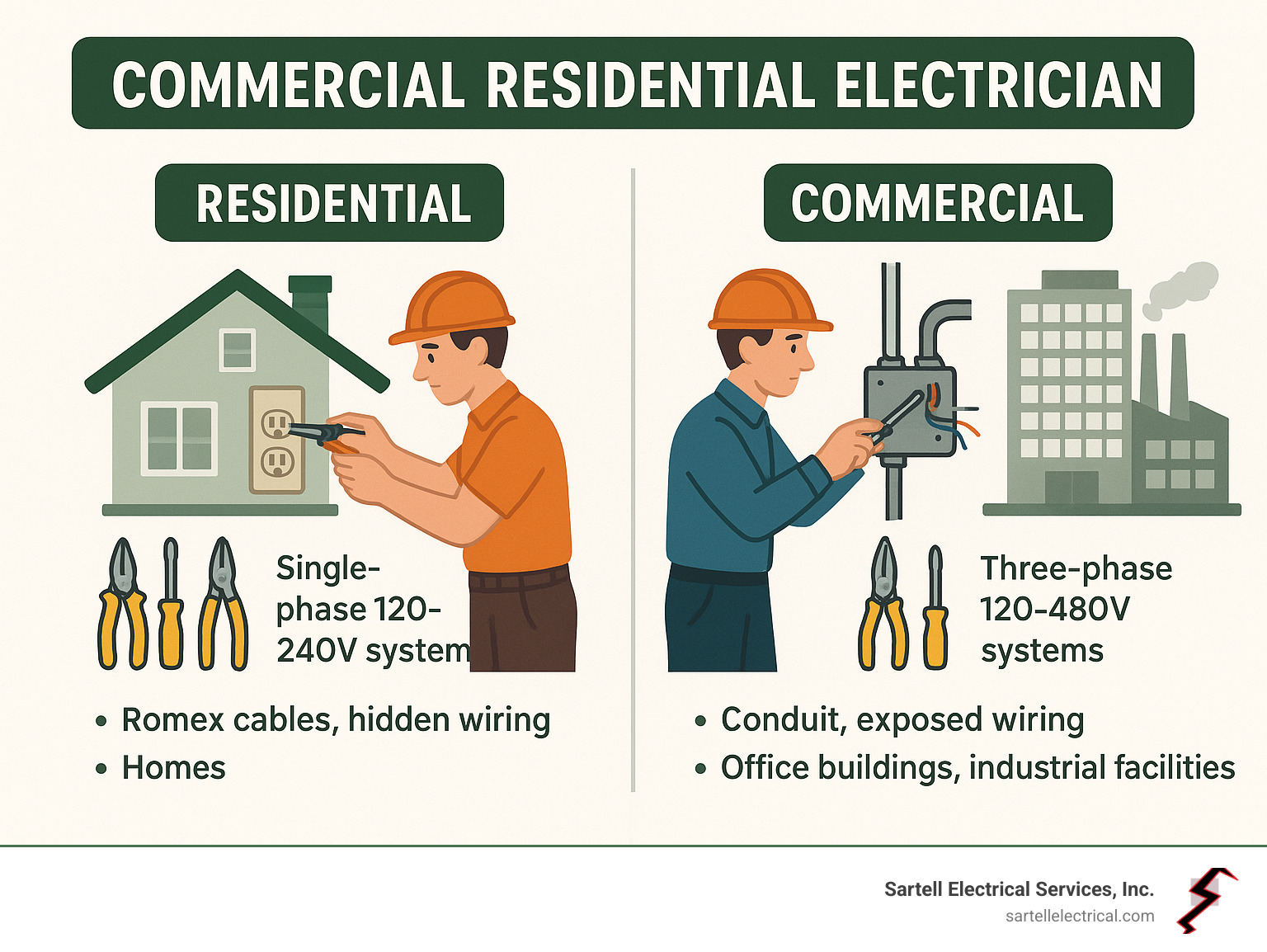
Residential systems run on single-phase power at 120-240 volts, which is perfect for everyday needs like powering appliances and electronics. Residential electricians work with Romex cables, designed to be hidden behind walls with protective sheathing.
Commercial systems use three-phase power that can handle 120V to 480V or higher. This extra power is essential for heavy machinery, extensive lighting, large HVAC units, and complex computer networks. Commercial electricians work with conduit protection and exposed wiring systems that run along ceilings and walls. This design allows for easier maintenance and accommodates much higher power loads.
| Feature | Residential Electrical Systems | Commercial Electrical Systems |
|---|---|---|
| Power Type | Single-phase | Three-phase |
| Voltage Range | 120-240 volts | 120V to 480V+ |
| Wiring Type | Romex cables, hidden wiring | Conduit protection, exposed systems |
| Panel Design | Lower capacity, simple access | High capacity, complex distribution |
| Primary Use | Household appliances, lighting | Heavy machinery, industrial equipment |
Residential projects are typically smaller and more straightforward, like installing new outlets or upgrading an electrical panel for an EV charger. These jobs usually involve one or two electricians and are completed quickly.
Commercial projects are much larger, such as wiring an entire office building, installing hospital backup generators, or setting up mall fire alarm systems. These projects require teams, coordination with other trades, and detailed blueprint interpretation. The complexity also extends beyond size, as commercial electricians must understand sophisticated systems like emergency lighting and industrial equipment.
At Sartell Electrical Services, we handle everything from simple residential upgrades to complex commercial installations. You can see the range of our work by checking out Our Projects.
Safety is crucial in all electrical work, but the rules become more complex in larger, busier buildings.
Residential electricians focus on homeowner safety, following national and local codes to protect families and property. Professional installation is key to ensuring everything meets safety standards.
Commercial electricians operate under stricter regulations for public access safety in high-occupancy buildings. This includes complex fire safety compliance rules, ADA regulations, and specialized business codes. The margin for error is smaller in commercial settings, where a power failure can be catastrophic for a hospital or data center, unlike an inconvenient outage at home.
For detailed information about electrical safety standards, check out The National Electrical Code (NEC).
The bottom line is that both are skilled professionals, but they have specialized expertise for different environments. Understanding these differences helps you choose the right professional for your needs.
Understanding the journey, responsibilities, and career prospects for electricians in both residential and commercial fields.
Becoming a skilled electrician requires dedication, continuous learning, and extensive hands-on experience. The journey is built on knowledge, precision, and an unwavering commitment to safety, whether in residential or commercial work.
An electrician’s journey starts with a high school diploma or GED, followed by an apprenticeship. These programs require 8,000 to 10,000 hours of on-the-job experience over about four years, covering everything from electrical theory to safety protocols.
After completing the program and passing competency exams, an electrician can earn a journeyman license to work independently. With more experience and testing, they can advance to a master electrician license, allowing them to pull permits and supervise others.
While core training is similar, specializations emerge. Residential electricians might certify in low-voltage systems or solar installations. Commercial electricians often need more extensive training for complex commercial spaces, requiring deep knowledge of high-voltage systems, control systems, and phase diagrams. Some commercial qualifications require over 4,000 additional hours of job experience beyond the initial apprenticeship.
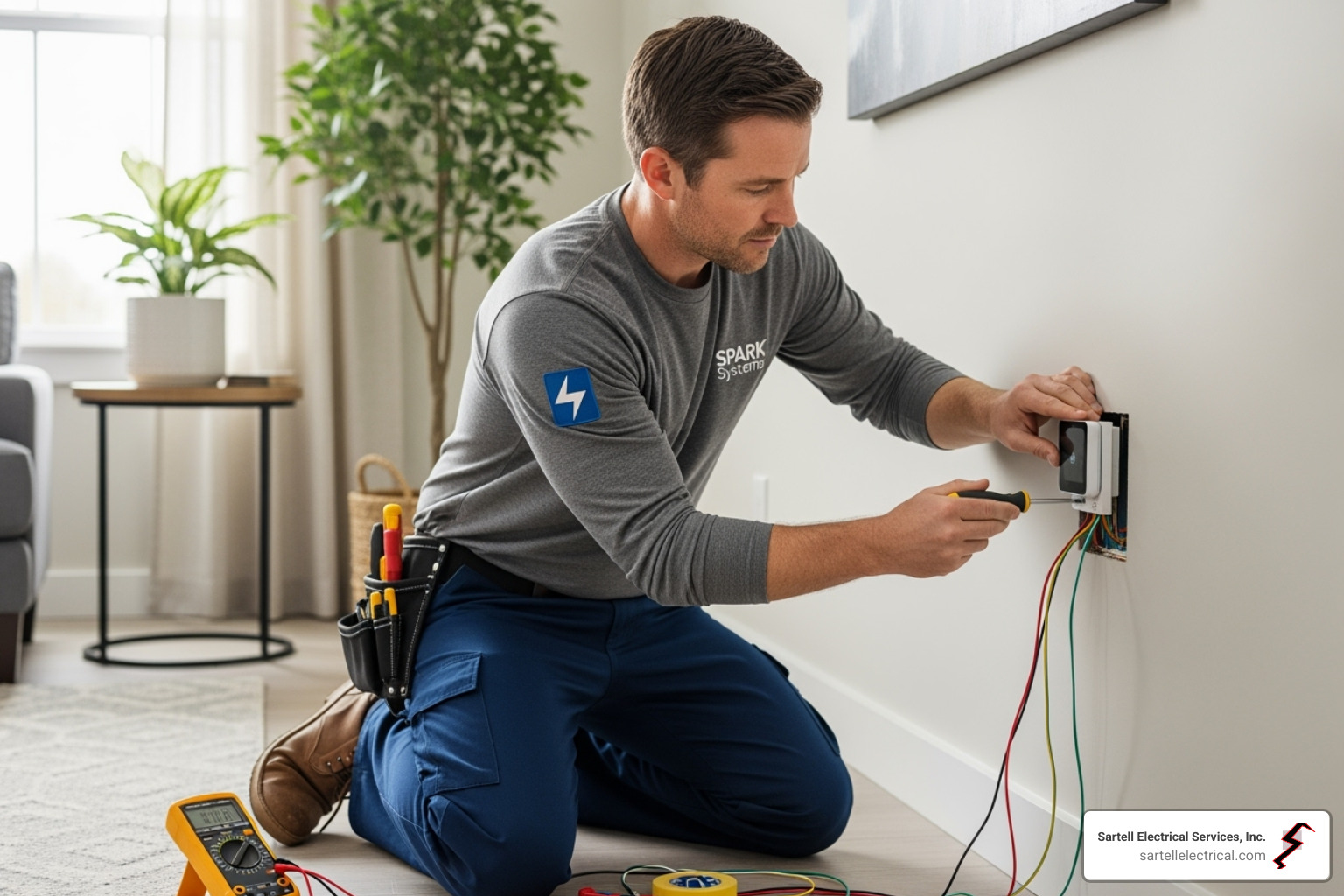
A residential electrician’s day might start with outlet installation in a new home, followed by troubleshooting flickering lights. They are the go-to experts for ceiling fans, panel upgrades, and ensuring home electrical systems meet safety codes.
Commercial electricians face a different world. One day they might be installing transformers in an office building, the next performing large-scale lighting maintenance in a mall. They work with complex emergency systems, follow intricate blueprints, and handle upgrades that keep businesses running.
Both types of electricians must be detail-oriented problem solvers, but commercial work often requires more coordination with other trades and a deeper understanding of complex building systems.
A common question is whether an electrician can do both. The short answer is yes, but it’s not always simple.
A truly versatile commercial residential electrician can handle both worlds, but it requires the right training and experience. The transition is generally easier for a commercial electrician moving to residential work. Since they have high-voltage experience with complex systems, the transition is generally straightforward, though they must familiarize themselves with residential codes.
The reverse is trickier. A residential electrician wanting to tackle commercial projects needs substantial additional training. While they understand fundamental electrical principles, they need hands-on experience with commercial hardware, higher voltage systems, and three-phase wiring.
At Sartell Electrical Services, we’ve built our reputation on versatility. Our team includes highly trained professionals who excel in both residential and commercial environments. Whether you need specialized services for your business or expert electrical solutions for your home, we have the experience to handle it all. Check out our Commercial Electrical Services and Residential Electrical Services to see what we can do for you.
The electrical trade offers excellent career prospects with consistent job demand, but earning potential and career paths differ between specializations.
Commercial electricians typically earn higher salaries due to the specialized skills, complexity, and risks of high-voltage installations. The larger scale of commercial projects also provides more opportunities and better salary potential.
Residential electricians also enjoy good earning potential, with continuous demand for home repairs, remodels, and new construction. They often enjoy more predictable schedules and steady employment.
Career advancement opportunities exist in both fields. Electricians can move into supervisory roles, become project managers, or start their own contracting businesses. The path to business ownership is also attractive for those who want to control their career.
Specialization opens more doors. Residential electricians can focus on smart home technology, while commercial electricians might specialize in advanced control systems. The ability to work across both sectors—like a true commercial residential electrician—can significantly boost career versatility and earning potential.
A practical guide to help you choose the correct professional for your specific electrical needs.
When your kitchen outlet sparks or your office lights flicker, you need an electrician. But which type? Choosing between a residential or commercial electrician can mean the difference between a quick fix and a costly mistake. Like choosing a doctor, it’s about finding the right specialist. A versatile commercial residential electrician is invaluable, but knowing when to call which specialist is key to your project’s success.
For electrical work in your home, apartment, or condo, a residential electrician is your go-to professional. They are specialists in home electrical systems and understand the unique needs of a living space. Common residential projects include:
They also handle electrical repairs during renovations and perform safety inspections, which are crucial when buying or selling a home.
For projects in a business, public building, or industrial facility, you need a commercial electrician. They are specialists in three-phase power, complex building codes, and the systems that keep businesses, hospitals, and factories running. Common commercial projects include:
Commercial electricians also handle regular maintenance and infrastructure upgrades to keep facilities safe and modern. For comprehensive commercial electrical solutions in Massachusetts, we’ve been serving the Boston area and surrounding communities for over 30 years. You can learn more about our commercial capabilities at Commercial Electrical Contractor Boston, MA.
Whether you need a residential specialist or a versatile commercial residential electrician, look for these key qualities to find a true professional:
The cheapest bid isn’t always the best value. Quality electrical work is an investment in safety. Choose a professional committed to excellence, because with electricity, you need it done right the first time.
Quick answers to the most common questions about residential and commercial electricians.
When it comes to choosing the right electrician for your project, we hear the same questions over and over again. These are the answers that matter most to homeowners and business owners alike.
The heart of the difference lies in power delivery and capacity. Your home runs on single-phase power, typically between 120-240 volts – perfectly suited for your everyday appliances, lighting, and electronics. It’s like having a steady stream of electricity flowing through your walls, hidden behind Romex cables that keep everything neat and tidy.
Commercial buildings, however, need something much more robust. They rely on three-phase power systems that can handle anywhere from 120V up to 480V or even higher. Think of it as the difference between a garden hose and a fire hose – both deliver water, but one can handle much greater volume and pressure.
This higher capacity is essential for powering heavy machinery, extensive lighting systems, large HVAC units, and complex IT infrastructure that businesses depend on. Commercial wiring is typically thicker gauge and runs through protective conduits, often remaining exposed along ceilings and walls for easier maintenance and upgrades.
Absolutely! A qualified commercial residential electrician or commercial specialist can typically handle residential work quite well. Since they’re trained to work with more complex, high-voltage systems, your home’s electrical needs are generally within their wheelhouse.
However, there’s an important caveat: they need to be familiar with residential building codes and practices. While the fundamental electrical principles remain the same, residential work has its own set of regulations and common practices that differ from commercial environments. Most experienced commercial electricians understand these differences and can adapt accordingly.
The reverse situation is trickier. A strictly residential electrician would need additional training and experience before tackling large commercial projects. The jump from single-phase home systems to complex three-phase commercial installations requires specialized knowledge and hands-on experience with industrial-grade equipment.
Commercial electricians typically command higher salaries, and there are several solid reasons for this. The work involves greater complexity, higher risks when dealing with high-voltage systems, and requires specialized knowledge that takes years to develop.
Commercial projects are also larger in scale, often involving multiple electricians and extensive coordination with other trades. The stakes are higher too – when a commercial electrical system fails, it can shut down entire businesses, affecting dozens or hundreds of employees and customers.
That said, residential electricians also enjoy good earning potential, especially those who specialize in high-end home automation, solar installations, or serve affluent neighborhoods. The residential market offers steady work with consistent demand for repairs, upgrades, and new construction.
At Sartell Electrical Services, we’ve found that electricians who can work effectively in both commercial and residential environments often have the best career prospects. This versatility makes them valuable assets who can adapt to different types of projects and market demands.
When it comes to electrical work, making the right choice isn’t just about finding someone who knows their way around a circuit breaker. It’s about finding a professional who understands the unique demands of your specific project and environment.
Residential electricians are the masters of home comfort and safety. They know exactly how to steer the cozy confines of your living space, working efficiently around your family’s schedule while ensuring every outlet, switch, and fixture meets the highest safety standards. Their expertise shines in single-phase systems, smart home installations, and the nuanced codes that govern residential properties.
Commercial electricians, on the other hand, are the powerhouse professionals equipped to handle the complex demands of business facilities. They thrive in environments where three-phase power systems, industrial equipment, and stringent safety regulations are the norm. Their training in high-voltage systems and large-scale projects makes them indispensable for businesses that can’t afford downtime.
But here’s where it gets interesting: the best electrical contractors don’t limit themselves to just one specialty. A truly versatile commercial residential electrician brings the best of both worlds to your project. They understand that whether you’re upgrading your home’s electrical panel or wiring an entire office building, the fundamentals of safety, quality, and code compliance remain the same.
For projects throughout Massachusetts, this versatility makes all the difference. Whether you’re a homeowner in Reading planning a kitchen renovation or a business owner in Boston designing a new retail space, you need a contractor who can adapt their expertise to your specific needs.
At Sartell Electrical Services, we’ve spent over 30 years building exactly this kind of comprehensive expertise. Our team doesn’t just handle residential or commercial projects – we excel at both, along with industrial, telecom, and healthcare electrical work. This breadth of experience means we bring lessons learned from complex commercial installations to make your residential project more efficient, and we apply the attention to detail from residential work to ensure your commercial project feels personal and well-crafted.
The electrical industry continues to evolve, with smart technologies, energy-efficient solutions, and renewable energy systems becoming standard across both residential and commercial sectors. Having a contractor who stays current with these developments across all specialties ensures your project isn’t just compliant today, but prepared for tomorrow’s innovations.
When you’re ready to power your next project with the right expertise, the best choice is often the most versatile one. A contractor who can seamlessly transition from installing a smart home system to designing a complex commercial lighting network brings a level of insight and efficiency that specialized-only contractors simply can’t match.
Ready to discuss your next major project? Whether it’s residential, commercial, or something in between, we’re here to help. Explore our comprehensive Commercial Electrical Services to see how we can bring the right expertise to your specific needs.
236 Ash St Reading, MA 01867
(By Appointment Only)
